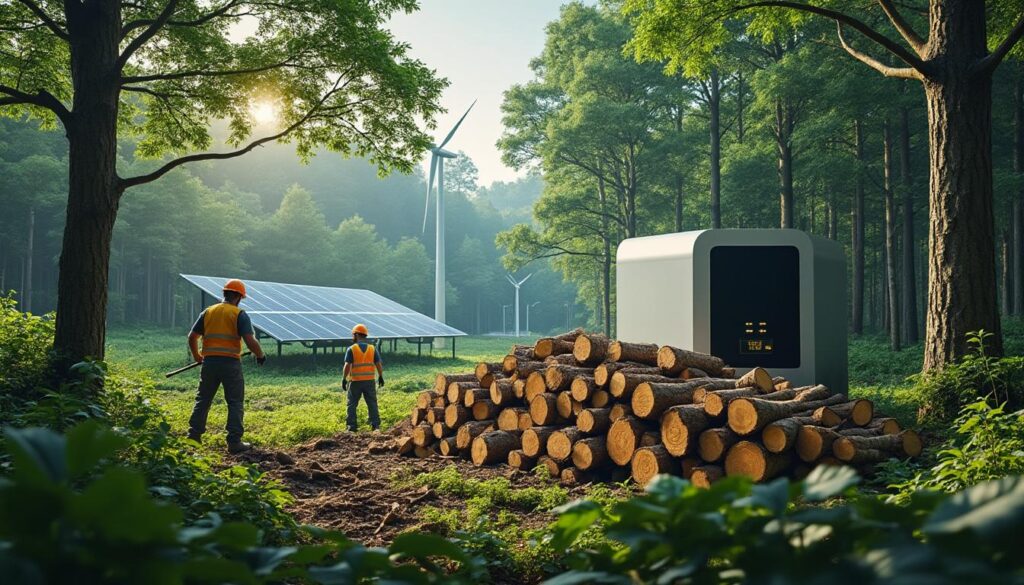
Since 2011, China has been pushing a true “Marshall Plan” for renewable energy, changing prices, supply chains, and the possibilities for access to clean energy in the developing world.
The effect is not just climatic: it redefines infrastructure, industry, and paths to energy independence for entire countries—and brings very concrete opportunities for those planning an efficient home or a clean energy business.
| Short on time? Here’s the gist: | 🎯 What you need to know |
|---|---|
| ✅ Key Point #1 | China has invested about $227 billion since 2011 in over 450 projects for new energy, with 88% after 2022 🚀 — a pace that has driven down global prices for solar, wind, and batteries. |
| ✅ Key Point #2 | Industrial dominance: ~80% of solar panels, 75% of lithium batteries, and 70% of wind turbines come from China, opening up space for more accessible residential and commercial projects 🏠⚡. |
| ✅ Key Point #3 | Avoid the mistake of buying only by price: check warranties, certifications, and integration with inverters and storage 🔌🔋. |
| ✅ Bonus | BRI (New Silk Road) directs capital and factories to Africa, Brazil, and India — an opportunity for low-emission industrialization 🌍. |
China’s Green Marshall Plan: Scale, Numbers, and What This Changes for Your Project
Between 1948 and 1952, the U.S. injected $13.3 billion into European reconstruction. The comparison today is inevitable: since 2011, China has structured a Green Marshall Plan by investing about $227 billion in over 450 projects in manufacturing and infrastructure for new energy, with 88% of this amount concentrated after 2022. The goal goes beyond decarbonization: it concerns industrial leadership, energy security, and geopolitical influence.
This movement has accelerated prices downwards. In 2024, Chinese exports of renewable technologies — panels, turbines, batteries, and electric vehicles — reached about $177 billion, or ~5% of the country’s total exports. Approximately $72 billion went to developing countries, mixing sales and direct investment. The practical result? Projects that previously didn’t add up are now becoming a reality, from home microgeneration to solar parks at the municipal scale.
The 2024–2025 outlook shows a deliberate expansion beyond Chinese borders. Just in 2024, there was about $11.8 billion in green energy through BRI, and in the first six months of 2025, another $9.7 billion, signaling continuity. Internally, the country installed more than 250 GW of solar energy just in the first half of 2025 (estimate from the think tank Ember, which includes distributed generation), consolidating a capacity that, in itself, reshapes the global market.
Why does this matter to you? Because the combination of industrial scale and external financing creates a “cascade effect” on the availability of cost-effective equipment. This paves the way for projects with photovoltaic energy on rooftops, home batteries for peak cuts, and heat pumps that are more accessible—reducing dependence on fossil fuels and the energy bill.
- 🔎 Plan the integration: combine panels + inverter + battery from the design stage to avoid rework during construction.
- 🧾 Demand warranties: modules with 25 years of performance and inverters with 10 years are now a competitive standard.
- 🧰 Standardize components: prioritize brands with a local support network and recognized certifications (IEC, CE, INMETRO/CE-Mark).
- 📈 Make realistic calculations: simulate seasonal consumption and size the battery for 1–2 critical days, not just for the “average” day.
Final insight from this section: when the global supply chain trades volume for low prices, what changes is viability — and viability is what multiplies real projects.
Overproduction, Prices, and Energy Architecture: How to Design Better with the New Reality
China has dominated the manufacturing of essential technologies: about 80% of solar panels, 75% of lithium batteries, and 70% of wind turbines are produced there. Internal competition has become so intense that manufacturers have created coordination mechanisms — a “quasi-OPEC” for clean energy — to reduce cannibalization. The effect on markets is clear: falling prices, shorter innovation cycles, and constant availability of equipment.
For architecture and retrofitting, this opens previously unthinkable choices. One can size solar roofs in modular arrays, opt for microinverters when there is partial shading, or migrate to hybrid inverters that communicate with lithium iron phosphate batteries. In multifamily buildings, it makes sense to explore energy communities, sharing generation by ideal fraction and reducing the payback time.
Practical example: a condominium of 40 units with an average consumption of 5,000 kWh/month can combine ~200 kWp of photovoltaics with 400–600 kWh of storage. The drop in prices for modules and batteries after 2022 makes it viable to mitigate nighttime peaks and cover heat pump loads on cold days, without reinforcing medium voltage cabins. In warm climates, the dual shading + photovoltaics also reduces thermal gains on the roof, lowering air conditioning usage.
At the municipal scale, schools and health centers are starting to integrate distributed generation with battery backup for emergencies. In industrial areas, the compressed price of modules and turbines allows for a “mix” of light wind + solar with shorter PPA contracts. And when the numbers add up, investment moves to the buildings themselves: thermal insulation, cross ventilation, and low-footprint materials now fit within the budget.
How to Avoid Common Pitfalls When Buying “Cheap”
Low price does not exempt due diligence. Look for traceable production lines, check batch quality reports, and ask for flash tests of the modules. For batteries, prioritize LFP chemistry with compatible BMS and upgradable firmware. For inverters, evaluate protection against islanding and support for V2H/V2G if you plan to integrate an electric vehicle in the future.
One way to simplify is to adopt kits approved by distributors with local after-sales support. This reduces the risk of a “brand orchestra” without integration and gives predictability to timelines. And, of course, include commissioning and monitoring in the contract — what cannot be measured cannot be improved.
In practice, Chinese overproduction has lowered hardware costs; it is up to the design to transform this hardware into comfort, resilience, and lower bills.
If you want to approve a more robust project with your municipality or condominium, bring simulated production data and peak demand reduction targets. The conversion of savings into thermal performance is the argument that convinces.
BRI, Financing, and Real Cases: Ethiopia, Morocco, and the New Energy Geography
The Belt and Road Initiative (BRI) serves as a channel for capital, engineering, and transfer of industrial capacity. In 2024, China directed around $11.8 billion to green projects in BRI countries; in the first half of 2025, an additional $9.7 billion. This is not charity: it is a strategy that combines infrastructure with access to critical minerals — lithium, nickel, cobalt, and rare earths — and opening markets for equipment.
Ethiopia has become a showcase. Between 2011 and 2018, it received about $4 billion for energy (wind farms and the Grand Ethiopian Renaissance Dam). In 2024, the country banned the import of new gasoline cars, betting on “new energies.” In 2025, investments nearing $500 million in solar factories began to build a local industrial base. It’s infrastructure pulling industry, and industry pulling jobs.
In Morocco, Chinese battery manufacturers have set up factories to supply electric vehicles in Europe and Africa. Africa, where about 90% of installed panels are of Chinese origin, is becoming a laboratory for affordable energy transition. The construction of railroads and logistics networks under the BRI supports export corridors and maintenance — a detail that many forget: without logistics, energy doesn’t scale.
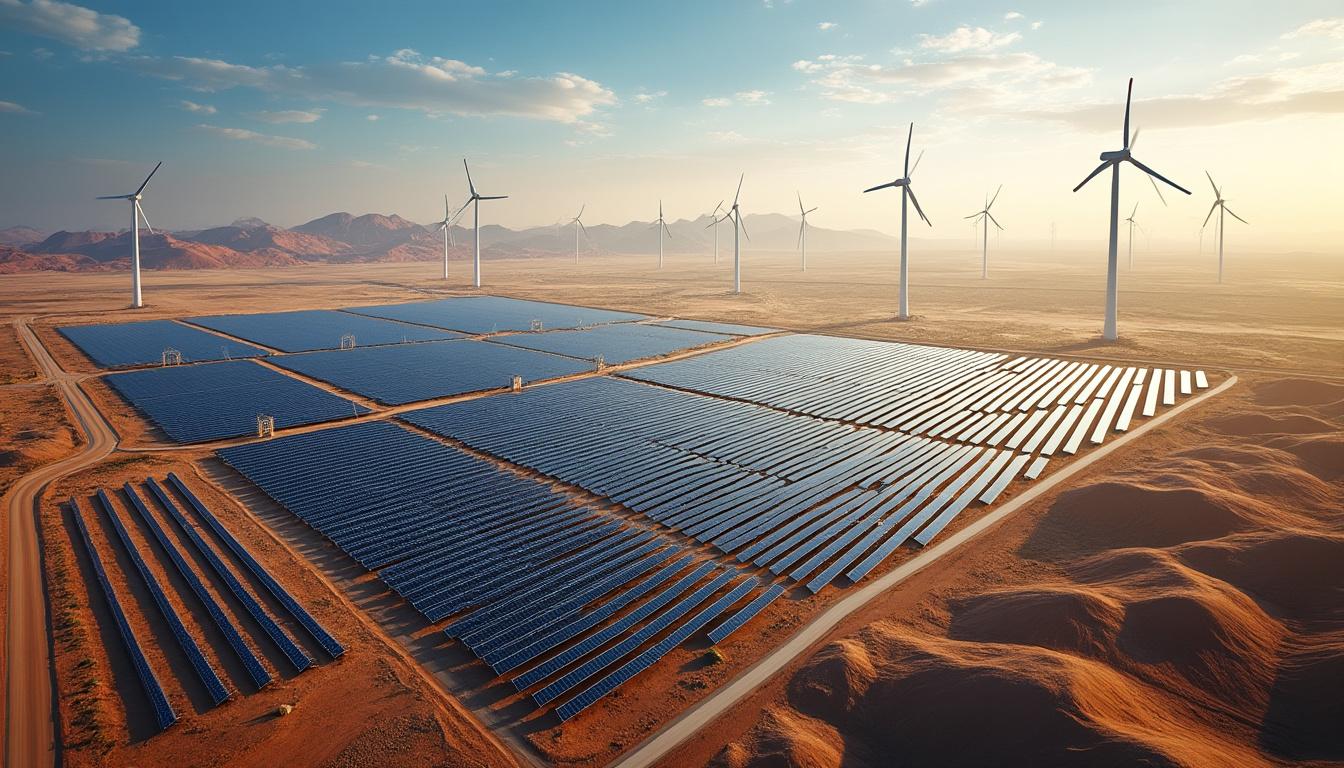
There are also symbols of ambition. The so-called “Great Solar Wall”, visible in satellite images since 2017 and expanded in 2024, reflects the accumulation of photovoltaic parks in northern China. These are landmarks that communicate to the world a simple goal: installed capacity is power.
What This Teaches Managers and Designers
Three lessons emerge. First, local industrial capacity arises when market and infrastructure appear together — do not expect eternal incentives. Second, robust projects in countries with grid constraints rely on storage from day one. Third, standardization reduces operational costs and increases reliability, something critical for hospitals and data centers.
For you, planning an efficient home, the message is direct: think of your property as a node in a network. Produce, store, manage. When the public grid fails, your home doesn’t need to fail with it.
Brazil and Latin America: Factories, Tariffs, and Opportunities for Low-Consumption Housing
Latin America has entered the map of the Green Marshall Plan. While China builds rail infrastructure and opens export routes, regional governments pursue green industrialization. Brazil has adopted a well-known tactic: it raised import tariffs on cars to attract local factories, just as China did with Western car manufacturers in the past. The result: BYD and Great Wall Motors have set up plants in the country, with supply chains that draw on battery, motor, and power electronics suppliers.
For the construction sector, this means increasing access to residential storage and charging solutions made in the region, reducing delivery times and replacement costs. With the expansion of manufacturers and distributors, certified components are likely to be closer, facilitating after-sales support and commissioning. Meanwhile, green credit lines gain traction when there is local production and predictability of parts.
In practice, those designing efficient homes can look forward to the arrival of modular batteries of 10–20 kWh with lower cost per kWh, hybrid inverters compatible with microgeneration, and bidirectional chargers for V2H. This enables simple strategies: using the electric vehicle as a buffer during peak hours, shifting water heating consumption to solar windows, and cushioning voltage spikes.
Attention to detail: even as manufacturing grows, technical specification continues to be critical. Standardize outlets and panels, size ducts for DC cables, and reserve ventilated space for batteries. In condominiums, plan for individual metering and generation sharing so that everyone can benefit. And yes, document the system from the legal project phase — approvers look favorably on developments that are already compatible with generation and efficiency.
Quick Checklist to Implement Tomorrow
If the goal is to ride the wave in your favor, focus on three steps:
- 🧭 Diagnosis: assess load by use (conditioning, AQS, lighting) and identify seasonal peaks.
- 🗺️ Energy architecture: define solar + battery as the base; evaluate heat pump and architectural shading.
- 🤝 Smart purchasing: prioritize suppliers with local support, extended warranty, and proven integration.
When industry and design communicate, the home stops being a passive consumer and becomes an energy asset.
India, COP30, and the New Energy Order: Technological Dependency or Shortcut to Decarbonization?
Relations between China and India are tense, but the pragmatic energy discussion prevails. India plans to jump from about 190 GW of installed renewables to nearly 500 GW by 2030. The catalyst is the massive purchase of Chinese technology — approximately 17% of solar cells exported by China are destined for the Indian market. The consequence is a dilemma: immediate clean energy versus the goal of developing a domestic industrial base.
This is where Chinese overproduction weighs in: low prices make local manufacturing less attractive in the short term, but accelerate adoption. The Indian response combines tariffs, incentives, and local content requirements, without giving up the expansion timeline. In parallel, China experiences its own paradox: it is expanding renewables at a record pace while maintaining coal projects to ensure base load stability. Two movements coexist — and this explains the seemingly contradictory headlines.
At COP30, held in Brazil, the global reading became clear: wealthy countries mentioned that developing ones would decarbonize quickly, but many support promises remained on paper. China filled that void with cheap technology, financing, and delivery. For those on the consumption side, what matters is viability. For those designing efficient cities and homes, what changes is the total cost of ownership: systems that were once “premium” now fit within family or municipal planning.
What to do then? Leverage the learning curve, without sacrificing quality and resilience. Treat the roof as a generator, the garage as a battery, and the envelope as the first efficiency equipment. If geopolitics push prices down, it is up to you to transform price into lasting comfort. The rule that remains is simple: start small, integrate well, grow when it makes sense — that is the phrase to remember.
Source: www.xataka.com.br