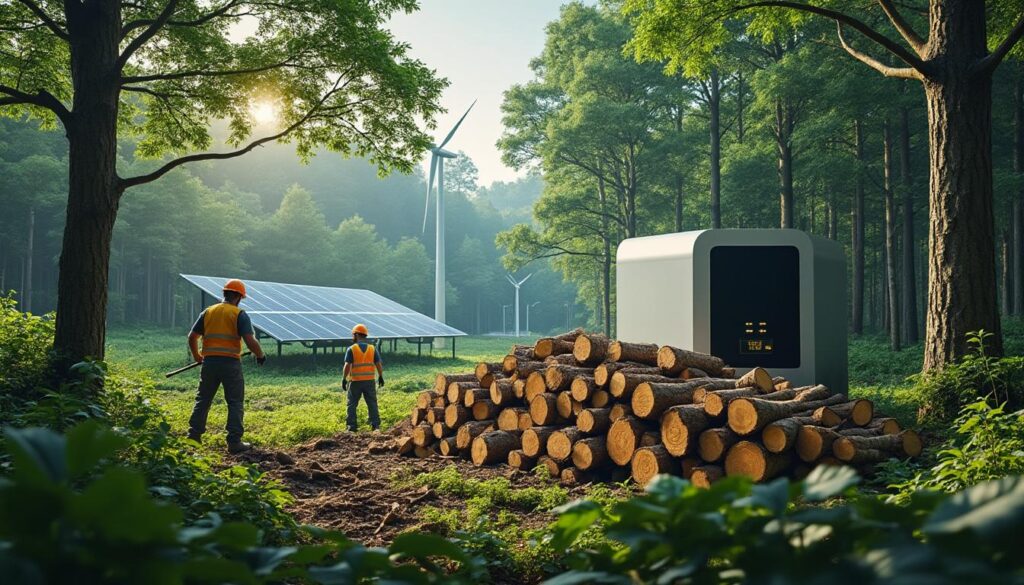
The video circulating today about France’s new energy strategy sparks a useful debate: combining nuclear with renewables to ensure clean, stable, and affordable electricity. It’s worth understanding what changes for the day-to-day lives of efficient homes and how to adapt rehabilitation or sustainable construction projects to this scenario.
| Short on time? Here’s the gist: ⚡ |
|---|
| ✅ Complementarity: nuclear provides stable baseload; solar and wind reduce costs and emissions 🌍 |
| ✅ Efficient home: insulation, heat pump, and photovoltaic self-consumption maximize savings 🏡 |
| ✅ Water management: designing retention, greywater reuse, and green roofs help in droughts and floods 💧 |
| ✅ Smart grids: dynamic tariffs + battery/V2G = gains from flexibility ⏱️🔋 |
France’s energy strategy in video: nuclear and renewables working together
The core of the French proposal rests on a clear binomial: next-generation nuclear reactors to ensure constant production and scalable renewables to reduce marginal costs and emissions. The goal is not to choose a side but to integrate technologies with different profiles to stabilize the grid and accelerate decarbonization.
The program mentioned in the video highlights the EPR2 family, advancements in safety and construction standards, and the progress of SMRs (Small Modular Reactors) like the NUWARD project. Meanwhile, offshore wind parks in the English Channel and the Atlantic, combined with solar on industrial and municipal rooftops, increase renewable capacity near consumption centers.
Why does this matter to those designing or rehabilitating a home? If the system’s foundation is more stable, dynamic tariffs and demand response programs tend to gain predictability. Practically speaking, heating water, charging an electric vehicle, or preheating a home with a heat pump during off-peak, cheaper hours becomes easier to plan. Nuclear helps to reduce price spikes on sun/windless days; renewables, on the other hand, create price “valleys” when production is abundant.
The video also emphasizes the need for smarter grids, distributed storage, and regional interconnections. This aligns with the European trend to accelerate smart meters and aggregation services. For households, it opens the door to packages where your home battery or EV with V2G provide flexibility and receive compensation.
However, there are points of concern. Reactor maintenance and licensing require rigor and time; the intermittency of wind and solar needs demand management and storage solutions. The key lies in designing a system that values each resource for what it does best: nuclear as a firm foundation; renewables as a clean, cost-effective amplifier; efficiency and flexibility as the glue that holds everything together.
At a time when Europe accelerates climate goals, the French approach is pragmatic: ensuring security of supply and reducing emissions without relying on a single heavyweight. For you, this translates to homes that communicate with the grid and leverage the best of both worlds—local production and stable baseload electricity.
Real example of consumer impact
Imagine a family in Lyon with 6 kW of solar on the roof, an 8 kW heat pump, and an electric vehicle. With the new framework, they schedule water heating between 2 a.m. and 6 a.m. (stable/cheaper window) and charge the EV at the end of the morning on windy/sunny Saturdays. Result: predictable bills and a smaller carbon footprint, without sacrificing comfort.
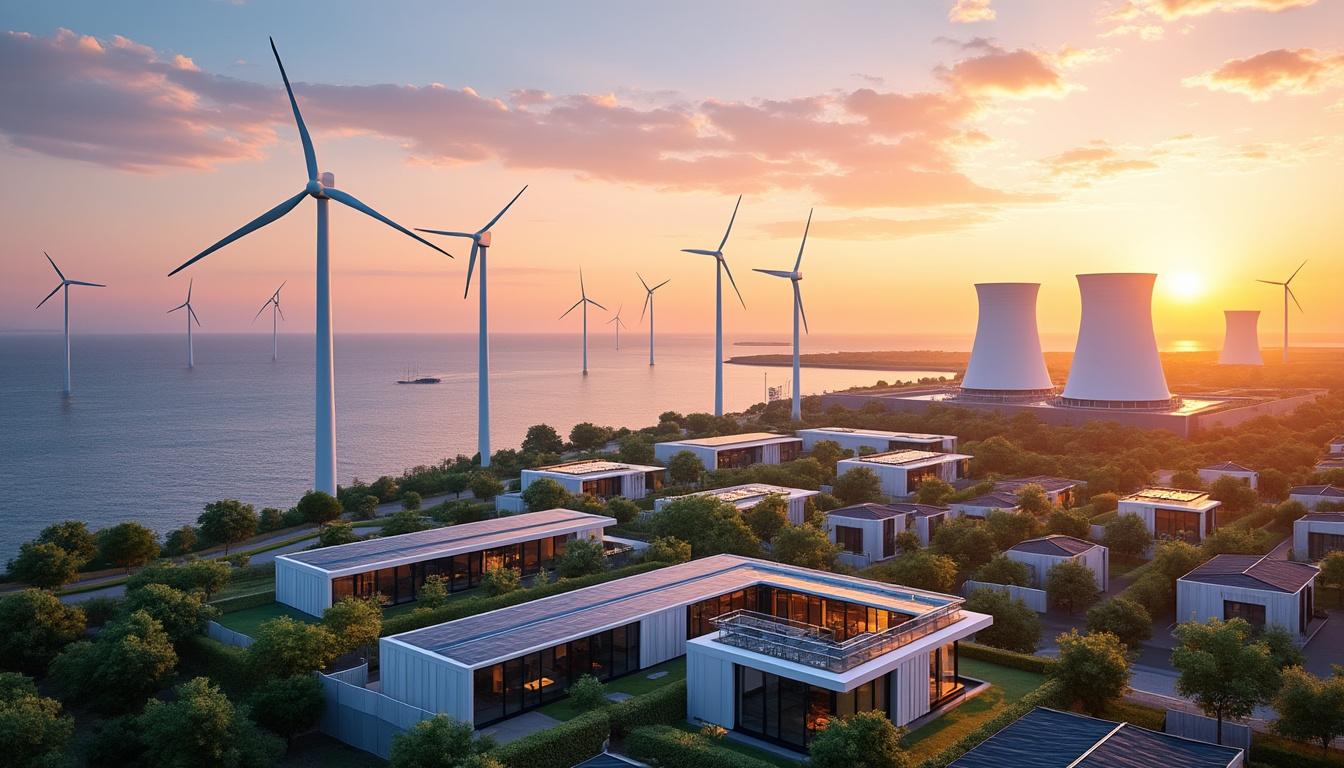
How the nuclear + renewables combination influences your efficient home
When the grid mixes stable production with renewable peaks, the ideal home becomes an organism that stores, shifts, and manages consumption intelligently. The first step, however, remains unchanged: reduce energy demand with a robust thermal envelope. In Portugal, solutions like exterior cork, rehabilitated rammed earth walls, or certified wood with a hydraulic lime finish create hygothermic comfort and inertia, reducing the workload of the heat pump.
In the second step, choose high-efficiency equipment: MVHR (mechanical ventilation with heat recovery) to maintain healthy air; top-grade appliances; LED lighting with sensors. This is where the French strategy helps indirectly: with cleaner and more predictable electricity, the return on air-water heat pumps, smart thermal storage, and induction cooktops accelerates.
Third: invest in photovoltaic self-consumption with attention to daily profiles. South/southwest-facing roofs with microinverters or optimizers help extract the maximum. Adding a small home battery (5–10 kWh) can reduce nighttime peaks and, on very sunny days, charge the EV. In Portugal, coastal profiles with breezes and humidity make it relevant to plan for adjustable shading and night-time ventilation to relieve thermal loads in summer.
Fourth: embrace time management. Dynamic tariffs—growing in popularity—allow water heating during the “valley” and postpone laundry or dishwashing to cheaper windows. The secret lies in simple automation: smart plugs, timers on the heat pump, and integrating the EV with a wallbox that reads price/production signals.
Fifth: pay attention to installation quality. There’s no magic without construction detail: controlled airtightness, thermal breaks, well-treated joints, and commissioning systems to fine-tune flows and climate curves. A passive home that communicates with the grid only fulfills its potential when the “craft” is done right.
Practical checklist for your project
- 🧱 Envelope: low U-values, absence of thermal bridges, useful shading in summer.
- 🌬️ Ventilation: MVHR with accessible filters and scheduled maintenance.
- 🌞 Solar: orientation, microinverters, monitoring of production/consumption.
- ♨️ Hot water: thermal storage with scheduling and short recirculation.
- 🔌 Flexibility: battery/EV with simple charging rules; tariff response ⏱️.
By combining these five pillars, the home is ready to take advantage of stable electricity during critical hours and renewable surpluses when the sun and wind are abundant. It’s the point where comfort, bills, and climate align.
Water management in the new mix: what the video inspires and what homes can do
What’s the link between energy and water? More than it seems. Both thermal plants (including nuclear) and solar and wind farms require WATER in different ways: industrial cooling, panel cleaning, foundations, and even construction. Europe faces droughts, floods, and pollution that pressure reserves, a theme amplified in recent reports on how to better manage our wastewater and protect ecosystems.
In a scenario where electrical infrastructures advance, residential architecture should act as a micro-retention basin. In urban plots, the combination of green roofs, permeable pavements, and cisterns for irrigation and toilets reduces runoff and cleans water via biophilia. Multi-family buildings can go further with greywater reuse—from the shower to toilets—and small macrophyte beds (wetlands) to polish effluents before infiltration.
For those integrating heat pumps, water is also a thermal resource. Recovering heat from warm wastewater (from baths, washing machines) eases the workload of the pump and lowers electrical consumption. It’s a silent synergy: saving energy while protecting water.
Field studies show that every millimeter of rainfall retained in green roofs relieves drainage networks during storm peaks. The same rooftop garden protects photovoltaic panels from overheating, gaining some efficiency points on hot days. In a dry summer, prioritizing native species with deficit irrigation maintains biodiversity with minimal water use.
Illustrative case study
In the “Monte Azul Condominium,” a hypothetical building of 20 units on the coast, an integrated strategy combined 30 kWp of PV, a common 40 kWh battery, and greywater reuse. During intense rainfall episodes, the green roof and a retention basin reduce runoff peaks. Maintenance is simple: quarterly inspections, fiber filters, and odor control. The benefit? Stabilized condo fees and resilience during drought weeks and stormy days.
When the video speaks of “better solutions for water,” the translation to the sustainable home is literal: design every surface to delay, absorb, and make useful every drop. Additionally, energy policies that value efficiency and clean production reduce the hydric pressure of the system as a whole.
By connecting energy and water in the same design, you create homes that consume less, better withstand climate extremes, and support the grid with flexibility. It’s sustainability applied, not just a slogan.
Smart grids, storage, and flexibility: why nuclear doesn’t replace rooftop solar
The central idea of the video—balancing nuclear with renewables—has a practical corollary: even with stable baseload production, rooftop solar remains essential. It cuts losses in the grid, mitigates local peaks, and provides autonomy during critical hours. What changes is how to manage this asset, now much more connected to smart grids.
Three blocks build the domestic strategy. First, electrical storage: 5–15 kWh batteries resolve late afternoon peaks and improve self-consumption. Second, thermal storage: well-insulated thermal accumulators function as “heat batteries,” charged during low-cost windows. Third, flexibility: shifting loads (appliances, EV, air conditioning) in response to price or production signals.
The V2G/V2H expands the range: an EV with 50–70 kWh is equivalent to several residential batteries. With clear rules—for example, maintaining a minimum of 40% for unexpected situations—the car becomes a “partner” to the home. In buildings, an energy-sharing system in garages creates mutual benefits, provided the condominium hires an aggregator with cybersecurity guarantees.
“tariff+automation” solutions already allow, in many cities, to turn loads on/off based on signals published by the retailer. The secret is to avoid the trap of too many gadgets: two or three well-configured contactors, a finely tuned climate control on the heat pump, and EV scheduling solve 80% of the gain.
What are the common mistakes? Undersizing insulation and oversizing the battery; ignoring shading and investing in too many panels; not considering maintenance and watching savings dwindle with dirty filters. Simple strategies beat complicated recipes.
Project tip with natural materials
A “thermal cabinet” with phase-changing materials (PCM) and cork insulation creates passive heat/cold reserves. Charged with peak sunlight or during the nighttime valley, it smooths the home’s consumption curve and increases comfort. It’s the kind of low-risk innovation that fits into a transitioning electrical mix.
In the end, even with nuclear providing stability, distributed solar and efficiency remain the first line of defense for comfort, budget, and climate. A powerful system always starts with a well-thought-out home.
12-month roadmap to apply now: from idea to home that collaborates with the grid
Transforming inspiration into building requires a clear plan. A simple 12-month calendar helps transition from “wanting” to “doing,” without haste but with direction. Below, a realistic pathway for those rehabilitating a T3 or building a compact home.
- 🗓️ Month 1: Energy audit and goals (kWh/m².year, summer/winter comfort, ventilation).
- 📐 Month 2: Envelope design with dynamic simulation; define shading and airtightness.
- 🧱 Month 3: Materials (cork, wood, lime) and construction details without thermal bridges.
- 🌬️ Month 4: MVHR specified with flow rates per room and maintenance access.
- ♨️ Month 5: Heat pump sized for actual thermal load; smart thermal storage.
- 🌞 Month 6: PV on the roof with microinverters; plan conduits for future expansion.
- 🔋 Month 7: Battery or V2G? Decide based on profile; install panel for automation.
- 🚿 Month 8: Greywater + tank; choose low-flow fixtures and efficient taps.
- 🧠 Month 9: Light automation: integrated dynamic tariffs, priority load rules.
- 🧪 Month 10: Commissioning: test MVHR, climate curves, airtightness, and flow rates.
- 📊 Month 11: Monitoring: define indicators (self-consumption, solar factor, liters/capita/day).
- 🔁 Month 12: Tuning: adjust timings, battery/EV limits, and maintenance plans.
If you live in a condominium, evaluate common solutions: shared PV, EV charging with dynamic balancing, and rainwater retention on roofs. For houses, light green roofs, deciduous shade to the west, and a small “thermal patio” with vegetation help with comfort and water.
In contracting, look for teams that document airtightness tests and conduct serious commissioning. Maintenance contracts with schedules and KPIs avoid surprises. A well-executed project is worth more than hastily installed sophisticated equipment.
Want a first step for today? Measure where you spend. A smart meter on key outlets and a week of observation reveal the energy “vampires.” Adjust the timing of hot water and washing machine to the tariff valley, and you’ll see an immediate effect—without spending on new hardware.
If you seek continuous inspiration, follow practical references and examples on platforms like Ecopassivehouses.pt. Good decisions start with good information.
Simple action to start now: activate the scheduling of your thermal storage for the tariff valley tonight and set a minimum charge limit on your EV. Tomorrow, observe in the consumption monitor the effect—small adjustments, real gains. 💡
Source: pt.euronews.com