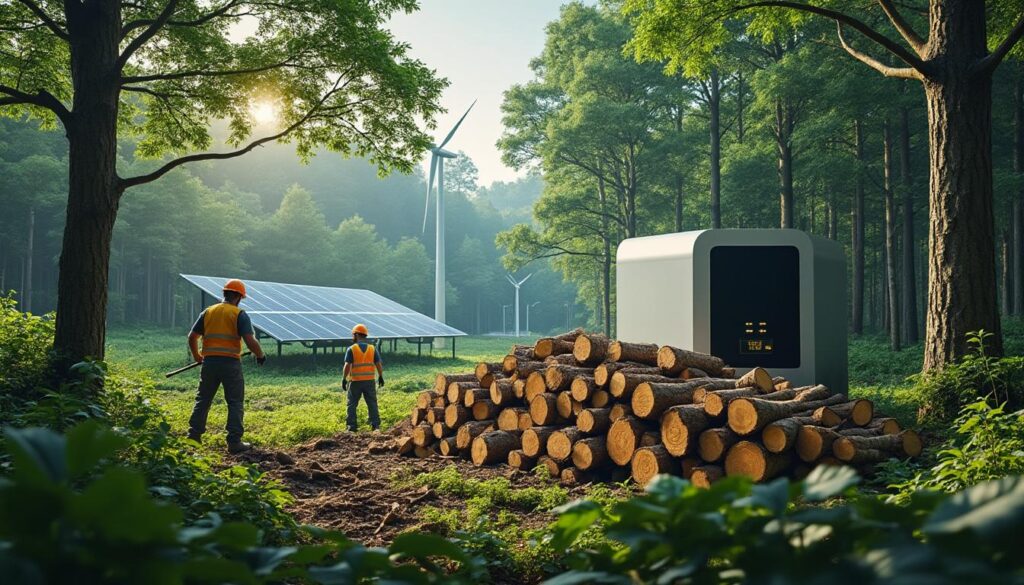
The debate on renewable targets has gained new momentum in Portugal: the proposal to transpose the RED III lowers the national target from 51% to 49% of renewables in gross final consumption by 2030, leading ZERO to criticize the loss of ambition and the lack of coherence with the PNEC 2030.
For those thinking about their home, neighborhood, or business, this discussion is not theoretical: it defines costs, support, project priorities, and the speed of the energy transition in everyday life.
Short on time? Here’s the essence:
| ✅ Key points | 🎯 Practical essence |
|---|---|
| ✅ Renewable target drops from 51% to 49% | ⚠️ Sign of lower ambition compared to the PNEC 2030, creates uncertainty for investments. |
| ✅ Undervalued energy communities | 🔌 Without clear measures, neighborhoods and condominiums lose traction and savings. |
| ✅ Transport without robust targets | ✈️ 🚢 Aviation and maritime are left out; road biofuels could increase costs. |
| ✅ Buildings with 75% renewable by 2030 | 🏠 Positive goal, but needs plans, support, and transparent measurement. |
| ✅ Priority: efficiency + electrification | 🔋 Measures at home and in the neighborhood accelerate targets and reduce bills now. |
ZERO condemns the reduction of the renewable energy target from 51% to 49% by 2030: what changes and why it matters
ZERO’s public position is clear: reducing the target from 51% to 49% by 2030 contradicts the National Energy and Climate Plan (PNEC 2030) and the principle of no climate regression. In simple terms, when science and the European context point to acceleration, a drop—even if small—sends the wrong message to investors, municipalities, and citizens planning the next decade.
It is important to recall the framework. The revised PNEC 2030 raised ambition, aligning the reduction of greenhouse gas emissions by about 55% compared to 2005 by 2030, and anticipated climate neutrality for 2045. At the same time, COP28 placed the world in front of the goal to triple global renewable capacity by 2030. By 2025, lowering national targets creates friction with these commitments and complicates coordination with European and private funds.
Principle of no climate regression and policy coherence
The principle of no regression means that climate legislation should not move backward when the urgency is to increase ambition. The transposition of the RED III should reinforce implementation and oversight mechanisms, not introduce targets below the strategic compass of the PNEC. When the regulatory framework oscillates, three undesirable effects arise: project delays, increased cost of capital, and loss of industrial capacity in the renewable value chain.
Consider the case of a fictitious cooperative, “Neighborhood Energy,” ready to install 1 MWp of shared photovoltaic power in a business park. Upon realizing that the national target is retreating, funders require more guarantees and extend timeframes. Result? Fewer green electrons on the grid in 2026 and a heavier electricity bill for all.
What is at stake in alignment with the RED III
ZERO does not contest the technical advances of the decree-law; the problem is the aggregate ambition and the monitoring of targets. There are no guardrails for energy communities and gaps in the definition of sectoral targets (specifically aviation and maritime). Without a clear compass, the scaling effect is lost, and efficiency gains are delayed.
- 🌍 European coherence: align targets with the RED III and with the trajectory of 55% reduction by 2030.
- 🏗️ Regulatory stability: clear rules to accelerate licenses and long-term PPAs.
- 👥 Civic participation: energy communities with priority access and transparent metrics.
- 📊 Quarterly monitoring: public panels with data by sector and region.
- 💶 Social justice: targeted support for low-income families to avoid inequalities.
| 🧭 Scenario | 📈 Renewable target | ⚡ Implication | 🏷️ Note |
|---|---|---|---|
| PNEC 2030 (approved) | 51% | High ambition and positive signal to the market | 👍 Consistent with 2045 neutrality |
| Transposition RED III (proposed) | 49% | Reduced ambition and risk of delays | ⚠️ Lower regulatory coherence |
| EU trajectory | High | Pressure to accelerate electrification | 🇪🇺 Integration of networks and flexibility |
| COP28 | Tripling global capacity | Scale and lower costs | 🌞 Industrial opportunity |
Key idea: consistent targets create trust, lower costs, and allow projects to produce energy sooner.
Energy communities and buildings: how the drop to 49% can hinder concrete projects
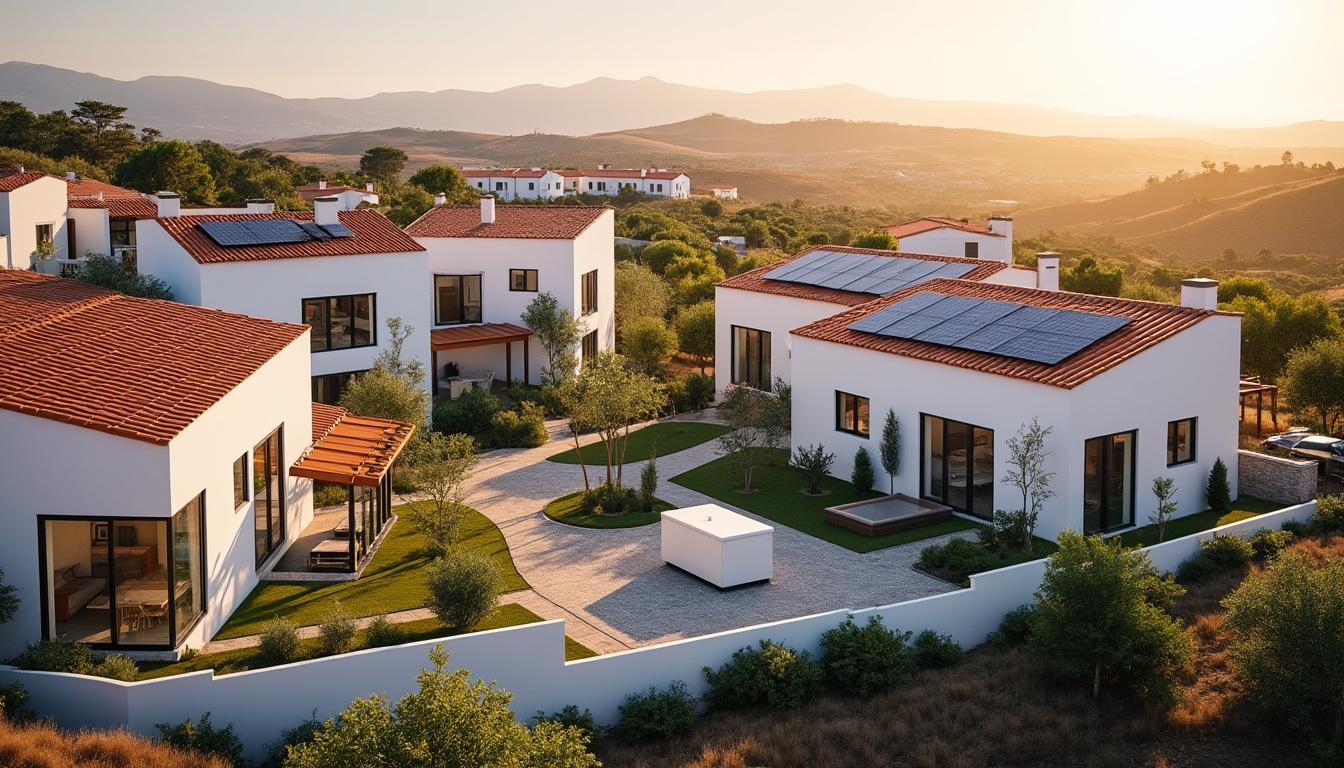
Targets are not numbers on paper; they are the basis of decision-making for those investing in solar panels, heat pumps, and thermal rehabilitation. By relegating the role of energy communities to the background, the proposal loses the engine that democratizes the transition and reduces the bill in neighborhoods where heating and cooling homes costs the most.
The target of 75% renewable energy in buildings by 2030 is a positive signal. However, without operational plans—such as co-production models in condominiums, flexibility aggregators, and dynamic tariffs—the goal does not reach the ground level of projects. In real contexts, like a typical condominium in Aveiro with 32 units, the lack of simple rules for collective self-consumption delays savings of 25-40%.
What a neighborhood needs to switch to “renewable mode”
Projects work when the steps are clear: energy assessment, phased construction, accessible financing, and measurement of results. The same applies to those living in old houses with uninsulated walls and single-pane windows. Without targeted support, low-income families are excluded, perpetuating energy poverty.
- 🏠 Thermal envelope first: insulation of roofs and facades + efficient windows.
- 🔆 Photovoltaic solar: individual/collective self-consumption with sharing by percentage or by hour.
- 🔥 Heat pumps: replace gas and inefficient biomass with COP 3-5.
- 🔋 Storage and management: batteries and EMS to align production with consumption.
- 💡 Measurement and verification: hourly data to prove savings and trigger supports.
Practical example: “Neighborhood Solar Cooperative”
Imagine a set of three buildings in Setúbal forming a cooperative. With 300 kWp on the roof and 120 kWh of shared batteries, the common bill drops by 32% annually. If the national target were clear and prioritizing communities were in the decree, the cooperative would secure more favorable supply contracts and green financing with lower interest rates.
| 🏗️ Measure | ⏱️ Typical timeframe | 💶 Estimated payback | 🌿 Key benefit |
|---|---|---|---|
| Insulation of roofs + facades | 3-6 months | 6-9 years | 🥶 Comfort and reduction of peaks |
| A+ class windows | 2-4 months | 7-10 years | 🔇 Less noise, more comfort |
| PV + collective self-consumption | 2-5 months | 4-7 years | ⚡ Lower effective tariff |
| Heat pump | 1-2 months | 5-8 years | 🔥 Clean and efficient heating |
| Intelligent management | 1 month | 2-4 years | 🧠 Daily consumption optimization |
Key idea: when the building is treated as a system, 75% renewable ceases to be a dream and becomes a calculated reality.
Transport, biofuels, and costs: why the absence of targets in aviation and maritime is a mistake
Transport is the “elephant in the room.” ZERO points out failures in the proposal: without clear targets for aviation and maritime and with excessive emphasis on biofuels and e-fuels in road transport, the risk is to increase costs without proportional efficiency gains. Direct electrification, wherever possible, is cheaper and scalable.
In terms of useful energy, an electric vehicle converts 70-85% of electricity into motion, while a vehicle using e-fuels may drop to 13-20% due to losses in synthetic production. This has direct implications for your wallet and the electrical system we need to size.
Decisions for fleets and families who don’t want to pay more
For urban fleets, buses, and last-mile logistics, the priority should be electric vehicles, night charging, and contracts with dynamic tariffs. For long distances and heavy loads, where direct electrification still faces barriers, it makes sense to bridge with sustainable biomethane and, gradually, green hydrogen in the TEN-T corridors.
- 🚗 Electrification where efficient: light, urban, and suburban vehicles.
- 🚌 Electric public transport: more comfort and less noise.
- ⛽ Judicious biofuels: avoid feedstocks with deforestation risk.
- ⚓ Maritime and ports: electrification onshore (cold ironing) and progressive targets.
- ✈️ Aviation: mandatory blend of SAF with a visible trajectory until 2030.
| 🚦 Option | 🔋 Energy efficiency | 💰 Operational cost | 🧩 Best use |
|---|---|---|---|
| EV (direct electrification) | High | Low to medium | 🌆 Light and urban fleets |
| E-fuels | Low | High | ✈️ Hard-to-electrify sectors |
| Sustainable biomethane | Medium | Medium | 🚚 Heavy and transition |
| Green hydrogen | Medium | High (decreasing) | 🏭 Industrial and logistical corridors |
For inspiration and technical context, it’s worthwhile to look for national analyses of electric mobility and renewables.
Key idea: the cheapest fuel is well-used electricity; sectoral targets prevent costly and ineffective decisions.
Sustainable biomass, air quality, and alternatives for efficient heating
ZERO warns of the risks of unsustainable biomass use and the need for strict criteria. This is especially relevant in housing, where stoves and old boilers still emit particles and increase maintenance bills. The transition must prioritize heat pumps, solar thermal, and heat networks powered by certified quality waste or industrial residual heat.
In historic neighborhoods, where rehabilitation requires care, the solution is not “one single technology,” but intelligent combinations. For example, a low-temperature air-water heat pump, properly sized radiators, and PV support reduce power peaks and ensure stable comfort. With moderate insulation and zoned control, the home improves its energy class without invasive works.
Air quality and comfort: immediate gains
Replacing local combustion with electrification reduces emissions inside and outside the home, improves sleep, and respiratory health. It adds simplicity: less ash, less maintenance, more automation. In cold regions, geothermal solutions or vertical probes provide superior efficiency and help manage networks flexibly.
- 🍃 Sustainability criteria: biomass only with certification and robust carbon balance.
- 🧪 Indoor air quality: CO₂ and PM2.5 sensors to monitor gains.
- 🌡️ Zoned control: comfort where needed, when needed.
- 🔁 Intelligent hybrids: PV + heat pump + inertia storage.
- 🏘️ Heat networks: leveraging waste heat from industry and data centers.
| 🔥 Technology | 🌿 Local emissions | ⚙️ Maintenance | 💡 Project note |
|---|---|---|---|
| Old wood stove | High | High | ⚠️ Avoid in dense areas |
| Modern pellet boiler | Medium | Medium | 📝 Only with certified biomass |
| Heat pump | Very low | Low | 🔋 Synergy with PV |
| Solar thermal | None | Low | 🌞 AQS and heating support |
To deepen technical decisions, videos on heat pumps and their integration with PV help visualize costs and benefits.
Key idea: the first clean energy is the one that is not consumed; the second is the one produced on the roof and used intelligently.
How to turn 49% on paper into 51% in practice: action roadmap for houses, neighborhoods, and municipalities
If the proposed target has fallen to 49%, the smart response is to accelerate the solutions that already work and ensure that no one is left behind. Houses and neighborhoods are the fastest front to create impact and reduce bills, while municipalities organize permits and infrastructure for larger-scale projects.
In the coming years, it is worth working with a simple roadmap: efficiency first, electrification, solar, intelligent management, and civic participation. With transparent metrics and accessible financing, neighborhoods can exceed 51% renewable energy in local consumption and inspire more ambitious policies.
Immediate steps that generate visible results
Whether you are a homeowner, condominium manager, or municipal technician, the focus is to ensure that the right energy arrives at the right time. Programs with a “single window” for permits, digital counters, and maximum deadlines speed up implementation and reduce indirect costs.
- 🧱 Efficiency: diagnosis, insulation, and windows before replacing equipment.
- 🔌 Collective self-consumption: shared rooftops and simple sharing rules.
- 📡 Flexibility: load management, dynamic tariffs, and storage.
- 🤝 Participation: informed assemblies and cooperation with the municipality.
- 🎯 Measurement: monthly indicators and publication of results in the building lobby.
Financing and social justice: no one is left behind
For low-income families, renovations should be 100% supported in basic measures (insulation and windows) and with high co-financing for equipment. “Comfort bonus” programs paid based on performance (kWh saved) ensure that the benefit is real. And for buildings with many tenants, ESCO models allow investments without initial capex.
| 🗓️ Milestone | 👤 Responsible | 🔧 Action | 📊 Indicator |
|---|---|---|---|
| 2025 | Municipality | Single energy window and digital permits | ⏱️ Average deadline < 60 days |
| 2026 | Condominiums | Plans for collective self-consumption by building | 🏢 1 plan per 50 units |
| 2027 | Urban fleets | 50% electric vehicles or zero emissions | 🚐 Targets per contract |
| 2028 | Energy Agency | “Comfort Bonus” program based on performance | 🧾 Certified kWh saved |
| 2029 | Cooperatives | Community storage and flexibility | 🔋 1 MWh per 1000 homes |
| 2030 | All | 75% renewable in buildings and >51% in the system | 📈 Annual public audit |
To deepen sustainable housing solutions and practical examples, resources like Ecopassivehouses.pt gather applicable ideas and on-the-ground experiences.
Key idea: ambitious targets only come to life with simple management, fair financing, and real participation; start today with what you control in your building and your neighborhood.
Source: www.ambienteonline.pt