Achieving 100% electricity supported by renewable energy is no longer a slogan: it is a concrete milestone announced by Microsoft and a clear signal of where the electrical system is headed. This shift directly concerns those who value efficient homes, resilient communities, and more predictable energy bills.
| Short on time? Here’s the gist: |
|---|
| ✅ 100% of Microsoft’s annual electricity consumption is supported by renewable energy ⚡🌱 |
| ✅ Portfolio of 40 GW contracted in 26 countries, with 19 GW already operational 🌍🔌 |
| ✅ Over 95 partners and 400 contracts enabled, accelerating projects and networks ♻️🤝 |
| ✅ Reduction of ~25 million tCO₂ in scope 2 emissions since 2020 🧮🌿 |
| ✅ Goal maintained: to be carbon negative by 2030 — and AI demanding new solutions ⚙️🔋 |
Microsoft reaches 100% renewable electricity: what it means for cities, businesses, and efficient homes
Confirmed in 2026, the announcement that Microsoft has ensured 100% of its annual electricity consumption from renewable sources marks a turning point for the energy transition. More than just a number, it is a contractual and operational commitment that puts pressure on entire value chains — from production to distribution — to accelerate. For those living in or designing efficient buildings, the signal is clear: green electricity is likely to become the new standard.
What does “100% supported by renewables” mean in everyday life? It means that throughout the year, the company contracts and injects equivalent amounts of electricity from wind, solar, and other clean sources into the grid, offsetting its overall consumption. Practically speaking, operations are covered by power purchase agreements (PPAs) and robust certificates that ensure additionality — that is, they help enable new capacity for clean generation. In complex electrical grids, not every kWh consumed in real-time is physically green, but the annual balance and direction of investment create real impact where it matters: on the ground, with new plants and grid reinforcements.
For cities and regions, the implication is direct. Large, stable consumers of electricity help grid operators plan, reduce volatility, and integrate renewables with greater confidence. For families and condominiums, this dynamic tends to translate, in the medium term, into more green tariff offerings, incentives for self-consumption, and solutions for distributed storage. When the big players pull, the entire ecosystem moves forward: from solar installers to heat pump manufacturers and low-carbon building materials.
There is also an educational and cultural effect. The announcement aligns with the goals of carbon negativity by 2030 set in 2020. By demonstrating that it is possible to scale contracts, logistics, and technology to manage colossal volumes of clean energy, a practical manual is created that schools, municipalities, and local businesses can replicate on a smaller scale. The message is pragmatic: start with contracts, reliable measurements, and clear annual targets; then evolve to hourly matching and storage — the famous pathway to 24/7 green supply.
Consider the example inspired by the “Solar Community of Ribeirinha,” a fictional grouping of 60 homes in a coastal municipality. By following similar principles — collective contract with a local producer, shared storage, and load management for heat pumps — it managed to cut 62% of the average cost during peak hours and stabilize the bill. This kind of trust only arises when the market, driven by large-scale actors, offers mature products and services.
Finally, it is worth noting: goals of this magnitude only work with rigorous measurement. Emission reports (including scope 2) and energy audits are now routine tools. For the reader, the parallel is direct: a clear dashboard of their consumption, combined with simple quarterly targets, leads to better and faster decisions. And consistent decisions build more comfortable homes and more resilient neighborhoods.
How Microsoft contracted 40 GW in 26 countries: PPAs that strengthen electrical networks and create trust
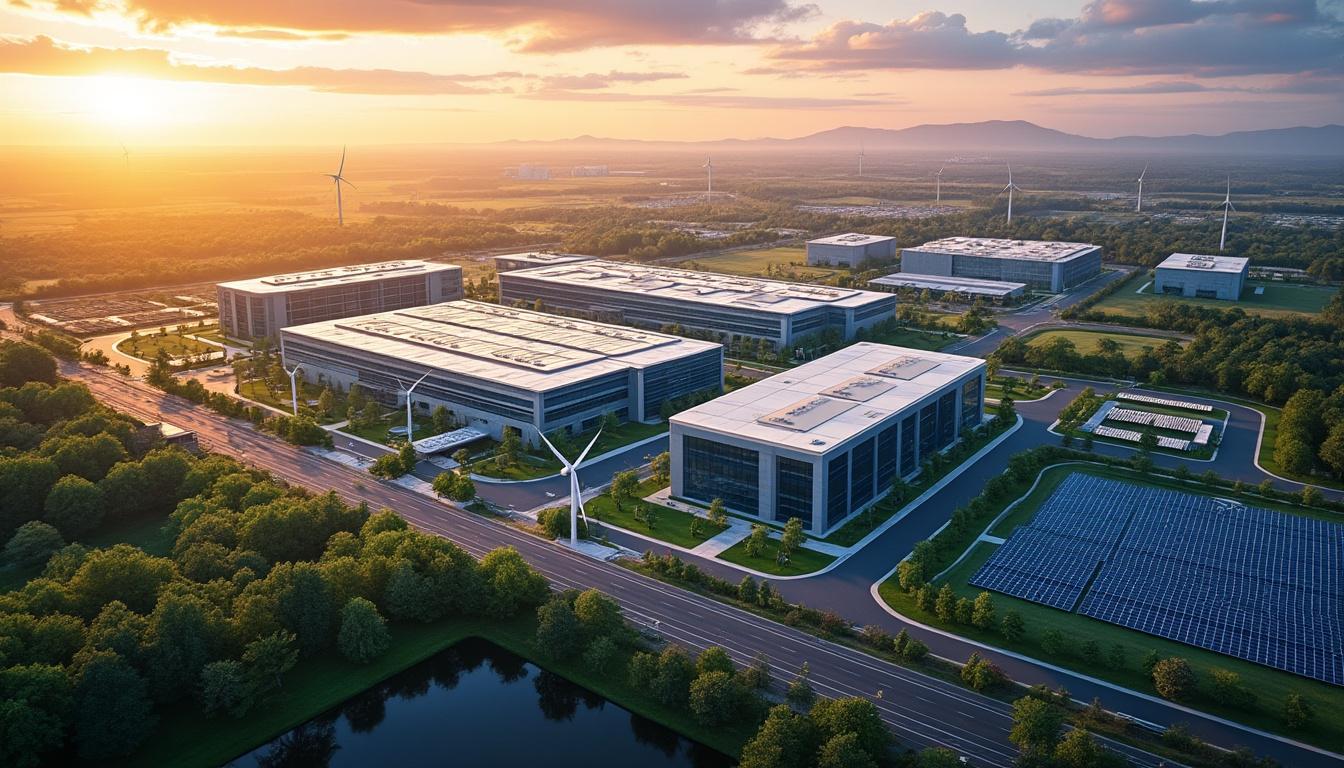
The number is impressive: a portfolio of over 40 GW of contracted renewable energy in 26 countries, with 19 GW already operational and the remainder coming online in the coming years. This scale does not appear from nowhere. The journey began in 2013 with a first PPA of 110 MW in Texas, which supported the early days of cloud services and paved the way for replicable technical and commercial models. Over time, more than 95 energy partners and over 400 contracts have been aligned, reducing barriers, enabling financing, and professionalizing an entire ecosystem.
The central mechanism here is the PPA, a long-term contract that provides predictability for the producer and stability for the buyer. With corporate PPAs, solar and wind farms can finance themselves faster and at lower costs, resulting in additional capacity installed, not just a transfer of existing energy. For the electrical system, this predictability is gold: it allows for planning reinforcements to the grid, calibrating storage, and negotiating flexibility services with clarity of horizons.
Another component is geographical and technological diversification. By distributing contracts across regions with different wind and solar profiles, the correlation of risk is reduced, and the consistency of supply is increased. Add to this battery storage and complementary contracts for hourly periods — and you have the embryo of 24/7 green supply, linking consumption to generation in concrete time windows.
Practical steps to replicate in condominiums and small businesses
Scale and context are different, but the method is transferable. Condominiums, SMEs, and cooperatives can follow the same logic: clear contracts, reliable measurement, and investment in local capacity whenever possible. A simple roadmap helps to start and avoids common mistakes.
- 🔎 Diagnose consumption: measure peaks, seasonality, and critical loads (heat pumps, HVAC, chargers)
- 🤝 Organize demand: gather neighbors/stores to increase negotiating power with producers
- 📄 Choose a PPA/green supplier: prioritize additionality, deadlines, and well-defined penalties
- 🔋 Add storage: shared batteries to cushion peaks and take advantage of low prices
- 🕒 Manage schedules: shift non-critical consumptions to windows with cleaner and cheaper energy
- 📈 Review quarterly: adjust targets and expand when savings are proven
When this cycle runs, it creates a virtuous circle: smarter consumption attracts better offers, which in turn enable more local projects. The result is more robust networks and a more predictable energy daily life, something that any condominium appreciates.
Cities that embrace this model quickly gain critical mass of knowledge. Universities train technicians, banks structure green financing, and the local maintenance industry thrives. It is a systemic transformation: well-designed contracts become invisible infrastructures that support the clean electricity powering data centers, factories, and your homes.
Measurable decarbonization: 25 million tCO₂ avoided since 2020 and what it teaches for buildings
Since 2020, Microsoft has reduced approximately 25 million tons of CO₂ in scope 2 emissions thanks to the reduced exclusive dependence on grid electricity and the expansion of renewable contracts. Scope 2 covers emissions associated with purchased electricity. By replacing it with additional green supply, emissions are cut at the source and the reform of local electrical matrices is accelerated.
The parallel with buildings is direct. When a condominium replaces gas boilers with high-performance heat pumps and contracts renewable electricity, it simultaneously reduces final consumption and indirect emissions. If the building already has thoughtful thermal insulation — adequate insulation, efficient windows, air tightness, and heat recovery ventilation — the groundwork is laid for comfortable decarbonization. The sum is powerful: less waste + clean energy = lower emissions and stable bills.
The “Ana and Miguel’s House,” an illustrative example, underwent three staged measures. First, the roof was rehabilitated with bio-based materials, and air infiltration was reduced; then, a heat pump with modular control was installed; finally, a green tariff with monthly matching was adopted, and a small 7 kWh battery was integrated. The combined effect was a 58% reduction in consumption during peak hours and a drop of over 70% in the home’s indirect emissions, thanks to the green contract aligned with hours of greater regional wind production.
Additionality is a decisive concept here. More than merely “buying certificates,” it is essential to ensure that your contract enables new renewable generation — parks that would not be built without firm demand. This is what changes the accounts of the planet and the neighborhood. When a local producer seals a stable agreement, they can employ teams, qualify technicians, and deliver energy at predictable prices for 10 to 15 years, which also protects the consumer from extreme market spikes.
In buildings designed as passive houses, the opportunity is even greater. The thermal load is so low that almost all electrical consumption shifts to smart uses (efficient HVAC, AQS with heat pump, class A appliances, vehicle charging). In this configuration, the marriage to clean energy tariffs and the use of simple automation — for example, scheduling AQS production for hours with abundant wind — generates daily and tangible benefits.
In the end, the lesson is practical: measure, reduce, and replace. Measure to know where to attack, reduce inefficiencies that do not bring comfort, and replace gray electricity with contracts that pull the grid towards green. With this, buildings become part of the solution, rather than just passive consumer units.
Six projects and partnerships that propelled the 100% renewable milestone
Ambitious goals gain substance in concrete projects. Among public initiatives and market learnings, six fronts stand out in the trajectory that led to an annual supply fully supported by renewables.
1) Anchor PPAs that unlock financing
Since the inaugural PPA of 110 MW in Texas (2013), long-term contracts have functioned as anchors for solar and wind farms in multiple regions. With predictability, projects get off the ground, and banks lower risks. Result: more plants, more local jobs, and more competitive tariffs.
2) Diversified portfolio: 40 GW in 26 countries
Spreading 40 GW across 26 countries creates redundancy and consistency. When wind is lacking on one coast, sun is abundant on another. By adding 19 GW already operational and a robust pipeline, delivery of energy is ensured even in adverse weather events, reinforcing the resilience of the grids.
3) Tactical increments for AI: +389 MW solar
With the AI boom, electricity demand grew rapidly. To keep up, 389 MW solar were added in new projects, adjusting production curves to match the consumption profiles of data centers. The goal is clear: strengthen clean capacity where and when it is most needed.
4) Storage and flexibility as the “glue” of the system
Short and medium-duration batteries enable energy shifting between hours, increase photovoltaic penetration, and smooth ramps at the end of the afternoon. Demand response services and hourly contracts complement engineering, bringing the vision of a 24/7 green supply closer.
5) Ecosystem of 95+ partners and 400+ contracts
Over 95 energy partners, with 400+ contracts, show that the challenge is as much about engineering as it is about coordination. Developers, utilities, engineers, and financiers work in cadence, normalizing templates, sharing data, and shortening licensing timelines.
6) Projects that strengthen local communities
Contracts that include territorial compensations — technical training, grid reinforcement, investments in biodiversity, and local economy — generate social acceptance and multiplier impact. The more a plant gives back to the community, the faster its execution and the greater its lifespan in harmony with the territory.
These six pillars translate into useful lessons for municipalities and cooperatives: a solid project combines good contracts, appropriate technology, and clear local benefits. When these ingredients align, achieving 100% renewable energy ceases to be an ambition and becomes operational routine.
For those designing or rehabilitating buildings, there is an evident bridge: well-structured collective contracts, sized storage, and flexible loads (such as AQS and vehicle charging) replicate, on a small scale, the same logic that makes data centers operate with reliable clean energy.
AI, supply security, and the path to carbon negativity by 2030: what readers can do now
Operating complex digital infrastructures with clean electricity is not trivial, especially with the rise of AI. The answer combines more renewable capacity, storage, and smart demand management. In parallel, goals such as being carbon negative by 2030 keep the compass pointed towards carbon removal and the total decarbonization of the value chain.
For electrical networks, the keyword is stability. Projects that deliver firm energy — with complementary wind and solar and strategically positioned batteries — decrease the need for peak fossil capacity. And when consumers organize their uses (for example, shifting AQS and nighttime vehicle charging to hours of greater wind), the grid breathes easier and the bill benefits.
In an efficient building, the golden rule is flexible load + green contract. Intelligent heat pumps, simple automation for appliances, and small residential batteries produce a “buffering” effect. With this, every clean kWh is better utilized, and the actual carbon footprint decreases verifiably. This is exactly the type of shared and explained solution, with examples and practical guides, that you will find at Ecopassivehouses.pt — a space to turn energy ambition into applicable decisions at home and in your neighborhood.
Want to take a step today? Request a proposal from your energy supplier with verified additionality energy and combine it with a plan to shift non-critical consumptions to windows of greater renewable production. Small repeated decisions build significant results — for you, for your community, and for the grid that connects us all. 🌿⚡
Source: jornaleconomico.sapo.pt