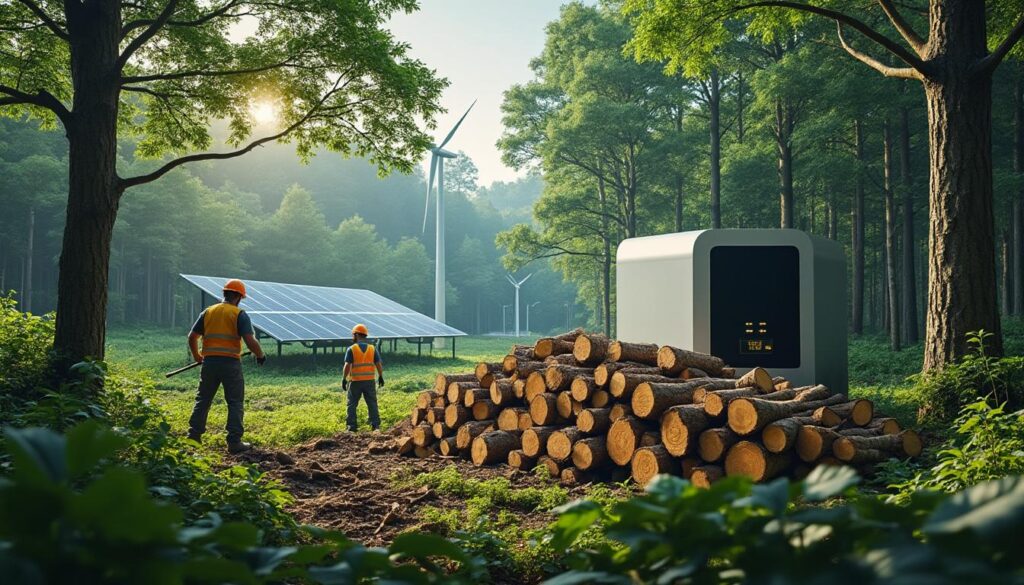
Portugal takes another decisive step in the energy transition. The new funding of €210 million from Hyperion Renewables promises to accelerate hybrid projects featuring solar, wind, and batteries, strengthening supply security and opening real opportunities for families and municipalities.
Short on time? Here’s the essential:
| ✅ Key Points | 💡 What it means for you |
|---|---|
| Funding of €210M for the Theia Project ⚡ | Nearly 300 MW of renewables entering the grid, with batteries for stability 📈 |
| Two hybrid projects (solar + wind + storage) 🌞🌬️🔋 | Less curtailment, cheaper energy at the right times, new “green” offers 🏷️ |
| Transition to IPP since 2023 🧭 | Greater ability to sell energy directly to consumers and businesses 🏠🏭 |
| Small production units distributed 🧩 | Ideal combination with collective self-consumption and energy communities 🏘️ |
Hyperion secures €210 million: what changes now for renewable energy in Portugal
The announcement of €210 million to build, operate, and refinance a portfolio of green projects in the national territory marks an operational turning point. Under the designation Theia Project, the portfolio adds up to nearly 300 MW and integrates two hybrid projects that combine photovoltaic, wind, and large-scale batteries, as well as several small production units. This counts for more than it seems: hybridization allows the use of the same connection point to the grid for two complementary sources and, with storage, smooths out peaks and valleys of generation.
Since 2023, the company has accelerated its journey to being an independent power producer (IPP), reinforcing its capacity to sell electricity directly and to structure stable long-term contracts. The industrial background provides grounding: founded in 2006 and with hundreds of megawatts developed in the Iberian Peninsula, Hyperion enters 2026 with financial and technical engineering capable of tackling an increasingly complex electrical system. There is a systemic effect here: more firm renewables mean less exposure to volatility, especially on sunny and windy days.
Another essential point is grid management. By integrating storage, Theia addresses one of the operator’s challenges: intermittency. On days with excessive production, part of the energy is stored and released in the late afternoon or at night, when demand rises. This “shape-shifting” reduces waste and supports frequency stability, a critical aspect with high renewable penetration. The operation opens doors to more corporate PPAs, dynamic rate offers, and strengthening of local energy communities.
Theia Project: hybrid portfolio linking production and flexibility
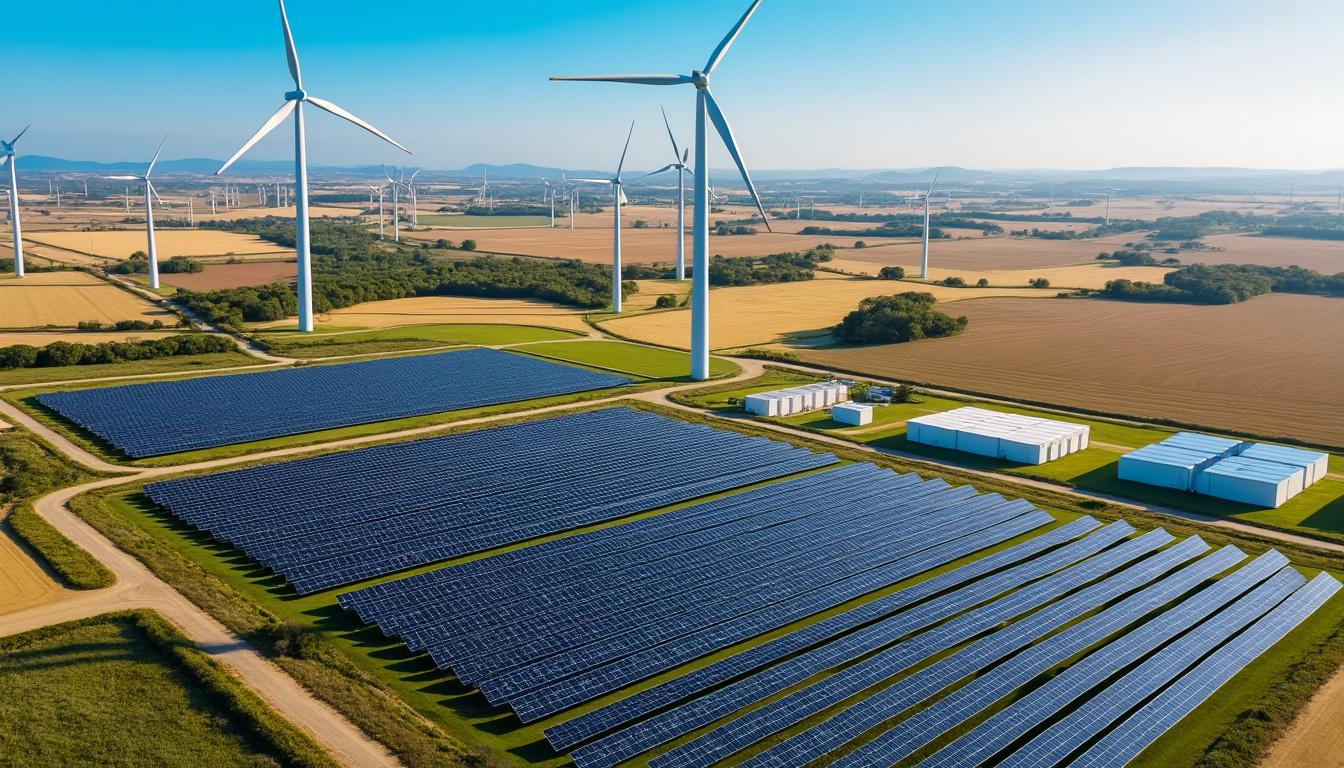
The hybrid design combines solar parks with wind farms that share infrastructure and, when coupled with BESS (Battery Energy Storage Systems), deliver more predictable power. The goal is clear: reduce curtailment and maximize the utilization of the connection point. European examples show gains of up to double digits in utilization rates and better revenue profiles. In Portugal, with frequent nighttime winds and intense daytime sun, the technical marriage makes even more sense.
There is also a local impact: modernized substations, optimized internal lines, and smart transformation posts represent investment in national engineering. Suppliers such as EPC integrators and battery manufacturers play key roles, from electrical design to commissioning. Complementarily, a mosaic of small distributed units brings production closer to consumption, useful for enabling collective self-consumption in towns and business parks.
Practical outcome? Theia tends to deliver more decarbonized energy during peak demand periods, reducing imports and contributing to climate targets. And it prepares the ground for solutions readers can already use: contracts with renewable origin, participation in communities, and, in the medium term, adherence to dynamic rates that reward consumption at the right times.
Direct benefits for homes and neighborhoods: rates, collective self-consumption, and stability with batteries
When projects of solar + wind + batteries enter the electrical grid, consumers feel the effect on their bills and service quality. The batteries from Theia reduce price peaks in the late afternoon, when domestic consumption rises and the sun disappears. With more flexibility in the system, retailers can structure rates with promotional hours based on renewable abundance, benefiting families with programmable appliances and electric vehicle (EV) charging.
There is also room for green PPAs with condominiums, cooperatives, and SMEs. By fixing part of the price for 10 to 15 years, local communities protect themselves from volatility and finance renewable expansion. Energy communities — now with a more mature regulatory framework — allow production sharing among neighbors within a radius defined by the grid operator, with hourly accounting and transparent compensation. Theia, by providing stable energy supported by storage, strengthens these models.
How to take advantage of green PPAs and dynamic offers
In practical terms, it’s worth observing three steps. First, consumption profile: understand when your home consumes more energy (morning, late afternoon, night). Second, manageable equipment: thermosiphons, heat pumps, EV chargers, and washing machines that can operate during time windows with cheaper electricity. Third, adequate contract: study proposals with renewable origin and prices tied to abundance windows. With Theia supporting greater predictability, there tends to be more choice and real discounts in the “green hours.”
In multifamily buildings, the equation improves with collective self-consumption (CSC). Installing photovoltaics on the roof and managing a “mix” with grid electricity at non-solar times can reduce contracted peaks and emissions. When the local grid is powered by hybrid projects with BESS, the tariff during critical hours can drop, reinforcing annual savings. Municipalities can enhance this in social neighborhoods and schools, anchoring supply contracts with projects like Theia.
Another benefit is resilience. Large-scale batteries help stabilize voltage and frequency, which translates into fewer microcuts, especially in areas with high residential photovoltaic penetration. For those working from home, this means fewer interruptions and greater longevity for sensitive electronics. For the grid, fewer operational and maintenance costs. And for the country, a firm step towards energy independence.
In summary: the key lies in aligning consumption habits with the new reality of intermittent abundance. Those who shift flexible loads to windows with cheap and clean energy multiply economic and environmental gains. This is where the financing now announced begins to touch everyday life.
Technologies of Theia Project: solar, wind, and batteries that communicate with each other
Theia combines three components that, well-orchestrated, change the rules of the game. Photovoltaic solar provides cheap energy during the central hours of the day; wind covers many early mornings and winters; and battery storage transfers electricity from abundant hours to periods of higher value. In technical terms, the battery can be AC-coupled (connected to the grid) or DC-coupled (in the solar direct current bus), each with advantages in losses, control, and capex.
In the recent Portuguese context, storage projects of 2–4 hours of duration have been preferred, balancing cost and utility of the “peak shaving” service and frequency support. Integrators such as Omexom Portugal have taken on electrical and civil engineering and construction, while suppliers like Saft deliver robust battery technology to operate multiple daily cycles. In terms of impact, it has already been demonstrated that enough energy can be supplied for more than 5,000 families per day from well-sized storage units.
Storage: the missing piece in energy architecture
Without batteries, the grid faces a paradox: cheap energy when there’s excess, but scarcity when it’s needed. With BESS, a “temporal elevator” is created that resolves part of the problem. Batteries also enable ancillary services — frequency regulation, reserve, and synthetic inertia — vital in a system with fewer thermal plants. When coupled with solar and wind at the same connection point, they help meet the operator’s limits and reduce local congestion.
From the building’s perspective, the story gains texture. Efficient houses — with decent thermal insulation, well-sealed window frames, and heat pumps — take advantage of rates with low price windows to pre-heat or pre-cool spaces. Grid storage stabilizes those periods and, consequently, the comfort of the home. For condominiums, micro-BESS for common use can manage elevators, lighting, and shared charging, reducing contracted power and the bill.
Integration with efficient housing: from material to kWh
Investment in renewables only fulfills its full potential when it meets prepared homes. Materials such as structural wood, natural fibers, and breathable coatings reduce thermal loads. Add glass with proper solar factor, updated shading, and controlled ventilation: the necessary energy decreases. Combine this with Theia providing stable and low carbon intensity electricity at the right times, and a virtuous cycle of savings and comfort is achieved.
In summary: generation technology and storage is only fully effective when it interacts with efficient buildings and informed consumers. This coordination is the shortest path to reduced emissions and lighter bills.
Energy independence and decarbonization: how Theia accelerates national goals
The reinforcement of nearly 300 MW hybrids with batteries fits into national and European carbon neutrality routes. By 2026, the priority is clear: decrease emissions from the electricity sector, reduce imports, and consolidate the green industry. Projects like Theia replace thermal peaks with storage, lowering the carbon intensity of electricity delivered during critical hours. And they lay the groundwork for electrifying heating, mobility, and light industrial processes.
There are also gains in land use and infrastructure. Hybrid solutions share cables, substations, and land, cutting licensing timelines and CAPEX per useful megawatt. In system terms, curtailment is reduced and dispatch is optimized. Municipalities benefit from tax revenue, skilled jobs, and efficiency programs linked to stable energy contracts — a triple local dividend. By increasing predictability, more PPAs arise with schools, hospitals, and public services.
Impact on the grid: from operator to end user
For the operator, more flexibility means less need for expensive contingency services. For retailers, a larger base of clean energy during the “afternoon peak” enables discounts oriented by time windows. For the user, this translates into a clearer array of offers: rates that reward efficient behavior, nighttime EV charging plans, and contracts with proven renewable origin. Theia functions as a silent stabilizer that everyone feels but few see.
The local economy also benefits. National supply chains — from civil works to cabling and automation — consolidate competencies. Municipal programs can link the arrival of hybrid projects to energy rehabilitation in schools and social housing, financing heat pumps, LED lighting, and smart monitoring. The result is a pull effect: clean energy drives efficiency and vice versa.
Finally, system confidence improves with renewable redundancy. When the wind fails, the sun helps; when the sun drops, the battery takes over; when both are abundant, it charges for the peak. This “electric choreography” brings Portugal closer to a resilient grid, prepared for extreme events and the growing demand for electric mobility. It is at this intersection that Theia contributes the most: less carbon, more security, and better marginal prices.
What you can do now: practical steps to take advantage of the new renewable wave
With more clean and stable energy in the grid, there are simple decisions that can generate savings and comfort. The starting point is to know your own home and consumption pattern. Here are high-impact steps that align habits with the new “green” offer.
Action checklist for the next 30 days
- 🔎 Request from the retailer the hourly consumption history and identify peaks (morning/afternoon/night).
- 🕒 Schedule washing machines and water heaters for lower tariff windows.
- 🔌 If you have an EV, set up night charging with a power limit and fixed schedule.
- 🌞 Evaluate photovoltaics on the roof; in a condominium, mention the option of collective self-consumption.
- 📄 Request proposals with dynamic rate or clear renewable origin (retail PPAs).
- 📶 Install monitoring (smart meter/smart plugs) to measure real gains.
- 🏗️ Plan improvements in insulation and shading to reduce thermal load.
- 🏘️ Check opportunities for energy communities in your municipality or create a local group.
- 🌐 Save useful resources like Ecopassivehouses.pt for guides and practical ideas.
Common mistakes to avoid and best practices
There are frequent pitfalls that undermine results. The first mistake is signing up for a “green” rate without hourly signaling: without a price guiding consumption, part of the savings is lost. Another misstep is investing in panels without reviewing insulation and shading; in poorly efficient homes, the solar gain is lost in thermal escape. It is also advisable to avoid hasty residential batteries when the local grid is already gaining flexibility from projects like Theia; in many cases, the best “battery” is to adjust schedules and improve the building’s envelope.
As best practices, prioritize solutions with quick ROI: tariff windows, monitoring, seals in window frames, and high-efficiency LED lighting. Confirm warranties and technical sheets, especially for equipment with power electronics. And document changes: with before/after data, it’s easier to negotiate with retailers and justify investments in the condominium. The goal is simple: each euro invested should reduce the kWh consumed or increase the kWh utilized during the right hours.
To close, a reminder that stands on its own: alignment between habits, building, and grid is where the magic happens — without miraculous promises, just good engineering and informed decisions. Starting today, choose one concrete action from the list above and put it into practice. The system is changing; it’s essential for the home to change with it.
Source: expresso.pt