The announcement of €15.5 billion for renewable energy in Africa is more than just a number: it is a real lever to electrify homes, modernize cities, and accelerate the energy transition on the continent.
See how this funding translates into concrete projects, jobs, and solutions that can inspire smart decisions in your own home and community.
| Short on time? Here’s the gist: |
|---|
| ✅ Direct impact: €15.5 billion to accelerate solar, wind, and smart grids in Africa ⚡ |
| ✅ How to use: prioritize solar mini-grids, storage 🔋, and water digitalization 💧 with smart metering |
| ✅ Avoid the mistake: underestimating capital costs and failing to foresee guarantees and clear contracts 📄 |
| ✅ Bonus: focus on local employment and technical training 🛠️ for lasting benefits |
EU allocates €15.5 billion: why this boost could change the renewable energy game in Africa
The package announced on the sidelines of the G20 consolidates the action of the Team Europe to mobilize investment in clean energy where the potential is immense and financing is still scarce. Since 2024, the campaign “Scaling Up Renewable Energy in Africa” has been structuring projects with a focus on measurable impact.
Three data points clarify the urgency: around 600 million people on the continent still live without electricity, Africa holds 60% of the best solar resources on the planet, and captures only 2% of global investment in energy. The gap is wide, but political and financial alignment has never been clearer.
Who finances and how the funding is distributed
The initiative combines funds from member states, European development banks, and new projects from the Global Portal. This architecture allows blending concessional capital with private investment, reducing risks and accelerating execution timelines.
The European Investment Bank and the European Bank for Reconstruction and Development provide financing and guarantees, while countries like Italy and Germany enhance bilateral contributions to accelerate on-the-ground works.
| Source 💶 | Contribution | Focus 🌱 |
|---|---|---|
| Team Europe 🤝 | +€10 billion (promise) | Structuring package of renewables and grids ⚡ |
| EIB (European Investment Bank) 🏦 | €2.1 billion | Infrastructure, guarantees, storage 🔋 |
| EBRD 🏛️ | €740 million + €600 million separately | Renewable projects and direct investment 🌬️ |
| Italy 🇮🇹 | €2.4 billion | Bilateral partnerships and mini-grids ☀️ |
| Germany 🇩🇪 | +€2 billion | Efficiency, grids, and technical training 🛠️ |
| The Netherlands 🇳🇱 | €250 million | Water and energy solutions 💧 |
| Portugal 🇵🇹 | €113 million | Pilot projects and Lusophone cooperation 🗺️ |
| Denmark 🇩🇰 | €81 million | Wind and offshore 🌊 |
| Sweden 🇸🇪 | €44 million | Digitalization and smart metering 📡 |
| Austria 🇦🇹 | €5 million | Training and R&D 🎓 |
| Ireland 🇮🇪 | €5 million | Community projects 🧩 |
Expected impacts and examples on the ground
The new 13 projects include the Nexus Energy-Water (Newza) 2.0 in Zambia, modernizing water systems with solar energy, sensors, and digital management along the Lobito Corridor. In rural areas, solar mini-grids with batteries are expected to reach remote communities, connecting schools and health posts.
In medium-sized cities, low-voltage networks reinforced with storage reduce blackouts and technical losses. The combined effect is access, quality, and predictability — three pillars for expanding businesses and public services.
- ☀️ More access: homes connected to mini-grids with predictable costs
- 🔋 Reliability: batteries reduce interruptions and damage to equipment
- 💧 Safe water: efficient pumping and reduced losses in pipelines
- 🛠️ Local employment: assembly, operation, and maintenance in the local area
- 📡 Digital: smart metering and mobile billing for transparency
The key point here is simple: where investment arrives with the right design, the cost of energy falls and resilience rises.
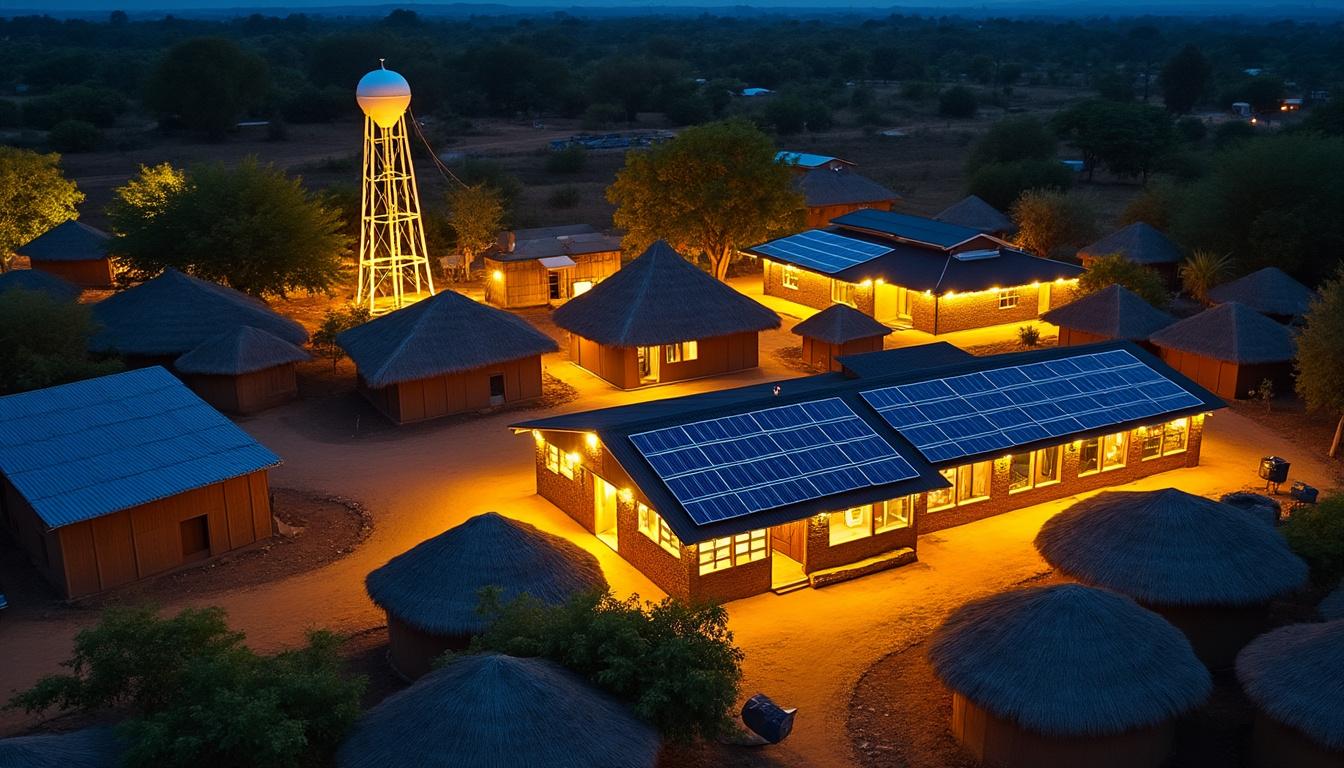
From announcement to impact: how to turn €15.5 billion into clean electricity for homes and cities
Converting funding into useful kilowatts requires prioritization. Projects that combine distributed generation, storage, and digital management scale quickly and reduce losses.
In practice, solar mini-grids and photovoltaic rooftops on public buildings are the fastest catalysts to reach the end consumer with quality and fair pricing.
Models that work on the ground
Community mini-grids with 200–800 kW and lithium batteries cover lighting, cooling, and micro-industry. Rooftops in schools and hospitals relieve the grid and ensure critical service during peaks.
In areas with stable winds, medium-sized turbines complement solar production at night. The result is a flatter and more predictable generation curve.
| Technology ⚙️ | Priority use 🧭 | Typical deployment time ⏱️ | Key advantage ⭐ |
|---|---|---|---|
| Solar mini-grid + batteries ☀️🔋 | Rural communities, load islands | 6–12 months | Fast, modular, declining cost |
| Rooftop PV on public buildings 🏥🏫 | Hospitals, schools, markets | 3–9 months | Reduces bills and frees up the grid for others |
| Onshore Wind 🌬️ | Medium cities and industrial parks | 12–24 months | Complements solar during the nighttime |
| Hybrid solar-wind ♻️ | Municipal grids and logistics hubs | 9–18 months | Stable generation profile |
| Water-energy Nexus 💧⚡ | Water treatment plants and urban pumping | 6–12 months | Safe water with clean energy |
From project to work: clear steps
A lean roadmap prevents delays. First, map essential loads (water, health, education), then confirm solar/wind availability and define minimum storage for 4–6 critical hours.
Finally, structure local operation with preventive maintenance and remote metering for auditing and planning.
- 🧭 1) Diagnosis: inventory of loads and losses by sector
- 🗺️ 2) Resource: solar/wind atlas and actual shadings
- 🔗 3) Grid: connection points, inverters, and protections
- 📊 4) Model: fair tariff, cross-subsidy, and social portfolio
- 🛡️ 5) Risk: insurances, guarantees, and spare parts
- 👥 6) Management: trained local operator and monthly KPI
The Newza 2.0 program in Zambia illustrates the systemic gain: solar panels at pumping stations and digital technologies to detect leaks reduce both water and energy losses at once.
To delve into self-consumption and efficiency solutions in buildings, it is worthwhile to follow technical content from specialized platforms like Ecopassivehouses.pt, which systematize best practices in sustainable construction.
Smart financing: reducing capital costs and protecting projects with guarantees
In many African countries, the cost of capital can be double that of mature economies. Without mitigation mechanisms, green projects become too expensive at the end for families and businesses.
The good news: the right financial design unlocks investments and keeps tariffs stable, even amid currency volatility and execution risks.
Tools that make projects bankable
Instruments like blended finance, payment guarantees, and power purchase agreements (PPAs) ensure predictability for investors and local governments. Well-designed auctions reveal the real costs and encourage efficiency.
The role of the EIB and the EBRD is to reduce credit risks and enable longer amortization periods — which ultimately converts into lower tariffs for the consumer.
| Instrument 💼 | What for 🎯 | Covered risk 🛡️ | Practical tip 💡 |
|---|---|---|---|
| Blended finance 🤝 | Lower average capital cost | High rates and volatility | Combine concessional + private for viable ROI |
| Payment guarantees 📄 | Ensure revenues from the PPA | Default by the off-taker | Link to performance (kWh delivered) |
| Currency hedging 💱 | Protect tariffs in local currency | Sudden depreciation | Cap with a trigger for tariff review |
| Auctions ⚖️ | Discover price and prioritize quality | Information asymmetry | Criteria: price, firm energy, and O&M |
| O&M funds 🧰 | Avoid failures due to maintenance | Prolonged downtimes | Minimum reserve of 6 months of O&M |
Common mistakes and how to avoid them
Often, projects ignore O&M costs and create “white elephants” that stop after two years. Another common pitfall is failing to secure contracts with performance clauses and clear arbitration.
Aligning construction schedules with disbursements and licenses reduces delays and penalties. Plan for battery replacements and critical parts from the start.
- ❌ Do not underestimate O&M: without a plan, the tariff will explode
- ❌ Avoid vague PPAs: set availability targets
- ✅ Conduct stress tests: currency and load scenarios
- ✅ Create governance: local committees and audits
- ✅ Prioritize modularity: growing in phases reduces risk
When financing respects local realities and protects operations, energy becomes cheaper and more reliable for everyone.
Employment, training, and local chains: lasting benefits beyond megawatts
Clean energy projects are valuable for the energy and the jobs and skills they leave behind. From solar installers to O&M technicians and SCADA programmers, a new economy is emerging.
Cooperation among training centers, municipalities, and cooperatives accelerates qualification and creates career paths that retain talent in the region.
Train to operate and maintain, not just to install
The learning curve improves when training includes failure simulations, safety protocols, and inspection routines. Short courses with practical certification deliver swift results.
Manufacturers can support with teaching kits and catalogs of critical parts. The goal is simple: local autonomy to keep production running.
| Role 👷 | Key skills 🧠 | Training load 🎓 | Practical output 🧪 |
|---|---|---|---|
| PV Installer ☀️ | DC/AC, safety, rooftops | 120–160 h | Installation of 5–20 kW |
| O&M Technician 🔧 | Diagnosis, SCADA, cleaning | 160–200 h | Monthly O&M plan |
| Mini-grid Operator 🖥️ | Tariffs, billing, KPIs | 100–140 h | Performance report |
| Grid Electrician ⚡ | Protections, grounding | 120–180 h | Safety checklist |
How to activate local chains and increase local content
Local content targets make sense when combined with quality and logistics. Start with metal structures, wirings, and panels — items with lower technical barriers and a high impact on cost.
Cooperatives can manage regional warehouses for parts and promote joint purchases. This reduces lead times and prevents downtimes due to lack of components.
- 🛒 Shared purchases: scale reduces price
- 🏭 Local parts: structures, cables, supports
- 🔁 Reuse: logistics to recycle modules and batteries
- 🤝 Partnerships with schools: internships and laboratories
- 📈 Employment KPI: targets per installed MW
By focusing on employment and maintenance, clean energy becomes a platform for local prosperity, not just a set of panels on the horizon.
Connecting energy, water, and agriculture: the value of the Nexus for cities and communities
Africa faces cycles of drought and flooding that pressure water and food. Using renewable energy for pumping, desalination, irrigation, and agricultural cooling creates resilient chains from field to table.
Projects of the Nexus type make each euro count twice: reliable energy and more secure food or water services.
Applications with quick returns
Solar pumping in wells reduces costs and allows social tariffs for vulnerable families. Community cold storage prevents post-harvest losses and improves agricultural income.
Studies show that each kilowatt used in cooling can save kilograms of food that would otherwise go to waste. It’s energy that translates into food and health.
| Application 🌐 | Direct benefit ✅ | Impact metric 📊 | Project tip 🧭 |
|---|---|---|---|
| Solar pumping 💧 | Continuous and affordable water | -40–60% in water costs | Size for 4–6 hours at peak |
| Agricultural cooling 🧊 | Less post-harvest losses | -20–30% in waste | Pre-cool during solar hours |
| Desalination 🌊 | Drinking water in coastal areas | +10–30 m³/day per unit | Integrate PV + batteries + VFD |
| Solar wastewater treatment 🏙️ | Less losses and failures | -15–25% energy per m³ | SCADA with leak alarms |
Real cases and steps to replicate
The Newza 2.0 in Zambia uses solar panels and digital technologies to modernize water systems in cities and communities along the Lobito Corridor. The integration of pressure sensors with data analysis allowed prioritizing repairs where the loss was greatest.
In agricultural cooperatives, hybrid mini-grids power pumps and refrigerators, ensuring product quality and stable income for small producers.
- 🧩 Map the pain: intermittent water? losses in cooling?
- ⚙️ Choose the right kit: PV, batteries, and VFD
- 📡 Digitize: sensors, telemetry, and alerts
- 📍 Pilot: start in a neighborhood or village
- 🔁 Scale: adjust, standardize, and replicate
When water, energy, and food walk together, the community gains resilience and independence in chains.
How this boost can inspire your home and community: efficiency, self-consumption, and neighborhood networks
Although the focus is on Africa, the solutions resonate anywhere: efficiency first, local generation later. Start with what is at your fingertips and has a short payback.
In neighborhoods and villages, energy cooperatives and surplus sharing create a network of trust around kilowatts.
High-impact gestures that fit the budget
Public buildings with free rooftops are an excellent showcase for solar self-consumption. Smart metering and time-based pricing encourage using energy during peak sun hours.
In homes, thermal comfort with simple insulation and cross-ventilation reduces the need for air conditioning — saved energy is generated energy.
| Action 🛠️ | Expected result 📈 | Priority 🎯 | Field note 💡 |
|---|---|---|---|
| Energy audit 🔎 | Map of losses and opportunities | High | Basis for decisions without waste |
| Rooftop PV + microinverters ☀️ | Bill cut and basic backup | Medium–High | Scalable by modules |
| Storage 🔋 | Autonomy during peaks and failures | Medium | Limit discharges to 80% for lifespan |
| Efficiency 🧱 | Reduction of base load | High | LED lighting and air sealing |
| Monitoring 📊 | Consumption under control | Medium | Alerts for peaks and monthly targets |
Neighborhood networks and inspiring examples
Residents’ consortia can install internal mini-grids for common areas, with individual metering and transparent tariffs. Municipal markets with solar coverage and community cold storage reduce costs for vendors and food losses.
A fictional cooperative, “Solar Maji,” in a coastal city, installed 400 kW on rooftops of schools and markets, set up 600 kWh of batteries, and used mobile billing. In 12 months, it reduced energy expenses by 28% and stabilized the neighborhood’s water supply.
- 🤝 Get organized: associate neighboring buildings
- 📄 Formalize: bylaws and sharing rules
- 🧮 Simulate: load and growth scenarios
- 🧯 Safety: electrical protection and fire brigades
- 📚 Always learn: workshops and technical content
Take with you a simple idea: start small, measure everything, and repeat what works. The transition is a marathon of short and well-thought-out steps.
Source: sapo.pt