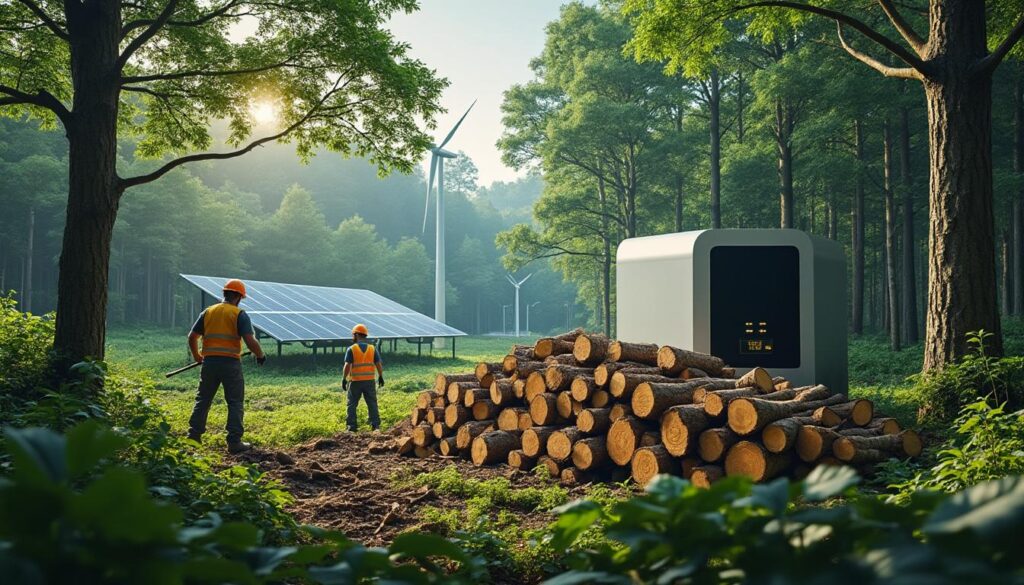
Argentina crosses a decisive milestone: 40% of national electricity consumption already comes from renewable sources, driving a new logic for industry, cities, and housing. In parallel, the country invests in sustainable solar parks that reduce costs, emissions, and operational risks.
| Short on time? Here’s the gist: | ✨ Details |
|---|---|
| ✅ Key Point #1 ⚡ | 40% of electricity consumption in Argentina is already renewable (hydropower, wind, solar, and bioenergy) — relief in costs and fewer emissions. |
| ✅ Key Point #2 🛠️ | Sustainable solar parks integrated with industrial plants increase resilience and reduce dependence on the grid. |
| ✅ Key Point #3 ❌ | Avoid undersizing infrastructure: transmission, storage, and long-term contracts need to go hand in hand. |
| ✅ Bonus 🌱 | Typical ROI in 4–6 years for well-designed photovoltaic projects; gains in reputation and green certifications. |
Argentina reaches 40% of its electricity matrix with renewable energies: what does this change in practice
When 40% of electricity consumption comes from hydropower, wind, solar, and bioenergy, the rules of the energy game change. The country reduces exposure to fossil fuels, smooths price volatility, and brings predictability to families and businesses. By 2025, renewable participation reached this level, and throughout 2026, the system consolidates operational and contractual integrations.
Numbers capture the picture objectively. The total installed capacity hovers around 43,930 MW, of which 17,076 MW are renewable. In the composition, approximately 22% hydropower, 10% wind, 5% solar, and 1% biomass/biogas stand out. Clean generation grows on average 5.5% annually, with notable jumps in solar (+24.1%) and biomass (+78.1%) — a sign of diversification and engineering that combines resources according to seasonality and demand.
The macroeconomic effect is direct. More renewables mean less import of energy liquids, improving the trade balance and freeing up foreign exchange for higher value-added investments. Furthermore, sectoral energy emissions tend to stabilize or decrease when expensive thermal generation is replaced by wind and solar assets with nearly zero marginal operation in carbon.
Composition and stability: the role of each source
Hydropower is still the pillar of the system, with the capacity to regulate power and dampen daily variations. Wind provides robust generation in regions like Patagonia, aligning with world-class winds. Photovoltaic solar is growing in high irradiation areas in the Northwest and Cuyo, with distributed production and centralized plants. Bioenergy, although smaller, fills gaps with dispatchability and intelligent use of waste.
This arrangement provides resilience. Peak evening hours can be met by hydropower, while the solar midday reduces thermal demand. During strong wind periods, wind energy alleviates reservoirs. It’s an energy chess game where each piece increases stability when well connected to the grid.
Impacts on your daily life and urban planning
For you, the consumer, this translates into more options: tariffs with hourly signals, self-production contracts, microgeneration with credit on the bill, and the possibility of participating in demand response programs. Cities can plan solar corridors in schools and markets, reducing peaks and freeing public budget.
Consider a realistic thread: Lucía, energy manager of a food industry in Córdoba, renegotiates her mix with a PPA from a wind source for nighttime and complements it with photovoltaic roofing on the warehouse. The factory reduces peaks, adjusts cooling with automation, and cuts 12% off the annual bill, with payback of less than five years. The secret is not magic: it’s about combining the right source, the right contract, and load control.
The insight that remains is simple: 40% renewable is not a finishing line but a platform for smarter decisions in industry and housing.
Sustainable solar parks: replicable solutions for industries and large consumers
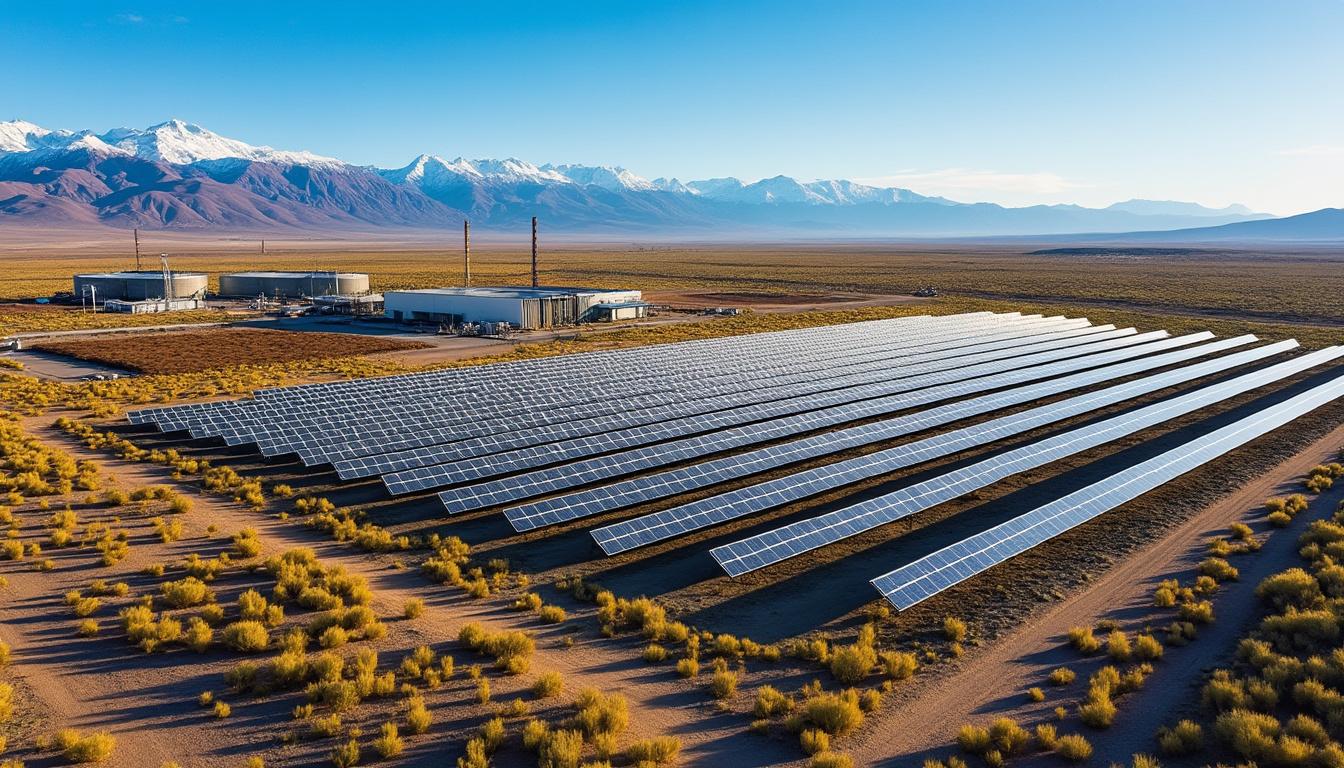
The sustainable solar park is more than rows of panels. It’s an energy ecosystem that integrates technology, landscape, and industrial operation. In Argentina, solar expansion accompanies a design that respects the land, optimizes light capture, and reduces operational costs, creating a replicable model for companies seeking carbon neutrality and financial predictability.
Smart design that respects the place
It starts with the layout: single-axis trackers increase production in fringe hours, and maintenance corridors are calculated to reduce shading and soil compaction. Native vegetation between rows diminishes dust (improving yield) and supports pollinators, earning points in environmental certifications. Cleaning with minimal water use and stormwater management prevents erosion and flooding.
Inverters feature chain topology with distributed MPPTs to improve tolerance to mismatches. SCADA with data on irradiance, module temperature, and soiling allows for predictive maintenance and daily operational decisions. In regions with snow, angles and heights are adjusted for runoff and safety; in the NOA, the design is indexed to the local albedo and wind loads.
Industrial integration and concrete benefits
Companies that integrate the park into their industrial plant reap operational benefits: reducing contracted demand during solar hours, stabilizing thermal processes with heat pumps, and directing excess production to flexible loads (compressed air, programmable cooling). The practical result is predictable cost patterns and less dependence on conventional supply during peaks.
- 🔌 Strategic self-production: combine roof + ground to match load curve with the solar curve.
- 🌿 Ecological site management: native vegetation and biodiversity corridors improve performance and image.
- 📊 Real-time measurement: monitor losses due to soiling and adjust cleaning on demand.
- 🧠 Automation: switch off non-critical loads during cloud minutes and recover afterwards.
- 🪫 Pre-batteries: start small (modular bESS) to cut peaks and test dispatch models.
This approach reduces the perceived LCOE over the lifecycle and creates an asset that enhances industrial real estate value. By replicating practices and metrics, solar parks become a standard infrastructure as essential as an internal substation.
If your organization seeks short payback, focus on solar loads by nature (cooling, pumping, compressed air) and physical or virtual PPAs that tie pricing and ensure additionality. The ideal sequence? Energy audit, load curve modeling, park engineering, and long-term contracting.
Case Study Miron: 297 modules, 172.26 kWp, and a self-sustaining factory
Among the emblematic cases, Miron — a Buenos Aires transformer manufacturer — installed a solar park at its plant and became the first self-sustaining factory in the country in its segment. The system includes 297 modules of 580 W, totaling 172.26 kWp. The design, arranged in the shape of the logo, combines brand communication with energy performance.
The numbers speak for themselves: an estimated annual reduction of 67.89 tCO₂ and return on investment in about 4 years. In parallel, Miron disseminated know-how to other industrial clients — Danone, Maxiconsumo, and AOTA — and institutional projects, proving that the solution is scalable when there is good engineering and the right contract.
How it was achieved: technical and financial roadmap
The initial diagnosis mapped peak consumption times and inflexible loads. Engineering prioritized inverters with thermal reserves, optimized cabling, and surge protection. In operation, a SCADA tracks generation, temperature, and alarms, allowing for daily decisions on cleaning and dispatch. Financially, it dilutes CAPEX with local suppliers and maintenance contracts that fix operational costs.
The park interacts with the plant: in the middle of the day, the solar curve serves presses and ovens with fine adjustments to temperature; at night, hydropower and the grid supply the remainder. Resilience and reduction of peak are gained, two critical factors to the final cost per unit produced.
What you can replicate tomorrow
- 🧭 Energy audit to know your real load curve, hour by hour.
- 🤝 Clear contractual model: self-production, on-site or off-site PPA, and availability clauses.
- 🧰 O&M focused engineering: access, cleaning, spare parts, and telemetry from day one.
- 📈 Performance metrics: PR, losses due to soiling, critical alarms, and costs per avoided MWh.
The message is direct: with data, well-structured project, and contract, industrial self-sustainability stops being a slogan and becomes a competitive advantage.
Challenges of 2026: transmission, financing, and storage to sustain 40% and go beyond
Advances are real, but the next leap depends on unlocking three fronts. First, transmission: wind and solar parks in remote areas require high-voltage lines and reinforcements at 132/220/500 kV. Second, stable financing: predictable milestones, long-term auctions, and incentives that reduce risk. Third, storage and firm energy: batteries (BESS), pumped hydropower, and capacity contracts to ensure security.
Sector entities have been reinforcing the agenda: strengthening the grid, coordinating the nation, provinces, and private sector, and resuming mechanisms similar to RenovAr with an updated design. Adopting international initiatives and attracting foreign capital—including through cooperation with Asian players—can accelerate transmission lines and local component factories, reducing costs.
| 📌 Indicator | 🔎 Situation | 🚀 Opportunity |
|---|---|---|
| 17,076 MW renewable | Installed base is growing | Prioritize 500 kV lines and regional reinforcements |
| +24.1% solar | Accelerated gain in high irradiation areas | Expand corporate PPAs and industrial rooftops |
| +78.1% biomass | Dispatchable and close to the load | Value waste and capacity contracts |
| Transmission | Saturated sections limit new projects | Public-private partnerships and green bonds |
| Storage | Penetration still modest | Modular BESS and pumped hydropower |
For municipal managers and companies, the action list is straightforward: map local bottlenecks, enable areas for substations, prepare efficient environmental licenses, and structure project calls with additionality requirements and biodiversity indicators. Thus, growth stops being episodic and becomes continuous public policy.
From the consumer’s point of view, it is worth seeking contracts that reward flexibility: those who shift consumption to solar hours pay less and help the grid operate safely. Storage on an industrial campus scale is the bridge between abundant midday energy and evening needs.
From the national matrix to your home: how to transform 40% renewable into comfort, savings, and autonomy
There is a direct link between a cleaner electricity matrix and more efficient homes. When the grid becomes more renewable at noon, heat pumps for heating and AQS, associated with photovoltaic roofs, reduce expenses and emissions. In cold climates, passive architecture — continuous insulation, airtightness, and recovery ventilation — lowers thermal load and allows for heating with less.
In neighborhoods with available infrastructure, energy cooperatives can install micro-parks and share generation among neighbors. Schools and municipal markets, with large roofs, become urban power plants that relieve the system at the right times. Electric vehicle chargers programmed for peak solar function as a pressure valve for surpluses, and future V2G solutions could provide support in the evening.
Simple steps to start now
- 🧪 Energy diagnosis of your home or company: know loads, peaks, and habits.
- 🌞 Custom photovoltaic: size for daytime consumption and consider future expansion.
- 🔥 Heat pump for heating and AQS, prioritizing operation during sunny hours.
- 🪟 Passive measures: shading, insulation, and sealing reduce energy needs.
- 📱 Simple automation: schedule hot water, laundry, and charging during solar hours.
In Latin America, the hydraulic tradition and constant winds already provide structural advantages. By connecting this potential to architectural solutions and smart contracts, each building becomes an active component of the electric system, combining comfort, savings, and low carbon. If there was one action to take today: schedule an energy assessment and identify three loads you can shift to solar hours — it’s a simple first step that yields visible results.
Source: noticiasambientales.com