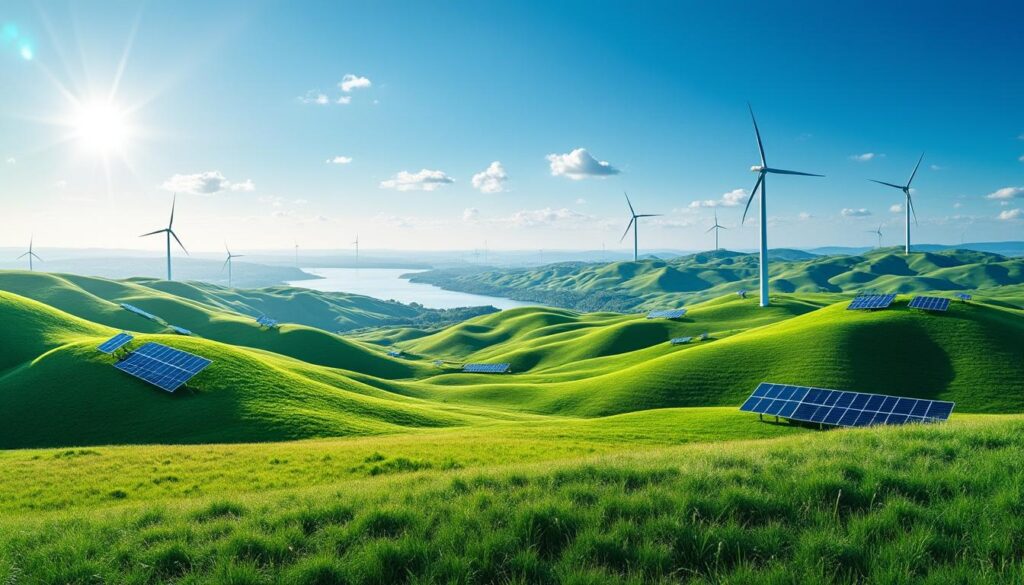
Portugal witnesses the operation of a new large-scale solar plant, capable of boosting the energy transition and reducing dependence on fossil fuels. The inauguration signals efficiency, scale, and direct impact on costs, supply security, and thermal comfort in housing.
| Short on time? Here’s the essential: ⚡ | |
|---|---|
| ✅ Key Point #1 | New solar plant of about 202 MW in Azambuja and Alenquer, with over 310,000 panels, potential to power 100,000 homes 🏠 |
| ✅ Key Point #2 | Integration with the grid helps reduce price spikes and emissions, aligned with the goal of 85% renewable electricity by 2030 🎯 |
| ✅ Key Point #3 | Best practice: combine solar + efficiency (insulation, shading, load management) for comfort and lower bills 🛠️ |
| ✅ Bonus | EDP Renewables with 540 MW already installed and a plan for more 1 GW by the end of 2026 boosts local opportunities 💼 |
Renewable energy giant inaugurates large solar plant with potential to power 100 thousand homes: what it means for you
The new solar park of about 202 MW, distributed between Azambuja and Alenquer, represents a leap in scale for clean energy in the country. With more than 310,000 photovoltaic modules, the project has the potential to cover the annual needs of 100,000 households, a number that helps visualize the real impact on daily life. Upon entering regular operation, the plant is expected to produce more electricity during peak sunlight hours, pushing down price spikes in the wholesale market and bringing predictability for consumers and small businesses.
The company behind the project, the renewable division of Energias de Portugal, highlights that this is its largest solar park in Europe. In parallel, it already has 540 MW of installed renewable capacity in Portugal and aims to add more 1 GW by the end of 2026. This planning reveals a portfolio strategy that does not rely on a single asset, but rather on a mosaic of plants that complement each other and provide resilience to the grid.
The practical effect on the electrical system involves reducing the need for gas plants during sunny hours, alleviating emissions and exposure to the volatility of imported fossil fuels. For the consumer, this can translate into more stable bills and the possibility of scheduling smart consumption: heating water, charging electric vehicles, or operating household appliances during hours of peak solar production. If you live in a condominium with common areas, thinking about shared self-consumption can be the natural extension of this scenario.
Integration quality: more than installed capacity
Size is important, but the quality of integration with the grid determines the real benefit. Monitoring systems, flexible injection contracts, and voltage management ensure that the plant is not only powerful but also predictable and stable. When combined with wind farms and small hydropower plants, production remains smoother throughout the day and year. This balance reduces the perceived “intermittency” and favors long-term contracts for industries and municipalities.
A possible scenario helps clarify: imagine the Cooperative of Várzea, in Alenquer, which operates a cold storage chamber for stone fruits. By negotiating a tariff with a differentiated price and installing a small supporting photovoltaic system, the cooperative shifts part of the consumption to the period of highest irradiation, reducing the annual bill and improving margins for local farmers. The large solar park, by providing abundant energy during those hours, acts as an anchor for this type of optimization.
Immediate results: increased supply security, avoided emissions, and new openings for energy community projects. For those looking to orient their home to the future, the message is clear: energy planning and housing comfort go hand in hand.

Portugal accelerates towards 85% renewable electricity by 2030: how the solar plant reinforces the goal
In 2023, renewables supplied about 61% of electricity in Portugal, according to operator REN. The target set for the decade points to 85% by 2030, and the inauguration of a photovoltaic plant of this scale serves as a key piece in that journey. While wind was the largest share of recent renewable production, solar is growing rapidly and fills sunny hours with low marginal cost energy, easing budget pressures for families and businesses.
The climatic context reinforces the urgency: the prolonged heat waves in 2022, temperatures above 45 °C recorded in various places in 2023, and the extreme drought in Algarve in early 2024 have left marks on the agricultural sector, the comfort of homes, and the price of basic products. The surge in olive oil, with increases around 50% in the EU and about 69% in Portugal in January 2024 compared to the previous year, illustrates how climate variability translates into daily costs. Reducing emissions is not just an environmental goal; it is also an economic strategy to reduce risks.
Solar at noon, comfort in the afternoon: matching supply with demand
Solar electricity peaks around noon and early afternoon. Scheduling consumption during this “golden window” is a simple way to leverage the new capacity. In residential buildings, pre-heating sanitary water, renewing air with low-consumption MVHR, and operating heat pumps in optimized mode can reduce night time load. In service buildings, preventive cooling and the use of thermal storage (for example, thermal mass in floors) help to flatten peaks. The now inaugurated plant increases the “pool” of available green kWh for this type of strategy.
Another essential vector is the complementarity between solar and wind. When the wind slows down on hot and stable days, photovoltaic production tends to rise. Conversely, Atlantic fronts and winter days can favor wind power. By combining different technologies, a more regular profile is achieved, a condition necessary for competitive supply contracts and reliably electrifying residential heating.
The strengthening of the network of energy communities emerges as a natural consequence. Neighborhoods that share locally produced energy achieve collective gains: less losses in the grid, more autonomy, and a culture of consumption management that involves condominiums, commerce, and public facilities. The new plant, by expanding the availability of clean energy, creates an ideal backdrop for these initiatives to flourish and interconnect.
To visualize real applications and see technology in the field, it is worth looking at examples of large plants in operation and digital integration in the Portuguese grid.
The combination of robust infrastructure and new domestic routines is the short path between goals and results. The benefit only materializes when it combines renewable production with consumption efficiency.
Best practices for your home: efficiency, self-consumption, and comfort with solar energy
A large plant changes the backdrop of the system, but comfort and the monthly bill are also resolved at home, with practical decisions. The first step is to reduce thermal load: adequate insulation, low-emissivity glass, exterior shading, and night ventilation in warm climates do more than any expensive equipment. The less the house needs, the better it takes advantage of cheap midday energy, pushing consumption to the solar window.
Those living in eligible rooftops can consider self-consumption. Even with a small installation, charging the battery of a thermal accumulator, powering a heat pump for light heating/cooling, and cooking during periods of high radiation maximizes the solar fraction. In buildings, collective self-consumption is gaining strength: the condominium’s rooftop supplies fractions, garages, and common services, and shared management ensures predictability.
Practical steps that work in daily life
- 🌞 Adjust schedules: wash laundry, dry, and cook preferably between 11 AM and 4 PM.
- 🧊 Do pre-cooling in the summer using the heat pump at noon to ease the night.
- 💧 Heat sanitary water during solar hours, with automatic control of the thermal accumulator.
- 🪟 Optimize exterior shading (shutters, solar screens) to cut thermal gains.
- 🔌 Use smart plugs and scheduling to sync loads with the sun.
- 📊 Track consumption with a monitoring app and adjust habits weekly.
To support informed choices, practical resources and case studies are available on specialized platforms like Ecopassivehouses.pt, where ideas about low-impact materials, bioclimatic design, and integration of renewables without “overengineering” can be found. A house that breathes well and protects itself from excess sunlight needs fewer kWh, so each solar unit provides more comfort.
Technology needs to come with simplicity: mode selector on the heat pump, zoned thermostats, thermal curtains, and CO₂ sensors in heavily used rooms. In kitchens, induction cooktops with timers help shift consumption. In garages, charging electric vehicles at noon becomes the norm when solar energy abounds. All this benefits from the new generating capacity now in operation.
Want to see inspiring solutions linking clean energy to social and river uses? The countryside offers examples that combine technology, community, and resilient logistics.
The direction is clear: combine efficient habits, simple technologies, and the new solar abundance to gain comfort, savings, and predictability throughout the year.
Local employment, value chains, and opportunities for municipalities with the inauguration of the solar plant
A photovoltaic plant of this scale mobilizes direct and indirect employment in distinct phases: studies and licensing, civil works, assembly, commissioning, and operation. Metalworking companies provide structures, transport companies organize logistics for the panels, electricians carry out cabling and testing, and maintenance teams take care of vegetation and cleaning of modules. For municipalities, this represents economic dynamism and the possibility of stable tax revenues.
The impact extends to training centers that start offering courses oriented towards photovoltaic installation, electrical design, and safety at height. Young technicians can enter the market with sought-after skills, and retraining professionals (from traditional construction, for example) find new paths. Small metalworking workshops that, a decade ago, only produced agricultural fences, now provide galvanized structures for solar parks and self-consumption.
From the field to the factory: narratives that connect
Consider the story of Oficina Ribeiro & Filhos, in Azambuja. Once seen as a niche business, it began to manufacture adjustable supports for panels, adapted to different inclinations and soil types. The contract with the new park scaled up the production line and, in parallel, opened the market among condominiums in the region looking for solar coverings for parking lots. When the local value chain participates, wealth remains in the territory.
Municipalities, in turn, can articulate the arrival of projects with energy and climate plans that integrate: ecological corridors to manage vegetation under the panels, agrivoltaic projects with resilient crops, and educational routes for schools to visit the plant. The goal is to add environmental, social, and economic value without conflicting with the landscape and land uses.
On the service side, demand for O&M (operations and maintenance) companies is advancing: robotic cleaning in dry periods, drone monitoring, and software for detecting “hot spots” in modules. Each long-term contract feeds a business ecosystem that learns and innovates. In the long run, this technical base opens doors for projects involving storage and smart grids, with battery integration and low-voltage load management.
When the large plant becomes a well-integrated “neighbor,” the territory gains energy competitiveness and strengthens its ability to attract investment seeking green electricity. This is the silent lever of local development.
Climate, resilience, and well-being: why a large solar plant also protects the comfort of your home
The last agricultural harvests affected by heat waves and prolonged droughts have shown how the climate enters homes through the front door: more expensive food, electrical grids under pressure, and sleepless nights. Cutting emissions by replacing gas with renewable electricity is a direct antidote against the aggravation of these events. The new plant contributes to that goal and, in turn, creates conditions for domestic climate resilience strategies.
A well-designed building uses solar energy intelligently: it lets the sun in during winter, blocks it in summer, stores cold and heat in thermal mass, and controls gains with shutters and vegetation. Now that there are more clean kWh at noon, it is beneficial to synchronize the operation of heat pumps to charge walls and floors with coolness, reducing nighttime discomfort during heat waves. In homes with inertial storage, the benefit is even clearer.
Micro-decisions with great returns
Three examples show the way. First, the Andrade Family, in Azambuja, reprogrammed the thermal accumulator to heat water between 11 AM and 3 PM and installed thermal curtains in two west-facing rooms. Result: less consumption at the end of the day and better sleep quality in summer. Second, the Padaria do Largo, in Alenquer, started cooling the fermentation chamber during solar hours; it reduced morning peaks and gained stability in production. Third, the Escola Básica do Vale installed vegetative shade in the playground and set timers for exhaust fans; comfort improved and the bill went down.
Resilience also depends on local networks: energy communities, microgeneration on public rooftops, and communication plans for heat waves. With more clean energy available during the day, hospitals, nursing homes, and schools can operate cooling systems preventively, easing the critical hours of the afternoon. This reduces health risks and protects the most vulnerable, without “technological miracles,” just with coordination and common sense.
On a symbolic level, the inauguration of this plant sends a message: today’s decisions shape tomorrow’s comfort. If the goal is cooler homes in summer, more stable bills, and reduced exposure to external shocks, the combination of solar infrastructure, architectural efficiency, and smart habits is the shortest and safest path.
For those looking to take the next step, it’s worth mapping the three pillars: reducing the need (insulation and shading), shifting consumption to the solar window, and, when it makes sense, investing in shared self-consumption. This is how a large plant, seemingly distant, comes through the front door and improves life inside the home.
Source: tech.yahoo.com