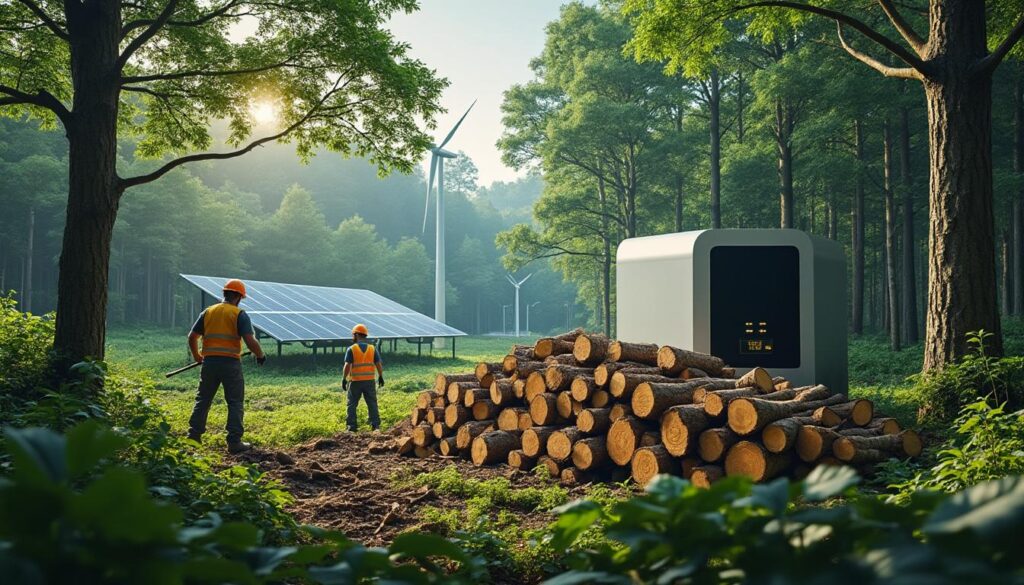
Portugal is at a key moment: more clean production in the electricity system is reducing the electricity bill and accelerating the transition to a more efficient and comfortable country. For those managing a home or a small business, this cycle opens up concrete opportunities for savings and improved energy performance.
| Short on time? Here’s the essence: ⏱️ | |
|---|---|
| Key point ✅ | Why it matters 💡 |
| More wind, hydro, and solar = cheaper electricity 🌬️💧☀️ | Less reliance on gas lowers the price in the wholesale market, reflecting in your bill. |
| Well-managed indexed tariffs 🧭 | Allow capturing decreases; plans with a “safety net” limit risks. |
| Avoid inertia ⚠️ | Reviewing the tariff once per quarter prevents getting stuck at mismatched prices. |
| Bonus: consume when the sun and wind dictate ⌛ | Scheduling machines for midday and early morning reduces costs and emissions. |
Cheaper electricity in Portugal: how renewable energies lower prices without losing reliability
When the wind blows and the dams spill energy, the price goes down. This is the direct effect of the so-called “merit order”: technologies with the lowest marginal cost (wind, hydro, photovoltaic) are dispatched first, and only later does the system resort to more expensive plants, typically gas. If demand is covered by clean sources, gas hardly sets the price, and the wholesale market relaxes, with a clear impact for residential consumers and small businesses.
The last few years have confirmed the trend. In 2023, electricity from renewable sources already represented a solid majority, and there were record months — in April 2024, for example, clean production reached historic values in the Portuguese system. In 2026, the combination of high water reserves and more solar and wind capacity keeps future prices at contained levels, signaling lighter bills for months unless there are unforeseen shocks.
Price mechanism: from climate to wallet
Imagine a day of regular rain in the watersheds, consistent wind, and clear skies at noon. Hydropower plants and wind turbines produce a lot, while photovoltaics hit their peak. Demand is almost entirely met by technology with a marginal cost close to zero, and the average price hour by hour decreases. When natural gas does not enter to define the last unit of necessary energy, the final value that reaches the market drops. It’s simple but powerful.
This pattern is reinforced by OMIP futures contracts, which act as a thermometer for price expectations in the coming months. If the market anticipates renewable abundance, futures drop and, with them, cost projections decrease for suppliers and customers with indexed tariffs.
Realistic example: family adjusting habits
Consider a family in Braga that schedules the washing machine for 1 PM, when the sun is strong, and shifts the hot water heater with a heat pump to early afternoon. They add a small photovoltaic self-consumption system and subscribe to an indexed tariff. The combined result is a shorter bill in the months of higher solar production, without sacrificing comfort.
On nights with wind, the same family schedules the dishwasher and dryer for the early morning. Small gestures, big effect: the house “follows” nature and pays less for it. Load management + abundant renewables = tangible savings.
Risks and safeguards, without dogmas
Not everything is linear: prolonged droughts or spikes in consumption can restore gas as a marginal technology. Therefore, it is wise to avoid magical promises and use a plan with risk limits (we’ll discuss this next). The central message, however, remains: the cleaner the electric mix, the more competitive the average price tends to be, with gains for budgets and for the climate.
In summary, the country is now reaping the fruits of decades of investment in hydro, wind, and solar. The impact on price is real and measurable, especially when consumers align habits with natural cycles.
Indexed vs. fixed tariffs: practical strategies to pay less without losing sleep
With the market favoring lower prices during clean hours, indexed tariffs are gaining prominence. These follow the cost of the wholesale market and transfer the price decreases to you. On the other hand, they expose you to increases when the system needs gas. Meanwhile, fixed tariffs stabilize the price over a period, useful for those who prioritize absolute predictability.
In Portugal, hybrid solutions have emerged that seek the best of both worlds. A good example is an indexed plan with a “safety net”, which automatically switches to a fixed price when futures signal an increase above the level of the best fixed rates available. This way, you benefit from declines and limit the risk of spikes if the situation reverses.
How to decide in 4 objective steps
- 🧮 Map your consumption profile: peak hours, contracted power, night/day use, and presence of continuous equipment (freezers, heat pumps).
- 📈 Check the futures (OMIP) and production reports: months with strong hydro/wind suggest an advantage for indexed.
- 🛡️ Prefer indexed with protection if you want to save and sleep peacefully; choose fixed if you cannot tolerate monthly variation.
- 🔁 Review quarterly: changing tariff when the context shifts is a good practice that avoids invisible costs.
Plans in the Portuguese market illustrate this logic. An indexed plan with automatic brake — like Autorock — switches to a fixed price when the forecasted future prices exceed the current fixed prices, protecting against escalations. For those who want full exposure to the market, there are purely indexed offers (e.g., Indie Spot). In both, the absence of loyalty ties gives freedom to switch if the situation changes.
Recent numbers help understand. In periods of renewable abundance, savings on the energy component reached 80–90% compared to some old tariff structures, with an additional effect on the reduction of VAT calculated on a lower value. Even with monthly variation, the bills of many families and businesses became lighter overall.
For small businesses — bakeries, cafés, grocery stores — a protected indexed tariff offers sufficient predictability with room to save when the weather pushes prices down. Ovens and industrial cooling cannot afford surprises; limiting peaks and capturing valleys is a winning combination.
However, avoid a common mistake: ignoring the opportunity to reassess. Inertia is costly. Scheduling a quarterly reminder in your calendar to compare proposals and observe the OMIP futures is a simple gesture that pays for itself.
Practical summary: if you value savings and accept slight variation, the indexed tariff with protection is a strong contender; if you need total rigidity, choose a competitive fixed tariff. Strategy is just as important as tariff.
Efficient homes and self-consumption: how insulation, solar, and smart management reduce bills and increase comfort
Beyond choosing the tariff, real savings come from the walls, the windows, and habits. Efficiency first, local production later: this is the sequence that transforms your home into a comfortable and economical organism. Portugal has accessible materials and solutions that tackle thermal losses and best utilize the clean energy from the system.
Insulation that makes a difference, without complicating
Improving insulation in the roof and facades, with natural-based materials such as expanded cork or low-footprint mineral fibers, cuts losses in winter and overheating in summer. Windows with low-emissivity double glazing and airtight frames complete the package. An apartment with 80 m² can reduce 30–40% of thermal needs with surgical interventions, many without structural work.
Efficient systems and control
The right equipment multiplies the effect. Heat pumps for hot water and climate control, programmable thermostats, and thermostatic valves balance comfort and consumption. An A+++ inverter air conditioner consumes less and delivers more when the surroundings are well-insulated. With a simple load manager, machines can be scheduled for midday (taking advantage of sun and low prices) and early morning with wind, reducing bills.
Smart photovoltaic self-consumption
A photovoltaic system of 2.5–4 kWp, well oriented, covers the base of daytime consumption (refrigeration, IT, pumps) and feeds flexible loads such as the washing machine. With an energy monitor, you learn in days to sync uses. A small battery (optional) can store surpluses for the evening, but it only makes financial sense if the tariff difference justifies it.
Daily gestures that are golden
- 🔆 Schedule the dishes and laundry for solar hours;
- 🌬️ Use the windy early morning for heavy cooling and dehumidification;
- 📊 Review the monitor weekly and adjust schedules;
- 🧊 Ensure cross-ventilation at night in summer to alleviate mechanical cooling.
These simple decisions, when added up, create a house that “breathes” with the weather. Stable comfort, fewer peaks, lower bills. And all of this aligns with the national effort to reduce emissions and dependence on fossil fuels.
To deepen efficient living solutions, the platform Ecopassivehouses.pt gathers ideas and best practices in ecological construction and energy management, focusing on simplicity and applicability.
Want to visualize these strategies in action? A tour through case studies and visual guides helps turn theory into daily routine.
The essential is clear: optimizing the surroundings and managing loads has a permanent return, regardless of the chosen tariff.
Small businesses thriving: predictable energy for restaurants, cafés, and grocery stores
Proximity businesses operate on tight margins and fixed costs that cannot fail. Ovens, refrigerated displays, coffee machines, and freezers do not stop — and the electricity bill weighs every month. The current context of renewable abundance opens a practical window: capturing low prices without losing predictability.
Three-layer strategy
First, a load audit: map permanent equipment, peak cycles, and relocation opportunities. Second, subscribe to an indexed tariff with a safety net, which benefits from decreases and limits expected increases from the futures market. Third, operational management: schedule ovens for pre-heatings during cheaper windows, stagger compressor starts, and use night curtains in displays.
Realistic example: a bakery with two electric ovens and three freezers. By staggering pre-heatings towards the end of the morning on sunny days, replacing old resistors with A++ equipment, and having a protected indexed contract, the combined reduction reaches double-digit percentages in monthly cost without compromising quality.
Control and metrics that count
Installing an online three-phase meter provides visibility into the load profile. By observing 15-minute curves, it is possible to detect unnecessary peaks, adjust schedules, and create alerts. Small investments — like timers and variators — pay off in a few months when aligned with an adequate tariff.
No less important: quick team training. Establishing simple routines (turning on/off, refrigerator doors, cleaning filters) saves energy and prolongs equipment life. When everyone realizes that the price is lower at solar noon, operational decisions naturally follow that logic.
For grocery stores and cafés, the golden rule is to divide consumption between base (inevitable) and flexible (adjustable). The base benefits from the trend of lower average prices; the flexible part shifts to economical windows. With a non-tied plan, changing strategy is quick if the market context turns.
Practical conclusion for local commerce: predictable and cheap energy arises from the right combination of contract, operation, and efficiency culture. Management is the new energy.
Portugal leading in clean energy: data, goals, and what changes for you by 2030
The country has established itself as a European reference in the energy transition. Over the last decade, the penetration of renewable electricity has steadily increased, with recent years surpassing 60% of annual consumption and peak months above 90% when hydro and wind align. In various European rankings, Portugal appears at the top for the share of clean production and the speed of solar photovoltaic adoption.
The goal for the next stage is clear: getting closer to 85% renewable electricity by 2030, strengthening networks, storage, and consumption-side flexibility. Here, the role of green hydrogen, boosting hydropower fueling, grid batteries, and digitalization that enables real-time demand modulation comes into play.
What this means in your daily life
More clean production tends to stabilize average prices and reduce exposure to external gas shocks. At the same time, the opportunity to plan consumption for times of greater sun and wind availability grows. Right tariff + right habits = lower bill and smaller footprint. It’s a virtuous circle where everyone wins.
Also, construction and rehabilitation are taking a leap. Energy-efficient housing projects, with natural materials and passive solutions, are expanding from north to south, while self-consumption spreads solar roofs across entire neighborhoods. The efficiency culture is no longer a niche and becomes a quality of life criterion.
Real challenges, concrete responses
Severe droughts can pressure hydro; therefore, diversifying with offshore wind and boosting storage is essential. In heat peaks, managing cooling with night ventilation, shading, and efficient heat pumps alleviates the grid. On the consumer side, installing smart metering and adopting tariffs that reflect hourly costs helps the system and your budget.
Want to keep track of the pulse of this transformation? There are accessible technical contents and demonstrations explaining how the electricity system integrates renewables, storage, and flexibility.
Central idea to retain: the more renewable the electric mix, the cheaper and more stable electricity tends to be — as long as consumers and businesses do their part with efficiency and smart management.
Simple action for today: check your tariff, schedule two electric loads for the solar period this week, and keep this principle in your daily routine — consume when the system is cleaner. Your wallet and the planet will thank you. 🌍💚
Source: newinbarreiro.nit.pt