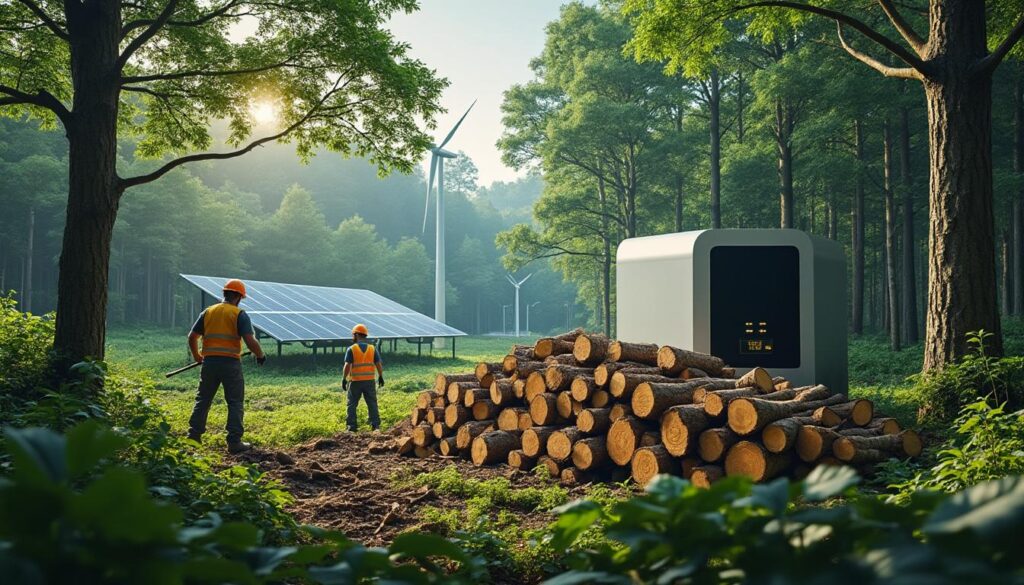
The registrations for Solenerge are reopening a decisive cycle to accelerate solar self-consumption in the Azores, with a reinforced budget and clear targets for installed capacity. For those who want to reduce their bills and gain energy autonomy, this window is the right opportunity.
If time is short, the table below gathers the essentials to act safely and quickly.
| Short on time? Here’s the essentials: ⚡ | |
|---|---|
| 🔑 Key point | 🧭 What to do now |
| ✅ Registrations reopened until February 28 | Submit your application as soon as possible at solenerge.azores.gov.pt ⏱️ |
| ✅ 100% support for eligible expenses up to 1,500 €/kW | Gather detailed quotes and certificates from the installer 📄 |
| ✅ Global budget of 60 M€ and target of 38.2 MW in the Region | Properly size the system to maximize self-consumption and comply with regulations 📊 |
| ✅ Eligible for citizens and private entities (does not include public administration) | Confirm tax number, contract ownership, and electrical compatibility 🧩 |
| ⚠️ Avoid common mistakes | Do not submit incomplete documents or hire uncertified installers ❌ |
Registrations for Solenerge reopen: deadlines, supports, and eligibility in the Azores
The Regional Government resumed the reception and analysis of applications for Solenerge with a budget increase that consolidates the program as a driver of the Azorean energy transition. The goal is clear: to put the consumer at the center, promote decentralized production, and reduce dependence on imported energy.
The current cycle runs until February 28, with online applications and analysis in the order of submission. This time priority favors those who prepare well and submit early, thus avoiding last-minute rushes. The program has a budget of 60 million euros and maintains the global target of 38.2 MW of installed photovoltaic power in the Autonomous Region.
One of the most attractive points is the level of support: Solenerge co-finances 100% of eligible expenses for purchase and installation, up to a cap of 1,500 euros per kW installed. In practice, a residential system of 4 kW can cover most of the investment, provided it meets defined technical and documentary criteria.
Who can apply? Citizens and private entities are included, except for regional administration and direct state administration. This opens doors for families, small businesses, consumer cooperatives, and associations, which can thus make a leap in efficiency with public support aligned with the PRR.
What has changed and why the reopening matters
Following the reprogramming of the PRR, the Region has reinforced the financial envelope, ensuring continuity for a program with an approved incentive value already estimated at 45 million euros. The reopening of applications comes to ensure the targets agreed with the European Commission, accelerating execution in a timely manner with a focus on quality.
For beneficiaries, this translates into predictability and confidence to proceed with projects that were waiting for the green light. For the insular electric system, it represents the next step in the strategy of trusting in smarter networks, with production close to consumption and reducing losses.
How to apply without setbacks
The application is submitted at solenerge.azores.gov.pt. Prepare in advance: data from the contract holder, location, desired power, descriptive memory, and proposals from certified installers. Remember that the order of submission counts, and selecting a competent technical partner speeds everything up.
In summary: clear deadlines, robust support, and a clear focus on self-consumption make this moment the right time to act. The next step? Understand how to plan the system and maximize results.
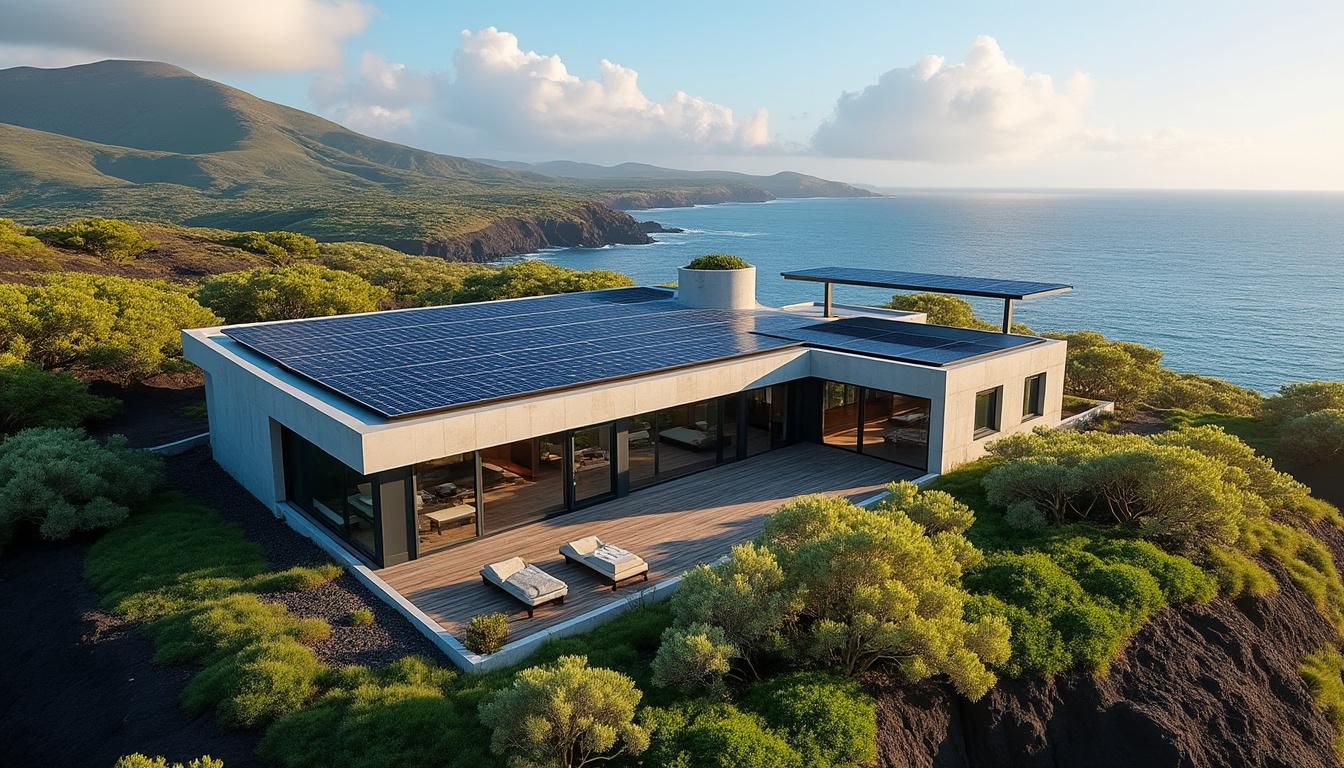
How to plan your self-consumption with Solenerge in the Azores: from the roof to the application
Planning well is half the success. For the Azorean context, with microclimates, salinity, and network specificities, careful sizing ensures yield, durability, and a faster application. The idea is simple: produce when the sun is shining and consume when needed, with minimal waste.
The first step is to assess consumption patterns. Bills from a year help to understand seasonality and peaks. Then, analyze the coverage: orientation, inclination, shadows from nearby chimneys or cryptomerias, and structural resistance for securing the supports. In windy islands, systems with aerodynamic profiles and certified fixtures make a difference.
Step-by-step guidance to make good decisions
- 🔎 Energy diagnosis: assess consumption by part of the day; identify key loads (DHW, heat pump, EV charger).
- 🧭 Roof study: verify usable area, south/west orientation, shadows, and condition of the tiles.
- ⚙️ Sizing: typical residential powers range between 3–6 kW; business, 6–20 kW, depending on profile.
- 🔌 Electrical compatibility: confirm single-phase/triple-phase, contracted power, and possible limits of the local network.
- 🪫 Storage (optional): batteries can increase self-consumption; evaluate if the gain justifies the cost.
- 📝 Technical proposal: ask the installer for a clear descriptive memory, with guarantee, yield, and maintenance.
- 💻 Application: gather documents and submit early at solenerge.azores.gov.pt.
Practical example: the Mota family, in São Miguel, with an annual consumption of 4,800 kWh and use of a heat pump. A 4.5 kW system, well oriented, can generate nearly 6,000 kWh/year. With time management (doing laundry and drying during the day) and potential pre-heating of DHW, self-consumption can exceed 65%, significantly reducing the monthly bill. The support from Solenerge covers eligible expenses up to 1,500 €/kW, making the decision financially solid.
Choices that enhance returns
Equipment with good guarantees, inverters ready for batteries, and real-time monitoring help fine-tune consumption. On roofs exposed to sea spray, aluminum/INOX profiles and fixtures extend lifespan. And, if there is an electric vehicle, scheduling charging for sunny periods turns excess energy into kilometers at almost zero cost.
Planning is not bureaucracy; it is what transforms public incentive into lasting results. With the plan in hand, it is worth understanding what this means in day-to-day life: savings, comfort, and resilience.
Practical benefits of Solenerge: savings, comfort, and energy resilience
Generous supports only make sense when they generate real value at home and in business. With Solenerge, the most visible benefit is the reduction of bills, but there is more: thermal comfort, resilience in extreme events, and alignment with decarbonization that is already redefining tourism and the regional economy.
Start with the bill. By shifting consumption to sunny hours, appliances, DHW, and EV charging become powered by energy that costs nearly nothing. The result is immediate: fewer kWh purchased and more autonomy. For those working from home, cooling the office during sunny hours becomes a smart and economic gesture.
There is also the silent comfort. Well-sized systems stabilize daily life: hot water ready, scheduled washes, fewer peaks in contracted power. In efficient or passive-inspired homes, the synergy with heat pumps and VMC ensures air quality and stable temperature at low cost.
Typical savings scenarios in the Azores
The table below illustrates indicative scenarios with common profiles in the Region. These are average values that vary according to island, orientation, shadows, and consumption habits; they serve to map orders of magnitude and support decisions.
| 🏠/🏢 Type | 🔋 Power (kW) | 📈 Annual consumption | 🌞 Self-consumption | 💶 Savings/year | ⏳ Estimated payback |
|---|---|---|---|---|---|
| T3 housing | 4.5 | 4,800 kWh | 60–70% 😊 | 500–800 € | Short, with Solenerge support ⚡ |
| Local accommodation | 8 | 10,000 kWh | 50–65% 🙂 | 1,000–1,500 € | Short-medium, depends on seasonality 🏖️ |
| Bakery | 12 | 18,000 kWh | 55–70% 🍞 | 1,800–2,600 € | Short-medium, with load management 🕒 |
In addition to savings, there is resilience. Batteries and intelligent management allow for better handling of occasional interruptions, common in island systems exposed to storms. And, on a collective level, each kW installed brings the Region closer to the target of 38.2 MW, reducing the import of fuels and strengthening the Azorean energy autonomy.
In summary, the benefits are tangible and evolutionary: the more you fine-tune the use, the greater the harvest from the sun. To harvest well, it is crucial to avoid technical and documentary errors in the application.
Technical requirements and mistakes to avoid in Solenerge applications
Part of the program’s success comes from the quality of installations and good execution of processes. Meeting technical and documentary requirements is not a detail: it ensures safety, yield, and validation of support.
Requirements that cannot fail
Installation by a properly certified entity, materials with CE compliance, and a project compatible with the contracted power are starting points. Fixing must consider wind and marine environment; inverters need adequate protection and monitoring. In fragile roofs, checking the structure beforehand prevents surprises.
In the process, the coherence of data is crucial: tax number of the applicant, energy contract, address, and customer number must match. The descriptive memory must explain the proposed solution, with module power, inverter characteristics, electrical diagram, and maintenance plan.
Frequent mistakes to avoid (and how to correct them)
- ❌ Incomplete documents — Solution: use a checklist and confirm before submitting.
- ❌ Uncertified installer — Solution: validate records and references from the supplier.
- ❌ Misaligned sizing — Solution: base on historical consumption and hourly profile.
- ❌ Ignored shadows — Solution: study with images and, if necessary, optimizers.
- ❌ Misalignment with contracted power — Solution: adjust the electrical panel and, if needed, revise the contract.
- ❌ Late submission — Solution: prepare the file and submit early; analysis is on a first-come, first-served basis.
Also consider the rules applicable to ongoing processes: with the reprogramming, certain updates cover already approved or under-evaluation applications. Read the updated regulation and confirm how the changes impact your specific case.
Realistic example: a local accommodation in Terceira, with 8 kW proposed, had the request suspended due to a discrepancy in the contract holder. It was enough to update the ownership and attach the correct certificates to unblock the analysis. Moral of the story: documentary detail is as important as the technical project.
To consolidate technical knowledge with a practical demonstration of sizing and good installation practices, it is worth exploring quality content.
Opportunity for households and small businesses: how Solenerge drives the energy transition in the Azores
In the Azores, every roof counts. For families and small businesses, Solenerge is the missing lever to turn intention into action. The resumption of applications creates a rare moment: 100% support for eligible expenses, limit of 1,500 €/kW, and a simple guide to move forward without unnecessary risks.
Let’s take the pastry shop “Doce Mar” as a reference. By installing 12 kW and scheduling ovens and cold storage for sunny periods, it managed to shift a substantial part of consumption to own production. The annual savings were reinvested in efficient lighting and a small charger for customers with electric vehicles. Result: lower costs, greater comfort, and a commercial argument aligned with sustainable tourism.
There’s also the local installation and maintenance business. Specialized companies in the archipelago bring experience in saline environments, strong winds, and island logistics. By choosing suppliers with proven track records, like those who serve “for the entire archipelago,” you reduce unforeseen events and improve performance over time.
Immediate checklist to apply today
- 🗂️ Gather documentation: tax number, energy bills, proof of ownership, and technical proposals.
- 📸 Document the roof: photos showing orientation, shadows, and condition of the covering.
- 📞 Contact a certified installer and request a descriptive memory with a guarantee.
- 🧮 Confirm the power suitable for your profile and the contracted power.
- 🌐 Submit at solenerge.azores.gov.pt and keep the proof.
- ⏰ Do not delay: the analysis follows the order of submission and the window closes on February 28.
For those who want to deepen knowledge about efficient housing, healthy materials, and integration of renewables in passive-inspired homes, resources like Ecopassivehouses.pt gather ideas, practical cases, and useful guides. The goal is simple: to give you tools to decide safely and reap the best from the sun every day.
If there is one action to take now, it is this: reserve 30 minutes today, organize the documents, and request a technical proposal. The rest flows — and your roof starts working in your favor. 🌞
Source: greensavers.sapo.pt