The rate of solar panel installation is cooling down in Portugal. The slowdown of 21% is real, but it is also a sign to optimize strategies, enhance efficiency, and make better choices with each euro invested in clean energy.
If you want to keep moving forward, the solution lies in intelligent planning, useful home improvements, and energy decisions with clear returns.
Short on time? Here’s the essential:
| ✅ Key Points | Why it matters now |
|---|---|
| 📉 Installations down 21% in Portugal | The annual addition drops to 1.7 GW; it is time to prioritize projects with better returns and prepare for grid connection. |
| ⚡ Congested grid and weak PPAs | Plan the connection point early, consider hybridization and shared self-consumption to unblock projects. |
| 🏠 Efficiency first, panels later | Insulation, shading, and load management reduce installed power and shorten payback 🕒. |
| 🔋 Batteries and communities | In profiles with afternoon peaks, storage and energy communities improve system economics 💡. |
21% drop in solar installations: what it means and how to adapt
The latest data indicates a contraction of 21% in the installation of new solar capacity in the country, falling from 2.1 GW the previous year to 1.7 GW now (values in direct current). The slowdown is not an isolated phenomenon: across the EU, new connections have slightly declined, from 65.6 GW to 65.1 GW, the first decrease since 2016.
In Portugal, the project pipeline remains robust, but execution on the ground is hindered by grid congestion, lower dynamism in PPAs, and lower wholesale prices. The result: large-scale projects postpone final investment decisions, and the residential segment adjusts expectations. Still, the country has accumulated about 8.2 GW installed (DC), split between 44% decentralized and 56% large-scale, remaining in the European top 10 in annual growth.
Looking abroad helps gain perspective: Germany advances little (+1%), Spain moderately (+5%), France surprises (+17%), Romania rockets (+45%) and the Netherlands suffers the biggest drop (-34%). Portugal declines more than the average but maintains solid fundamentals: high solar resource, mature projects, and expanding self-consumption.
The national electricity system has also changed: renewables reached nearly 77% of cumulative electricity production until August, reinforcing solar’s role in the mix. In alternating current, official statistics totaled 6.5 GW by October, with 824 MW connected in the first ten months and about 30% of that in decentralized production.
Real causes of the slowdown: grid, PPAs, and prices
The root of the slowdown combines three key factors. First, limited grid capacity in certain areas: saturated transformers and lines slow down connections. Second, lower activity in PPAs, which complicates financing without stable long-term revenues. Third, lower energy prices, which prolong payback, especially where self-consumption is not maximized.
There is also a healthy rebalancing: after years of euphoria, the market filters projects and favors more efficient solutions, such as hybridization (solar + wind + storage), shared self-consumption, and repowering existing plants.
Practical example: Condomínio Ribeira Nova
A condominium with 42 units in Setúbal planned 120 kWp on the roof but faced connection delays. The solution was to phase: 40 kWp in phase 1, active management of common loads, and adoption of an energy community to share with 12 nearby neighbors. With the consumption curve adjusted (scheduled heat pumps and vehicle charging at the right time), the project achieved 73% self-consumption in the initial phase and made phase 2 feasible without oversized inverters.
The message is simple: the market slowdown is not a brake on your plan; it is an invitation to structure it better.
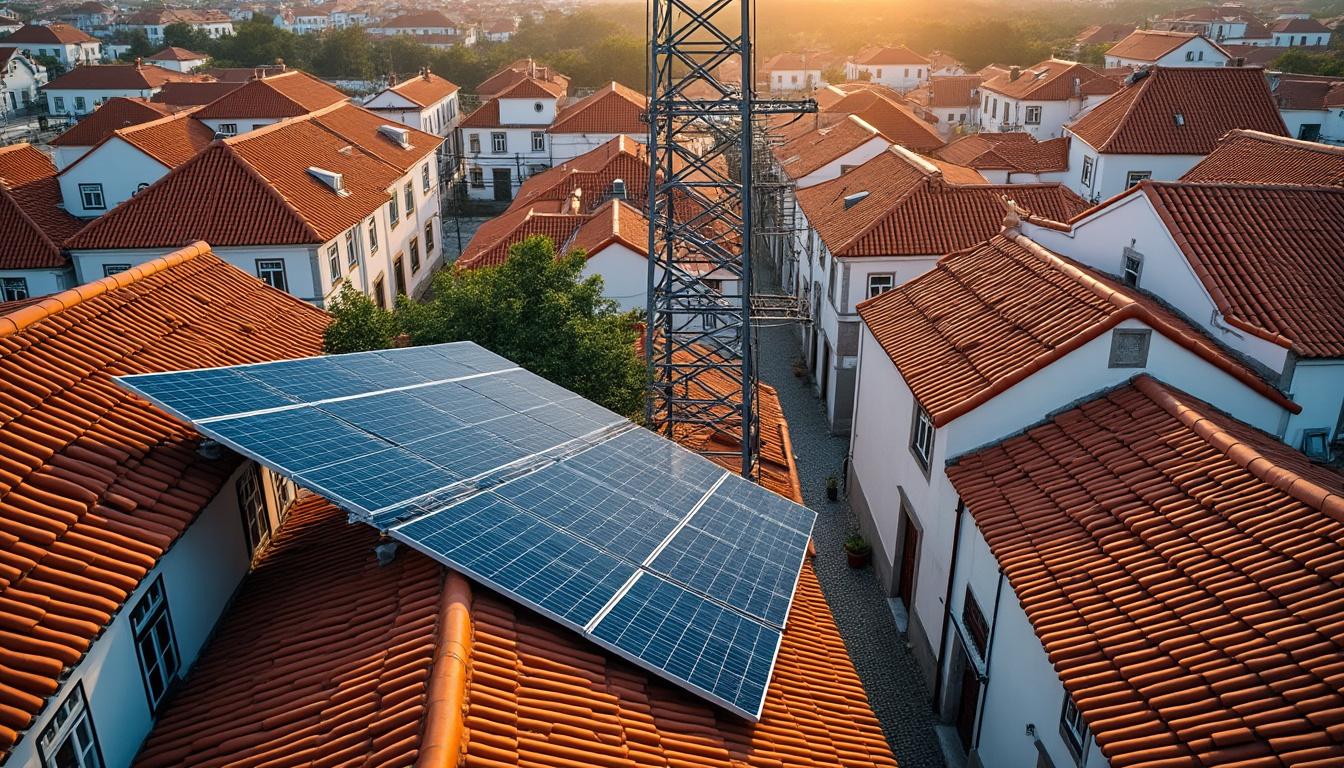
Fewer panels, more efficiency: how to reduce consumption and pay less
When installation slows down, efficiency becomes the main lever. In many homes, investing first in insulation and thermal management shortens the return on solar and reduces the power to install. The goal is clear: consume less, better, and at the right time.
Start with the envelope. Roofs with continuous insulation, airtight windows, and smart shading reduce thermal load. In warm climates like Alentejo, brise-soleil and external shutters prevent overheating without excessive reliance on air conditioning. On the coast, avoiding thermal bridges and condensation saves energy and extends the lifespan of materials.
The second step is to tame the consumption curve. An efficient heat pump operating at noon when the sun is out is worth more than two extra modules. Water heaters with electrical resistance can be fed during solar windows, turning surpluses into “thermal battery”. In kitchens, induction plates with “power management” function prevent unnecessary peaks.
Immediate efficiency checklist
- 🧊 Insulation in the roof (≥ 12 cm mineral wool): reduces thermal load by 20–30%.
- 🌞 External shading on south/west windows: cuts excessive solar gains.
- 🕒 Load scheduling: washing machine, DHW, and EV during peak production hours.
- 🔌 Smart plugs with metering: real data to size PV without guesswork.
- 🛁 Pre-heating DHW at noon: uses surpluses as thermal storage.
- 📶 Centralized management (Home Energy Management System): orchestrates loads and avoids peaks.
These measures prepare the ground for a lean photovoltaic system. If your home needed 6 kWp, an efficiency strategy can reduce it to 4–5 kWp, maintaining comfort and low bills. Fewer modules, less inverter, less structure — lower investment and controlled risk.
Case: house in Évora
In a T3 house of 200 m², insulated with cork and with external shutters, the annual thermal load dropped by 28%. By adjusting water heater and dryer schedules to 12 p.m.–4 p.m., self-consumption rose to 78%. The final system was 4.2 kWp with a 3.6 kW inverter and no battery. Instead of 10 years, the estimated payback was 7–8 years, even with lower tariffs in the wholesale market.
If the market is cooling, efficiency heats up the financial equation.
Exploring practical guides and real cases helps set priorities and avoid oversized installations. Clear information avoids expenses that don’t add to comfort.
Self-consumption, energy communities, and batteries: choosing wisely in 2025
With a congested grid and fewer PPAs, self-consumption models gain relevance. The challenge is to decide between individual, collective, energy communities, and the use of batteries. The right choice depends on your consumption curve, solar exposure, and contract tariff.
In the typical residential context, individual self-consumption remains the foundation. In buildings and developments, collective self-consumption allows sharing production by units, smoothing peaks and increasing local utilization rates. Energy communities go further: they include nearby users (such as cafes, grocery stores, and schools) and unlock daily synergies — commerce consumes when families are away.
And batteries? When there are regular surpluses at noon and significant consumption at the end of the day, storage smooths the bill. However, attention to prices is crucial: during periods of cheap energy, the battery competes with the grid. It is worth it if your goal is to increase autonomy and reduce contracted peaks.
| 🔎 Option | 💚 Advantages | ⚠️ Risks | ⏱️ Typical Payback |
|---|---|---|---|
| Individual self-consumption | Simple, straightforward, highly reliable | Poorly exploited surpluses without management | 6–9 years 🕒 |
| Collective self-consumption | Distributes production and peaks in the building | Requires agreement and shared metering | 5–8 years 🕒 |
| Energy community | Local synergies, better usage rate | More dense legal and technical process | 6–10 years 🕒 |
| Residential battery | Autonomy and peak power | High capex, sensitive to grid prices | 8–12 years 🕒 |
How to decide with data (and not myths)
Monitor consumption by circuit for 2–4 weeks. If your night base is relevant, a 5–7 kWh battery may make sense. If the peak is during the day, it’s better to shift loads (DHW, machines, EV). In buildings, analyze profiles by unit: older people and remote workers consume when the sun is out, increasing the viability of collective options.
In local commerce, mini-PV with 10–20 kWp and sharing contracts with neighbors create stable revenues and foster customer loyalty. Everything documented and transparent, with certified metering and clear sharing rules.
Making decisions based on real data reduces errors and shortens the path to return.
Large-scale projects and the grid: how to unlock licenses and connections
The slowdown has exposed a bottleneck: the grid. There are about 20 GW of projects with licenses or connection points assigned, but many are waiting for infrastructure upgrades. For those promoting parks or large self-consumptions, the key word is flexibility: adjust configurations, locations, and schedules to match production and available capacity.
Hybridization is a pathway for advancement. By combining solar with wind at the same connection point, the joint profile is smoother and reduces the need for bulky reinforcements. Repowering existing plants — swapping equipment for more efficient models — leverages existing permits and infrastructure, accelerating timelines. In markets with lower prices, reducing operational risk takes priority over marginal energy gain.
Hybridization and repowering: viable shortcuts
Projects that combine PV + wind + storage deliver more predictable power. In areas where new connections are blocked, repowering a wind farm with panels downstream of the same connection point may be the quickest and safest exit. For industrial installations, batteries of 1–2 hours smooth peaks and increase the local use of PV, avoiding exports during low-price hours.
Procedures are becoming digitalized. When preparing documentation, be surgical: impact studies on the grid, simulated production curves, and intelligent “curtailment” strategies show commitment to system stability. This technical detail reinforces the trust of the managing entity.
Proximity PPAs and virtual sharing
With PPAs activity more discreet, proximity contracts — between local producers and electro-intensive consumers — gain interest. Virtual energy sharing within the same grid zone reduces losses and mitigates price risks. For cooperatives and municipalities, four-year agreements with annual review clauses balance security and flexibility.
The practical roadmap includes: aligning construction schedules with connection windows, planning hybridization from the base design, evaluating repowering where infrastructure exists, and investing in flexibility management (batteries, load control). None of this is theoretical: these decisions shorten months and secure return in a more demanding market phase.
When the grid is the limit, engineering becomes the lever.
Perspectives 2026–2030: Portugal between goals and reality — what to do now
The horizon is clear: with the current dynamics, the country could reach about 19 GW accumulated by 2030, below the official target of 20.8 GW. In the EU, the target of 750 GW seems elusive, with projections hovering around 718 GW. Nevertheless, solar energy has already provided about 13% of European electricity, proof that the transition is underway — and needs new traction.
What can unlock it? A combination of measures: reinforcement and modernization of the grid, rapid transposition of the RED III, simplification of licenses with digital processes, and flexibility markets that value storage and demand response. In parallel, municipal policies that promote self-consumption and energy communities strengthen the local fabric and reduce grid losses.
There is also a short-term path reachable by any family or business. First, size systems based on real data (not “rules of thumb”). Second, prioritize efficiency and load shifting before increasing power. Third, evaluate sharing opportunities — in the building, on the street, in the neighborhood — to improve the utilization of generated energy.
For those managing assets or portfolios, plan the “staircase” 2026–2030: well-defined phases, self-consumption goals, price scenarios, and pre-designed hybridization options. If the market will fluctuate for another two years, the optimal point is to build resilience now to reap in 2028–2029, when the European volume tends to recover to about 67 GW/year.
And on the ground, how to start tomorrow? Conduct a load audit at home, adjust DHW and laundry schedules to solar windows, and check if the roof allows for effective shading in summer. If you already have PV, test export profiles and assess a small battery or joining a local community. Small steps, big effect.
In summary: the euphoria is over, maturity has arrived. The secret is to combine efficiency, data, and good engineering. If you have to remember just one idea, let it be this: align your consumption with the sun — the return will appear and the grid will appreciate it. 🌞
Source: expresso.pt