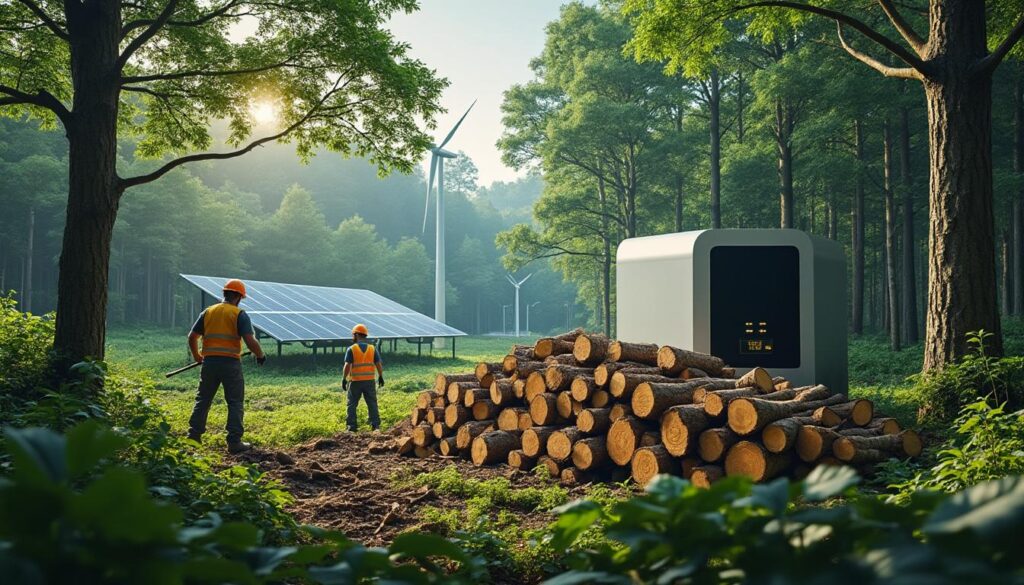
The new diploma published clarifies the rules for supporting farmers in the adoption of renewable energies, focusing on efficiency, cost reduction, and emissions. It is a concrete opportunity to transform agricultural operations with practical and quick-return solutions.
| 🌿 Short on time? Here’s the essentials: |
|---|
| ✅ Support of up to 100% via reimbursement, to invest in efficiency, production, and energy storage in the agricultural sector ⚡ |
| ✅ 15 million euros as a non-repayable grant, funded by the Environmental Fund and operationalized by the IFAP 🏛️ |
| ✅ Eligible: agricultural and livestock producers, cooperatives, associations, producer organizations, and irrigation associations 👩🌾👨🌾 |
| ✅ Avoid this mistake: ignore dimensioning and measuring results (it can block the reimbursement) ❗ |
| ✅ Bonus: align the project with the PEPAC and the Ecorregime to earn merit points 🌱 |
Published diploma: guidelines that unlock support for farmers in adopting renewable energies
The diploma now published in the Diário da República establishes a clear framework to support investments in energy efficiency, renewable production, and storage in the agricultural sector. The total allocation is 15 million euros, granted as a non-repayable grant, with reimbursement a posteriori after the project is executed and validated by the IFAP.
Eligible to apply are agricultural and livestock producers, cooperatives, associations, producer organizations, and irrigation associations. Applications must justify the modernization of operations, the reduction of consumption, the decrease of emissions, and the increase of renewable energy. In practice, solutions such as photovoltaic with efficient pumping, batteries to manage peaks, biogas from effluents, and improvements such as variable speed drives in motors fit here.
The support can cover up to 100% of the eligible investment, which is uncommon and very favorable. However, since it is paid via reimbursement, it requires cash flow planning and often, a bridge financing from banks. This point has been decisive for smaller operations, where the timing of invoices and proof of execution matter as much as technical merit.
The financing arises from the articulation between policies of environment, energy, and agriculture, with funds from the Environmental Fund and execution by the IFAP. By aligning objectives with the PEPAC and the European Green Deal, the diploma reinforces a transition that is not only electric: it is also agronomic, managing water, soils, and climate in a logic of resilience to heat and irregular rainfall.
Realistic example: an irrigation association with two pumping stations invests in 250 kW of photovoltaic with 400 kWh of batteries and intelligent watering control. Typical result? 40–60% savings on electricity during peak hours, operational payback in 3–5 years, and greater cost predictability, essential for water contracts with thousands of farmers.
Even small producers benefit: 15 kW of PV on-roof, 20 kWh of batteries, and a monitoring system that adjusts cold storage and irrigation. Field experience shows that, with good tuning, post-harvest losses are reduced and quality is stabilized, which is worth as much as the electricity bill.
In summary, the diploma brings simple rules, defined resources, and a focus on useful measures on the ground, opening space for energy projects that restore autonomy to farmers.
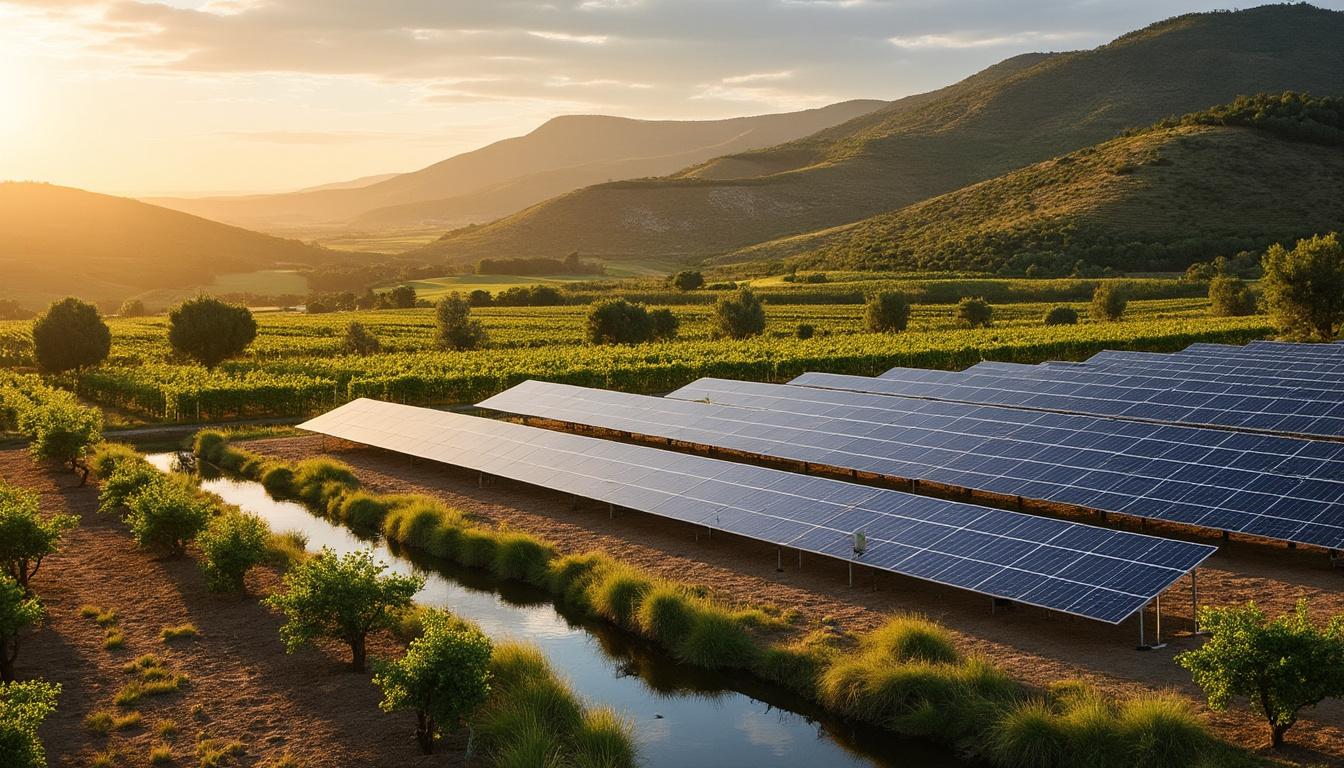
Support for farmers: how to apply to IFAP and ensure 100% reimbursement
To turn the opportunity into completed work, it is important to follow simple steps and document every decision. The managing entity is the IFAP, which will publish notices with deadlines and forms. Approval depends on technical quality, environmental merit, and the ability to execute smoothly.
Published diploma and eligibility criteria aligned with PEPAC and Ecorregime
The diploma reinforces that support aims at efficiency, renewables, and storage in the agricultural sector. Projects linked to interventions in the “Sustainability – Ecorregime” domain of the PEPAC have a clearer path, especially when they demonstrate reductions in consumption and emissions. If your operation received support from the Ecorregime in 2024, check the crossover of requirements: you may gain priority for coherence of objectives.
Practical steps for a solid application
- 🧭 Energy diagnosis (audit, although often optional): identifies powers, consumption hours, and waste.
- 🧾 Technical dossier: descriptive memory, diagrams, location, licenses, 3 comparable budgets by equipment type.
- 📊 Estimated savings and reduction of emissions: scenarios with and without the project, and measurement methodology (e.g., IPMVP).
- 🏦 Financial plan: project timeline, invoices, bridge financing (reimbursement is a posteriori).
- 📤 Submission to IFAP: beneficiary profile, operation data, technical and eligibility annexes.
- 🛠️ Execution and commissioning: tests, compliance reports, and connection to the grid as per DGEG and operator.
- ✅ Payment request: evidence, measurements, and construction photos to unlock reimbursement.
Common mistakes to avoid
Three slips can cut points or block payments: sizing panels without considering the hourly profile of the operation; forgetting seasonal variation in irrigation; and not planning for O&M (cleaning, wiring inspection, preventive replacement). Another common mistake is the “cheap equipment is expensive”: inverters without local support and batteries without solid warranties.
A good practice is to create an “energy work diary”: before/after consumption, photos of panels and meters, simple reports with dates and responsible persons. It facilitates audits, speeds up reimbursement, and makes operations more professional in energy management.
If you are considering applying, confirm in your agricultural calendar where the work fits best. Installing at the peak of the season may cause losses; doing it during the less active period shortens deadlines and reduces interruptions.
For support covering up to 100%, the documentation requirement is a small price to pay. The secret is to match good engineering with good management.
To delve into procedures and view examples of forms, it is worth watching recent tutorials and public clarification sessions.
The right video helps visualize the process and provides tips from those who have already been through the same steps.
Technologies with the highest returns in the field: solar, storage, biogas, and smart efficiency
With the support defined by the diploma, the question becomes: where to invest first? The answer depends on the consumption profile, activity, and irrigation season. Still, there are technologies that consistently deliver more for each euro.
Photovoltaic solar with load management
Photovoltaic remains the anchor. On warehouse roofs or shading of parking lots, production often matches the use of motors, cold storage, and selection equipment. By integrating load controls, it is possible to shift processes to sunny hours and reduce energy purchased from the grid.
Storage to smooth peaks and stabilize costs
Batteries are not for everything, but they shine when there are concentrated peaks and asymmetric tariffs. In operations with nighttime irrigation, a hybrid system can charge in the late afternoon and discharge in the early hours of the night, maintaining flows without paying the peak hours. With support of up to 100%, the operational payback shortens significantly.
Biogas and circularity
In livestock farming, effluents are latent energy. Small digesters produce biogas for heating, cogeneration, or even injection into drying equipment. The benefit is twofold: fewer emissions and lower costs of thermal energy. Integrating biogas with heat recovery and greenhouses makes a real difference in the bill and crop quality.
Efficiency that is not visible, but counts
“Invisible” measures pay off quickly: variable speed drives in pumps, IE3/IE4 motors, LED lighting in storage and insulation of cold rooms. The diploma covers efficiency equipment and infrastructure, so it is worth creating an integrated package that tackles losses before multiplying renewable production.
Illustrative case study: “Quinta da Ribeira” installed 50 kW of PV, 100 kWh of batteries, variable speed drives in pumps, and a small biogas boiler to heat greenhouses. The combination reduced 45% of grid consumption and stabilized maturing temperature, enhancing quality. The a posteriori reimbursement was unlocked with a photographic dossier and monthly meter records.
Looking for a clear path? Start with the diagnosis, tackle the losses with efficiency, and only then size the PV and storage. On this platform, at Ecopassivehouses.pt, practical guides and examples help prioritize choices.
In summary, choosing technologies with quick returns and simple maintenance multiplies the effect of support and prepares the operation for the next decade.
Water and soil management with renewables: agrivoltaics, efficient pumping, and energy communities
In agriculture, energy and water go hand in hand. The diploma acknowledges this by including infrastructure and allowing irrigation associations to be beneficiaries. This is where agrivoltaics, efficient pumping, and rural energy communities show their full potential.
Agrivoltaics: producing energy and protecting crops
Installing elevated panels over sensitive crops creates microclimates that reduce water and thermal stress. In years of extreme heat, partial shading decreases evapotranspiration and may improve productivity. Furthermore, oriented structures allow maneuvers and machinery, maintaining the agricultural vocation of the land.
Efficient pumping with pressure control and variable speed drives
The heart of many irrigation perimeters is the pumping stations. With variable speed drives, pressure sensors, and timed controls, waste is reduced, and “water hammer” is avoided. The association “Vale do Ouro”, for example, by installing 300 kW of PV and automating pumps, cut peaks and synchronized irrigation shifts with solar production, reducing costs without sacrificing flow.
Rural energy communities: sharing that compensates
By forming Renewable Energy Communities among cooperatives and irrigators, it is possible to share excesses, optimize profiles, and increase collective self-consumption. The support from the diploma accelerates installation, and digital management allows energy to flow virtually between members, even when plots are not contiguous.
And what about water? Reservoirs with floating PV add benefits: less evaporation and more production. Annual cleaning and designs to prevent biofouling become part of the O&M plan, easily covered in well-done contracts.
By integrating soil, water, and energy, vulnerability to climate is reduced, and autonomy increases. It is a step that strengthens agriculture and enhances the landscape, with technology that respects daily work in the field.
To visualize solutions on the ground and see experiences of agrivoltaics in Mediterranean contexts, explore recent audiovisual resources.
Seeing how others have done it helps transform ideas into concrete projects, with fewer deviations and more impact.
Avoiding traps in support: contracts, maintenance, and measuring results in renewable energies
With generous support, there also arise risks of hasty decisions. Avoiding traps begins with contracting well, ensuring maintenance, and credibly measuring results. The goal is not to install equipment; it is to harvest savings and resilience year after year.
Contracts that protect the operation
Prefer models with turnkey, clear deadlines, and guaranteed performance. Including SLA (service levels), maximum response times, and penalties for unavailability provides security. Check warranties of inverters and batteries, and ensure local technical support. In grid connections, align deadlines with DGEG and operator (e.g., E-Redes), avoiding delays that tie up capital and delay a posteriori reimbursement.
Operation and maintenance as part of the investment
An O&M plan includes scheduled cleaning, thermal inspection of strings, battery testing, and firmware updates. In dust and pollen environments, the frequency should be higher. Who does what, when, and at what cost? If it is not in the contract, it probably won’t be done at the right time. Think in the medium term: avoiding small stoppages pays more than a large late intervention.
Measurement and verification: what is not measured, will not be reimbursed
Define a measurement and verification (M&V) methodology from the start. The IPMVP framework is a reference: record baseline, install sectorial meters, compare “before/after”, and keep reports. For the IFAP, this is not bureaucracy: it is objective proof that the project reduced consumption and emissions. Without this, doubts and payment delays arise.
Essential checklist before signing ✅
- 🧩 Sizing aligned with the hourly profile of the operation and irrigation seasonality.
- 🥽 Safety: DC/AC protections, battery ventilation, and emergency plans.
- 📑 Licenses and authorizations handled (DGEG, municipality, grid operator).
- 🛡️ Clear performance and availability guarantees.
- 📈 M&V agreed in writing, with success indicators and dates.
- 👩🏫 Training for the team to operate systems and read dashboards.
- 🗂️ Reimbursement dossier prepared with photos, invoices, and production/consumption records.
A final useful question: in August, when everyone needs water and coolness, who guarantees the maintenance? If the answer is in the contract and in the calendar, half the job is done. The rest is to reap the benefits of a more efficient operation and one more free of unpredictable bills.
In the end, the diploma is a lever. It is up to each operation to transform it into useful energy, with simple decisions, serious measurement, and a focus on what works on the ground.
Source: www.agroportal.pt