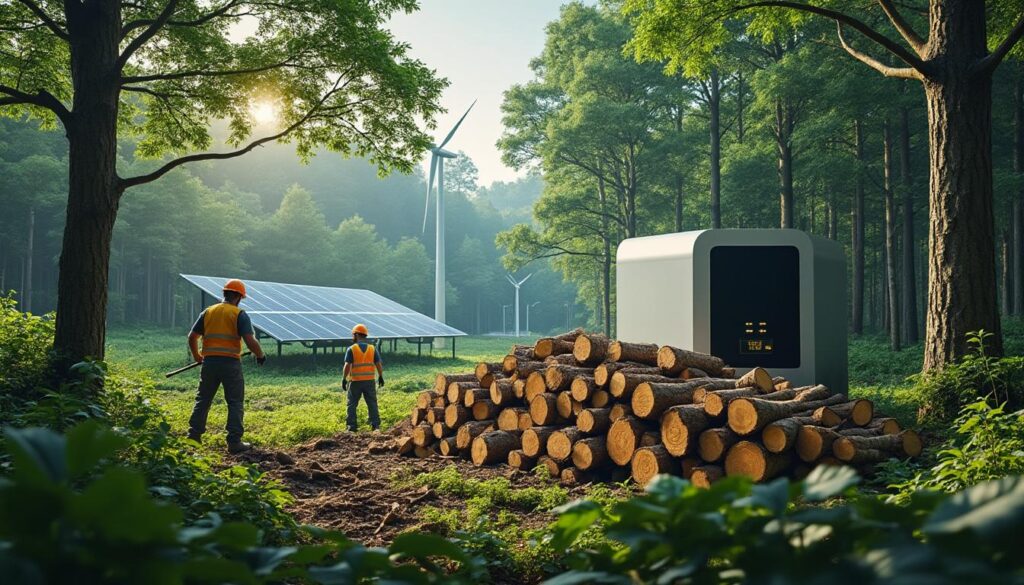
At COP30, in Belém do Pará, Prime Minister Luís Montenegro reinforced that Portugal will maintain its commitment to renewable energies and called for concrete actions for mitigation, adaptation, and climate financing. The political commitment gains practical expression in public policies, cooperation with Brazil, and solutions that can already be applied in your home.
| Short on time? Here’s the essentials: ⚡ | |
|---|---|
| ✅ Key point #1 | Portugal strengthens renewables at COP30 and aligns policies to accelerate solar, wind, and efficiency in homes 🏡 |
| ✅ Key point #2 | Method: use energy audits, energy communities, and adaptation indicators to prioritize works 🔧 |
| ✅ Key point #3 | Avoid the mistake of waiting for “the perfect solution.” Start with low-cost measures and progress in stages ♻️ |
| 🌟 Bonus | Portuguese natural materials (such as cork) increase comfort and reduce emissions 🍃 |
COP30 in Brazil: Portugal reinforces commitment to renewable energies — what changes for you
At the climate summit in Belém, under record temperatures and frequent extreme events, the message was clear: transform commitments into action. Luís Montenegro called for an “ambitious and coherent package” that combines mitigation, adaptation, and financing, and requested an agreement with global adaptation indicators that allow monitoring, implementation, and financing of real results. These words have a direct translation on the ground: more agile licensing for renewables, integration of batteries, strengthening of the grid, and tools to adapt homes and cities.
For families, the focus shifts from “if” to “how”: how to install photovoltaic systems with storage, how to combine heat pumps with cork insulation, how to reduce consumption with intelligent management. Luso-Brazilian cooperation — formalized through memorandums of understanding and business partnerships — adds scale and technology, from green hydrogen to offshore wind. For you, this means more available solutions, more robust supply chains, and ideally, decreasing costs over time.
The backdrop is well known: Portugal has experienced heatwaves, fires, and episodes of heavy rain, with impacts on housing comfort and energy costs. The response asked for at COP30 is “collective, coordinated, and sustained.” In daily life, this translates into three fronts: reducing consumption, generating clean energy locally, and preparing homes for climate extremes.
Practical measures aligned with Portugal’s renewable commitment at COP30
To guide decisions, consider prioritizing by impact and feasibility. From the state’s side, expect simplifications in collective self-consumption, incentives for thermal rehabilitation, and the promotion of energy communities. From your side, a phased plan maximizes results without long stoppages in construction.
- 🔆 Install photovoltaic panels and prepare conduits for future home battery.
- 🌀 Adopt high-efficiency heat pumps for heating and domestic hot water (AQS).
- 🧱 Improve the envelope: cork in insulation, thermal break frames, shading.
- 🧠 Use intelligent management: time control, load monitoring, and appropriate tariffs.
- 💧 Prepare for adaptation: stormwater drainage, vegetative shading, and cross ventilation.
| Public commitment 🇵🇹 | Impact for you 🏠 | When ⏱️ |
|---|---|---|
| Accelerate renewables (solar, wind, storage) | More offerings and combined solutions PV+battery+heat pump | Short to medium term |
| Adaptation indicators agreed at COP30 | Clear standards for rehabilitation focusing on comfort and resilience | Medium term |
| Climate financing oriented towards results | Facilitated access to lines for works with measured performance | As regulations evolve |
Want to see examples and ongoing projects? There are good case studies on specialized platforms like Ecopassivehouses.pt, focused on efficiency and bioclimatic design. The next topic delves into architectural adaptation — the bridge between the goals of COP30 and real comfort in housing.
Climate adaptation in buildings: COP30 indicators and construction solutions that protect your home
Adaptation is no longer future: it is present. By advocating a coherent global architecture for adaptation — from monitoring to implementation and financing — Portuguese leadership paves the way for works with clear metrics: indoor summer temperature below 26–27 ºC without permanent air conditioning, controlled humidity, and stormwater management without damage. These indicators, when incorporated into projects, help prioritize investments and avoid piecemeal fixes.
An effective rehabilitation combines passive strategy and active technologies. The former reduces needs (movable shading, cross ventilation, well-positioned thermal masses); the latter covers what is lacking with efficient equipment and, if possible, local energy. In Portuguese climate, solutions with natural materials — cork, certified wood, clays — offer thermal performance and low carbon footprint, with remarkable acoustic comfort.
From problem to solution: summer comfort without excessive consumption
Extreme heating is today’s great test. Many homes overheat because they receive direct radiation through windows, have poorly insulated ceilings, or insufficient ventilation. The solution starts outside: brise-soleil, awnings, and deciduous trees to the south/southwest; it continues indoors with selective glass films, ceiling fans, and thermal masses (inertia walls) to dampen peaks. When necessary, a reversible heat pump covers critical days, but with lower consumption thanks to passive measures.
- 🌳 Intelligent shading: trees and movable elements reduce solar gains by up to 30%.
- 🪟 The right glass: suitable solar factor and airtight frames prevent overheating and leaks.
- 🧱 Reinforced envelope: roofs with expanded cork and well-insulated façades stabilize temperature.
- 💨 Cross ventilation: opposite windows + high grilles naturally extract warm air.
- 🚰 Controlled water: sized gutters, retention basins, and permeable pavements mitigate flooding.
| Measure 🛠️ | Investment 💶 | Benefit 🎯 | Error to avoid ⚠️ |
|---|---|---|---|
| Shadings (brise-soleil, awnings) | €–€€ | -2 to -4 ºC at summer peak | Install without studying solar orientation |
| Cork insulation (roof/façade) | €€–€€€ | Year-round comfort + reduced consumption | Interrupt thermal continuity |
| Cross ventilation with high exhaust | €–€€ | Daily natural cooling | Lack of grilles/return openings |
| Stormwater management (retention/infiltration) | €–€€ | Less risk of damp and flooding | Undersize gutters and drains |
By aligning the work with adaptation indicators emerging from COP30, predictability is gained: measurements before and after, performance targets, and clear financing criteria. This is how the words “monitoring, implementation, and effective financing” become completed work and daily comfort.
Energy efficiency at home: align your housing with Portugal’s post-COP30 strategy
The reinforcement of renewables requires homes prepared to consume less and use clean energy at the right time. A step-by-step plan avoids costly mistakes and allows for quick results. Think of three modules that interconnect: envelope (insulation, windows, shading), systems (heat pumps, ventilation, AQS), and energy (photovoltaics, batteries, management). The advantage is cumulative: each step improves the next.
90-day roadmap to lower bills and emissions while maintaining comfort
The first month is dedicated to diagnosis: simple energy audit, recording of consumption, detection of air leaks and moisture points. In the second month, “quick wins” are targeted: sealings, timers, flow controllers, fine-tuning heating curves, and a shading plan. In the third month, the main intervention is decided — PV, heat pump, or insulation — based on return and comfort needs.
- 🧪 Audit: measuring before investing avoids oversizing equipment.
- 🔌 Load management: shifting consumption to solar hours improves self-consumption.
- 🔋 Battery: useful when there are daily surpluses and advantageous dynamic tariff.
- 🛁 Efficient AQS: water heaters with heat pump reduce 50–70% compared to electric resistance.
- 🌞 Modular PV: start with 3–4 kW and plan for expansion to facilitate evolution.
| Intervention ⚙️ | Estimated saving 📉 | Difficulty 🧭 | Good practice ✅ |
|---|---|---|---|
| Heat pumps (climate control/AQS) | 30–60% vs. old boiler/AC | Medium | Size by thermal load, not by area |
| Photovoltaics 3–6 kW | 40–70% of the house’s annual energy | Medium | Orientation S/SE/SO and inverter with reserve |
| Cork insulation | 15–30% in heating/cooling | Medium | Avoid thermal bridges in pillars and boxes |
| Intelligent management (smart plugs/EMS) | 5–15% through time optimization | Low | Integrate with PV and dynamic tariffs |
With the political package from COP30 prioritizing results, those demonstrating performance tend to win: savings data, comfort during heat waves, drops in bills. Platforms for technical dissemination, such as Ecopassivehouses.pt, provide guides and benchmarks to define simple and comparable goals among homes.
Brazil-Portugal partnerships at COP30: green hydrogen, offshore wind, and sustainable value chains
The strengthening of relations with Brazil, around COP30, translates into an energy innovation corridor. Memorandums of understanding and business commitments advance projects in green hydrogen, offshore wind, and network digitalization. While Brazil offers scale, solar resources, and biomass, Portugal provides experience in integrating renewables and managing grids. The desired outcome is a cleaner, more resilient, and inclusive energy model on both sides of the Atlantic.
This cooperation has practical effects for consumers and professionals: greater availability of certified equipment, sharing of know-how in offshore maintenance, and standardizing safety and sustainability requirements in supply chains. The ambition is not just to install more megawatts, but to ensure energy governance based on innovation and solidarity, with local benefits and workforce qualification.
What this alliance can unlock for you
Access to products with a better cost/performance ratio tends to increase as scale grows. Additionally, joint training programs can facilitate the hiring of qualified installers, reducing construction errors. On the other hand, shared low carbon goals in value chains encourage sustainable materials — an opportunity for the cork industry, low-temperature ceramics, and certified woods.
- 🧰 Technical qualification: more courses for installers of heat pumps, PV, and offshore.
- 🚢 Optimized logistics: Luso-Brazilian supply chains can reduce delivery times.
- 🧾 Responsible purchasing: criteria for recycled content and embedded emissions.
- 🔬 Applied R&D: joint testing on marine corrosion, smart grids, and batteries.
| Project 🌍 | PT Contribution 🇵🇹 | BR Contribution 🇧🇷 | Common benefit 🤝 |
|---|---|---|---|
| Green hydrogen | Integration into the grid, certification | Solar/biomass scale | Industrial decarbonization |
| Offshore wind | Maritime planning, operation | Shipbuilding and ports | Stable energy at decreasing cost |
| Smart grids | Flexibility management | Large-scale data analytics | Self-consumption and resilience |
As agreements materialize, consumers gain variety, the industry gains scale, and the climate gains time. The next step takes place in the cities — where collective comfort and the resilience of infrastructures are decided.
Resilient urban planning after COP30: how Portuguese cities can protect people and heritage
The city is the “system” where energy, water, mobility, and housing converge. COP30 places adaptation with indicators at the center, fitting into urban management: heat island targets, percentage of vegetation cover, water retention capacity, air quality, and time to recover after extreme events. The goal is to link design to clear metrics and consequent financing.
For those living in urban areas, the transformation brings tangible benefits: shaded spaces, lower energy bills with energy communities, fewer floods in sloped streets, neighborhoods with smooth mobility and more comfortable microclimates. Municipalities that integrate tree planting, thermal rehabilitation, and water management reap quick gains in well-being and public health.
Municipal actions with direct impact on your neighborhood
An effective strategy combines nature, technology, and participation. The good news is that much can be done with lean works and simple measurement criteria. Urban sustainability is not an accessory; it’s essential infrastructure to face heat and intense rains.
- 🌲 Strategic tree planting: suitable species, shading for sidewalks and façades.
- 🧱 Rehabilitation of neighborhoods: insulation of social buildings with cork and appropriate ventilation.
- 💧 Nature-based solutions: green ditches, permeable pavements, and retention basins.
- 🔌 Energy communities: PV in public buildings and sharing with residents.
- 🛰️ Monitoring: temperature, humidity, and air quality sensors to guide decisions.
| Municipal action 🏙️ | Quick impact ⚡ | Timeline ⏳ | COP30 indicator 📊 |
|---|---|---|---|
| More shade and water (SBN) | -2 ºC in local heat islands | Short | % of permeable area and tree cover |
| Thermal rehabilitation in priority buildings | Comfort and lower consumption | Medium | kWh/m² and discomfort degree-hours |
| Municipal energy communities | Lower bills and resilience | Medium | % of locally shared energy |
| Urban drainage plans | Less flooding/damage | Medium | Retention capacity (m³/ha) |
When the city measures, learns, and improves, everyone benefits. And when the neighborhood participates, solutions last. The next step returns to your home: choose a simple action to start today and add to the collective effort.
Action for today: choose a concrete gesture — for example, schedule an energy audit or install shading — and set the date. Small consistent steps build comfortable homes and a more resilient country. 💡
Source: sicnoticias.pt