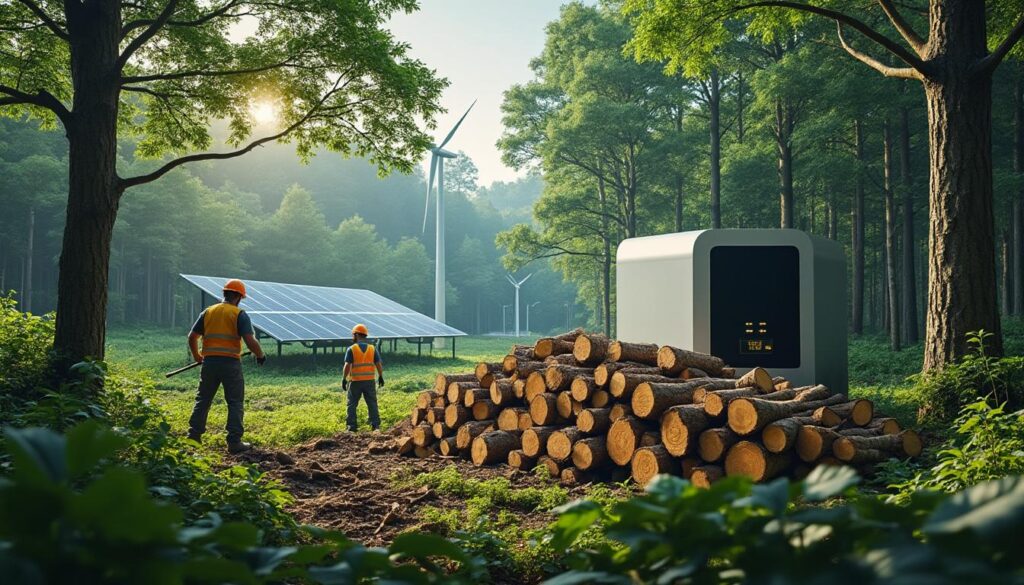
In 2025, Portugal set a record for electricity consumption and, as a result, saw an increase in emissions from the electricity sector by more than one million tons of CO2. This is a warning sign — and also an opportunity to act intelligently.
| Short on time? Here’s the gist: | Summary ⚡ |
|---|---|
| ✅ Key point #1 | Record consumption of 53.1 TWh in 2025 led to more production in gas plants and +1 million tons of CO2 🏭 |
| ✅ Key point #2 | Renewables accounted for 68% of consumption — a high value, but growing slowly, while demand increased 📈 |
| ✅ Key point #3 | Error to avoid: electrifying without storage and demand management creates peaks met by gas and extra emissions ⚠️ |
| ✅ Bonus | Address this with batteries (goal of 2 GW), collective self-consumption, and smart charging — fewer peaks, more efficiency 🔋 |
In 2025, energy consumption in Portugal resulted in an increase of one million tons of CO2: causes and important numbers
The year 2025 will be marked by an undeniable fact: electricity consumption reached 53.1 TWh, a new historical maximum, growing 3.2% compared to 2024. This variation, equivalent to +1.7 TWh, was not accompanied by a proportional increase in renewables. The result was an increased use of natural gas in combined cycle plants, resulting in +1 million tons of CO2 in electric generation, as highlighted by the association ZERO.
Why did demand rise? Several signals converged: greater electrification of industrial processes, replacement of gas or diesel boilers with heat pumps in buildings, and more electric vehicles on the roads (over 200,000 already). These movements are positive, but they require planning: without storage and peak management, the grid resorts to gas when renewables fall short.
What lies behind the historical maximum of 53.1 TWh
These are underlying trends. Electric heating grew, especially in coastal cities, with recent buildings opting for heat pumps. Digitalization also plays a role: data centers and IT-intensive services consume continuously. In the residential sector, the adoption of more efficient equipment reduced unit consumption, but the increase in the number of devices and greater electrification offset some of these savings.
A concrete example comes from a condominium in Almada that replaced boilers with heat pumps: it reduced gas consumption, but the nighttime peak without its own photovoltaic source increased the electric bill. Only when the condominium installed time programming and pre-heating water during off-peak hours did it manage to reduce the peak — a simple lesson about the impact of demand management.
How 1.7 TWh extra pushed gas consumption up
Even with a year favorable to hydropower and wind, renewables grew little in relative terms. In absolute values, they reached about 37 TWh, a record, but nearly stagnant compared to 2024. The difference between demand and clean production, in a system without sufficient storage, was filled by 7.9 TWh of electricity generated from gas — +54% in one year. This is where the origin of the additional million tons of CO2 lies.
Notice how a technical detail has macro effects: without batteries and with sometimes saturated Iberian interconnections, solar excess at noon decreases prices, halting investments and, paradoxically, failing to assist when the peak at 8 PM arrives. It’s like having water gushing at noon and thirst at night — without a bottle to store it.
The role of the blackout on April 28
The April 28 episode exposed vulnerabilities. For security reasons, national gas production was increased due to uncertainty in imports from Spain. Such events show that resilience requires firm capacity and flexibility: distributed storage, demand response protocols, and better Iberian coordination.
The central insight here is clear: electrifying is essential, but electrifying with intelligence is crucial.
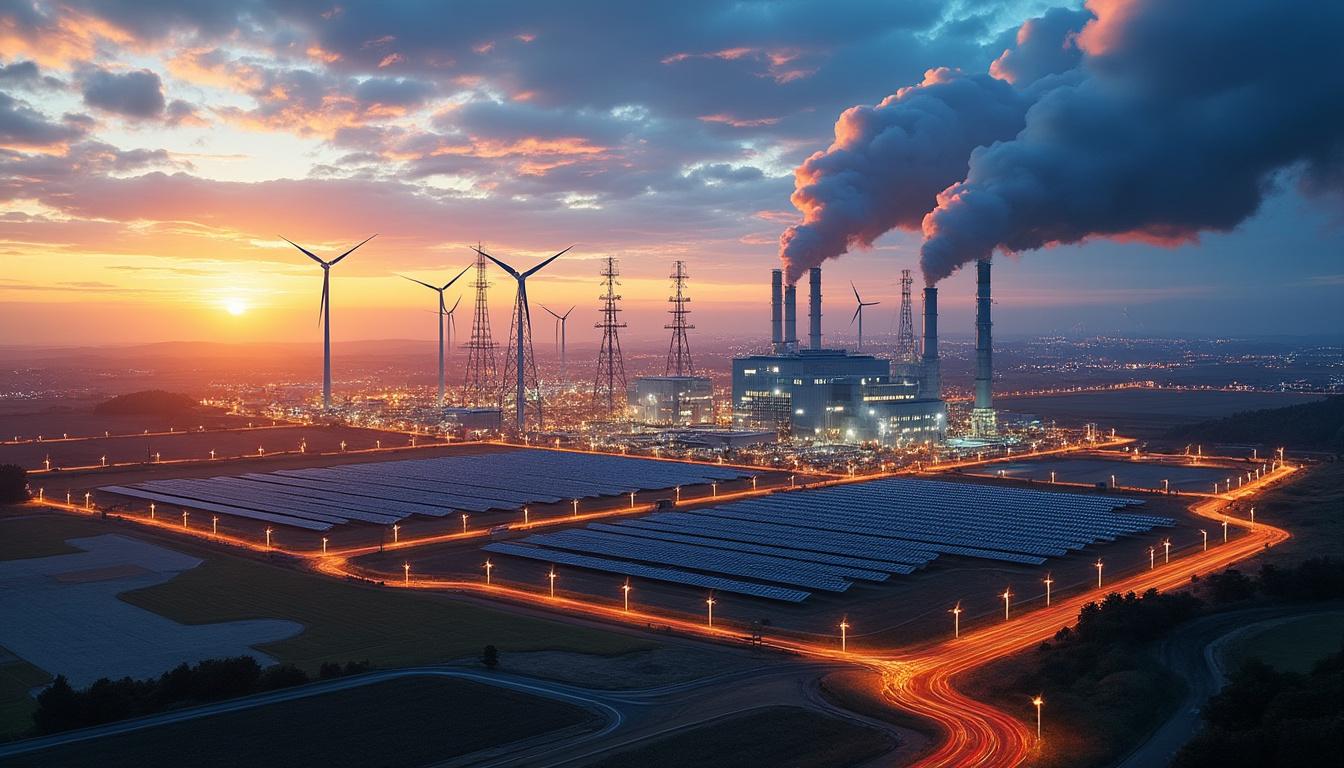
Having understood the picture, it is worthwhile to explore what hindered renewable growth and how to overcome the barriers with practical solutions — from the rooftop to the national grid.
Renewables stagnant at 68% and 7.9 TWh of gas: what hindered progress and how to unblock it
Although electricity from renewable sources covered about 68% of consumption in 2025, the gain was insufficient compared to the jump in demand. The country maintains a high level, but dependency on gas during peaks has increased. What happened? A combination of administrative barriers, lack of wind re-equipment, and slowing installation of photovoltaics (both centralized and distributed).
There are licensed projects that do not move forward for economic reasons: when the sun is abundant and demand is low, prices drop, and the remuneration for photovoltaics shrinks. Without batteries and with limited Iberian interconnections, exporting is not always viable; thus, new projects await better network and market conditions. This vicious cycle translates into lost clean energy during the day and greater reliance on gas in the evening.
Photovoltaics: how to overcome the brake
Three fronts can unlock progress: simplification of licenses in Acceleration Areas, incentives for storage, and promotion of collective self-consumption. When a neighborhood shares production and batteries, it reduces the local peak and the need for costly reinforcements in the grid. An example comes from a block in Braga that installed 400 kW of shared solar and 600 kWh of batteries: in addition to saving on the bill, it cut peaks by 35% in winter afternoons.
Wind energy: the potential of re-equipment
Many parks operate with old turbines. Replacing them with more efficient models (repowering) increases production in the same location, with less territorial impact and leveled costs. It’s a way to “grow” renewables without expanding area. By combining repowering with evening supply contracts (PPAs with time profiles), it results in a direct cut of gas needs.
Grid and interconnections: the forgotten link
Without modern grids, the transition slows down. Strengthening transformers, digitizing management, and expanding interconnections with Spain allows for surplus to flow and safe imports during critical hours. The April episode demonstrates the importance of this network. Planning and grid works may not be “glamorous,” but they are the foundation for integrating more renewables without curtailment.
Do you want to delve deeper with a visual and clear guide on these challenges and solutions? Look for a video that explains the relationship between renewables, gas, and emissions, focusing on practical advice for consumers and decision-makers.
The key message of this section is straightforward: without removing barriers to solar/wind and without grid/storage, each extra kWh of demand pulls on gas.
Houses and buildings: 10 practical decisions to reduce CO2 without losing comfort
A large part of the solution begins where everyone lives and works. Efficient buildings lower demand and flatten peaks, easing the grid and reducing gas dependency. The following actions are pragmatic and prioritize return and comfort.
Start with the envelope: where the cheapest kWh is the one not used
Efficient windows, continuous insulation, and sealing of infiltrations stabilize temperature and reduce the required cooling power. In a T3 in Aveiro, replacing old frames with models featuring thermal breaks and movable shading reduced heating consumption by 28%, providing superior comfort and less noise.
Well-tuned electric heating
Heat pumps with modulating control and time programming adapt to prices and renewable availability. Pre-heating the home and water when there is sun/wind and reducing output during peak hours cuts emissions and the bill. Integrate room-specific thermostats, weather curves, and heat recovery ventilation.
Photovoltaics, batteries, and collective self-consumption
A system of 4–6 kW on a family roof covers a good part of daytime demand. By adding a battery of 5–10 kWh, it shifts production to the late afternoon, helping to avoid the gas ramp. In buildings, collective self-consumption allows those without roofs to benefit from their neighbors’ production, with fair distribution via smart meters.
- 🏠 Insulate first: thermal envelope before buying more power
- 🔧 Adjust afterwards: heat pumps with well-configured parameters
- ☀️ Produce locally: PV on the roof or shared in the building
- 🔋 Store surpluses: batteries sized for nighttime peak
- 🕒 Use at the right times: time programming for AQS and heating
- 🚗⚡ Charge EVs outside peak: slow and smart, preferring solar midday
- 📡 Monitor: smart meters and monthly kWh targets
- 🌬️ Maintain air quality: ventilation with recovery
- 🤝 Organize neighborhoods: energy communities
- 📑 Check incentives: funds and deductions available in the country
The case of the “Condomínio da Rua do Sol” in Porto is illustrative: after insulating roofs, adjusting heat pumps, and installing 80 kW of PV with dynamic sharing, peak needs fell by 32% and thermal comfort increased. All of this works better with simple and actionable information. Resources like Ecopassivehouses.pt gather tried-and-tested ideas, without magical promises — just solutions that make sense, at rational costs.
An idea to remember: efficient buildings are the first renewable power plant of any country.
Storage and flexibility: achieving 2 GW in batteries and going further, to cut peaks and CO2
The national goal of 2 GW of batteries in the National Energy and Climate Plan is not a detail: it is the bridge between much renewable energy at the wrong time and less gas when the grid needs it. Storing solar kWh from noon to 8 PM reduces the “evening ramp,” the most expensive and polluting. But batteries are not alone — there is thermal, hydraulic flexibility, and even electric cars functioning as micro-reserves.
Residential and community batteries
In homes, 5–10 kWh cover typical family peaks; in condominiums, 100–500 kWh shared smooth the peaks of elevators, AQS, and heat pumps. In small industries, modular cabinets of 1–2 MWh avoid very high power contracts. The secret isn’t size, it’s the algorithm: charge when renewable energy is cheap, discharge at peak, keeping autonomy for the night.
Thermal storage and hot water
Hot water tanks and thermal inertia of the walls are “hidden batteries.” Heating water between 11 AM and 3 PM on sunny days and reducing power at night generates real savings. Hotels and hospitals have been using this logic for decades; bringing it to residential buildings is the way to democratize flexibility at low costs.
Vehicle-to-grid (V2G) and fleet management
Corporate fleets park for many hours. With bidirectional chargers, a fleet of 50 vehicles can return energy during peak times, rewarding the company and helping the grid. In neighborhoods, V2G transforms cars into reserves for emergencies. This is not fiction: European pilots show reductions in peaks greater than 20% in small-scale aggregates.
Do you want to see real experiences and clear explanations on how batteries and flexibility reduce emissions without compromising comfort? Look for a user-oriented video geared towards building managers, with examples of V2G and community batteries.
A useful summary of this section: storing and shifting consumption is as important as producing clean energy.
Integrated planning for 2026: from neighborhoods to the national grid, from project to construction
After the alert of 2025, the focus is on planning well and executing better. Three pillars accelerate the transition: licensing with criteria and speed, strengthening grids and interconnections, and activating consumers as part of the solution. All with simple metrics: fewer local peaks, more hours of renewable operation, and a consistent drop in CO2 per kWh.
Strategic Environmental Assessment and Acceleration Areas
Completing the Strategic Environmental Assessment provides predictability and unlocks the Renewables Acceleration Areas. This attracts investment and prioritizes locations with lower environmental conflict and better grid connection. With clear rules, projects move from “on paper” to delivering clean kWh during prime hours.
Cities that consume less by design
Urban planning can also reduce emissions. Compact neighborhoods, with tree-shaded areas, ventilated facades, and gentle mobility, decrease the need for heating and motorized transport. Renovating existing buildings with passive solutions (shading, insulation, efficient ventilation) reduces structural consumption, lasting decades.
Quick checklist to act today
If you’re looking for a first step that makes a difference, the sequence below balances cost, impact, and simplicity:
- Audit consumption with real data (bills, load curves) 📊
- Eliminate thermal leaks: frames, shading, and insulation 🧱
- Configure heat pumps with time programming and climate curves 🕒
- Install PV sized to profile and plan for future battery ☀️
- Add a battery when the load curve demands it and the price justifies 🔋
- Organize collective self-consumption in the building or neighborhood 🤝
- Charge EVs outside the peak; consider V2H/V2G when available 🚗
- Sign up for a dynamic tariff and activate alerts for peaks/solar hours ⚡
- Monitor results and adjust quarterly 🔍
- Share learnings in the local community and knowledge networks 🌍
For those wanting to deepen their knowledge, practical resources and case studies are available on sharing platforms like Ecopassivehouses.pt, focusing on real, sustainable, and replicable solutions. The simple action to start today? Set a goal to reduce 20% of your peak between 7 PM and 10 PM with three actions: program your hot water for midday, shift your EV charging, and adjust heating an hour before peak. Small changes, repeated collectively, can prevent another gas turbine from firing up tomorrow.
Source: www.publico.pt