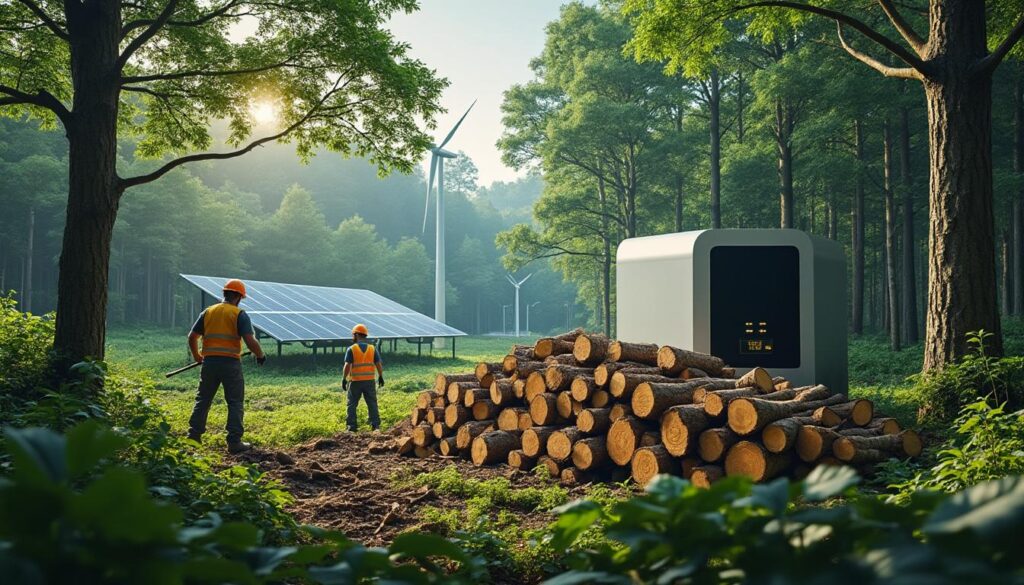
An investment of 210 million euros in hybrid renewable energy projects is accelerating the energy transition in Portugal and consolidating the Iberian Peninsula as a European green hub. This dynamic opens concrete opportunities for those looking to reduce energy costs at home and build a more sustainable future without magic promises.
Short on time? Here’s the essential:
| ⚙️ Point | 🔎 Essential |
|---|---|
| ✅ Key outcome | 210 M€ enables the Theia Project (295.45 MW) with solar + wind + batteries, enhancing grid stability and more clean energy available. |
| ✅ Effective method | Sale of energy via long-term PPAs covers about 70% of production, reducing risk and stabilizing prices for consumers. |
| ✅ Best practice | Storage supported by the PRR integrates renewables and prevents waste; at home, PV + battery with intelligent management maximizes self-consumption. |
| ✅ Bonus | Energy communities, heat pumps, and dynamic tariffs help reduce bills without losing comfort. 🌱 |
Investment of 210 M€ in renewable energy in the Iberian Peninsula: what changes now for consumers and the territory
The financing of 210 million euros secured by Hyperion Renewables for the Theia Project represents much more than two power plants. The operation confirms the maturity of the Portuguese market to finance hybrid portfolios that combine production and battery storage, a decisive step to reduce intermittency and enhance the value of every renewable kWh. Practically speaking, this translates into greater price predictability in the wholesale market and less need for fossil peak power plants, especially on windless days or during peak nighttime hours.
The Theia combines two complementary projects: Cavaleira, an unprecedented case in the country, interlinks photovoltaic solar, wind, and batteries at a single connection point; Vale de Moura combines solar and batteries in an optimized layout. In total, there are 295.45 MW of installed capacity, with a clear priority for smart energy management. The batteries absorb excess power when there is sun and wind simultaneously and return it to the grid when consumption rises, reducing curtailment and improving service quality for nearby residents.
On the market side, the sale of energy is largely ensured by long-term PPAs, already covering about 70% of the portfolio. This contractual anchoring with national and international entities, including a hybrid PPA, lowers financial risk and stabilizes revenues. For consumers, this means a higher likelihood of stable and competitive tariffs, with electricity from clean sources. In practice, those who choose suppliers with a strong PPA portfolio tend to experience less volatility in final prices.
The investment also includes a strategic message: the PRR will support storage, recognizing its role in supply security and in integrating increasing percentages of renewables. This echoes the vision, already advocated in Iberian forums, to create a competitive energy hub between Portugal and Spain, taking advantage of complementary natural resources, interconnections, and industrial know-how. It is not by chance that parallel movements reinforce this route: partnerships such as Iberdrola–Norges Bank to expand renewables in the region and the 700 M€ loan between EDP and the EIB for networks and new projects in Spain, Portugal, and Italy are pieces of the same puzzle.
In financial terms, the structure of Theia reveals maturity: about 175 M€ in project-level debt, secured by a syndicate composed of Santander Totta, Banco Português de Fomento, BCP, and SMBC; and an additional 35 M€ in holdco-level debt via Eiffel Investment Group. It is an innovative solution in the national market for portfolios with a strong storage component, and it has been legally supported by specialized teams (CS Associados, PLMJ, and Perez-Llorca), revealing the degree of sophistication the sector has reached.
Why does this matter to those who inhabit and rehabilitate houses? Because the convergence between clean production, robust grid, and storage allows for the planning of buildings with electrical infrastructures ready for self-consumption, electric vehicle charging, and efficient heating, knowing that green electricity has systemic support. This predictability is what gives confidence when investing in a heat pump, a home battery, or a photovoltaic pre-installation during construction. In summary, when the system becomes smarter, the home can (and should) also become smart.
Key idea to retain: structured financing + PPAs + batteries = price stability and higher energy quality for all.
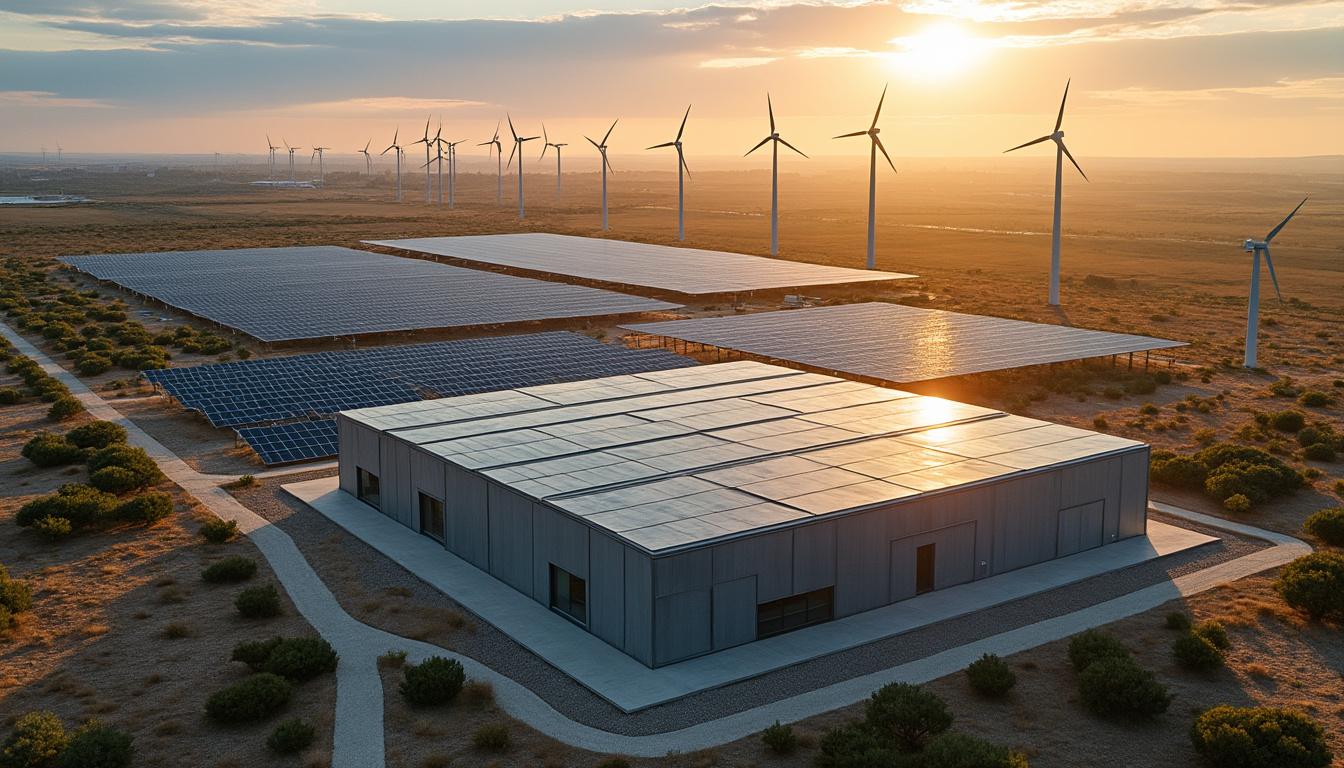
Theia hybrid projects explained: Cavaleira and Vale de Moura and why the battery changes the game
The two pillars of Theia function as a living laboratory for large-scale renewable integration. Cavaleira is unique for linking solar, wind, and battery at the same connection point. This architecture reduces connection costs, shares infrastructures, and optimizes energy dispatch. When the wind blows at night, the battery smooths power ramps. During the day, with sun and wind, the system charges storage to cover the afternoon peak. The result is a production profile close to the real consumption curve, something that the grid and suppliers value.
How hybridization reduces losses and improves profitability
Without batteries, a solar or wind farm faces two limitations: intermittency and curtailment when the grid saturates. By combining PV + wind + storage, the additional CAPEX of the battery is compensated by three effects: lower waste, better average selling price (the battery “moves” energy from cheap hours to expensive hours), and greater revenue predictability under PPA. This enables more robust financing and smaller spreads, which ultimately reflect in lower systemic energy costs.
At Vale de Moura, the focus is on pairing PV with a battery. Consider a summer day: the hours of highest production (11 am–4 pm) do not always coincide with the peak of domestic consumption (7 pm–10 pm). The battery absorbs excess and returns it to the grid when spot prices rise, reducing the need for fast fossil plants. This “clean arbitrage” is as relevant at the utility level as it is at the residential level: a 5–10 kWh battery at home follows the same logic, but with your consumption profile.
Environmental design and landscape integration
There is more than engineering: social acceptance depends on the relationship with the territory. In both projects, the integration involves biodiversity corridors, runoff management, minimization of reflections, and respect for local sight lines. In lands with forest or olive groves, practices for maintaining soil and native flora favor pollinators and natural pest control. Fencing materials with less visual impact and drainage solutions inspired by SUDS (Sustainable Urban Drainage Systems) reduce erosion and improve aquifer recharge.
What this inspires in housing
If in a hybrid park the battery acts as the conductor, in an efficient home the “battery” can be tripartite: electric storage, thermal inertia (mass walls), and active consumption management (simple home automation). The same logic applies to “domestic hybridization”: roof PV + heat pump + smart water heater. Heat is stored when production is high and used at night with minimal reliance on the grid. It is a small-scale reflection of what Cavaleira and Vale de Moura achieve at the system level.
The moral of the chapter: hybridizing is optimizing; at utility or domestic scale, bringing together the right technologies reduces losses and provides comfort at controlled costs.
How to lower the bill at home with the renewable wave: practical steps that work
When the electrical system becomes cleaner and more stable, there is room for intelligent decisions at home that bring real savings. The Theia investment and large-scale Iberian partnerships create a “cushion” of green energy; it is up to each family to capture that value with informed technical and contractual choices.
Choosing the right supplier and tariff
Look for companies with consistent PPA portfolios and transparent renewable sources. Tariffs with stable prices and differentiated hours help those who can shift some consumption to lower-cost periods. If the supplier publishes origin reports (GdO) and energy mix, even better. Predictability begins at the source: those who purchase energy from projects like Cavaleira and Vale de Moura tend to offer competitive tariffs.
Installations and habits that are worthwhile
- 🔋 Residential battery (5–10 kWh) with PV: increases self-consumption and smooths peaks.
- 🌞 PV facing west + part to the south: more production during peak value hours.
- 🔥 Heat pump A+++ with storage: heating water during cheap hours.
- 🚗 EV charging programmed (12 am–7 am) and, if possible, bidirectional in the future.
- 🏠 Building airtightness + ventilation with recovery: less energy wasted.
- 🧠 Smart management (smart plugs, thermostats): shifting washing and drying machines to more economical hours.
Energy communities and collective self-consumption
If you live in a building or neighborhood with large rooftops, consider creating an energy community. It is a direct way to share local renewable production, reducing grid losses and costs. The Iberian regulatory framework has evolved to facilitate these models. The parallel with Theia is clear: solid contracts (even if internal) and shared storage bring production and consumption closer.
Concrete example: a condominium with 80 kWp of PV and a 40 kWh battery reduces the building’s consumption peaks, stabilizes the use of elevators and common lighting, and allows for lower prices in the units, especially when combined with a low tariff. Management is simple: clear sharing rules and monthly monitoring to adjust quotas.
Final insight from this section: combine technology + contracts + habits; it is this triad that transforms clean electricity into sustainable savings.
Financing and partnerships until 2026: why the Iberian Peninsula can be the most competitive green hub
Theia does not emerge in isolation; it joins movements that position Iberia as a provider of profitable and resilient clean energy. Initiatives like IETI have underscored, in European meetings, the competitive advantage of Portugal and Spain: superior solar resources, quality wind, ports and industry capable of anchoring green hydrogen, and expanding interconnections. When large projects, smart networks, and specialized financing are combined, the levelized cost of electricity (LCOE) decreases, and consumers benefit.
At the same time, EDP has reinforced investment with the EIB, totaling 700 M€, financing not only renewable power plants in Spain, Portugal, and Italy but also the modernization of distribution networks in the Peninsula. More capable networks mean fewer losses and more room to connect residential and commercial PV without limitations. Iberdrola, with Norges Bank Investment Management, announced a partnership that adds over 1,300 MW in the region, elevating the scale of Iberian renewables. The message is clear: patient capital seeks assets with stable contracts and mature technology – exactly the profile of hybrids with batteries.
For clarity, here is a simplified map of who does what in these operations:
| 🤝 Partner | 📌 Role | 💶 Value/Dimension | 🎯 Relevance for the consumer |
|---|---|---|---|
| Hyperion Renewables | Develop and operate the Theia Project (hybrid) | 210 M€ | More stable clean energy → potential for predictable tariffs ⚡ |
| Banking syndicate (Santander Totta, BPF, BCP, SMBC) | Project-level debt | ~175 M€ | Competitive financing → lower LCOE 📉 |
| Eiffel Investment Group | Holdco-level debt | ~35 M€ | Flexible financial structure → accelerates execution 🚀 |
| EDP + EIB | Networks and renewables in the Peninsula | 700 M€ | More robust networks → fewer interruptions, better PV connection 🏡 |
| Iberdrola + Norges | Iberian renewable expansion | +1,300 MW | More green supply → competition and fairer prices 🏷️ |
This ecosystem is only credible with stable legal frameworks and network planning for 10–15 years. Storage, once seen as “extra,” is now critical infrastructure. The message for those rehabilitating homes is pragmatic: prepare the electrical installation for three-phase when possible, leave space for a battery in the technical panel, and choose equipment compatible with time management. With networks modernizing and hybrid projects growing, your home will be ready to capture lower tariffs and produce part of its energy on-site.
Strategic note: scale + contracts + networks = competitiveness. This is what secures the Iberian ambition to lead clean energy with real impact on the final cost.
Construction and rehabilitation aligned with renewables: practical solutions, materials, and details that matter
To take advantage of the new energy context, the home must work with the climate, not against it. In areas with intense sun, the priority is to control thermal gains in summer and retain heat in winter, using clean electricity to heat efficiently. Natural materials and bioclimatic design enhance comfort and lower bills, without relying on expensive tricks.
Efficient envelope compatible with clean energy
Three layers make a difference: continuous insulation (roofs and façades), air tightness with well-executed membranes, and ventilation with recovery (VMC). Together, they reduce thermal loads and allow a well-sized heat pump to operate at low temperatures, increasing the COP. Meanwhile, fixed shading to the south/west – eaves, brises, deciduous trees – flattens heat peaks without blocking natural light. On the roof, the PV benefits from passive cooling through ventilation under the panel, which increases production on hot days.
Construction materials and details that matter
Choices like certified structural timber, lime plasters, and plant-based insulators (cork, hemp, cellulose) provide hygroscopic comfort and a smaller footprint. Mass floors (exposed concrete, tiles) function as a “thermal battery,” absorbing heat during lower price hours and slowly releasing it. Windows with a balanced solar factor allow winter gain and summer protection, provided they are combined with proper shading.
Forward-thinking electrical infrastructure
- ⚡ Panel with space for hybrid inverter and battery.
- 🌀 Preparation for three-phase and dedicated cabling for heat pump and EV charger.
- 🔌 Segregated critical circuits (refrigerator, essential lighting) for potential backup.
- 🧰 Technical ducts sized for additional cables and communication (monitoring).
An inspiring case: in a house in Alentejo (“Casa do Montado”), the combination of PV 6 kWp, 10 kWh battery, VMC, shading with pergolas, and a well-calibrated heat pump reduced energy purchased from the grid by over 60% throughout the year. On days of excess, the energy heats the water heater and partially charges the EV. It is precisely the domestic reflection of the philosophy of hybrid parks: store when there is excess, use when needed.
Synthesis message: build the “envelope” first, then the efficient mechanics, and only then the intelligence. The correct order doubles the gains.
If you want to turn this reading into action, start today with a simple measure: ask your supplier for a tariff aligned with renewable PPAs and schedule an evaluation of your roof for PV + battery. A small decision now avoids expensive works tomorrow and prepares the house for the energy that is coming. For more practical guidance and clear comparisons, follow the guides and case studies at Ecopassivehouses.pt.
Source: www.idealista.pt