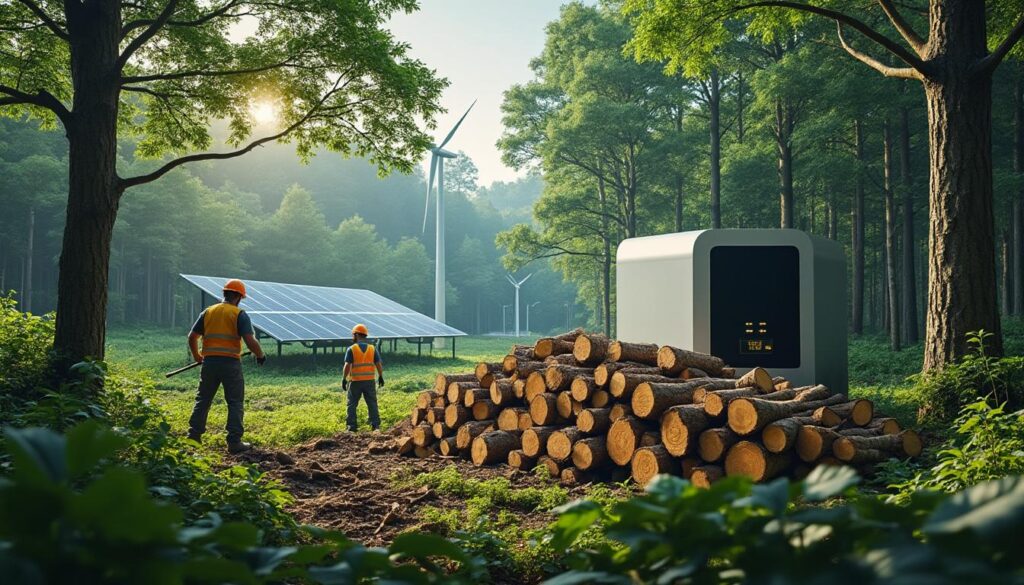
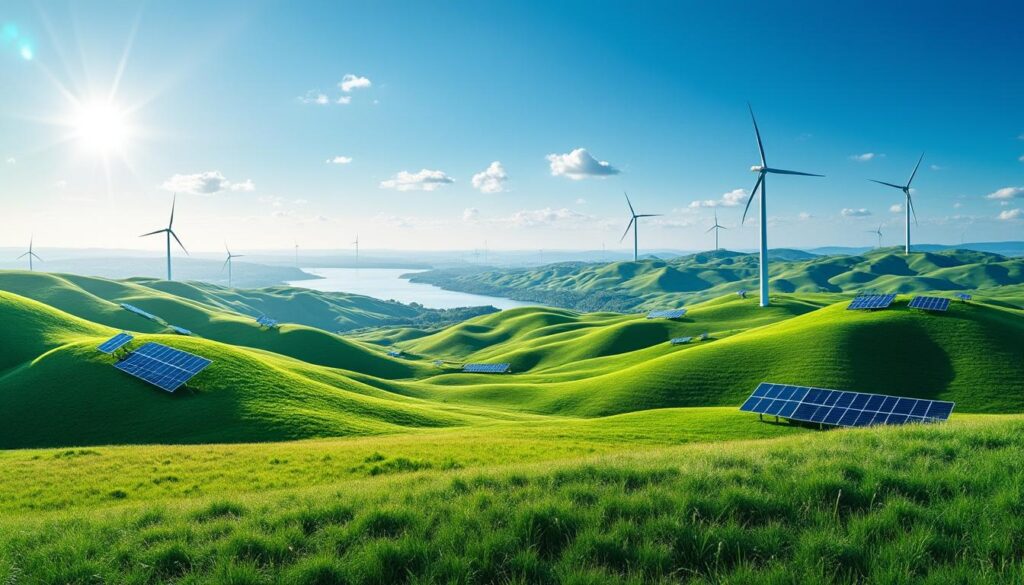
The European Union is at a turning point: the electricity generated by solar and wind energy has exceeded fossil fuels for the first time. This advancement changes the way we produce, consume, and think about energy in our homes.
| Short on time? Here’s the gist: |
|---|
| ✅ Solar + wind = 30% of EU electricity by 2025, surpassing fossil fuels (29%) ⚡ |
| ✅ Photovoltaics grew +62 TWh (+20.1%) compared to 2024, compensating for the drop in hydro ☀️ |
| ✅ Avoid dependence on gas during peak hours: smart tariffs and home batteries reduce costs ⏱️🔋 |
| ✅ Coal; Poland is the exception (~50%) 🏭 |
Historic milestone: solar and wind surpass fossil fuels in the EU — why this happened now
For the first time, electricity from wind and solar sources reached 30% of the mix in the European Union, slightly above the 29% from fossil fuels. This result crowns a trajectory started more than a decade ago and accelerated since 2020. In five years, the share of wind and solar rose from 20% to 30%, while fossil fuels fell from 37% to 29%. This is a structural transformation, not just a temporary change.
The European Electricity Review report from the think tank Ember helps explain what is behind this shift. In 14 of the 27 member states, including Portugal, Spain, Denmark, Germany, Greece, Luxembourg, Estonia, and the Netherlands, the collective production of solar and wind surpassed that of coal, oil, and gas throughout 2025. In several cases, more than half of the electricity, for at least a third of the hours in the year, came from these two sources. It is a clear sign that the system is reconfiguring to operate with renewables as a base, rather than as a complement.
There are also weather and market factors that pushed this change. Europe faced a persistent drought that reduced hydroelectric output by 12% and, to a lesser extent, wind by 2%. Paradoxically, this reinforced the role of solar energy: photovoltaic production rose +62 TWh (+20.1%) compared to 2024, benefiting from more installed capacity and greater solar exposure, even in northern countries. In Portugal, the photovoltaic share increased from 15% to 18.5% between 2024 and 2025, helping to mitigate the lower productivity of wind.
On the fossil side, the only fuel that grew was natural gas (+8%). The increase came mainly from the peak hours, when low hydro output forced reliance on gas plants to ensure supply security. The collateral effect was an average price increase of 11% for electricity compared to 2024. Nevertheless, the structural trend is for a decline in coal — less than 5% share in most countries — with one notable exception: Poland, where coal remains around 50%.
On the geopolitical front, reducing dependence on imported fuels is a strong argument. As analysts from Ember emphasize, every percentage point gained by solar and wind means less exposure to external shocks and more predictability for families and businesses. Solar leadership, in fact, is no longer exclusive to wealthy economies: since 2015, the world has seen solar energy multiply tenfold and emerging economies (China, India, Brazil) have come to dominate the expansion, signaling that costs have dropped and technology has matured.
If you’re looking for a phrase to remember, think of this: the EU has definitely entered an era where the sun and wind stabilize the system — not the other way around.
What changes for your home: lower bills, thermal comfort, and energy autonomy
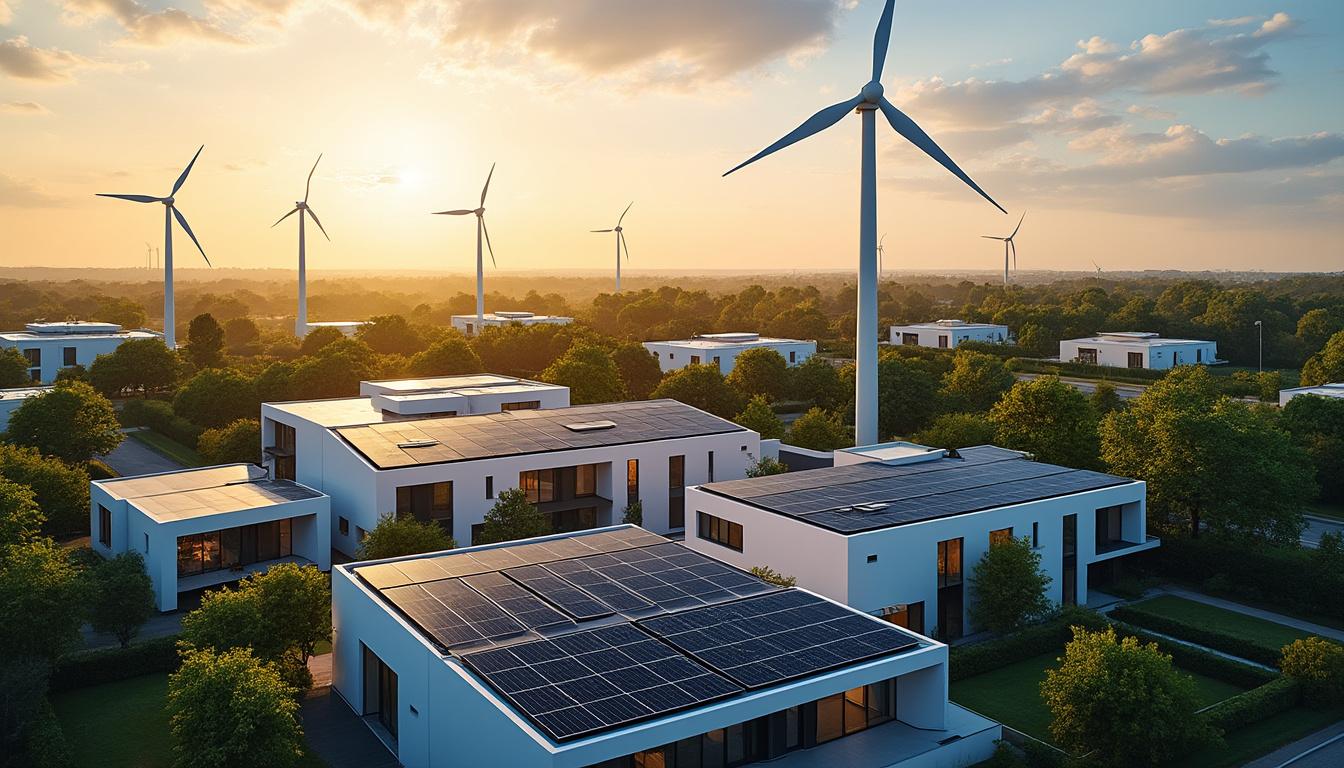
When the macroeconomics of energy change, the effect reaches your meter. The surpassing of fossil fuels by solar and wind translates into more stable prices in the medium term, greater availability of electricity contracts from renewable sources, and opportunities for those who want to produce locally. For a family in a T3 apartment in an urban area of mainland Portugal, installing 4 to 6 kWp of photovoltaic panels on an unobstructed roof can significantly reduce grid consumption during sunny hours and dampen tariff fluctuations.
Imagine the House of Ana and Miguel, a couple with two children. They have a south-facing roof, 28 m² of usable space, and a typical consumption profile of 4,200 kWh/year. With a 5 kWp system, microinverters, and a 5 to 10 kWh battery, they adjust their consumption: washing machine, water heater, and electric car charging are scheduled between 12 PM and 4 PM. What’s the practical result? Self-consumption above 40–60%, less energy purchased during peak hours, and greater comfort in the summer with efficient cooling.
Concrete actions to take advantage of the new reality
There are no miracles, but there is a method. The combination of good habits with accessible technology delivers quick results, especially when the grid is pressured and prices spike. An integrated approach — insulation, shading, efficient equipment, and photovoltaics — multiplies gains and avoids regrets.
- 🌞 Schedule consumption: program appliances during sunny hours to increase self-consumption.
- 🔋 Consider a battery: 5–10 kWh covers typical nights and short peaks; think of time-shifting.
- 🏠 Improve the envelope: insulation in roofs and walls, shading, efficient window frames.
- 🔥 Replace gas with a heat pump: A+ or higher; heats, cools, and produces hot water with high efficiency.
- 📲 Use dynamic tariffs: with simple automation, pay less when electricity is cheaper.
- 🤝 Join an energy community: share surpluses in the neighborhood and reduce costs collectively.
For those living in an apartment, shared rooftops and collective self-consumption open new doors. The regulation already allows neighbors to share the same installation and divide benefits, with smart metering. The priority is always the same: reduce dependence during peak hours, when gas makes the bill expensive. With small automation (Wi-Fi relays, management apps), the home works for you without daily effort.
If you need a starting point, a simple energy audit clarifies where to invest first. The goal is not to collect equipment, but to align what you already have with the new logic of the system. The sun and wind are doing their part; it’s up to each home to synchronize with them.
In operational summary: organize the house to consume when the sun shines and reserve energy for when the grid is more expensive.
Electric grid, batteries, and flexibility: how to stabilize a system dominated by solar and wind
With wind and solar in command, the next challenge is flexibility. The EU needs more medium and low voltage networks, active demand management, and distributed storage. The Ember report highlights that almost half of large-scale storage is concentrated in Italy and Germany — a good start, but insufficient for a system accelerating the mismatch between production and consumption throughout the day.
There are three pieces to coordinate. First, the grid: reinforce transformers, cables, and substations where photovoltaics grow faster than the capacity to transport them. Second, storage: batteries in neighborhoods, buildings, and homes that absorb daytime surpluses and return energy during peak hours. Third, digitization: smart meters, forecasting algorithms, and flexibility markets to reward those who help stabilize the system.
The role of the consumer: from spectator to resource of the system
For you, this translates into opportunity. A home battery serves not only to “store kWh”; it participates in network services, reducing peaks currently covered by gas. With appropriate contracts, you can get paid for providing capacity, in a behind-the-meter scheme that rewards flexibility. And if you have an electric car, Vehicle-to-Grid (V2G) is the next frontier: the battery on wheels reinforcing local stability.
Energy communities are an accelerator. Shared storage in the condominium, smart charging in the parking lot, and a logic of collective self-consumption transform the building into a small “buffer” for the neighborhood. This is not theory: European municipalities are already proving the concept, reducing peaks and bills with simple software and clear sharing rules.
No less important is passive efficiency: well-insulated and shaded homes shift cooling demands, decreasing demand when the grid is under stress. It’s “invisible” energy, but powerful. Every kWh that doesn’t need cooling at 7 PM is a kWh that doesn’t need gas at that hour.
The message is clear: without flexibility, the transition costs more; with flexibility, the transition saves money. And flexibility arises from both the engineering of the grids and the decisions of each building.
Actionable summary: storage + automation + passive efficiency = lower bills and a more stable grid.
Leaders, lessons, and contrasts: what Portugal can learn from European cases
The European map for 2025 shows a Europe at various speeds, but with the same direction. Denmark remains a living laboratory for wind, both onshore and offshore, combining long-term planning with social acceptance resulting from local benefits. Germany has simplified permits for rooftop photovoltaics and promoted stable auctions, which boosted the supply chain and the training of installers. The Netherlands intensively explores solar on industrial rooftops and floating parks, while Spain has accelerated self-consumption with clear rules for sharing and virtual metering.
Portugal does not lag behind: it has grown robustly in solar — from 15% to 18.5% of photovoltaic share in one year — and has wind resources yet to be exploited in interior and offshore areas. What’s missing? Agility in grid connection, reinforcement of local lines, and municipal programs that integrate energy rehabilitation with renewable production. In old neighborhoods, solutions with photovoltaic tiles, architectural shading, and low-noise heat pumps allow gains without altering façades.
What to do with the exceptions
Poland illustrates that the transition is not uniform. With about 50% coal in the mix, the path involves reconverting plants for seasonal backup, expanding networks, and mobilizing funds to retrain workers. The message for the rest of the EU is clear: where coal falls to <5%, there is no turning back, but rather a need to manage the replacement well to avoid overloading gas during critical hours.
There is also the issue of national storage: Ember notes that half of large-scale capacity is in Italy and Germany. For Portugal, this means accelerating municipal and community battery projects — especially in areas with high photovoltaic penetration — and creating transparent remuneration models for flexibility. Without this, the “old” grid will hinder “new” progress.
In terms of public policy summary: swift licensing, reinforced networks, and consistent auctions generate trust and investment. In terms of architectural summary: active rooftops, bioclimatic façades, and efficient equipment reduce structural consumption and free up the grid during tight hours. Portugal can learn from its neighbors and adapt solutions to its climate, urban fabric, and construction culture.
The takeaway from this part: leadership is not copying; it is quickly adapting what already works.
The immediate future until 2030: realistic goals and steps you can start this week
The numbers tell an optimistic but demanding story. With total renewables reaching ~48% of EU electricity by 2025 (including hydro, geothermal, and biomass along with wind and solar), the logical next step is to cement the path to 2030 with selective investment and stable rules. The declared priority by analysts is to reduce dependence on imported gas and expand storage — not only in plants but also in buildings and neighborhoods.
For your home, a three-pronged plan is effective. First, reduce the need with efficiency: insulation, efficient gaps, shading. Second, produce with well-sized photovoltaics and inverters prepared for batteries. Third, manage with light automation and tariffs that reward off-peak consumption. This triad protects against volatility and increases property value without complications.
Simple 7-day roadmap
To turn intention into action, a short roadmap helps kickstart without delays. You don’t need to do everything at once; the sum of small decisions builds a home prepared for the new electrical matrix.
- 📊 Day 1: Gather data on your consumption (12 months), peak powers, and times of highest use.
- 🧭 Day 2: Set priorities (thermal comfort, savings, autonomy) and investment ceiling.
- 🌐 Day 3: Request 2–3 proposals for PV and battery with shading study and load curve.
- 📦 Day 4: Replace key equipment (heat pump, hot water system, LED lighting) with A++ classes.
- 📲 Day 5: Activate simple automations for washing, hot water, and climate control during solar hours.
- 🤝 Day 6: Explore local energy community or collective self-consumption in the condominium.
- 🧾 Day 7: Choose an optimized tariff for time-of-use and review annually.
If you are an owner in a historical building, discreet solutions exist: high-density cork, exterior shutters, quietly controlled mechanical ventilation, and PV modules integrated into barely visible horizontal plans. In houses, solar pergolas and ventilated rooftops offer shading and production in one architectural gesture.
Closing this journey with a golden idea: start with what you control today and let the grid work better for you tomorrow.
Source: www.publico.pt