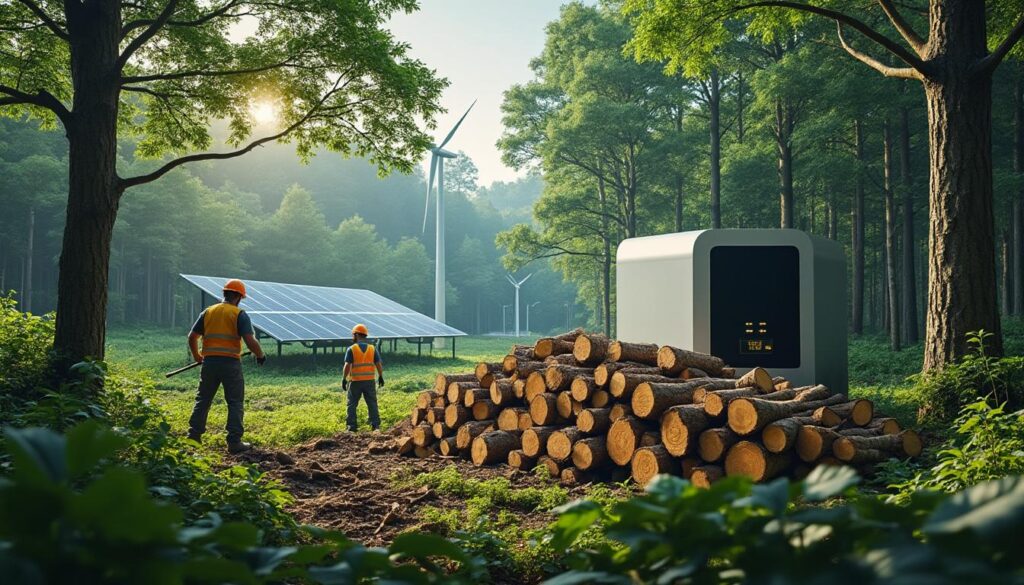
The European Commission has presented new guidelines to make energy more accessible, accelerate renewables, and modernize networks. These guidelines do not create laws, but assist regulators and Member States in applying existing legislation with more clarity and speed.
The focus is threefold: smarter network tariffs, boosting innovative renewable technologies, and infrastructures capable of integrating large volumes of clean electricity, with concrete benefits for families, condominiums, and municipalities.
Short on time? Here are the essentials:
| ✅ Key Points | 🎯 Practical Action | 💡 Direct Benefit |
|---|---|---|
| Time and location-based network tariffs | Schedule consumption for times with abundant energy | Lower bills and less overloaded networks ⚡ |
| Agrivoltaics, floating solar, and BIPV on the rise | Utilize roofs and unproductive land | More local kWh and reduced external dependency 🌞 |
| Acceleration zones for renewable projects | Faster licensing with environmental safeguards | Quick integration of new capacity 🌿 |
| Energy communities and collective self-consumption | Organize neighbors and condominiums with shared metering | Stable savings and local resilience 🏘️ |
Smart network tariffs for more accessible energy: how to take advantage of the new European guidelines
The Commission’s guidelines advocate for network charges to stop relying mainly on the volume consumed and instead reflect the time and location of usage. Why? Because electricity is cheaper when there’s abundant wind or sun and when the lines are not congested. Aligning price with the reality of the system reduces peaks, avoids costly reinforcements, and distributes costs more effectively.
Today, network charges already represent about a quarter of the household bill and could increase with the electrification of heating and mobility. By encouraging consumption during times of lower pressure, the new tariff structures allow for better use of existing infrastructure and, consequently, help to prevent rises in systemic costs.
What changes in practice for your home or condominium
With dynamic tariffs and locational signals, devices such as heat pumps, water heaters, EV chargers, and washing machines can be programmed for hours with greater availability in the network. Smart meters and simple applications automate this “fit,” without sacrificing comfort.
In a typical condominium with 24 units in Braga, load management shifted 35% of consumptions to solar periods, also taking advantage of the rooftop microgeneration. The result was an average reduction of 18% in the network component and fewer simultaneous peaks in elevators and the boiler room, which avoided an increase in contracted power.
Simple numerical example
Imagine a household that charges the electric vehicle (7 kW) from 7 PM to 9 PM. By shifting to 2 AM–5 AM, when the network is lightened and there’s wind, the charges and energy prices tend to be lower. Add to this an electric storage water heater programmed to pre-heat water during the early morning. In total, the home “frees” the network during peak hours and gains measurable savings.
For those with photovoltaic panels, synchronizing washes and passive cooling around midday maximizes self-consumption and reduces energy injected at unattractive prices. What is not used can feed the home battery, making the house more resilient in the late afternoon.
Three common mistakes to avoid
First, confusing dynamic tariff with “unpredictable prices.” Reliable applications show advantageous windows in advance, and it is possible to set price limits. Second, adopting devices without intelligent control. Without automation, the potential for savings decreases. Third, ignoring the contracted power: peak management also reduces fixed costs.
To take the first step, it’s worth monitoring a week of consumption and identifying two “flexible” devices. The goal is simple: one shifted habit per week until the household’s energy calendar aligns with the network.
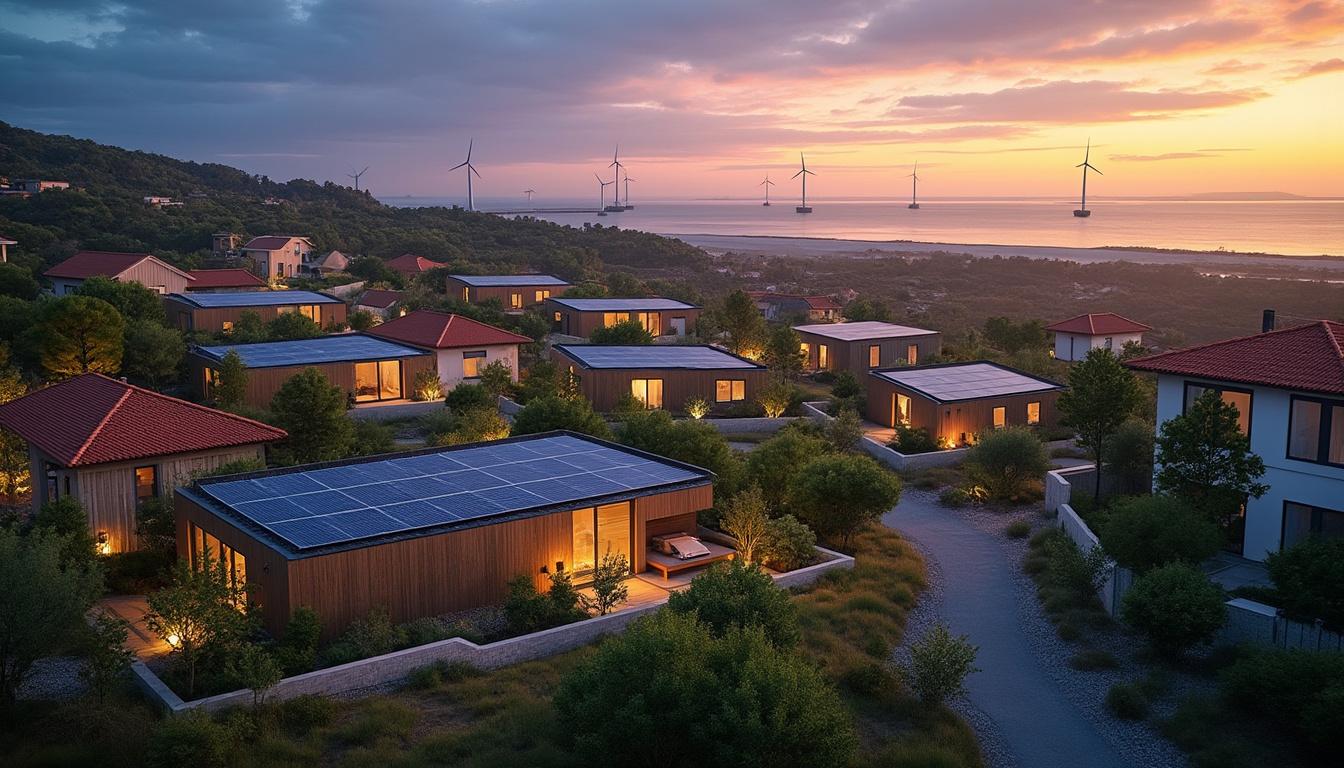
Innovative renewables highlighted by the Commission: agrivoltaics, floating solar, and BIPV with real applications
To reduce external dependency and lower costs, the Commission emphasizes technologies with high production density and low land impact. Among them are agrivoltaics (panels over crops), floating solar (in reservoirs and lakes), and building-integrated photovoltaics (BIPV), along with emerging solutions such as ocean energy and floating offshore wind.
The European goal of at least 42.5% renewables in final consumption by 2030 requires scaling these pathways quickly. The advantage: production close to where it is consumed, less losses, and urban and rural synergies. For neighborhoods and municipalities, this means more autonomy and predictable revenue.
Agrivoltaics: producing food and electricity on the same soil
In vineyards in Alentejo, elevated structures create partial shade, reducing water stress on plants while generating energy. With bifacial modules and trackers, yield per hectare increases, and agriculture gains climate protection. A nearby transformer station and a cooperative management allow irrigation communities to benefit from cheaper electricity during critical pumping hours.
A replicable example is the partnership between farmers and a local school: during the day, the parcel feeds irrigation; after classes, part of the energy supplies the sports hall. The logic is simple: useful energy twice, without competing with agricultural production.
Floating solar: thermal efficiency and reservoir utilization
Water surfaces reduce module temperatures and improve performance. Additionally, there is less land occupation and evaporation control in reservoirs. In Portugal, medium-sized reservoirs near substations are obvious candidates. With protection of ecosystems and biological corridors, projects gain quicker permits in acceleration zones when designated.
For coastal communities, combining floating solar in artificial ponds with community batteries reduces reliance on diesel generators during events and festivities, offering a quiet and clean experience.
BIPV: the roof and facade as discreet power plants
In urban rehabilitation, integrating photovoltaics into roofs and facades (solar tiles, semi-transparent modules, photovoltaic brise-soleil) reduces material and labor costs by replacing coverings. In Lisbon, an office building replaced its glass facade with ventilated photovoltaic modules and now covers 28% of annual consumption while improving thermal comfort.
In housing, south and west facades with active shading generate in the morning and late afternoon, smoothing the peak at 7 PM. With fractional metering, owners share excess and stabilize common expenses.
Emerging technologies: ocean and floating wind
In the Atlantic strip, wave energy and floating wind can sustain nighttime loads, pairing well with daytime solar. Pilots already show complementary curves and integration via storage and green hydrogen for industrial and port uses. At the municipal level, long-term Power Purchase Agreements (PPAs) protect public services from volatility.
For those planning to renovate homes or condominiums, it is worth thinking of the building as an “energy platform.” Choosing roofs prepared for PV, anticipating cabling for batteries, and technical spaces prevents future works and accelerates access to energy communities.
If seeking visual inspiration, documented European projects on video help estimate shading, anchoring, and maintenance. Seeing solutions in real context avoids surprises and shortens the path to the work.
Infrastructure and storage: acceleration zones and integration of 100 GW/year with environmental safeguards
The Commission describes how Member States can create specific zones where renewable and network projects receive faster licensing, with simplified but robust environmental assessments. The goal is to enable the annual installation of 100 GW additional by 2030, linking production, storage, and network digitalization.
For municipalities, this translates into proactive planning: identifying public roofs, industrial parks, areas to rehabilitate, and cable corridors. By anticipating substations and connection points, the “bottlenecking” of projects in the last mile is avoided.
Smarter network: from cabling to information
This is not just about thicker wires. Smart meters, production and consumption forecasting systems, and flexibility platforms allow neighborhoods to offer “services” to the grid: reducing load in minutes, delivering excess hourly, supporting local voltage. In return, they receive remuneration or more advantageous tariffs.
A parish on the coast could aggregate 300 heat pumps and 150 EV chargers into a flexibility community, coordinated by an aggregator. When the grid signals congestion, consumption shifts a few minutes, and the neighborhood is rewarded. The result: less costly reinforcements and more stability.
Diverse storage
Batteries in buildings and at the neighborhood level smooth out rapid variations. Thermal storage in hot water tanks or through active slabs in buildings retains cheap energy for peak hours. In industrial areas, green hydrogen and interconnections assist intensive processes, reducing emissions and peak costs.
For municipal services (swimming pools, street lighting), contracts with grid operators can enhance this flexibility. The key is to measure, prove performance, and automate, so the benefit is predictable and repeatable.
Environment and public participation
The guidelines maintain environmental protection and community participation as foundational principles. Ecological sensitivity maps, migratory corridors, and cultural landscapes guide deployments. Early public consultation reduces litigation and accelerates timelines. Successful experiences include workshops in schools and visits to plants, bringing citizens closer to decision-making.
With technical and social preparation, acceleration zones become showcases of good integration: faster projects, mitigated impacts, and clear local benefits. Municipalities that lead quickly attract investment and create skilled jobs.
Practical tools for homes and condominiums: self-consumption, energy communities, and dynamic tariffs
European policies come to life when they reach your meter. The good news is that there are already simple tools to transform the bill and comfort. In urban areas, collective self-consumption and energy communities allow neighbors to share production, adjust consumption, and buy energy more intelligently.
To start, it’s worth mapping the building’s solar surfaces, common loads (elevators, garage, lighting), and consumption profiles. Next, choose a model: pure internal sharing or with the sale of excesses. Legal metering and relations with the trader are done with already established rules, and bureaucracy is increasingly digital.
Concrete steps that work
- 🧭 Quick diagnosis: 12 months of bills, contracted power, and peak times.
- 🔆 PV sizing: roof, orientation, shading, and target self-consumption quota.
- 🔋 Storage: building battery or hot water as a “thermal battery.”
- 📲 Automation: smart plugs, EV control, and heating/cooling based on cheap hours.
- 🤝 Community: clear sharing rules, maintenance fund, and transparent monitoring.
A real case: a condominium in Aveiro with 32 units installed 60 kWp on the roof and a 40 kWh battery for common loads. By combining dynamic tariffs and shifting washes to the solar period, they achieved 23% savings in the first year, without changing comfort habits.
Integration with electric mobility
Scheduled charging in garages finds cheap energy and helps the grid. With a simple “solar-next” algorithm, EVs absorb excess from midday. At night, they charge only if the price falls below a defined ceiling. The driver gains autonomy in the morning, and the community reduces peaks.
Contingency and resilience plans
Combining PV, a small battery, and emergency lighting ensures critical services during grid failures. For those working from home, maintaining internet and IT for 2–4 hours can be decisive. The difference lies in the setup: separate critical circuits and size based on actual use.
Visual guides for energy communities show step-by-step statutes, measurement, and financing. By seeing successful examples, it’s easier to replicate and avoid mistakes.
2026 roadmap for an efficient and accessible home: steps, financing, and best practices towards 2030
With demanding European goals and a modernizing grid, a clear plan for the next 24 months is essential. The focus is simple: reduce unnecessary consumption, produce locally what makes sense, and take advantage of tariffs aligned with the system’s availability.
Three strategic steps
1) Efficiency first: roof insulation, adequate frames, and control of leaks. The lesser need for heating/cooling multiplies the value of each kWh generated. 2) Local production: PV on the roof or facade, and if possible, small storage. 3) Flexibility: automate loads and join an energy community or a trader with a dynamic tariff.
In practice, a house in Setúbal reduced cooling loads by installing external shading and nighttime ventilation. Next, it placed 6 kWp of PV and a storage water heater with electric resistance to operate in the early morning. Finally, it enabled an EV charger with a price cap. The combination resulted in a more comfortable home and a predictable bill.
Financing and incentives
Several national and European programs, aligned with the “Action Plan for Affordable Energy Prices,” prioritize energy rehabilitation, self-consumption, and smart grids. Lines with subsidized interest rates and support for condominiums gain traction when a technically sound project and maintenance plan are in place. The key is to present a specifications document with measurable and verifiable goals.
For municipalities, funds directed to acceleration zones and integration of storage in public facilities allow for reduced operational costs and provide replicable examples. Schools, swimming pools, and municipal markets are ideal labs.
Best practices and traps to avoid
Prioritize solutions with simple maintenance, complete documentation, and accessible monitoring. Avoid oversizing batteries without a consumption profile that justifies them. Do not neglect installer quality or compatibility between inverters, meters, and management systems. When updating contracted power, align with the post-project reality so you do not pay for what you do not use.
The Commission’s guidelines are not binding but signal the way forward. National regulators can translate them into tariff methodologies and more agile licensing processes. If the framework evolves towards future legislation, those who are already prepared will be a step ahead.
A final reminder for everyday life: schedule today a device for the cheapest time and note the difference in the bill. Small gestures, repeated, build more efficient homes and lighter bills.
Source: www.ambienteonline.pt