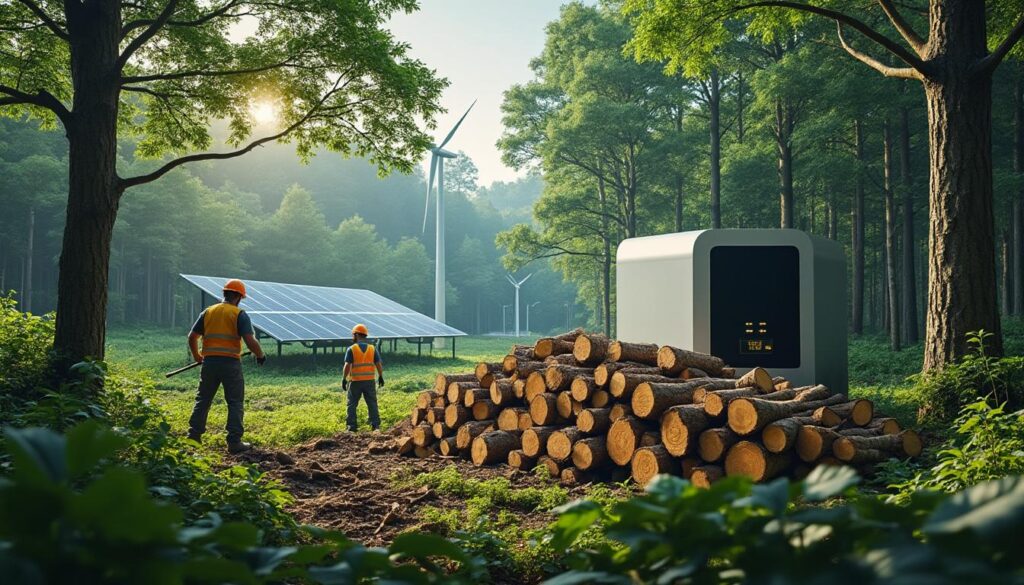
The Doomsday Clock has moved closer to midnight and sent a clear signal: halting clean energy is a luxury the planet can no longer afford. The message is urgent, but the solutions are concrete, accessible, and start at home, in the neighborhood, and with political choices.
If you are looking for a simple roadmap for action, the following summary provides direction and priorities before diving into the details.
| Short on time? Here’s the essential: ⏱️ |
|---|
| ✅ Key Point: 85 seconds to midnight demands an acceleration of wind, solar, and efficiency now ⚡ |
| ✅ Method: insulation + heat pump + photovoltaics + load management = falling bills and emissions 📉 |
| ✅ Avoid: regulatory delays and myths about “insoluble intermittency” ❌ |
| ✅ Bonus: energy communities reduce costs and create local resilience 🤝 |
Doomsday Clock warns of the end of Trump’s war on renewable energy: why acting now reduces systemic risk
The Doomsday Clock is a metaphor created by scientists to measure the proximity of a civilizational collapse. Updated annually since the mid-20th century, it now stands at 85 seconds to midnight, the closest point ever recorded. It is not superstition: it is a sign grounded in real risks, from nuclear proliferation to climate crisis fueled by fossil fuels, compounded by misinformation undermining collective responses.
The past year has brought data that needs attention. Carbon dioxide concentrations have reached a record high, about 150% above pre-industrial levels, pushing the climate to new extremes. Three consecutive years above the 1.5 °C threshold have strained natural and urban systems, with heatwaves in Europe causing deadly fires and compromising public health. An analysis by Imperial College London and LSHTM indicated that 68% of the 24,400 heat-related deaths last summer bore the mark of climate change.
As the air warms, it holds more moisture. Approximately +7% water vapor for every additional 1 °C creates conditions for intense rainfall. In several Asian countries, overlapping monsoons in autumn caused thousands of casualties. In deforested regions, like parts of Sumatra, the damage was exacerbated: the missing forests failed to halt floods, exposing populations and infrastructure. This illustrates how climate risk is systemic, interlinking energy, land use, and civil protection.
In this context, maintaining a “war” on renewable energy is not just a political choice; it is a risk multiplier. By suspending permits for offshore wind projects and dismantling climate policies, the recent U.S. Administration has pushed the world in the wrong direction. A federal court has begun to correct the course by allowing a major wind project in Massachusetts to proceed, nearly completed. Still, each month lost delays jobs, technology, investment, and, above all, wastes time on the climate front.
The European counterpoint, with wind and solar generating more electricity for the first time than fossil fuels, shows the feasible direction. A think tank indicated that, over five years, fossil fuel participation dropped from 36.7% to 29% in EU electricity, while wind + solar rose to 30%. The progress is not linear – wind energy faced a weaker year – but the trend is unmistakable. When investing, the system learns, reduces costs, and becomes more resilient.
What does 85 seconds to midnight mean for your daily energy
For a family or a condominium, 85 seconds is not an apocalyptic movie; it translates into more volatile energy bills, more severe heat and cold spikes, and interruptions that come at a cost. In simple terms: efficiency and clean energy make the home more comfortable, reduce expenses, and protect against energy crises. Those who invest in insulation, heat pumps, and local electricity production gain autonomy and predictability.
Another crucial piece is misinformation. When world leaders say that countries using wind energy are “losers” or claim that China does not invest in renewables — despite having installed the largest wind farm in the world — they create noise that delays decisions. The right answer is simple: compare costs, reliability, and real impact on your street, not slogans.
In light of these signals, it is worth moving to the next part: how to halt the escalation of risk through intelligent energy choices and public policies that work on the ground.
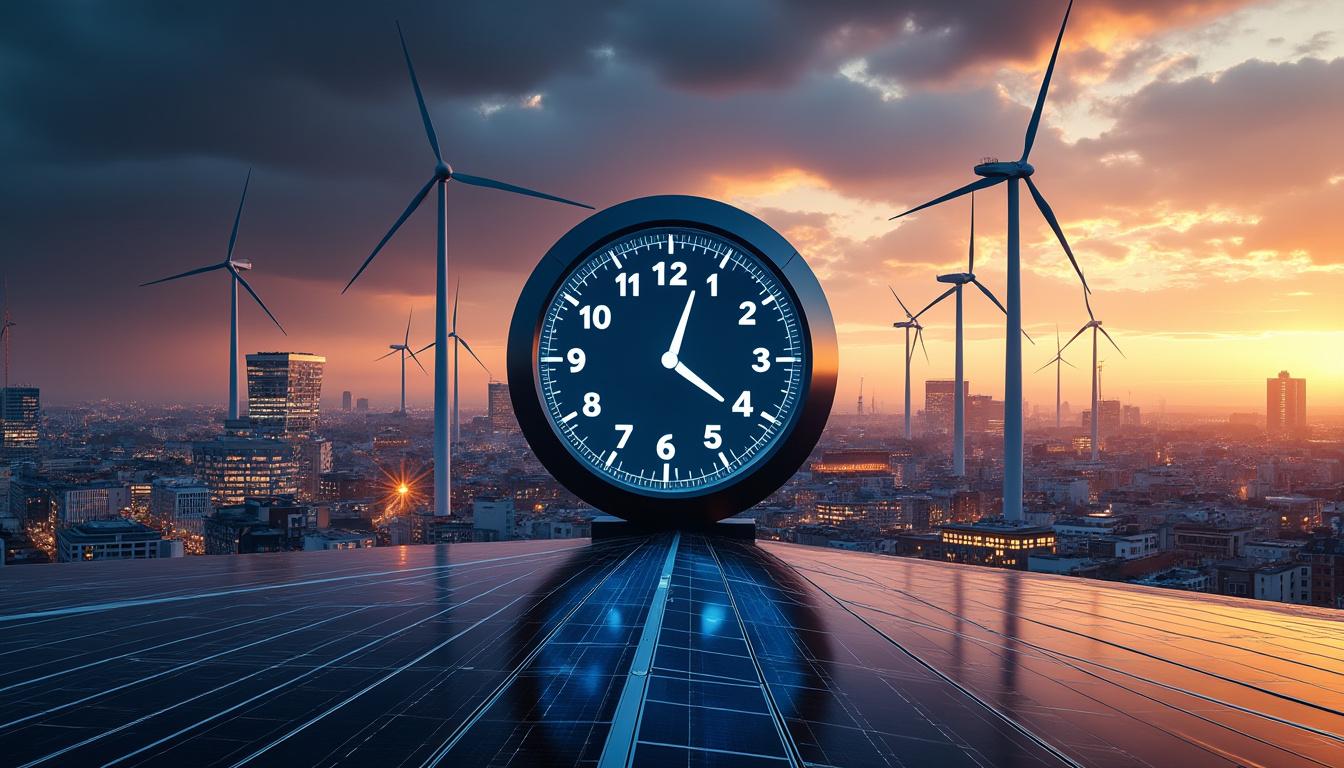
Doomsday Clock warns of the end of Trump’s war on renewable energy: real costs of halting wind and solar
Delaying wind and solar projects incurs three costs at once: higher energy bills, technological delays, and climate vulnerability. Stopping the connection of offshore wind farms or withdrawing sensible support for efficiency means families pay more per kWh and the economy loses skilled jobs. It’s a bad business decision, especially when alternatives are already competitive without permanent subsidies.
Consider a typical condominium of 24 units, with elevators, garage lighting, and water pumps. Without management, consumption concentrates during the most expensive hours. By installing photovoltaics on the roof, replacing fluorescents with LEDs, and adjusting the timing of pumps, it is common to cut 20–35% of the common bill. If smart plugs for vehicle charging and water heating are included during periods of solar surplus, the savings increase. There is no magic here: it’s applied engineering and monthly measurement.
At the macro level, the suspension of offshore wind projects in the U.S. was an industrial misstep. Value chains for towers, cables, and foundations need cadence and predictability. When investment is frozen, suppliers lose orders, shipyards stop, and skills disperse. The European market learned the lesson and is preparing a “clean energy reservoir” in the North Sea, with multi-country interconnections that reduce costs and balance production. These are 21st-century infrastructures, comparable in importance to the large dams of the past.
There is also a hidden financial cost: the regulatory risk. Projects that stall halfway through increase capital costs for future undertakings. Interest rate + uncertainty = more expensive energy. In contrast, regulatory stability lowers spreads, attracts pension and insurance funds, and transforms the energy transition into a safe investment opportunity for decades. Families benefit through predictable tariffs and self-consumption programs with clear rules.
In a case study of the “Atlantic Condominium” in Cascais, the combination of 40 kWp photovoltaics, roof insulation, and a central heat pump for hot water reduced common annual spending by about 32%. The strategy included a supply contract that values solar surpluses during low-demand hours and a simple maintenance plan: cleaning panels twice a year and monitoring consumption with a digital platform. In parallel, the units adopted windows with low emissive glass, improving comfort in summer and winter.
When it comes to banning wind energy “by principle,” the basics are lost sight of: diversification reduces risk. Onshore wind, offshore wind, solar on rooftops and degraded lands, geothermal in favorable locations, hydro with modernization — each technology covers a part of the load and hourly profile. A smart combination, supported by storage and demand management, creates an electrical system that withstands cloudy days and windless nights with competitive costs.
In summary, ending the war on renewables means lower bills, creating skilled jobs, stabilizing industrial chains, and reducing climate risks. It is the most sensible package when the clock is ticking against us.
Doomsday Clock and your home: practical roadmap to cut emissions and bills without losing comfort
If the goal is to push the hands of the clock back, the first area for action is housing. In both new and existing buildings, there are a sequence of measures that work repeatedly. The secret is to combine efficiency with local production and intelligent management, transforming dispersed consumption into a synchronized orchestra.
Start with the envelope: insulation, airtightness, windows
Before purchasing technology, it is worth losing less energy. Insulating roofs and walls, sealing leaks, and installing windows with thermal breaks and low emissivity glass reduces the need for heating and cooling. In Mediterranean climates, exterior solar protections (brise-soleils, shades, deciduous trees) cut summer heat gains, decreasing air conditioning hours. In rehabilitation, cork panels or plant fibers offer good performance and low impact.
Devices that turn every kWh into comfort
High-efficiency heat pumps, well-sized, cover hot water and climate control with high COPs, especially in well-insulated buildings. Combined with mechanical ventilation with heat recovery, they maintain indoor air quality and control humidity. In kitchens, induction stoves enhance safety and efficiency, and replacing old boilers with well-managed electric equipment prepares the house for an increasingly clean grid.
Production and management: photovoltaics, batteries, and smart load
Installing photovoltaics on the roof or facade captures immediate value, especially when there are flexible loads (hot water, electric vehicles, washing machines). Home or community batteries absorb surpluses and sustain peak loads at night. The cherry on top is the load management: heating water in the early afternoon, charging vehicles during solar hours, and programming A/C to pre-cool the house before a peak.
- 🔧 Step 1: diagnose losses with a simple energy audit
- 🌡️ Step 2: reinforce insulation and address leaks
- ⚙️ Step 3: adopt a heat pump and mechanical ventilation with recovery
- ☀️ Step 4: install photovoltaics and, if it makes sense, a battery
- 📲 Step 5: automate loads and enroll in a smart tariff
- 🤝 Step 6: participate in a local energy community
In multifamily buildings, energy communities allow sharing production among neighbors, reducing losses and increasing collective self-consumption. It is a practical way to democratize the transition, with immediate gains for those living on the ground floor and for those with available rooftop space.
To inspire and guide, the Ecopassivehouses.pt space gathers project experiences, details on natural materials, examples of real monitoring, and practical guides for each step, always focusing on tested solutions on the ground. The idea is simple: less abstract theory and more actions that you can implement in the coming weeks.
Expected result? A house that consumes less, costs less to operate, and withstands extreme heat and cold better. This is comfort and energy security translated into square meters and euros per month.
Doomsday Clock: policies and investments that delay the hands and accelerate the transition
Families and buildings do a lot, but the scale that the clock demands also requires well-designed incentives and investments. The recommendation is clear: congresses and parliaments should reject attacks on renewables and approve measures that quickly reduce fossil fuel use. In practice, this means accelerating networks, simplifying licenses, ensuring predictability, and mobilizing capital.
| Measure 🧭 | Expected impact ⚡ | Who acts 👥 | Timeline ⏳ |
|---|---|---|---|
| Stable auctions for wind/solar | Price drop and industrial security | Government/Regulator | 1–3 years |
| Simplification of licenses | Projects on the ground faster | Local agencies | 6–18 months |
| Networks and interconnectors (MPIs) | Less curtailment, more reliability | Network operators | 2–6 years |
| Incentive for batteries and flexibility | Controlled peaks, lower tariffs | Regulator/Traders | 1–2 years |
| Energy communities | Local self-consumption and inclusion | Municipalities/Citizens | 6–24 months |
| Thermal rehabilitation of buildings | 30–60% consumption cut | Owners/State | 1–5 years |
Recent examples show that when there is vision, the tide turns. Ten European countries have committed €9.5 billion to transform the North Sea into a global clean energy hub linked to multiple countries. The goal is to supply about 143 million homes by 2050, creating redundancy and better utilizing the variability of wind. At the same time, the EU has surpassed the symbolic barrier where wind + solar surpassed fossil electricity. These milestones matter because they create confidence, align investment, and fix talent where it makes a difference.
On the other side of the Atlantic, the court decision allowing a major offshore project in Massachusetts to proceed is a reminder: Rule of law and regulatory stability are as important as turbines and inverters. When Congress blocks attempts to dismantle climate policies and approves well-calibrated incentives for mature solutions, the learning curve accelerates. The final bill for consumers drops, and the Doomsday Clock gains precious seconds.
In short, the right policies create scale, scale creates low prices, and low prices create social acceptance. It is this virtuous cycle that we need to activate, without magical promises and with budgetary seriousness.
Doomsday Clock and the information battle: how to respond to myths that delay the transition
In times of anxiety, it is tempting to believe easy slogans. However, energy misinformation has costs. Let’s look at three popular myths and practical responses that help you decide based on facts.
“China does not invest in renewables; wind is for losers”
The data shows otherwise. China has installed the largest wind farm in the world and leads in photovoltaic solar, driving global cost declines. Calling countries that use wind energy “losers” ignores the real economy: where the wind blows, electricity is cheap, and industry gains competitiveness. In Europe, wind and solar have already surpassed fossil fuels in annual electricity generation — that’s the scoreboard that matters.
“Intermittency makes renewables unfeasible”
Intermittency is a technical challenge, not a blockade. Three tools address the issue: geographic diversification (distributed wind and sun), storage (batteries, pumping), and demand-side flexibility (flexible loads, dynamic tariffs, V2H). Multi-use interconnectors at sea share production among countries, smoothing variations. At home, scheduling hot water production and vehicle charging for sunny hours turns intermittency into savings opportunities.
“Wind turbines kill many birds and ruin landscapes”
Bird mortality due to wind turbines is much lower than that caused by glass buildings, traffic, and domestic cats. Detection and selective stopping technologies reduce impacts on sensitive flight paths. Regarding landscapes, planning is key: prioritize offshore, industrial corridors, and already transformed areas, and share benefits with communities. The aesthetic debate is legitimate; the answer is not to stop everything but to do it right.
There is also the myth that “electric cars pollute more due to the battery.” With grids becoming cleaner and recycling rates increasing, the life cycle of an electric car is now lower in emissions than that of combustion vehicles in most European countries. Where electricity is still fossil, the solution is not to abandon electric cars — it is to clean the grid and accelerate renewables.
Finally, “renewables are expensive.” The LCOE of wind and solar has dramatically fallen in 10 years. Today, many projects deliver energy at costs lower than new fossil plants, even before accounting for the carbon price. When someone repeats the myth, ask: how much does gas cost at peak? Who pays for the fires, floods, and heatwaves aggravated by fossil fuels?
Responding with facts, empathy, and concrete examples disarms narratives attempting to delay solutions. Accurate information is a tool for resilience as much as a panel on the roof.
Simple action to start today: choose one step from the roadmap — for example, scheduling an energy audit for your building or comparing proposals for 3 kWp of photovoltaics — and set a date this week. Small repeated decisions can push back the hands of the Doomsday Clock more than you might imagine.
Source: pt.euronews.com