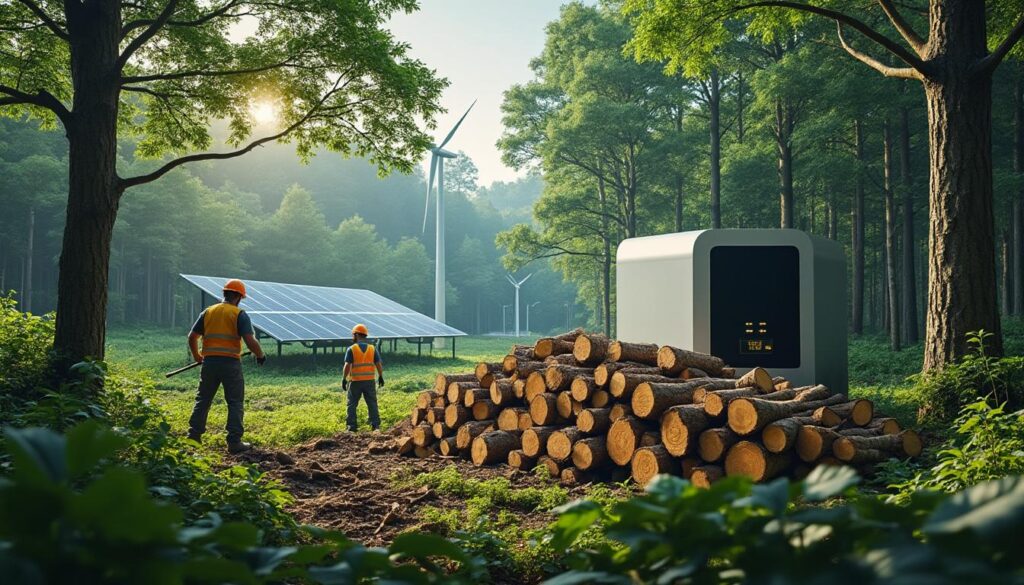
While political criticisms of wind energy make headlines, the market continues to create real jobs, with direct impacts on cities, construction, and local communities. This overview helps you connect data, opportunities, and practical decisions for your home and career.
| Short on time? Here’s the gist: |
|---|
| ✅ Jobs on the rise: Europe with 2.04 million positions in renewables by 2024, nearly 1.8 million in the EU 🇪🇺 |
| ✅ Where the vacancies are: wind with 279,100 jobs and solar with 865,000 in 2024 ☀️🌀 |
| ✅ Good practice: focus on “job-ready” skills (design, installation, O&M, energy management) 🛠️ |
| ⚠️ Mistake to avoid: ignoring supply chains, grid integration, and continuous qualification; this hinders projects and careers ⛔ |
| 🎯 Bonus: diversity matters — women make up 32% of the sector but only 19% in management; inclusion accelerates innovation 👩🔧 |
Renewable jobs in 2024-2026: the real numbers behind the political noise
Renewable energy is advancing despite controversial rhetoric. In 2024, Europe added 2.04 million jobs in the sector — with the European Union concentrating just under 1.8 million, according to recent reports. This solid foundation supports the expansion of technical services, equipment manufacturing, and field operations, with tangible impacts on local economies.
A joint study by the ILO and IRENA, published in 2025, helps to contextualize: China led with 43.9% of global renewable employment; Asia (excluding China and India) accounted for 14.9%; and the 27 EU countries ranked as the third largest “region” in global participation, with 10.8%. Practically, this means that European suppliers, installers, and operators are integrating into increasingly dense global supply chains, from wind blades to photovoltaic inverters.
There are also energy milestones that explain the demand for talent. In 2025, wind and solar generated, for the first time, more electricity than fossil fuels in the EU, exceeding them by 1%. This result, highlighted by the think tank Ember, transformed climate goals into real orders: grids needing modernization, plants to operate, batteries to integrate, and houses to renovate with self-consumption and efficiency.
In sector detail, European wind employed about 279,100 people in 2024. Germany was the largest hub, with nearly 110,000 positions, followed by Spain and Denmark. Solar reached a record of 865,000 workers in 2024, growing 5% in a year — a rate well above the 0.8% of the overall EU labor market. These numbers translate into opportunities for those skilled in design, installation, operation and maintenance, project management, and digital systems integration.
Not everything is linear. The association SolarPower Europe projected a contraction of 5% in the EU’s photovoltaic workforce by 2025 (from 865,000 to about 825,000 jobs), citing unappealing policy frameworks for investment and global overcapacity pressuring European manufacturers. The key point for you: the market remains large, but it will demand higher technical quality, productivity on-site, and differentiation strategies.
To guide decisions, the table below summarizes the recent picture. Use it as a map for training, reskilling, and business positioning.
| Sector 🔌 | Jobs 2024 👷 | Trend 2025 📈/📉 | Key notes 🧭 |
|---|---|---|---|
| Solar photovoltaic ☀️ | 865,000 | −5% estimated (≈ 825,000) | Price pressure; focus on O&M, installation quality, self-consumption |
| Wind (onshore/offshore) 🌀 | 279,100 (EU) | Mixed: onshore expansion; offshore with delays | Europe 2nd largest installer and manufacturer; bottlenecks in the supply chain and grid |
| Other renewables ⚡ | Remaining of the total European | Stable to slight growth | Biomass, heat pumps, smart grids, and storage |
Final insight: numbers grow where there is construction, maintenance, and detailed engineering — choose applicable, measurable skills connected to field execution.
Trump, wind energy, and jobs: what politics changes (and what it does not change)
Political disruptions in the US — such as attempts to cut subsidies to solar and wind or statements against new parks — generate uncertainty. Statements by Donald Trump have again classified turbines as expensive and harmful to the economy and promised to halt onshore and offshore projects. Paradoxically, previous campaign materials highlighted that, between 2016 and 2019, American wind capacity grew by about 32%, indicating that the market responds to competitive costs and network needs, regardless of the noise.
Why does this matter to you? Global supply chains reflect local decisions. When projects in the US slow down, European factories may adjust production; when Europe advances with interconnections and auctions, suppliers gain momentum. By 2026, many companies maintain plans lasting 10-15 years — time frames in which short-cycle political volatility weighs less than the structural decline in costs and the need to electrify buildings, mobility, and industry.
Consider the case of a fictional SME, VentusWorks, located in Braga and with maintenance contracts for wind parks in Galicia. Legislative fluctuations across the Atlantic have little affected the core: inspections by drones, retrofitting controllers, and managing critical components. By investing in predictive diagnostics and IRATA training for work at heights, the company maintained margins and expanded teams, demonstrating how technical specialization protects jobs.
However, there are real effects when subsidies are abruptly cut or permits are stalled: capital costs rise, projects are repriced, and part of the jobs migrate to more resilient segments (O&M, repowering, grid reinforcement). In regions with ports and shipyards, like Viana do Castelo, clusters related to offshore may face delays. The practical response is diversification: solar + building storage combos, energy performance contracts, and energy management services reduce exposure to a single segment.
In housing, political instability should never hinder measures with clear returns: thermal insulation, shading, efficient ventilation, sized photovoltaic systems, and electric vehicle charging. Even if an offshore wind auction is delayed, energy bills decrease with self-consumption, and the value of property remains. And, on the employment side, installers and commissioners with solid certifications continue to be in demand.
Final insight: politics can delay projects, but economic “gravity” pulls towards competitive technologies; skills and quality services shield your professional path.
Jobs in solar energy: where the vacancies are and how to position your career
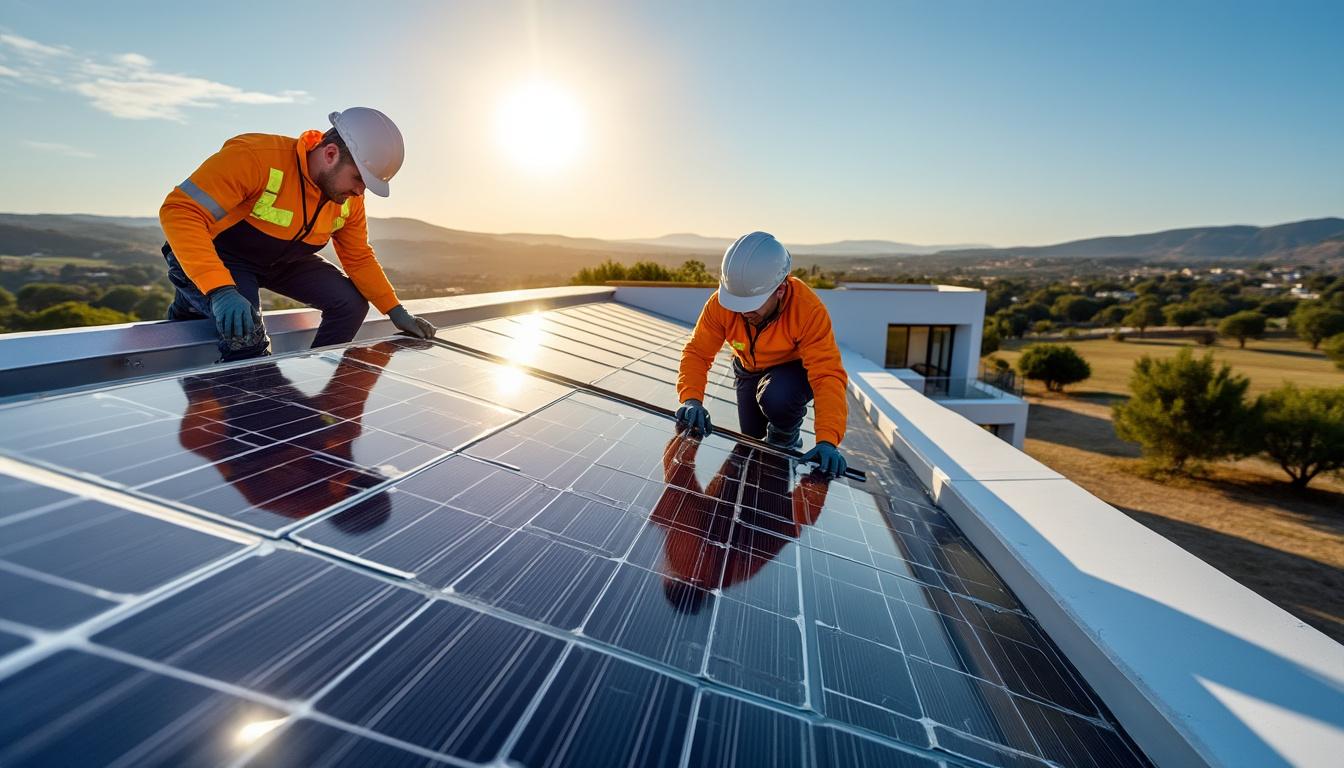
Solar energy continues to be the fastest entry point to skilled work in the sector. In 2024, the EU added about 865,000 photovoltaic jobs, with Germany as the largest employer, followed by Spain, Italy, and Poland. Despite the anticipated −5% slowdown in 2025, the volume remains extremely high, with consistent demand for installers, designers, and O&M technicians capable of reducing failures and maximizing production.
What explains the fluctuation? In part, global overcapacity has lowered module prices, pressuring European manufacturers’ margins; on the other hand, post-energy crisis political frameworks have not always aligned incentives, grids, and licensing. For you, the question is pragmatic: how to gain relevance in a more demanding and competitive market?
Practical skills that generate hiring
Solid job openings concentrate on stages with a direct impact on system performance and safety on site. In a building, a poorly sized design or ineffective routing can irreversibly cut annual production. By mastering standards, software, and good installation practices, you differentiate yourself without relying on module price.
- 🧭 Sizing and simulation: PVSyst/Helioscope, shading calculation, DC/AC losses, and optimal orientation.
- 🛠️ Safe rooftop installation: anchoring, waterproofing, cable-length ratio, waste management.
- 🔌 Power electricity: selectivity of protections, SPD, sectioning, hybrid inverters, and integration with batteries.
- 📡 Commissioning and monitoring: IV-curves, thermography, performance KPIs (PR, CUF), and predictive O&M.
- 🏠 Building integration: compatibility with heat pumps, EV chargers, and load management home automation.
Here’s a concrete example. The fictional cooperative Sol de Évora decided to equip 200 homes with 5 kW + 5 kWh of storage. By standardizing kits, training teams for commissioning in 90 minutes, and using centralized monitoring, it reduced callbacks by 37% and increased resident satisfaction. The result? A 5-year maintenance contract and new openings for technicians.
How to turn your home into an efficiency laboratory
If you manage a condominium or consider a renovation, prioritize “self-paying measures”: insulation, airtightness, shading, and mechanical ventilation with heat recovery. From there, size solar based on consumption profile and introduce automation (for example, heating water when there is surplus). Besides saving, you create practical cases for your portfolio — a powerful argument in interviews.
There is still room for niche markets with higher margins: historic roofs with aesthetic integration, BIPV in facades, or collective self-consumption in neighborhoods. These fronts require careful engineering and exemplary documentation. In technical competitions, proposals that prove low failure rates within 24 months gain an edge over “miraculous” pricing.
Final insight: the sun continues to hire those who deliver measurable quality; focus on critical stages and turn each project into a technical reference.
Onshore and offshore wind: where jobs are born in the value chain
European wind plays a dual role: it is the second largest installer and the second largest manufacturer of equipment in the world. This positioning supports jobs from design to port logistics, covering blades, towers, nacelles, cables, offshore substations, and SCADA software. In 2024, the EU presented around 279,100 jobs in wind, with Germany (~110,000) leading, followed by Spain and Denmark, classic hubs of engineering and manufacturing.
Then why is there talk of “difficulties”? Offshore faces rising costs, cancellations, grid connection challenges, and pressure on the supply chain. Larger components require specialized ships, narrow weather windows, and adapted ports. This delays schedules and complicates financing. At the same time, onshore maintains continuous expansion, especially in repowering: replacing old wind turbines with more efficient models increases production without expanding the occupied area.
Applied example: the coastal cluster and the “port effect”
Imagine the Atlantic corridor between Viana do Castelo and A Coruña. Modernized shipyards, logistics yards, and training in rope access and medium voltage electrical create a regional “magnet” for jobs. A delay in an offshore auction can slow down assembly, but the service portfolio — inspection, blade reinforcement, converter upgrades, substation maintenance — sustains teams. For you, the message is clear: specializing in O&M and electrical safety maintains robust employability in more turbulent cycles.
Integration with the building sector and energy-efficient homes
Wind does not live in isolation. The electricity generated feeds heat pumps, neighborhood grids, and even energy communities. Real estate projects that combine bioclimatic architecture, exemplary thermal envelope, and green supply contracts create jobs for installers, commissioning agents, energy auditors, and asset managers. When a municipality opens a front to connect schools to wind PPA, tasks arise: electrical adaptations, load profile management, and energy quality verification.
To illustrate, the fictional company NorteWind Service developed a “repowering + education” package, where technicians perform scheduled maintenance and, in parallel, train municipal teams to monitor quality indicators (THD, flicker). This generated new vacancies and reduced complaints, showing that energy literacy is also an employment vector.
Final insight: wind employs those who master safe operation, logistics, and network integration; repowering and premium services offset slower offshore cycles.
Green work with purpose: inclusion, reskilling, and lasting wages
Sustainable growth requires real inclusion. In 2024, women held 32% of full-time jobs in renewables, above oil and gas (23%), but below the global average labor force (43%). In top positions, the number drops to 19%. This is not only a social issue — it is also operational: diverse teams correlate with more innovative projects, fewer incidents, and better talent retention.
How to advance? First front: unbiased recruitment, with objective job descriptions, blind technical tests, and transparent progression goals. Second front: reskilling professionals from adjacent sectors — electricians, welders, HVAC technicians — for solar installation, wind O&M, grids, and storage. Third front: schedules compatible with family care and mentoring programs, increasing retention in the sector.
Reskilling well is different from “just giving a course”
Effective programs focus on real work scenarios: electrical safety, working at heights, commissioning, compliance documentation, and after-sales service. In a residential project, the difference between “installing” and “delivering” lies in the technical dossier, in the testing, and in user training. Trainings that simulate these steps increase immediate employability.
On the salary side, the trend is stabilization with premiums for certifications and quality KPIs. Technicians who maintain PR above 82% in solar plants, or who reduce MTTR in wind turbines, negotiate better. In SMEs, maintenance contracts with clear SLAs create revenue predictability and career plans.
Consider the story of the fictional character Inês, 29 years old, an electronics technician who migrated from retail to solar O&M. In 9 months, after certification in commissioning and practical courses in IV-curve, she moved from assistant to shift manager. It wasn’t “magic”: it was a path driven by metrics and the ability to solve problems in the field.
For those managing projects and condominiums, inclusion also reduces costs: well-trained and diverse teams make fewer repetitive errors and document better. And, in your home, when you request proposals that value quality, safety, and assistance — not just price — you help push the sector to higher standards, reinforcing lasting jobs.
Final insight: diversity and practical qualification elevate project quality and job stability — two pieces of the same green puzzle.
Immediate action: choose a concrete skill to develop in the next 2 weeks (for example, commissioning inverters or safety at heights) and apply it in a real or pilot project; practical results are your best calling card.
Source: pt.euronews.com