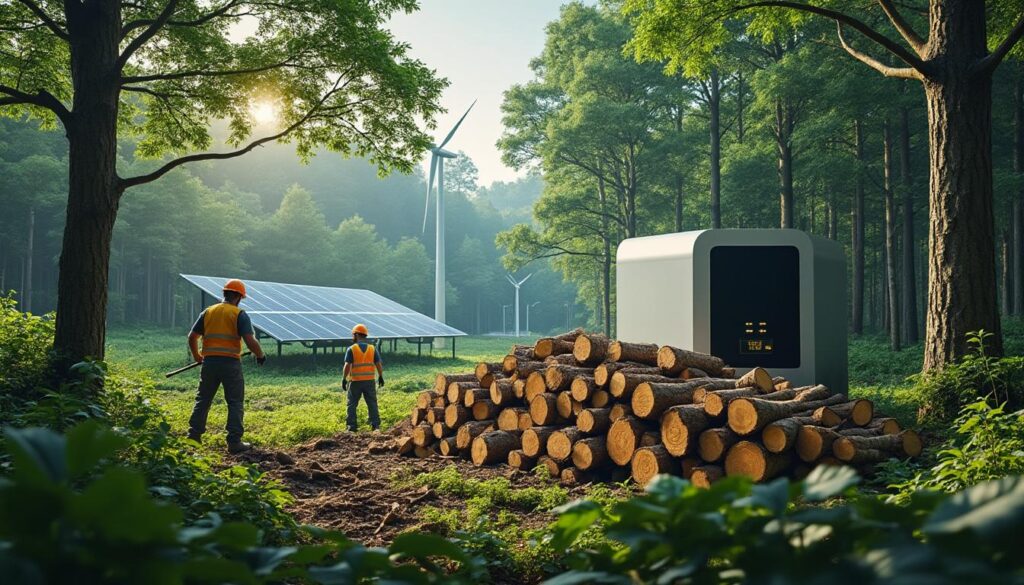
COP30, in Belém, placed renewable energies at the center of global decisions. The words of Ursula von der Leyen echoed like a roadmap: accelerate, simplify, and transform the energy system with real benefits for people and the climate.
| Short on time? Here’s the essence: ⏱️ |
|---|
| ✅ 95% of the new global capacity came from renewables — a clear sign of structural shift 🌍 |
| ✅ Triple renewables and double efficiency by 2030: agreed target in progress 🎯 |
| ✅ Renewables are cheaper and reduce energy risks for homes and cities 💶 |
| ✅ Avoid pitfalls: poorly done sizing and lack of integration between insulation + solar + management 🧩 |
| ✅ Bonus: energy communities and storage accelerate local autonomy ⚡ |
COP30 and the real momentum: why renewables are the sustainable future
In the session on energy transition, Ursula von der Leyen emphasized that renewables “are here to stay” and that countries need to “maintain the momentum.” With the largest share of new electricity capacity emerging from clean sources, the message is clear: the market has already changed, and public policies must keep pace with this dynamism.
This signal comes in the continuation of the commitment made at COP28: triple renewable capacity and double energy efficiency by 2030. COP30, held in Brazil, reinforced the need to turn targets into concrete actions, from homes to industries. The newly launched World Forum on Energy Transition — with partners like Brazil, Canada, DRC, Kenya, Peru, South Africa, the UAE, and the UK — aims to align financing, supply chains, and technical training.
What does this mean for you? Less unpredictable bills, more comfort, and a more resilient property. In housing, the equation combines three pieces: well-insulated envelope, local production (photovoltaic and solar thermal), and smart management (batteries and automation). When these elements come together, the result is a home that consumes little, generates part of its energy, and maintains comfort with minimal dependence on fossil fuels.
Examples that show the way
Imagine a multifamily building that replaces gas with heat pumps, applies cork insulation on the facade, and installs solar panels on the roof. The combination reduces thermal needs, covers a significant portion of the electricity for common areas, and enables shared charging for electric vehicles. Another high-demand solution: energy communities that connect neighboring rooftops and share production.
- 🌞 Photovoltaic solar: modular, quick to install, and with falling costs.
- ❄️ Heat pumps: heat and cool with high efficiency.
- 🧱 Thermal envelope: less loss, less installed power needed.
- 🔋 Storage: shifts consumption to cheaper hours and increases autonomy.
- 📲 Smart management: prioritizes loads, avoids peaks, and optimizes self-consumption.
Errors to avoid? Installations without prior assessment of the building, sizing by “eyeballing,” and lack of monitoring. With real data, decisions become clear and results consistent.
| Indicator 🌍 | Signal at COP30 ⚡ | Practical impact 🧭 |
|---|---|---|
| 95% of new capacity | Renewables lead global additions | Greater clean supply, more predictable prices |
| Triple renewables by 2030 | Goal reaffirmed by various blocs | Multiple local and regional projects |
| Double efficiency by 2030 | Efficiency as the 1st source of energy | Cost reduction without loss of comfort |
| World Forum on Transition | Countries coordinated in value chains | More access to technology and financing |
In summary: COP30 made it clear that the transition is not a trend; it is infrastructure under daily construction, from the roof to the neighborhood.
How COP30 accelerates the energy transition in homes and cities
When leaders advocate for renewables, the effect only materializes if it reaches the facades and streets. Urban scale is decisive: efficient buildings, electric mobility, and smart networks generate a virtuous cycle of savings and comfort.
Let’s take the fictional case of “Quinta do Rio,” a set of four rehabilitated buildings in a mid-sized city. The intervention combined exterior cork insulation, triple-glazed windows, heat pumps, 120 kW of photovoltaic on roofs, and shared batteries. Total consumption dropped by 58% and peaks were smoothed out, allowing for smaller power contracts. The cherry on top: an energy community that shares excess with a nearby school.
Concrete actions that work
- 🧭 Energy audit: starting point to decide where to invest first.
- 🧰 Envelope + technology: insulate, seal, then install generation and management.
- 🔁 Efficient climate control: reversible heat pumps and heat recovery.
- 🔌 Photovoltaics for self-consumption: prioritize daytime loads (DHW, appliances, EV).
- 🤝 Energy community: share production and stabilize bills.
The municipal scale can accelerate with solar maps, simplified licensing, and rate systems that value flexibility. And why not transform the roofs of public facilities into pedagogical solar power plants?
| Measure 🛠️ | Estimated savings 💶 | Average payback ⏳ | Complexity 🧩 |
|---|---|---|---|
| Insulation + efficient windows | 30–45% thermal energy | 5–10 years | Medium (construction + finishes) |
| Heat pumps | 50–70% vs. resistances | 3–7 years | Medium (hydraulic/electrical) |
| Photovoltaic solar | 20–40% of the electricity bill | 4–8 years | Low (quick installation) |
| Batteries + management | +10–25% self-consumption | 6–10 years | Medium (software + EMS) |
If you want a practical plan: start with what does not fail — efficiency in the envelope, then climate control, and finally generation and management. The right order multiplies results.
Triple renewables and double efficiency by 2030: practical impact on your life
The goals set after COP28, reinforced at COP30, will only be achieved if each building does its part. For the household, this translates into a realistic and phased roadmap, respecting budget and timeline.
Simple roadmap, in clear steps
- 📋 Year 1: Diagnosis and low-cost measures — sealing, caulking, equipment tuning, and humidity control.
- 🏗️ Years 1–2: Thermal envelope — insulation in roofs and facades, shading, efficient blinds.
- ♻️ Years 2–3: Efficient climate control — heat pumps and DHW with high COP and qualified installation.
- 🔆 Years 2–4: Photovoltaic solar — sized to the actual consumption profile (monitoring helps a lot).
- 🔋 Years 3–5: Storage and management — batteries, bidirectional EV chargers, and home automation.
A family of four in a semi-detached house, for example, can reduce 60–75% of grid consumption in five years, with superior comfort. The key is to avoid shortcuts and integrate solutions as a system.
| Step 📌 | Main action ⚙️ | Expected result ✅ | Project note 🧠 |
|---|---|---|---|
| 1 | Audit + sealing | -10 to -15% thermal expenses | Baseline data for sizing |
| 2 | Insulation + windows | -20 to -35% additional | Less installed power needed |
| 3 | Heat pumps | Stable climate with less kWh | Prepare hydraulic and electrical systems |
| 4 | Photovoltaic | High self-consumption | Hybrid inverter facilitates batteries |
| 5 | Batteries + EMS | Smoothing peaks and optimizing hours | Integrate EV (V2H/V2G) when possible |
Want a quick check? If the envelope is weak, any active system will work hard. Start where energy “leaks.”
Green economy in daily life: costs, financing, and return on investment
Renewables are not just a climate issue; they are a financial decision. With falling costs and volatile energy, reducing dependence on the grid improves household budgets and enhances property value.
Combining sources of financing
- 🏦 Green credit: subsidized rates for efficiency, photovoltaics, and heat pumps.
- 🤝 Energy communities: dilute costs and enhance revenues through sharing excess.
- 💡 Leasing/ESCO: companies finance and operate systems, paid with savings.
- 📈 Efficient mortgage: properties with better energy class tend to have more favorable conditions.
- 🧾 Incentives and exemptions: local programs can reduce initial CAPEX.
Prudent strategy: divide the project into phases to balance cash flow, starting with actions of highest return per invested euro (insulation and leak control), and then, generation and storage. Monitoring performance is what separates promises from results.
| Instrument 💼 | When to use 🗓️ | Main advantage 🌟 | Risk/attention ⚠️ |
|---|---|---|---|
| Green credit | Phased projects | Competitive interest | Evaluate APR and fees |
| ESCO | Condominiums/services | Reduced capex | Clear performance contract |
| Energy community | Neighborhoods/associations | Scale and sharing | Governance and measurement |
| Efficient mortgage | Deep rehabilitation | Property value | Require energy certification |
In the end, the best financing is one that allows for a good execution, without shortcuts. The correct engineering pays for itself in comfort and cost stability.
Sustainable materials and bioclimatic design: the foundation that enhances renewables
The cleanest energy is the one that does not need to be produced. This is where natural materials and bioclimatic design come into play, reducing the demand even before installing technology.
Materials that work and make sense
- 🌿 Cork: lightweight insulation, renewable, and excellent thermal inertia.
- 🌲 Structural wood (CLT): low embodied carbon and quick construction.
- 🏺 Lime mortars: hygrometric regulation and durability.
- 🧱 Raw earth brick: inertia and comfort in variable climates.
- 🕶️ Active shading: louvers and blinds that control solar gains.
Combine this with correct solar orientation, cross ventilation, and seasonal protections. This way, the photovoltaic system and the heat pump work less, last longer, and deliver stable comfort — even during heatwaves.
| Element 🧱 | Key property 🔬 | Recommended application 🏡 | Direct benefit ✅ |
|---|---|---|---|
| Cork | Low conductivity | Facades, roofs | Less loss and more comfort |
| CLT | Structural and lightweight | Roof extensions | Quick work, reduced carbon |
| Aerial lime | Humidity management | Interior rehabilitation | “Breathable” walls |
| Raw earth | High thermal inertia | Interior walls | Modulates temperature peaks |
When the foundation is solid, technology shines. And when technology and architecture integrate, the home becomes a small center of comfort and autonomy.
Governance and scale: maintaining momentum after COP30
If the message is “maintain momentum,” the question is: how to ensure continuity? The answer lies in local governance, technical training, and replicable projects that unite municipalities, companies, and citizens.
From neighborhood to city: what works
- 🗺️ Municipal solar plans: mapping rooftops and targets by neighborhood.
- 📊 Open data: monitored consumption, production, and emissions in real time.
- 🏫 Demonstration schools: solar rooftops as living laboratories.
- 🛠️ Capacity building: certified installers and preventive maintenance.
- 🧑⚖️ Agile licensing: clear rules and short deadlines for efficient works.
An inspiring example is the creation of efficiency corridors on avenues with coordinated rehabilitation: improved facades, LED lighting, stops with photovoltaic coverage, and charging points. When the city shows the way, individuals move forward with more confidence.
| Public action 🏛️ | Multiplier effect ➿ | Gain for citizens 🙌 | Connection with COP30 🌐 |
|---|---|---|---|
| Solar mapping | Prioritized projects | Less decision time | Triple renewables with focus |
| Support for energy communities | Scale and inclusion | More stable bills | Aligned local autonomy |
| Technical training | Installation quality | Fewer failures | Sustained momentum |
| Real-time data | Peak management | Fairer rates | Doubled efficiency |
If COP30 signaled the way, it is up to each city to translate the vision into action. You can start today: choose a measure, measure, adjust, and replicate. For practical ideas and step-by-step guides, explore the resources at Ecopassivehouses.pt.
Source: observador.pt