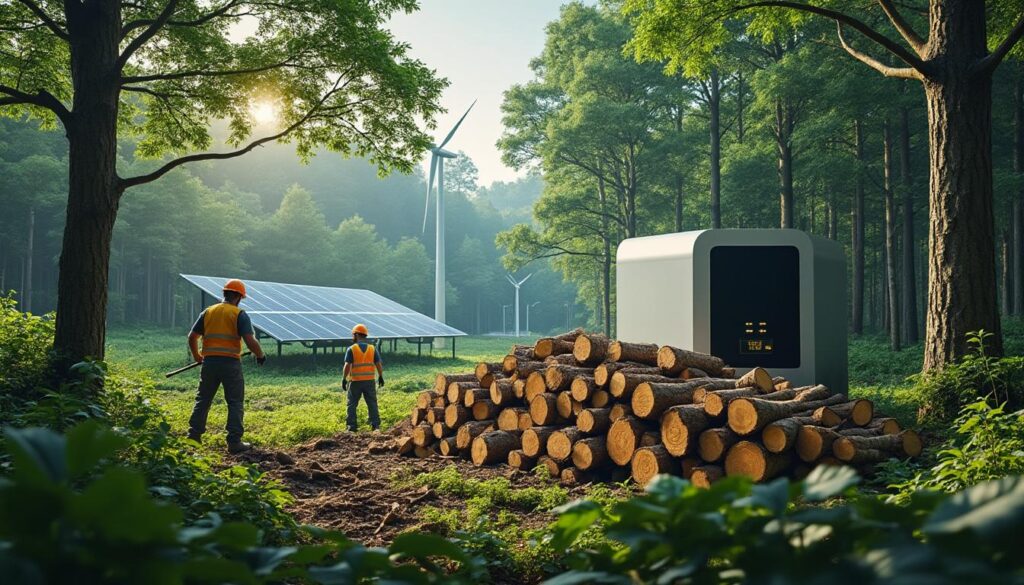
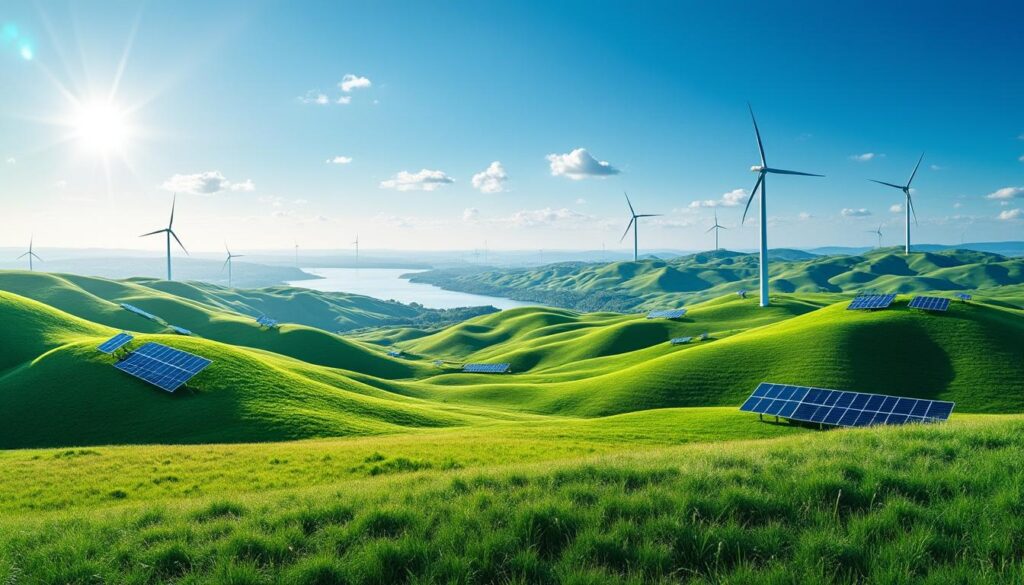
The Chinese bet on clean technologies is reconfiguring energy, cities, and industry, with impacts that are already reaching daily life. If you’re looking for practical ways to integrate this sustainable shift at home, here you will find clear and applicable ideas.
| Short on time? Here’s the gist: ⚡🌱 | |
|---|---|
| ✅ Key Point #1 | China has become the first “electro-state”, leading the installation of renewables and driving global decarbonization 💡 |
| ✅ Key Point #2 | sponge cities, electric mobility, and data are reclaiming air, water, and soil, with replicable solutions in any neighborhood 🏙️ |
| ✅ Key Point #3 | Avoid the common mistake: copying technology without climate and cultural adaptation. Prioritize efficiency, maintenance, and integration with local habits 🧭 |
| ✅ Bonus | Solar + heat pump + insulation is the trio with the best cost/benefit for comfortable, low-consumption homes 🔋 |
China invests in a sustainable future: from “electro-state” to leadership in renewables
Over the past decade, China has established itself as a critical supplier of clean technology and a global benchmark in scale and cost. Energy sector analysts describe the country as the first “electro-state”, where decarbonized electricity becomes the backbone of the economy, from mobility to base industries. This shift goes far beyond targets; it translates into infrastructures, networks, and skills spread across entire cities.
The numbers illustrate the leap. In just half a year, over 250 GW of solar have been connected, a figure higher than what many regional blocks installed in decades. At the same time, both onshore and offshore wind capacity continue to grow, supported by agile supply chains and operation and maintenance engineering at scale. The implicit message is clear: when the cost falls and logistics work, the transition accelerates.
The ripple effect reaches all continents. From Southeast Asia to Africa, modular battery systems, high-efficiency inverters, and monitoring solutions have arrived at competitive prices, creating space for local energy autonomy. For the end user, this means more options to combine photovoltaic generation, heat pumps, and intelligent load management.
What it means to be an “electro-state” in practice
Being an “electro-state” implies abundant and clean electricity production, electrification of end uses (heating, transportation, industrial processes), and networks capable of integrating storage. In China, this vision emerges with solar parks in the desert, coastal wind, HVDC transporting energy over thousands of kilometers, and capacity markets to stabilize the system.
The resource scarcity does not disappear but migrates: fewer fossil fuels, more need for minerals and advanced recycling. The country has, therefore, also invested in LFP batteries and sodium-ion to relieve pressures on lithium.
- 🔌 Focused electrification: prioritize low/medium temperature heat with a heat pump.
- 🌀 Flexibility: time-of-use tariffs and home batteries balance the grid.
- 🛰️ Data and AI: wind/solar forecasting optimizes dispatch and maintenance.
- 🔁 Circular economy: battery and panel recycling already integrated into costs.
| Indicator ⚙️ | China 🌏 | EU 🇪🇺 (reference) | Impact for you 🏠 |
|---|---|---|---|
| New solar/semester | ~250+ GW | Total installations ~400 GW over years | Price drop and more options for kits 🔽 |
| Scalable batteries | Massive LFP/sodium production | Gradual expansion | Store excess and self-consume 🌞 |
| HVDC/integration | Corridors of thousands of km | Regional projects | Stability and dynamic tariffs ⚡ |
For those planning an efficient home, the message is pragmatic: electrify the essentials, insulate well, produce and store locally. This is the foundation of comfort and predictable bills.

Cities reinvented in China: sponge city, clean mobility, and blue skies
Chinese metropolises have undergone an accelerated cycle: pollution, crisis, and reinvention. Today, urban programs combine sponge cities, green corridors, rain gardens, living roofs, and distributed sensors. The objective is twofold: reduce flooding and heat islands while simultaneously filtering water and improving air quality in an urban design that favors active and electric mobility.
Beijing and Shanghai have been revitalizing entire neighborhoods, replacing impermeable surfaces with porous ones and enhancing shading. In Shenzhen, 100% electric buses have cut emissions and noise, with direct gains for public health. The results are already visible in indicators: more blue sky days and reduced runoff during extreme events.
Sponge city in action: the “Jade Neighborhood” case
Imagine the “Jade Neighborhood,” a typical block previously subject to flooding. The project replaced concrete with permeable pavement, installed rain gardens along sidewalks, modular reservoirs under squares, and green roofs on public buildings. In one year, micro-drainage retains peak rainfall and increases humidity in the summer, improving thermal comfort.
This approach is of interest to any condominium. With modular solutions, it is possible to reduce maintenance costs and elevate the quality of life, especially in areas with hot summers.
- 🌧️ Rain gardens: capture and filter rainwater locally.
- 🟩 Living roofs: lower temperature and protect waterproofing.
- 🚲 Active mobility: continuous networks for walking and cycling with shade.
- 🚌 Electric transport: less noise and particulate matter, more comfort.
- 📡 Environmental sensors: real-time data guide maintenance.
| Solution 🌿 | Direct benefit 💧 | Climate benefit 🌡️ | Application at home 🏡 |
|---|---|---|---|
| Permeable pavement | Fewer puddles and floods | Recharges aquifers | Drainable sidewalk and patio ✅ |
| Green roof | Thermal comfort | Reduces heat island | Light substrate + efficient irrigation 🌱 |
| Shades and trees | Cooler air | Carbon sequestration | Pergolas and native species 🌳 |
To get inspired by replicable urban solutions, it is worth observing how data and community participation accelerate outcomes. Seeing with your own eyes helps in better planning.
When planning your neighborhood, think about how water, shade, and circulation connect. Small decisions, such as a shaded crosswalk or a retention pond, change daily comfort.
Industry and low-carbon materials: the silent foundation of the Chinese shift
Without cleaner materials, there are no truly sustainable cities or homes. China is moving forward with low-carbon steel (electric furnaces and green hydrogen), lower-clinker cement and pozzolanic additions, and an ecosystem of batteries that serves both mobility and buildings. This combination reduces emissions and total life cycle costs, especially when logistics and recycling are considered from the start.
In factories, electrifying medium thermal processes with industrial heat pumps and electric resistance, combined with heat recovery, has cut consumption. At the same time, sodium-ion lines have gained traction as a robust and affordable alternative for stationary applications, relieving pressure on lithium during peak demand.
Smart materials for smart buildings
In construction, materials with low embodied energy and good hygrothermal performance — such as engineered wood, plant fiber panels, and technical clays — are coming back into focus. In humid climates, they regulate vapor and temperature, reducing the cooling load. In dry climates, they combine with thermal mass to stabilize peaks.
- 🧱 “Eco” cement: less clinker, more durability with well-measured additions.
- 🔩 Green steel: renewable electricity + quality scrap = smaller footprint.
- 🔋 LFP/sodium batteries: safe, stable, and with a good lifespan for buildings.
- 🌾 Biomaterials: plant fibers and raw earth for comfort and health.
| Material 🧰 | Carbon footprint 📉 | Technical advantage 🧪 | Recommended use 🏗️ |
|---|---|---|---|
| Green steel | Reduction up to 50% | High strength | Critical structures and connections |
| Low-clinker cement | 20–40% reduction | Chemical durability | Slabs, beams, mortars |
| Engineered wood | Stores carbon | Light and fast | Floors, walls, roofs |
The impact reaches the residential market when mature logistics chains reduce prices and increase availability. It is the engine that allows efficient home solutions to become standard rather than exception.
When choosing materials, cross-reference footprint, durability, and maintenance. A good design amplifies the benefits of a good material.
What you can apply at home: efficiency, energy, and healthy comfort
Transforming the home starts with efficiency. The Chinese experience demonstrates the power of the trio insulation + airtightness + ventilation with recovery. Add solar energy on the roof, a well-sized heat pump, and load management, and the result is comfort with predictable bills. In apartments, the strategy involves shading, window airtightness, and efficient A+++ class equipment.
In the “Lin Apartment” in Chengdu, replacing window frames with profiles with thermal break, solar control film, and dual-flow MVHR has reduced consumption by 35% and improved air quality. In houses, the formula also includes light-colored roofs, continuous insulation on the envelope, and photovoltaics with microinverters to optimize production on complex roofs.
Step-by-step guide for any home
It is not necessary to do everything at once. A phased plan keeps investment under control and brings gains from day one. Prioritize the envelope and systems that work all year round.
- 🧊 Reduce losses: insulation of roof and strategic internal walls.
- 🌬️ Healthy air: MVHR with appropriate filters and simple maintenance.
- 🌞 Generate energy: 3–6 kW of PV covers a good part of the loads.
- 🔥 Heat/cool efficiently: well-sized heat pump, high SCOP.
- 📱 Smart management: schedule loads for sunny times or low-rate periods.
| Measure 🛠️ | Typical investment 💶 | Annual savings 📉 | Practical note 🧾 |
|---|---|---|---|
| Roof insulation | Medium | High | First step with the best return ✅ |
| Efficient windows | Medium/high | Medium | Combine with external shading 🌤️ |
| PV 4–6 kW | High | Medium/high | Self-consumption and electric vehicle charging 🔋 |
| Heat pump | Medium | High | Sizing based on actual thermal load 🧮 |
To explore solutions further, Ecopassivehouses.pt brings together ideas and practices on sustainable housing, with references to projects in different climates. The goal is to help you choose the essentials and avoid unnecessary spending.
An efficient home is not just about technology; it’s intelligent design that respects the climate and your habits. Start with what you can control today and create a path for the rest.
Policies, financing, and cooperation: how China accelerates and what it changes for you
The Chinese repositioning in the climate agenda combines national goals and regional implementation. The country has been strengthening the carbon market, expanding efficiency standards, and financing green infrastructures through sustainable bonds. The political signal reduces risk and attracts capital for the long term, crucial when discussing electric networks, mobility, and urban renewal.
Historically, after Rio-92 and the Agenda 21, environmental policies gained density. The recent energy transition adds an industrial dimension: competitiveness based on low carbon. This opens up space for cooperation with municipalities and companies that wish to modernize their consumption and production matrix, whether in Europe, Africa, or Latin America.
Tools that unlock projects and multiply impact
In practice, the range of instruments ranges from dynamic tariffs and renewable auctions to guarantee mechanisms and green credit lines. For the end consumer, this appears as incentives for heat pumps, solar rooftop programs, and financing with reduced rates for energy rehabilitation. Municipalities learn from Chinese pilots to link financing to real performance (measured by sensors and audits).
- 🏛️ Clear regulation: energy codes and building labels push the average upward.
- 💸 Green finance: bonds and dedicated funds stabilize long-term investments.
- 🤝 Partnerships: South-South cooperation and technical exchange accelerate the learning curve.
- 🧩 Standardization: modules, connectors, and protocols simplify maintenance.
| Instrument 🧭 | How it works ⚙️ | Benefit 🎯 | Local application 🏘️ |
|---|---|---|---|
| Carbon market | Price for emissions | Incentivizes efficiency | Buildings with real monitoring 📊 |
| Renewable auctions | Long-term contracts | Predictable pricing | Local energy communities 🔗 |
| Green credit | Reduced rate | Capex enabled | Rehabilitation and residential PV 💡 |
An inspiring example is the “Ping An Eco-Park,” which used green financing to install PV, batteries, and a microgrid with a priority on electric mobility. The return comes not only from the energy bill but also from real estate appreciation and urban comfort.
For you, the path is to outline a 3 to 5-year plan with goals: insulation this year, MVHR next, PV and heat pump in the following phase. Attach costs, savings, and maintenance. With clear objectives, support and technological solutions become natural allies.
Start with a simple gesture today: make a list of three measures with the best return (insulation, MVHR, heat pump) and schedule an energy diagnosis of your home. A clear plan is half the journey to a comfortable, efficient, and future-ready home. 🌿
Source: jornaleconomico.sapo.pt