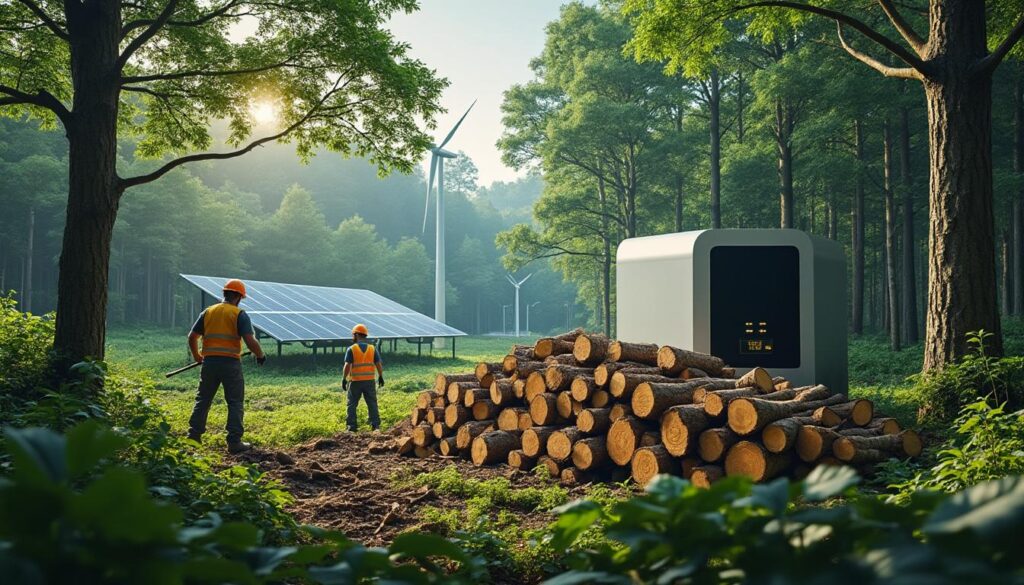
The new energy forecasts have changed scale: by 2025, renewable energies will equal coal in global electricity generation, and the trend points towards surpassing it. For those thinking about the home, the neighborhood, and the city, this turning point opens very concrete doors.
According to the International Energy Agency, by 2030, renewables combined with nuclear should account for 50% of global electricity (up from 42% in 2025), while demand increases by more than 3.5% per year, driven by industry, electric vehicles, air conditioning, and data centers/AI. The challenge is to transform this new mix into comfort, efficiency, and smarter bills.
| Short on time? Here’s the gist: | |
|---|---|
| ✅ | Renewables equal coal in 2025 ⚡ — a historic milestone that accelerates the transition and favors self-consumption and the electrification of heating. |
| ✅ | By 2030: renewables + nuclear = 50% of electricity 🌍 — improves system stability and opens the door to more dynamic tariffs. |
| ✅ | Electric demand grows >3.5%/year 📈 — EVs, AC, and data centers require load management, storage, and more efficient buildings. |
| ✅ | Practical priority 🛠️ — combining photovoltaics, heat pumps, and smart management reduces spikes, emissions, and costs. |
Renewable Energies Reach Coal: What Changes for Your Home and City
The fact that renewable energies have reached coal in electricity production is a sign of technological and economic maturity. More efficient wind turbines, decreasing costs of photovoltaic panels, and smarter grids have converged to this result. For you, the impact appears on various fronts: more green electricity supply during sunny and windy hours, greater price predictability during periods of abundance, and real opportunities for shared self-consumption.
There is also an urban consequence: when the mix is cleaner, the incentive to electrify heating, mobility, and cooking intensifies. Heat pumps replace gas boilers, induction cooktops gain ground over conventional stoves, and charging electric vehicles also becomes a tool for grid management. Electricity ceases to be just a service and becomes a flexible infrastructure in which the building actively participates.
From Solar Production Curve to Daily Comfort
The strong global growth of photovoltaics, with record installations, results in a “belly” of production at midday. Between 11 a.m. and 4 p.m., electricity tends to be more abundant and, at times, cheaper. Taking advantage of this window is a simple gesture: schedule the heat pump to heat the hot water tank during those hours, run washing and drying machines, or pre-cool the house in the summer. By shifting loads to this period, you reduce the bill and help smooth out evening peaks.
The same reasoning applies to neighborhoods and condominiums. With collective self-consumption, the energy from the roof of block A can power the elevator of block B and charge electric bicycles in the park. The logic shifts from “every man for himself” to “optimization together,” and the condominium becomes a small efficiency hub.
Rising Demand: Why Building Efficiency is Decisive
The IEA projects that by the end of the decade, annual electric demand will grow by more than 3.5%, and that this growth will exceed total energy demand by 2.5 times. The electrification of industry, more air conditioning in hot summers, and the expansion of data centers and AI put pressure on the grids. Therefore, buildings that consume less and consume better are part of the solution: quality insulation, airtightness, movable shading, and night ventilation reduce the energy needed for comfort.
In developed economies, after years of stagnated consumption, new growth is expected, with about 20% of the global demand increase by 2030 coming from these countries. This change reinforces the role of municipal policies and neighborhood projects that combine electric mobility, renewables, and thermal rehabilitation of buildings. A city where every roof and every garage participates creates distributed energy security.
In summary, the turnaround is not just statistical; it reconfigures household and neighborhood decisions. The real gain arises when renewable production meets prepared buildings and habits programmed for the future.
How to Utilize Renewable Electricity: Photovoltaics, Heat Pumps, and Smart Management
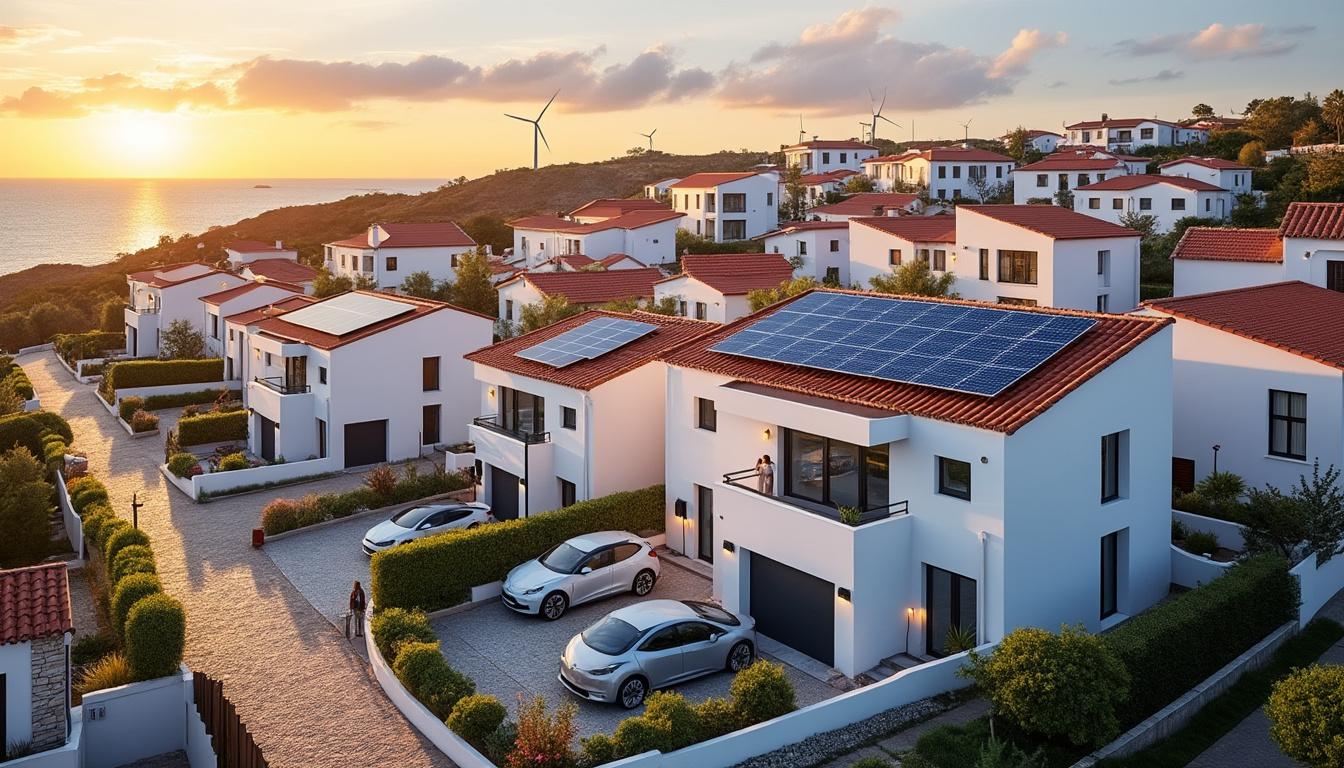
With more clean electricity available, the priority is to orchestrate household equipment to consume at the right times. The efficient trio is clear: photovoltaic panels on the roof, a heat pump for heating/hot water, and smart management to automate schedules. This set reduces emissions and stabilizes the bill, maintaining high comfort.
A practical rule: transform the house into a “storage unit for heat and freshness.” In winter, use the heat pump to warm the thermal mass of the building during sunny hours; in summer, pre-cool spaces before the afternoon peak. Complementary elements like well-sized hot water tanks and small thermal accumulators (for example, radiant floors with inertia) act as invisible batteries, without complex electronics.
Concrete Steps to Act Now
- 🔧 Install a load controller that prioritizes the heat pump when there is solar excess and delays machines to outside peak times.
- 🔋 Consider storage — home or thermal batteries — to absorb excess from photovoltaics at midday.
- 🌞 Schedule the hot water between 11 a.m. and 4 p.m.; it is during this window that renewable electricity is most abundant.
- 🚗 Charge the EV at low power during the day, taking advantage of local production and reducing evening peaks.
- 📲 Use dynamic tariffs when available; combined with automation, they can reduce the average cost per kWh.
By adopting this logic, the house begins to interact with the electrical system as an adaptive organism. Taking advantage of simple sensors — temperature, humidity, presence — allows adjusting the heat pump set points based on people and sun. Small repeated gains every day add up to a significant impact over twelve months.
Realistic Example of a T3 in Atlantic Climate
Imagine a T3 apartment with 6 kW of photovoltaics, an air-water heat pump, and radiant flooring. In winter, the system raises the floor temperature to 23 °C between 10 a.m. and 3 p.m. and then maintains it with very low power. On windy days, the grid also provides cleaner kilowatts; automation takes advantage of this to heat the hot water tank. In summer, external shutters close at 11 a.m., cross ventilation lets in the fresh morning air, and the heat pump makes a “cooling touch” after lunch. Result? Stable comfort and predictable bills.
For those wanting to compare options and see documented cases, this research is a good starting point to delve into integrated systems.
By going into detail about integration, it becomes clear that the best system aligns technology with habits. The backbone is simple: reduce losses, shift consumption, and use local production as the primary source. This is the solid recipe that withstands price changes and seasonal variations.
Tariffs, Self-Consumption, and Return: Transforming the Electricity Bill into an Investment
With renewables rivaling coal, the hourly price volatility will likely reflect solar and wind abundance. To take advantage, it’s worth combining self-consumption with an appropriate tariff. The general rule is this: the greater your flexibility to shift loads, the greater the benefit of a tariff with generous off-peak hours or even dynamic prices. In buildings with thermal inertia, the opportunities multiply.
There are three key questions before choosing: what consumption profile do you have (day/night), what is the automation potential (controllers, programming), and how much can you produce locally. A family that spends afternoons at home and has 4–6 kW of photovoltaics tends to benefit more from an optimized bi-hourly tariff. Those who are away during the day will benefit from automation to shift hot water and EV charging.
Practical Comparison of Scenarios
Consider three typical paths and the type of gains to expect. The numbers vary by region and provider, but the logic remains:
| Scenario 🔎 | Strategy ⚙️ | Expected Benefit 💡 |
|---|---|---|
| Simple Self-Consumption | PV 4–6 kW, no battery, hot water scheduled at midday | Reduction of 20–35% in the annual bill, depending on the profile |
| Self-Consumption + Battery | PV 6–8 kW, 5–10 kWh battery, bi-hourly tariff | Reduction of 35–55%, greater resilience to peaks |
| Collective Self-Consumption | Condominium PV, intelligent sharing by fractions | Decrease of 30–50% per fraction and efficient use of roofs |
The return on investment depends on local costs and incentives. In contexts with partial fee exemption for self-consumption and accessible financing, timeframes of 6 to 10 years are common for residential PV; with a battery, the timeframe extends, but resilience and protection against extreme prices compensate. It is also important to value comfort: well-sized heat pumps reduce noise, improve air quality, and eliminate fossil fuels indoors, benefits that do not show up on the bill but matter in daily life.
To delve deeper into tariffs and practical self-consumption, exploring expert content helps avoid pitfalls and choose the right system size.
In the end, the best strategy is not the most expensive one, but the most finely tuned. A small system, well aligned with schedules and habits, often outperforms a large, poorly managed system. Intelligence lies in alignment, not in excess.
Passive Architecture and Natural Materials: Reducing Demand to Free Up Grids
If electric demand is going to grow, the safest way to maintain comfort with controlled costs is to reduce the energy needed for heating and cooling. Passive architecture offers a solid set of solutions that work 365 days a year: continuous insulation, air tightness, exterior shading, and controlled ventilation with heat recovery. These measures cut peaks and free up capacity on the grid for industry, data centers, and electric mobility.
The choice of materials is also structural. Wood fibers, cork, hydraulic lime, and compressed earth bricks provide thermal mass and hygrothermal regulation, making environments more stable. The house cools down more slowly in summer and loses less heat in winter. Thus, the heat pump works fewer hours and with gentler set points. The result is a flatter “consumption profile,” ideal for grids dominated by variable renewables.
Strategies That Work in Iberian Climate
On south and west facades, exterior shading is crucial. Brises, slatted shutters, and pergolas with vegetation block direct radiation during critical hours and allow diffuse light, reducing mechanical cooling. In the peak of summer, cross-ventilation — opposite windows open, with mesh screens and security control — dissipates accumulated heat, especially in structures with thermal mass. In winter, air tightness reduces infiltration, and ventilation with heat recovery maintains air quality without penalizing energy.
In rehabilitations, the rule is to act in layers: first airtightness, then continuous insulation, then shading, and only then active systems. An apartment with old frames can gain much from sealing joints, double low-emissivity glass, and external shutters. Small works, big impact. The same applies to roofs: wood wool or expanded cork over the slab reduces losses and improves acoustic comfort.
Practical Case: Semi-Detached House that Cut Peaks by 40%
In a semi-detached house of 120 m², the combination of 10 cm of continuous external insulation, replacement of frames, VMC with recovery, and automated shutters programmed by solar radiation reduced the cooling peak by more than 40%. With 5 kW of PV and a hot water tank of 300 L, the heat pump now operates mainly between 10 a.m. and 4 p.m. The nighttime peaks have disappeared. This is the type of synergy that cities need to reconcile more air conditioning with stable and clean grids.
The message is simple: before adding power, reduce the need. Efficiency built into walls and windows lasts for decades and pays off every month.
Electric Cars, Data Centers, and Peaks: Neighborhood Solutions for a Flexible Grid
The growth in demand comes from various fronts: electric cars, air conditioning in longer summers, and the expansion of data centers and AI. How to manage this? The effective answer combines local planning with technologies already available. Neighborhoods with distributed photovoltaics, smart charging, and microgrids with community batteries manage to flatten peaks and increase autonomy during grid failures.
Smart charging is key. In workplaces, low continuous power during the day aligns with solar production. At home, a simple rule prevents peaks: start charging at nightfall with moderate current and, when possible, shift part of it to midday, especially if there is PV. Where technology allows, V2H/V2G turns the car into a useful battery, supplying the house during peaks and returning energy to the grid during critical events.
Neighborhood Study: “Solar Limoeiro”
In “Solar Limoeiro,” a fictional neighborhood inspired by several real experiences, 60% of rooftops have PV and there is a community battery of 500 kWh. Public chargers adjust power based on clouds and wind; the VMC of service buildings increases flow when there is an excess of renewables to pre-cool spaces. On hot afternoons, the system asks domestic induction cooktops to slow down for 15 minutes and the gym’s showers to delay heating hot water. Almost no one notices, and the grid benefits.
Nearby data centers adopt free nighttime cooling and reuse heat for municipal pools. On days of wind abundance, they heat thermal storage tanks that supply low-temperature systems throughout the next day. This type of symbiosis — IT heats the city; the city offers thermal inertia — makes digital expansion compatible with climate goals.
Simple Tools for Condominiums
It doesn’t have to start big. A condominium can install a controller that reads hourly prices and local production, activating pumps, elevators, and hot water in blocks. Programming external shutters based on radiation and temperature reduces cooling load. And by creating an internal regulation for energy sharing, neighbors transform dozens of small gestures into a solid collective outcome.
The more distributed the consumption intelligence, the more resilient the grid will be. The city of the future starts at the electric panel of each building.
If the world is heading toward 50% of electricity from renewables + nuclear by 2030 and demand is growing above 3.5%/year, the sign that matters is clear: prepare the house to consume less and better — insulate, shade, program. Starting today with a simple adjustment to schedules is worth more than postponing the future until tomorrow.
Source: dinheirovivo.dn.pt