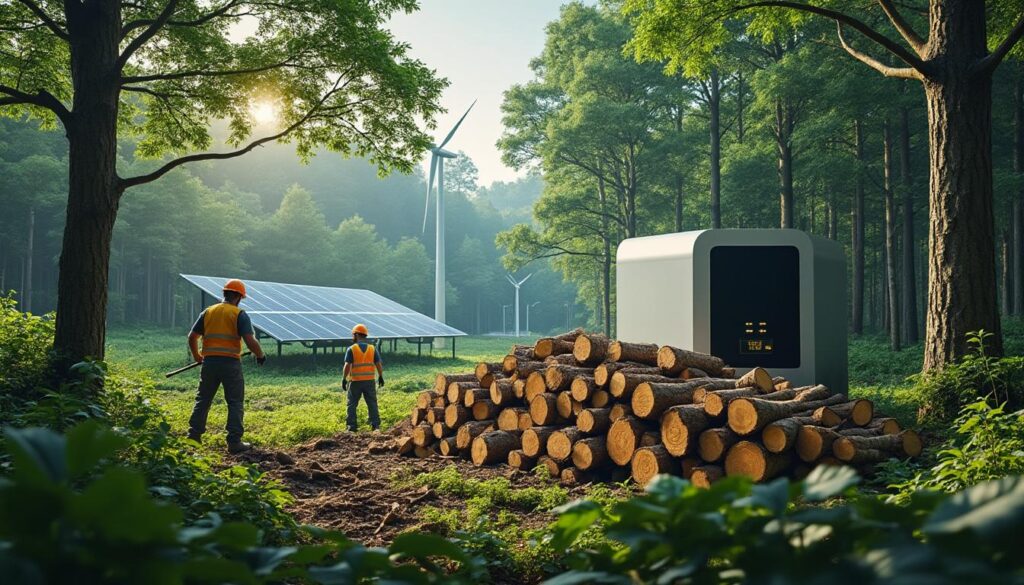
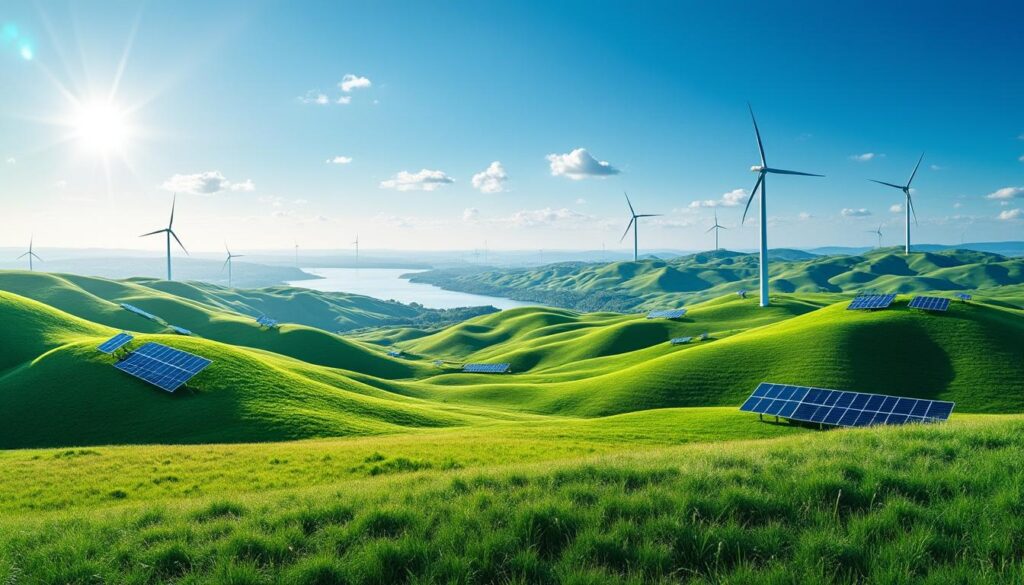
The International Day of Clean Energies brings a concrete opportunity to accelerate the energy transition in Portugal, focusing on social justice, innovation, and efficiency in housing. The message from the United Nations reinforces a clear path: reduce reliance on fossil fuels and expand renewables with modern grids, accessible financing, and benefits for all.
| Short on time? Here are the essentials: |
|---|
| ✅ Triple renewables by 2030 ⚡ — connect more projects to the grid, with storage and agile licensing. |
| ✅ Reduce capital costs 💶 — cheaper financing for families, municipalities, and energy communities. |
| ✅ Prioritize grids and efficiency 🔌 — modernize infrastructures and rehabilitate buildings to cut waste. |
| ✅ Just transition 🤝 — skill building, local jobs, clean value chains, and social inclusion. |
UN Message and the Significance of the International Day of Clean Energies in Portugal
The call from the United Nations is direct: the planet is at risk of temporarily exceeding the 1.5 °C limit, and the joint mission is to make this peak as minimal and brief as possible. In practical terms, this means a quick, orderly, and fair transition away from fossil fuels, with renewables taking center stage in energy supply. By 2025, wind and solar were already surpassing coal in global electricity generation, and by 2026, the trend was consolidated with falling costs and greater technological maturity.
Portugal finds in this date a reflection of its own journey. Over the past decade, the country has established an electricity matrix with a strong presence of wind, hydro, and solar, and has experienced several periods of nearly complete coverage from clean sources. The UN message reinforces this direction, amplifying ambition: more projects, prepared grids, and the real economy reaping benefits, ranging from public health to local employment, with more stable energy bills.
Why This Date Matters for Homes, Cities, and the Economy
Clean energies are connecting communities still without reliable access to electricity, introducing clean cooking to replace polluting solutions, and modernizing essential services. In Portugal, this translates into neighborhoods with collective self-consumption, schools with photovoltaic panels, and municipalities using smart LED lighting to reduce consumption. The impact extends to air quality and the resilience of grids during extreme events, which have become more frequent due to global warming.
The industry also plays a decisive role: diversifying supply chains and responsibly including critical minerals, ensuring that benefits reach producing regions. The UN recommends that progress be measured by the number of people and companies who effectively access clean technology at fair costs — and not just by installed capacity. This implies simplifying licenses, accelerating grid connections, and enhancing storage to accommodate the variability of renewables.
Triple Renewables by 2030: From Discourse to the Construction Site
Tripling global capacity is not a slogan: it is a plan with concrete consequences. To make it real, regulators must reward clean energy and remove administrative barriers; network companies need to modernize and digitalize distribution; and the financial sector must reduce the cost of capital, especially for those who need it most — vulnerable families, small businesses, and countries with high solar and wind potential. In Portugal, an integrated approach combines more agile renewable capacity auctions, strengthening Iberian interconnections, batteries in substations, and energy communities with clear governance.
To guide priorities, it is worth noting four clues that make a difference on the ground:
- 🌬️ Wind + solar with ready grid: coordinated expansion with enhanced lines and storage.
- 🏘️ Efficiency first: rehabilitating buildings reduces peaks and gives the grid “time”.
- 🤝 Just transition: qualifying workers and supporting local SMEs in the value chain.
- 💡 Data and digital: smart meters and tariffs that encourage off-peak consumption.
The core is simple: connect people and industries to clean energy quickly and efficiently. This is what turns global goals into thermal comfort in homes and competitiveness in businesses.
Portugal at the Forefront: Grids, Storage, and Examples That Work
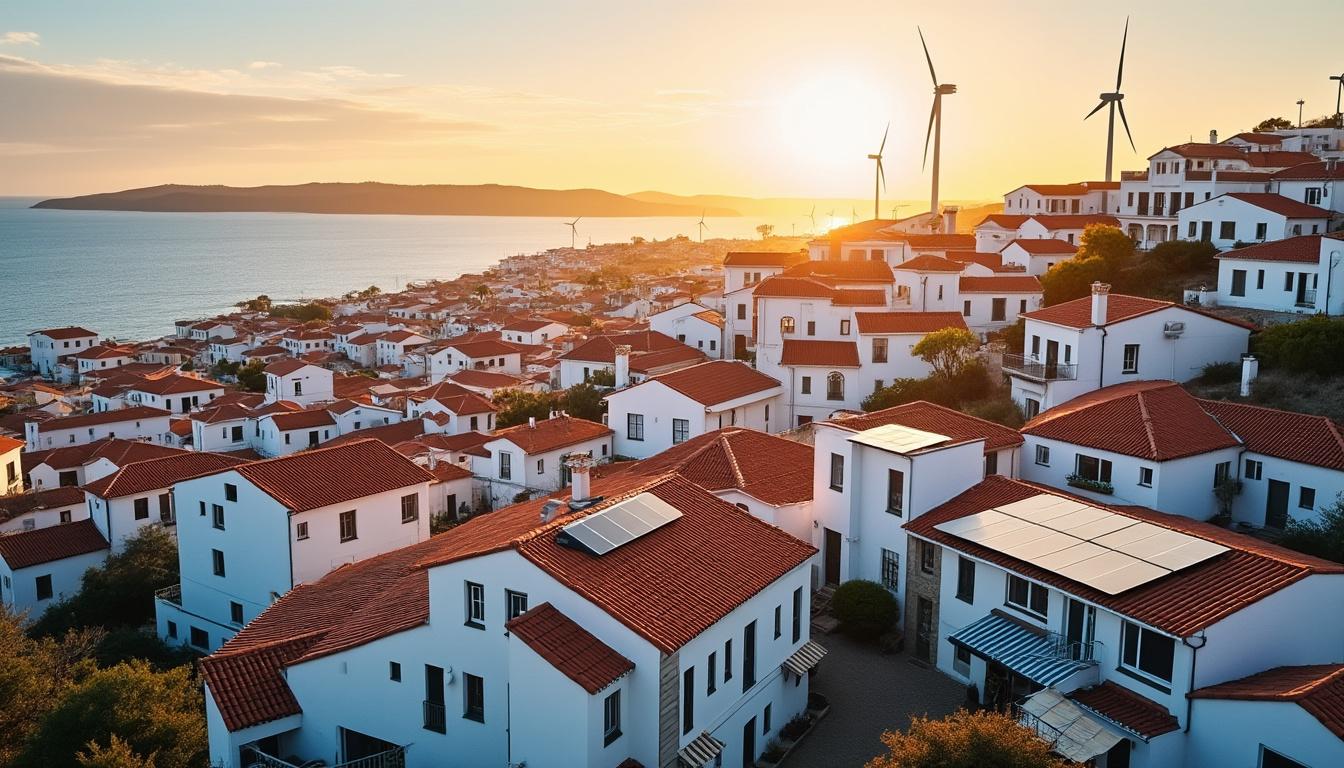
Portugal stands out for having more than half of its electrical capacity from renewable sources and for regularly achieving, over several recent months, an annual production above 60% from clean origins. These numbers can only remain consistent when the electrical grid can absorb the variability of wind and solar, shifting consumption scheduling and ensuring reserves of flexibility. This is why grids and storage have ceased to be a “backstage” topic and have become the heart of the transition.
The reinforcement of substations, replacement of cables, installation of batteries at strategic points, and active demand management help to “make room” for new photovoltaic and wind projects. Interconnection with Spain is an asset, allowing for the export of surpluses during sunny hours and importing when the wind calms. In parallel, hydroelectric pumping — from Alqueva to other sites — continues to be a warehouse of energy on a large scale, while neighborhood solutions, such as community batteries, resolve local congestion.
Practical Cases: From the Coast to the Interior
Consider Minho, where mature wind farms coexist with export industry. The digitalization of medium voltage lines has reduced interruptions, freeing up capacity for solar rooftops in industrial areas. In Alentejo, the combination of photovoltaic ground installations and the rehabilitation of historic centers has brought thermal comfort at lower costs, respecting heritage. On the coast, the experience of small-scale offshore wind has shown that it is possible to integrate advanced technology with controlled impacts, provided that marine planning is transparent and participatory.
The common thread of these examples is coordination: it is not enough to install panels; network planning, smart metering, and tariffs that value consumption during high production hours are necessary. Many families are already programming washing machines or electric vehicle chargers for sunny periods, reducing costs while helping the system. Businesses, in turn, are starting to adjust shifts and invest in collective self-consumption, sharing energy between buildings.
Looking ahead to the coming years, three priorities emerge: accelerating the connection of new parks, resolving network bottlenecks in intensive photovoltaic areas, and encouraging decentralized storage (home and commercial batteries). With this, the country turns goals into routine: clean energy available when most needed and predictable bills. In summary, smart infrastructures are the invisible cement of the transition.
Sustainable Housing and Passive Houses: Practical Alignment with the UN Message
Living in an efficient house is the most direct way to participate in the clean revolution. The priority is to reduce energy needs and then cover consumption with renewable sources. In the Portuguese climate, the combination of continuous thermal insulation, controlled airtightness, shading, and mechanical ventilation with heat recovery generates superior comfort and low bills. When the structure is optimized, heat pumps and photovoltaics easily and durably come together.
Immediate Actions in Apartments: Start Today Without Heavy Renovations
In apartments, many improvements can be done in a weekend and yield results. Swapping bulbs for LEDs with appropriate color temperature, installing quality seals in window frames, calibrating thermostats, and programming the timer of the water heater are steps that reduce waste. Induction cookers, combined with clean cooking, improve indoor air quality and safety. Load management — for example, scheduling the washing machine for solar hours — lowers costs when there is self-consumption in the building.
For those who can go a bit further, adding photovoltaic panels on the condominium roof or joining a Renewable Energy Community in the area turns residents into co-producers of electricity. It is common that, with an average of 2 to 4 kWp per unit (in a shared system), a significant portion of daytime consumption is covered. The key is a good shading analysis, the division of energy quotas, and a simple agreement among neighbors for future maintenance and upgrades.
Deep Rehabilitation in Houses: Integral Comfort and Autonomy
In houses, the strategy gains depth. It starts with the envelope: cork as natural insulation, lime plasters that regulate humidity, efficient frames with double or triple glazing, and external shading. Next, an air-water heat pump provides heating, cooling, and domestic hot water with high efficiency. With 5 to 8 kWp of photovoltaics and a thermal storage tank, the house starts to “converse” with the sun, anticipating consumption when there is production. A moderate battery (4 to 10 kWh) complements nighttime management, but it is not mandatory in all cases.
- 🧱 Envelope first: continuous insulation and elimination of thermal bridges.
- 🌬️ Healthy air: ventilation with heat recovery and adequate filters.
- 🔆 Right solar: sizing according to consumption profile and optimal tilt.
- 🔥 Heat pump: seasonal balance and zoning control.
- 📊 Monitoring: measure to manage — data that drives decisions.
A typical case: the Silva Family, in Évora, rehabilitated a house from the 80s with projected cork, high-performance MVHR, and 6 kWp of PV. Comfort in summer soared with external shading and nighttime ventilation, and the electricity bill stabilized, even with two weekly charges of an electric vehicle. The structural point was not “more technology,” but rather the right sequence of decisions: first reduce needs, then electrify, and finally produce locally.
For those seeking inspiration and method, the platform Ecopassivehouses.pt brings together design principles, eco-friendly materials, and checklists that help transform goals into concrete projects. An efficient house is, above all, a space for well-being and energy autonomy. The synthesis is unequivocal: less waste, more comfort, with renewables doing the rest.
Financing and Justice: How to Make the Transition Accessible to Families and Municipalities
The UN insists on a point that, in practice, decides the success of the transition: the cost of capital. High rates stifle good projects. In Portugal, three avenues are combined to unlock investment with social impact: green credit lines with public guarantees, savings-sharing models (ESCO), and energy communities with transparent governance. When financing lowers risk, projects in schools, nursing homes, municipal markets, and neighborhoods that most need comfort and predictable bills emerge.
Families can access energy efficiency credits with favorable terms, reducing monthly payments from day one thanks to energy savings. Condominiums can access “turnkey” packages for solar roofs, LED lighting, and decentralized MVHR. Municipalities align public buildings in performance contracts: the company invests, shares savings, and ensures maintenance. In parallel, European funds and national programs prioritize thermal rehabilitation, heat pumping, and the removal of inefficient gas equipment.
Renewable Energy Communities: Local Energy at Fair Prices
Energy communities allow neighbors, small businesses, and municipalities to co-invest in generation and share electricity through the same transformer, with predictable tariffs and local reinvestment. This model increases the resilience of the grid, reduces losses, and creates local jobs (installation, operation, maintenance). A clear legal status, smart meters, and a simple internal regulation with rules for membership, exit, and capacity expansion are crucial.
To ensure that no one is left behind, social programs can subsidize energy quotas for vulnerable families within the community. Schools and nursing homes become energy anchors of the neighborhood, with community batteries stabilizing flows and serving as energy shelters during heatwaves. This is the concrete meaning of just transition: clean energy that protects, builds skills, and stimulates the real economy.
If looking for a first step without friction: map annual consumption (kWh), identify peaks, simulate efficiency measures, and only then size renewable production. With data in hand, financing appears, and risk decreases. In short, access to capital and smart rules turn green dreams into certain bills.
Biophilic Architecture, Natural Materials, and Innovation That Reduce Embedded Emissions
The energy transition is not limited to electricity. Buildings carry “hidden” emissions in materials and construction systems. The good news is that Portuguese innovation in cork, engineered wood, lime plasters, and cob solutions allows for reduced embedded carbon without sacrificing durability. In rehabilitation, cork provides diffusive insulation, dimensional stability, and circularity; glued laminated timber (GLULAM) and CLT reduce construction time and enable lightweight structures with excellent thermal performance.
Biophilic architecture is not a luxury: it is a strategy for health and efficiency. Plants, well-measured natural light, ventilated patios, and external shading cut thermal gains and enhance comfort. When the design takes advantage of the site — orientation, dominant winds, thermal inertia — mechanical systems work less and last longer. Natural mineral materials, such as hydraulic lime and clays, regulate humidity and improve indoor air quality, reducing pathologies and maintenance costs.
From Factory to Site: Clean Supply Chains and Qualified Employment
The so-called “new Portuguese brick” is made from local partnerships: cork producers, carpentries, materials laboratories, and small metalworking companies that deliver prefabricated construction systems ready to assemble. This intelligent industrialization reduces waste, optimizes logistics, and democratizes construction quality. At the same time, it demands qualification: installers trained in air tightness, sealing of penetrations, and blower door testing ensure real performance and not just “on paper”.
Pilot projects have shown that the right combination — continuous insulation, certified woods, selective glass, and MVHR — can reduce operational energy by more than half in Portuguese climates. Combined with photovoltaics and heat pumps, the result is robust: comfort on days of extreme heat, clean air, and predictable bills. And when the project uses materials with digital passports, future maintenance becomes transparent, adding value to the property over time.
For those planning rehabilitation, a simple roadmap helps: set performance goals (temperature, humidity, bills), audit the envelope, prioritize no regret measures (insulation, airtightness, shading), electrify with a heat pump, and finally install solar. Resources like Ecopassivehouses.pt gather guides, case studies, and checklists that reduce noise and expedite decisions. A practical reminder to close: today, take stock of obvious losses in your home (drafts, shading, load control) and choose one measure to execute this week — the transition begins at the distance of an intelligent gesture.
Source: unric.org