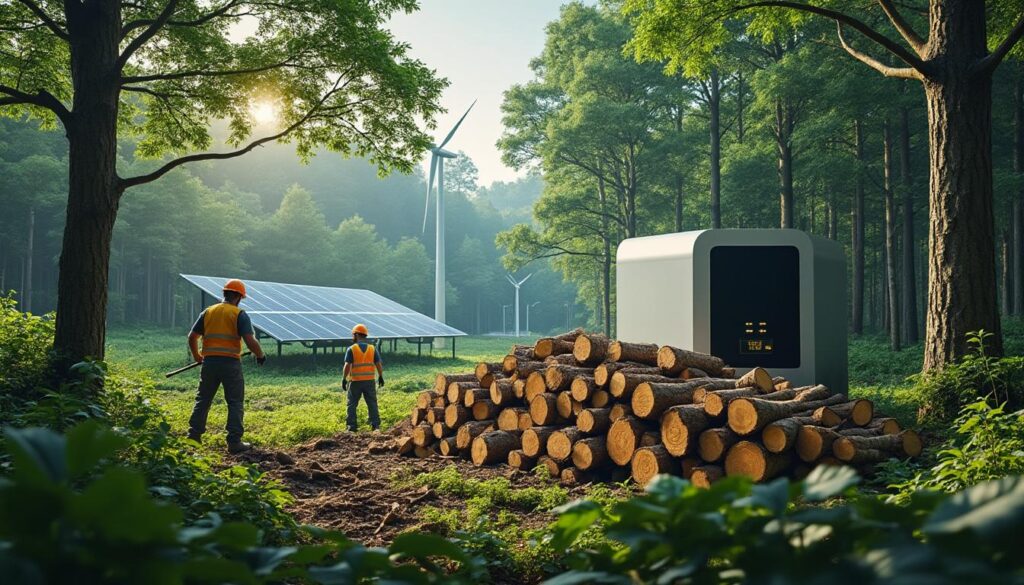
Defending the climate is, above all, an act of love for those who will come after us. When someone says “I love someone who will live in the 22nd century,” they are transforming environmental urgency into a direct, concrete, and profoundly human responsibility.
| Short on time? Here’s the essentials: ⏱️ |
|---|
| ✅ Older generations have time, networks, and authority — three powerful levers to accelerate the energy transition ⚡ |
| ✅ Energy communities and collective self-consumption reduce costs and emissions, and create social closeness 🏘️ |
| ✅ Agrovoltaics reconcile panels and agriculture: less evaporation, more resilience, and yield 🌾☀️ |
| ✅ Pro-biodiversity solar parks become refuges for pollinators if we plant native species 🐝 |
| ✅ Responsible mining + recycling is the “lesser evil” compared to fossil fuels: less pollution and avoidable deaths ♻️ |
Intergenerational solidarity and climate action: why older people should lead now
There are moments in history when experience becomes the most valuable competitive advantage. In climate defense, this advantage is in your hands: available time, established networks, and social authority. Those living today through the “third act” of life have undergone profound transformations — from civil rights to the digital revolution — and know that systemic changes are possible when there is focus and persistence. That is why organizations like Third Act, founded in 2021 by Bill McKibben, mobilize people over 60 to pressure banks, municipalities, and regulators to accelerate the energy transition.
This leadership has a powerful emotional motive: the love for those who will live in the 22nd century. Transforming concern into action plan is the decisive step. From neighborhood circles, community centers, or senior universities, it is simple to create groups with clear goals: change energy suppliers to 100% renewable tariffs, push for energy communities in the neighborhood, and conduct energy audits in municipal buildings. When a condominium board approves thermal insulation and a heat pump, it frees families from unstable bills and cuts emissions for decades.
Consider a realistic guiding thread: a group of retirees in Setúbal decides to meet biweekly. In three months, they map 20 rooftops with photovoltaic potential, contact two energy cooperatives, organize a session with the municipality, and invite an efficiency technician to assess local schools. The result? A pilot project of collective self-consumption in a primary school, with savings that fund a social energy efficiency fund for vulnerable families. The change gains traction because it is visible, replicable, and financially sensible.
There are also financial levers that only older generations naturally master: pensions and savings carry weight in banks and funds. Writing a joint letter to your financial institution, demanding divestment from oil and gas and prioritization of renewables and energy rehabilitation, multiplies impact. When dozens of senior clients speak with one voice, boards of directors listen. It’s the same mechanism that worked in previous decades when civic pressures changed banking and business practices.
And there’s the civic dimension: those with solid professional backgrounds inspire trust. A former teacher, a retired doctor, a civil engineer with 40 years of work — these figures mobilize the neighborhood with credibility. Public debates on solar and wind parks become more balanced when someone with technical experience translates jargon, clarifies myths, and proposes solutions such as agrovoltaics or active protection of biodiversity in projects.
Finally, there is the simplest and most transformative gesture: mentoring a young activist. An intergenerational duet — experience + energy — has another strength with local mayors and deputies. And when the conversation gets tough, the memory of those who have seen the world change helps keep the course. The insight that remains: age is not a brake, it is a multiplier of impact.
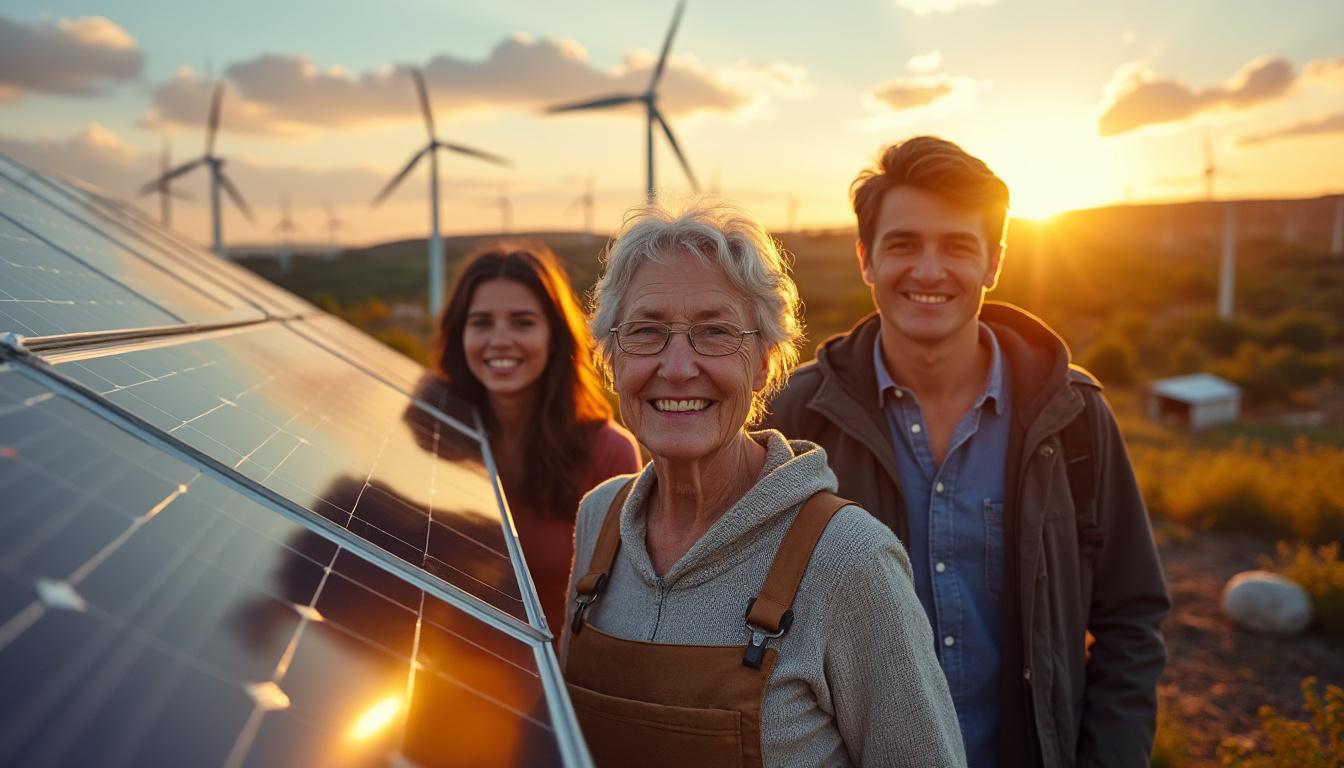
Renewable energies as a legacy for the 22nd century: solar, wind, and efficiency within reach of your neighborhood
The world is experiencing a historic turning point: the acceleration of renewables is already the new local economic engine. The metaphor is convincing — if the Industrial Revolution burned coal to grow, the current revolution learns to harvest photons and wind. In Portugal, the combination of abundant sun, robust power grids, and falling prices of photovoltaic panels opens a rare window for families, condominiums, and institutions. The right question is: what to do first?
Start with the obvious and effective: reducing needs. A simple energy audit — checking windows, thermal bridges, and old equipment — cuts consumption quickly. This is followed by gradual replacement with heat pumps and the installation of photovoltaic panels with or without batteries. In buildings, collective self-consumption allows sharing energy among units, with clear rules and platforms that simplify management. In mixed neighborhoods, energy communities function as local mini-utilities: they produce, share, and reinvest.
For those leading residents’ councils or cultural associations, here’s a pragmatic roadmap that works:
- 🌞 Map rooftops with good alignment and little shade; use satellite images and solar radiation apps.
- 📊 Gather consumption data from the past year and identify peak times; this properly sizes the system.
- 🤝 Choose a partner (cooperative or installer) with a history and performance guarantees; compare 3 proposals.
- 🔌 Define sharing in collective self-consumption: percentages by unit and access rules for new neighbors.
- 💶 Finance prudently: municipal funds, green lines, and ESCO models that pay for themselves with the savings.
This strategy is reinforced by a justice argument: predictable energy bills protect retirees with fixed incomes. By stabilizing expenses, they free up resources for health, culture, and family support — a virtuous circle where climate and well-being walk together.
In areas where there are doubts about integrating solar and wind into the landscape, there are design solutions that reduce conflicts: placing panels in already anthropized areas (industrial rooftops, shaded parking lots), adjusting heights and distances of wind turbines based on ecological corridors, and adding tangible local benefits (funds for thermal rehabilitation, solar bus shelters, efficient public lighting). In every decision, the question to ask is: “How does this project improve life here?”
When energy becomes a community asset, a legacy is created. A well-sized and maintained system for 20 to 25 years works as an “energy rent” for the neighborhood. The next step, which we open in the section below, is to reconcile production with agriculture — because energy and food are the duo that sustains the 22nd century.
Agrovoltaics: reconciling solar energy with agriculture and landscape without losing productivity
Agrovoltaics addresses the most frequent objection in rural areas: “Will the panels take space away from food?” The technical and field answer is clear: no, if designed wisely. In this system, the photovoltaic modules rise above the crops, with spacing and height that allow light, tractors, and harvesting to pass. The result is a microclimate that reduces evaporation, limits heat stress, and can even increase yields in certain crops.
Imagine rows of panels at 3–4 meters above the ground, with adjustable tilt and wide corridors. Under this “smart shade,” heat-stress-sensitive vegetables (lettuce, spinach, strawberries) maintain stable productivity in more extreme summers. In olive groves and vineyards, tall and sparsely spaced structures mitigate fruit scorching and reduce irrigation needs. At the same time, spontaneous vegetation between rows lowers soil temperature, increasing panel efficiency — a double gain.
Are there real challenges? Yes. Mechanization requires planning, structural costs are higher, and connection to the grid needs a clear timeline. But the benefits make up a robust package: agricultural yield + electrical yield + water resilience. Pilot projects in semi-arid areas show less plant mortality during heatwaves and lower water consumption per kilogram produced. And when the community participates from the start, social acceptance skyrockets.
In regions where large photovoltaic plants generate controversy — as has happened in some agricultural valleys — the solution is not to abandon solar energy, but to change the design. Integrating agrovoltaic plots, biodiversity corridors, and areas for community access eases landscape pressure. A local committee with farmers, biologists, and energy technicians resolves 80% of conflicts still in the study phase, saving time and costs.
How to progress from zero to a plausible project? Three steps work well: agronomic diagnosis of the parcel, simulation of radiation and shadows throughout the year, and prototype of one hectare with real-time shared monitoring (electric production, humidity, growth). At the end of a harvest, the data guide expansion. To facilitate the start, platforms like Ecopassivehouses.pt gather technical sheets, manufacturer references, and case studies that help to decide securely.
At the center of this approach is a simple idea: panels as “a beautiful harvest of electrons”, serving the soil and the people. When agriculture wins, energy wins, and the landscape does too.
Biodiversity in solar parks: from “empty” landscape to sanctuary for pollinators
The criticism that solar parks are “ecological deserts” is only true when management is careless. Recent experiences, like the Bee the Change initiative in Vermont, show the opposite: with native flora and ecological management, a photovoltaic field becomes a refuge. The strategy is straightforward: replace poor grass with mixtures of local plants that bloom sequentially, create landing areas, and avoid honey bee hives when they compete with native species.
The result is measurable. In projects adopting this model, the number of wild pollinators can triple, and there is a noticeable increase in butterflies and insectivorous birds. In Mediterranean climates, combinations with dittrichia viscosa, sage, clover, daisies, and oregano favor peaks of continuous flowering. The benefit is not only ecological: neighboring farmers report better fruiting in orchards and gardens due to the increased presence of pollinators around.
The right management includes three more practices: late mowing to allow for natural seeding, ecological corridors between rows for small mammals and reptiles, and shallow water points for insects. When the solar park incorporates these rules into the specification document, it generates a “light reserve” effect with marginally higher costs but a high impact on the landscape.
It is important to correct misconceptions: a conventional cornfield can be, from a biodiversity perspective, a “biological desert.” A solar park with native flora and without pesticides, on the other hand, has structure and food year-round. The key is habitat planning. The choice of honey bees — useful in beekeeping — must consider competition with local solitary bees; if the goal is to strengthen native fauna, native flowers and shelters for wild pollinators should be prioritized.
This model also reduces conflicts with the community. When a developer presents, right from the start, a biodiversity plan with indicators (number of observed species, percentage of floral coverage, flowering times), residents understand the ecological gain. And when local associations participate in monitoring, pride and a sense of belonging increase. In summary, solar parks can be part of the ecological solution, not a problem, as long as they are well designed.
Mining for batteries, lithium, and difficult choices: reducing impacts without losing direction
The energy transition presents an unavoidable dilemma: extracting lithium, cobalt, and other minerals implies local impacts. Ignoring this would be dishonest. But there is a comparison that matters to retain: fossil fuels pollute from start to finish. From the well to the chimney, their byproducts are linked to millions of deaths from air pollution every year. Lithium placed in a battery, on the other hand, works for 10–20 years, and then enters a flow of reuse and recycling that improves every year.
What is the responsible path? First, reduce demand through efficiency: well-insulated buildings, heat pumps, shared electric mobility, and smart charging. Less waste means less mining. Second, substitute and recycle seriously: cathodes with less cobalt, hydrometallurgical recovery processes, and mandatory recycled content targets. Third, require mining with safeguards: prior consultation with communities, protection of aquifers, ecological compensations, and independent monitoring with open data.
There’s a decisive role for those with a strong voice and serenity: moderate local debate to distinguish poorly designed projects from necessary ones with strict conditions. On the ground, monitoring committees with senior citizens, universities, and NGOs ensure continuity and institutional memory — something that is often lacking when political cycles are short. And if a project does not meet criteria? It should be halted or revised. That’s how public trust is built.
At the same time, investing in alternative storage — stationary iron-phosphate batteries, sodium ions, or thermal batteries — diversifies the pressure on critical raw materials. And betting on demand management (for example, heating water at midday with excess solar) reduces the need for large battery banks. It’s a dance between technology, systemic design, and governance — and older generations can lead it with pragmatism.
To guide decisions, a small checklist helps:
- 🧭 Proven need: does the project respond to a real and efficient demand?
- 🌊 Protected water: independent hydrogeological studies and published contingency plans?
- 🪵 Ecological compensation: habitat restoration and biodiversity corridors budgeted?
- 📈 Transparency: real-time data on emissions, noise, and water quality available to the public?
- 🤝 Local benefit: energy at reduced prices, decent jobs, and investments in community efficiency?
The point that remains is simple and firm: the “lesser evil” well-regulated is preferable to a status quo that continues to heat the planet and make people sick. With demands and participation, better choices are made and life improves.
Immediate action: schedule a meeting today in your condominium or local association to evaluate the creation of a collective self-consumption group. An hour of well-guided conversation can be the first step to leaving your community — and those you love — an energy legacy that lasts until the 22nd century. 💚
Source: www.publico.pt