The green financing from the EIB unlocks two new wind farms in Tâmega and accelerates the energy transition in Portugal with hydropower storage technology. The moment is ideal to take advantage of this clean electricity in efficient homes and well-thought-out projects.
See below the critical points and then delve deeper into each topic with practical guidance, examples, and actionable ideas.
| Short on time? Here’s the gist: | |
|---|---|
| ✔️ | Key message |
| ✅ | EIB finances €175 million (with the guarantee from Cesce) for two wind farms integrated into Tâmega 🌬️💧 |
| ✅ | Capacity of 274 MW hybridized with hydroelectric storage type “gigabattery” ⚡ |
| ✅ | Clean energy sufficient for +400 thousand people, reinforcing energy security 🇵🇹 |
| ✅ | Aligned with REPowerEU and reducing dependency on fossil fuels 🛡️ |
| ✨ | At home: dynamic tariffs, heat pumps, smart charging for EVs, and consumption management 🏡🔋 |
EIB invests €175 million in Tâmega: direct impact on clean energy and electrical security
A green loan of €175 million has been granted by the European Investment Bank to enable two new wind farms in northern Portugal. The operation, structured with the guarantee from Cesce (Spain’s export credit agency), reduces financial risk and lowers the cost of capital, enabling a solution with systemic benefits: 274 MW of capacity and integration with the Tâmega hydroelectric complex. The synergy is clear: wind turbines generate when there is wind; water stores when there is surplus; the grid receives stable energy when demand increases.
This design is intentional and responds to three challenges: the variability of wind, the need for flexibility in the grid, and the European goal of accelerating electrification with renewables. By hybridizing wind and water at the same hub, the need for new high-voltage lines is reduced, environmental impact diminishes, and existing assets in Tâmega are optimized. Practical result: less infrastructure work, more efficiency in land use, and greater stability of the system.
According to data from the promoter and the funder, the expected energy is sufficient to supply more than 400 thousand people. More important than the number is the effect of energy security: in scenarios of lower imports and greater intermittency, the ability to pump water and generate electricity on demand acts as a “buffer” for the system. By 2026, with Europe consolidating REPowerEU measures, solutions that combine local production and storage gain relevance by reducing exposure to imported fossil fuels and geopolitical volatility.
The financing backed by Cesce is not a complete debut for Iberdrola; previous operations in Baltic wind farms tested the model. Here, however, there is a national first: the Wind-Hydraulic Hybridization of Tâmega is seen as the first in Portugal to operationally integrate wind and hydroelectric storage into a single articulated system. For those observing the market, this means learning that can be replicated in other valleys with existing dams — Douro, Cávado, Zêzere — as long as environmental and grid studies justify it.
In terms of scheduling and value chain, projects of this type typically generate peaks of employment during construction and permanent positions in operation and maintenance. Recent experience at national parks indicates that local suppliers of metalworking, concrete, cabling, and technical services benefit from orders, and municipalities increase tax revenue, as long as implementation respects environmental constraints and territorial planning.
For the end consumer, what matters is the effect on the hourly price of electricity and the predictability of the system. When there is a lot of wind, prices tend to soften or even fall; with storage, part of that surplus is saved for peak hours, avoiding cost spikes. Those using dynamic tariffs have space to save: heating water in the middle of a windy afternoon, charging the electric vehicle at night with wind and water turbine action, or scheduling the heat pump when the grid is more “green”.
The integration with Tâmega rebalances an increasingly renewable grid. It is here that wind, hydropower, and smart load management show that, together, they resolve the wind paradox: abundant, yet unstable. The key lies in the right combination, in the right place, with financing prepared for the long term.
Wind hybridization and storage in Tâmega: how the “gigabattery” stabilizes the grid
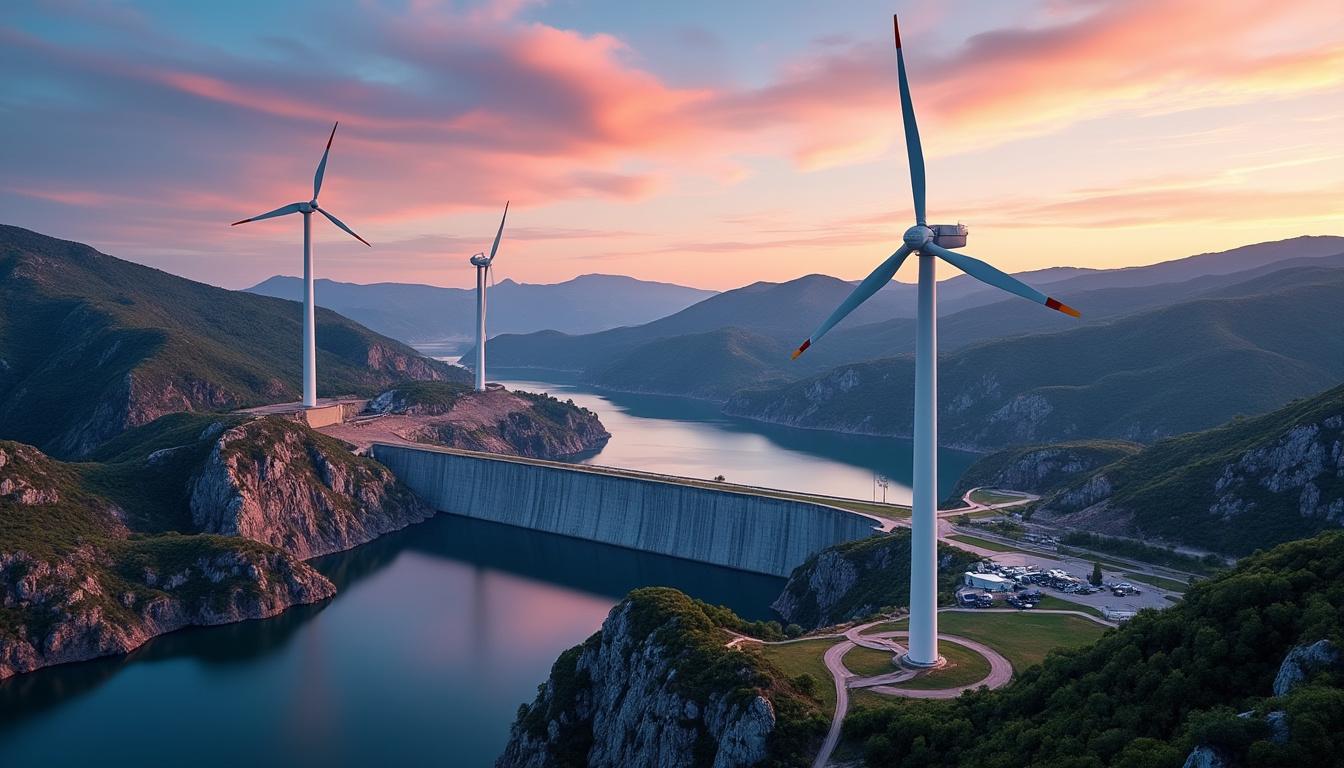
Tâmega is more than dams: it is a pumped storage system that functions like a reversible battery. When there is excess electricity (for example, on a windy dawn with low demand), part of the energy moves pumps that lift water to an upper reservoir. Then, at the peak of late afternoon, the water descends through turbines and generates electricity again. Simple in concept, sophisticated in engineering, this cycle allows energy to be shifted in time — from cheap hours to valuable hours.
On a typical day with irregular wind, Tâmega’s wind farms feed the grid, and when production exceeds local demand or prices drop, they redirect energy for pumping. Conversely, at the end of the day, when families turn on kitchens, heat pumps, and chargers, the hydroelectric plant turbines water to cover the peak. This balance softens oscillations, reduces the need for fossil-fired fast-start plants, and improves service quality.
There is an additional gain that is rarely discussed: the lifespan of assets. Wind turbines operate more stably when there is a “buffer” of storage downstream; dams, in turn, optimize discharges with less hydraulic stress. From a planning perspective, this means lower leveled costs over the life cycle. For the grid, this means less curtailment (turning off turbines due to excess production) and therefore better utilization of natural resources.
And what about environmental impacts? By using existing hydroelectric infrastructures and reinforcing already present lines, hybridization avoids extensive new servitude corridors. The additional footprint is focused on the foundations, access, and local connections of the wind turbines. Studies of avifauna and ecological corridors guide positioning and seasonal pauses, with measures such as blade painting, bird radar, and nighttime noise management becoming standard. This is how the concept gains legitimacy: energy performance accompanied by measurable environmental mitigation.
In European markets, days with very low hourly prices have become frequent in recent years, with occasional episodes of negative values. With pumped storage, this “limbo” of prices is an opportunity: buying virtually cheap energy when pumping and selling it during higher value hours when turbinating. The average consumer does not operate dams, of course, but benefits indirectly from more stable bills and directly when adopting solutions that align with the signals from the grid.
To summarize the logic: the wind provides clean energy, water offers flexibility, and the grid gains resilience. Tâmega brings together these three elements with an architecture that Portugal can replicate, respecting the diversity of its rivers and valleys.
Practical example of operation over a day
Imagine a Tuesday with strong gusts in the middle of the morning. Between 11 a.m. and 3 p.m., Tâmega’s wind farms produce above regional consumption. Rather than wasting it, the pumps elevate water, storing hundreds of MWh. At 8 p.m., with families active at home, the hydro plant returns that energy to the grid. The result? Less need to turn on gas turbines and smoother hourly prices. The same logic applies during the weekend when demand is lower: the system transforms a “discomforting excess” into response capacity for the night.
What seems like a technical trick is, in fact, a piece of energy architecture: using volumes of water as thermal mass in the electrical system, ensuring comfort, predictability, and more rational costs for the end consumer.
How these wind farms can reduce your bill: simple steps and real gains
With more renewable energy entering the grid, the great ally of your budget is time. Consuming more when there is wind and water turbinating — and less when the grid is tighter — brings savings without sacrificing comfort. What to do, in practice? There are three areas of action within reach of any family: tariff choice, efficient equipment, and basic automation.
Right tariffs and smart habits
Bi-hourly or dynamic tariffs reward those who shift consumption to windy hours. In Portugal, the market has been expanding offers indexed to the hourly price. Scheduling the washing machine for windy dawn and heating the water heater in early afternoon are simple gestures with accumulated effects. If you have photovoltaic panels, the rule remains: prioritize loads when there is own production or wind in the grid.
Equipment that talks to the grid
Modern heat pumps, electric vehicle chargers with app control, and programmable thermostats allow precise consumption tuning. On windy days, increasing 1 °C in the thermal accumulator or advancing the car’s charging saves euros and emissions. The combination with small home storage (battery) reinforces autonomy, but is not mandatory for those who can already adapt schedules.
Light automation and predictable results
Smart plugs, routines on the mobile phone, and flexibility aggregation services help “follow the wind” without daily effort. Some retailers already offer discounts for allowing automatic adjustment of EV charging based on the hourly price. Thus, the house becomes a flexible element of the system, and the bill appreciates.
- 🌬️ Take advantage of windy days: wash, dry, and heat water outside peak hours.
- 🔌 Charge the EV at dawn: use automatic scheduling and current limit.
- 🔥 Optimize the heat pump: preheat before the evening peak.
- 📱 Use smart apps and plugs: automate without complicating daily life.
- 🧰 Maintain: clean filters and calibration ensure the claimed COP.
For additional inspiration and practical guides on efficient housing, explore open resources at Ecopassivehouses.pt. These are tested ideas on the ground, translated into simple steps without magical promises — exactly what matters when wanting to save with comfort and common sense.
What the Tâmega region gains: jobs, environment, and a new energy map
Large projects only make sense when they improve people’s lives and respect the place. In Tâmega, the benefits go beyond energy: there are jobs, local supply chains, and an opportunity to enhance the landscape with discreet and well-integrated technology. The construction phase usually mobilizes dozens to hundreds of workers — tower assembly, foundations, high-power electricians, SCADA technicians. In operation and maintenance, stable teams formed in the region remain, with multi-year contracts.
With the municipalities, tax revenue and environmental compensations should be directed towards useful projects: rehabilitation of rural roads, reinforcement of social equipment, and environmental education. Successful models bring together schools, associations, and companies for technical visits, interpretative trails, and vocational training. This movement creates local pride and reduces the perception of “imposed work.”
On the environmental side, modern deployment already incorporates good practices: monitoring birds with radar and selective pause periods during migrations, designing access routes that avoid sensitive areas, and ecological restoration with native species. Noise is addressed at the source and at the distance of implementation, and projected shadow is mapped to minimize discomfort. At the same time, the parks avoid new extensive lines by taking advantage of the substations of the hydroelectric complex, a direct gain for the landscape.
It also opens doors to technical tourism and education. Families and students can understand on-site how wind and water interact, realizing why the “gigabattery” is a central piece in a system with increasing renewables. This creates energy culture — the basis for better choices at home, work, and in the community.
However, there are conditions for the balance to be positive: transparent planning, informed public participation, and monitoring metrics. Publishing reports on avifauna, noise, and production, with open data, increases trust and allows adjustments. The European experience shows that projects with open governance face fewer conflicts and deliver more local value.
In the end, Tâmega illustrates a simple idea: when technology, territory, and people are aligned, the energy transition ceases to be abstract and becomes visible, useful, and shared.
Practical checklist to prepare your home and take advantage of Tâmega’s new electricity
With more wind and storage stabilizing the grid, it is worth aligning your home to reap the benefits. Below, a straightforward roadmap designed for those wanting consistent results without complicating life.
1) Insulation and windows first
Before buying gadgets, take care of the envelope: continuous insulation (roof and walls), efficient windows, and controlled airtightness. Less loss means that any “cheap and green” kWh is worth more because it stays inside the house. Examples: insulate the roof, correct thermal bridges, and install window frames with thermal breaks.
2) Heating, cooling, and AQS with heat pump
Replace fossil boilers with heat pumps with hourly control. On windy days, anticipate heating water or ambient heating in underfloor heating. Use inertia tanks to “store heat,” just as Tâmega stores energy with water. The more flexible your system is, the more you save.
3) Photovoltaics with smart inverter
If you have an appropriate roof, install PV with an inverter prepared for dynamic tariffs and basic APIs. The logic is simple: self-consume on sunny days and, when wind lowers prices, choose between buying from the grid or charging a small battery. Look for inverters with clear monitoring and remote updates.
4) EV charging that follows the price
Home chargers already allow price scheduling or based on the carbon intensity of the grid. Set the priority window for the early morning and allow the system to shift charging to hours with wind in Tâmega. A well-adjusted current limit avoids spikes and extends the lifespan of the electrical installation.
5) Realistic example: the Alves family
In a T3 in Amarante, the Alves family combined insulation in the roof, a 6 kW heat pump, a 200 L water heater, and 3.6 kWp PV. With a dynamic tariff, they scheduled washes from 1 a.m., pre-heating of AQS at 2 p.m. on windy days, and charging the EV between 2 a.m. and 5 a.m. In 12 months, they reduced peak consumption by 35% and the annual bill by about 18–22%, with superior comfort. The secret was not “expensive” technology, but simple orchestration aligned with the grid.
If you want to get started today, start small: adjust two schedules (AQS and EV), activate price alerts on your mobile, and check for thermal losses in the house. The sum of these steps, multiplied by thousands of homes, makes the energy transition happen where it matters: at home, with comfort and sobriety.
To continue exploring themes of passive housing, natural materials, and energy autonomy, there are useful and up-to-date contents at Ecopassivehouses.pt. The final reminder is simple: align schedules, choose equipment wisely, and let the wind from Tâmega work in your favor. Today, a small schedule adjustment is already a concrete step. Tomorrow, the energy bill will thank you.
Source: www.ambienteonline.pt