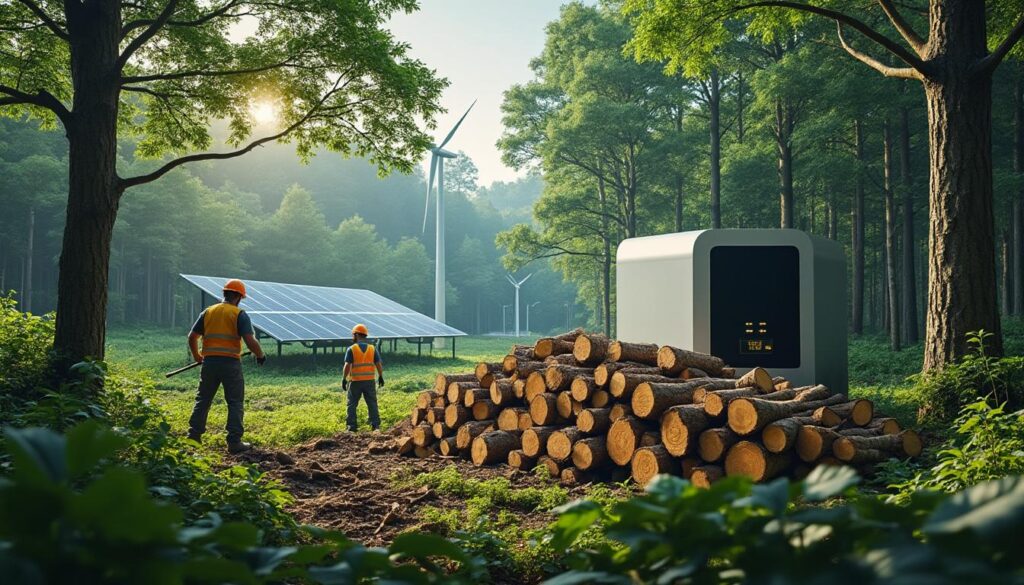
The stability of electricity prices does not happen by chance: it results from consistent technical and political choices. APREN emphasizes that renewable energies, when well integrated, act as a natural buffer against volatility, protecting your family budget.
| Short on time? Here’s the gist: | |
|---|---|
| ✅ | Quick summary |
| ⚡ | Renewables stabilize prices: low marginal cost and “merit order” push down wholesale prices, especially during sunny and windy hours. |
| 🧭 | 2026 with slight increase: ERSE projects ~1% for residential consumers (BTN), but the energy tariff drops ~2.6%; stabilization comes from renewables. |
| 🧩 | Grid and commercialization rise: access to the grid and commercialization costs (+8.2%) pressure the bill, offset by declining CIEG and the reduction of the PRG differential. |
| 🚀 | PNEC 2030 requires faster implementation: accelerating renewables and flexibility reinforces the downward trend in prices and protects against shocks. |
| 🏠 | For you: photovoltaic self-consumption, load management, and small efficiency upgrades reduce costs now and increase resilience. |
APREN and price stability: how renewables cushion market volatility
When discussing electricity prices, two variables dominate: marginal production cost and market rules. Renewable technologies, with marginal costs close to zero, are dispatched first, pushing the more expensive plants out of the market during many hours. This mechanism – known as merit order – has been crucial in containing the volatility brought by the European energy crisis.
After a peak of uncertainty, the wholesale market registered a sharp decline in 2024 with an average price around €63/MWh, about 28% below 2023. Among the structural factors, the reappraisal towards normality of commodities and the greater presence of renewables, reinforced by regulatory measures that reduced systemic costs, are noteworthy. In 2025, the estimated average reference was close to €60.9/MWh, while the observed value approached €65/MWh, indicating that renewable integration fell slightly short of plans. Nevertheless, the stabilizing role persisted.
The stabilizing effect is also evident in the economic balance of the system. APREN highlights that the reduction of the production cost differential with Guaranteed Remuneration (PRG) results from new rules and the maturity of technologies, particularly the alternative wind regime and the compensation from photovoltaic auctions. In net terms, the incorporation of PRE brought, up to November, a savings exceeding seven billion euros due to the merit order effect, surpassing the associated costs.
In practice, what does this mean for you? Less exposure to shocks in gas and carbon prices, especially when the sun and wind are abundant. On days of high photovoltaic production, the wholesale market price can drop drastically during lunch hours, which translates into more predictable daily tariffs and opportunities to shift consumption.
Drivers of stability that renewables bring
Understanding the drivers helps act intelligently. In Portugal, the Iberian interconnections, the growing solar and wind capacity, and flexibility (storage, demand management, hydraulic) work together. The benefit increases when project execution is timely and when the grid keeps pace with reinforcements and digitalization.
- 🌞 Solar at noon: lowers prices and enables self-consumption with quicker returns.
- 🌬️ Night wind: balances the curve and avoids reliance on expensive plants during peak hours.
- 💧 Adjustable hydropower: acts as a “buffer” on less renewable days.
- 🔋 Storage: shifts cheap energy to expensive hours, stabilizing peaks.
- 🧠 Load management: scheduled heat pumps and EV charging reduce pressure on the grid.
The key message remains clear: the larger the renewable share and the flexibility of the system, the lower the volatility and the greater the predictability of your bill.

Tariffs 2026: ERSE reading and APREN analysis — what changes and how to protect your bill
The tariff update projected for 2026 signals a stable scenario for residential consumers (BTN). ERSE anticipates an average increase of about 1% compared to 2025, while the energy tariff declines ~2.6% thanks to expectations of lower market prices. Conversely, commercialization tariffs rise 8.2% and access to the grid sees an increase, reflecting investments and operational costs.
The relief comes from the decreasing General Interest Costs (CIEG) and the reduction of the PRG differential, with APREN highlighting a predicted amount of around ~€627 million for 2026, about -22.6% compared to the previous year. This is a sign of the sector’s maturity and that auction policies and alternative schemes are beginning to yield tangible results for the national electrical system.
To interpret the impact on your bill, it is worth looking at the “boxes” that make up the price: energy, networks, commercialization, and taxes. The “energy” portion tends to ease; networks and commercialization apply some pressure. The balance, according to regulation, keeps the bill nearly unchanged in real terms, below the expected inflation — reinforcing the stabilizing role of renewables.
| 🧾 Component | 2025 | 2026 (est.) | Variation |
|---|---|---|---|
| ⚡ Energy tariff | Base | Lower | -2.6% ⬇️ |
| 🔌 Access to networks | Base | Higher | ⬆️ |
| 🛒 Commercialization | Base | Higher | +8.2% ⬆️ |
| 🏛️ CIEG | Higher | Lower | ⬇️ |
| 🌱 PRG (cost diff.) | Reference | ~€627 M | -22.6% ⬇️ |
How to act now to pay less
The best response is tactical and simple. If you have a bi-hourly tariff, schedule consumption for off-peak hours (washing and drying clothes, charging EVs, heating water). If you don’t, comparing offers in the free market remains essential — prioritize suppliers that reflect the relief in the “energy” component.
In the building, small actions yield significant returns: adjust the heat pump thermostat, optimize hot water flow, correct air leaks, check window seal integrity. In homes with photovoltaics, maximize self-consumption through load management and, if possible, install a smart socket to synchronize appliances with solar peaks.
If you are considering installing PV, look for energy communities or condominiums with unoccupied rooftops. The return shortens when daytime consumption aligns well with production, especially in homes with remote work or heat pumps.
Common mistake to avoid
Many consumers change suppliers solely for the initial discount and overlook the tariff structure. Compare the hourly curve and indexing policy before deciding. The cheap option can end up being expensive during peak hours.
To visualize the bill and the difference between components in practice, a good visual guide is beneficial.
Overall, the guidance is clear: optimize when you consume, choose who sells it well to you, and, if possible, produce part of your energy. This is how the stability of the system translates into stability in your budget.
PNEC 2030 and flexibility: accelerate implementation to lower prices and increase resilience
Portugal has consolidated a reference position in renewables, but APREN has been assertive: without swift execution, the benefits do not fully reach the bill. The National Energy and Climate Plan (PNEC 2030) set ambitious targets for renewables and efficiency, however, the recent pace has slowed, reflecting an incorporation below the potential and an average price slightly above what was estimated.
What does accelerating mean? Firstly, removing licensing bottlenecks and reinforcing the grid — both physical and digital. Secondly, expanding storage and demand response to orchestrate renewable variability. Thirdly, energizing energy communities and collective self-consumption to democratize production and reduce losses in the grid.
Without flexibility, the system faces peaks and valleys: cheap energy wasted at noon and excessive demand in the evening. With batteries, smart management, and bidirectional electric vehicles, this puzzle transforms: energy is stored when it is abundant and used when it is scarce, which smooths prices and lowers the need to resort to costly technologies.
Three levers of flexibility that lower prices
First lever: distributed batteries. Condominiums with PV and storage reduce peaks on the local transformer, improving service quality and avoiding more expensive investments in the grid. Second: active consumption management in buildings with heat pumps, where it is possible to preheat water and spaces during cheap hours. Third: EV as a resource, through smart charging and, in the future, V2G (vehicle-to-grid), transforming each vehicle into a small energy buffer.
Practical examples help visualize. In a medium-sized municipal school, a 100 kWp system with 200 kWh of batteries shifts 30% of demand to cheap energy hours, reduces the annual bill by double-digit percentages, and relieves the transformer during peak hours. In a neighborhood with 50 EVs, scheduling charging for after midnight smooths the local curve and reduces costs from losses and congestion.
Good engineering also matters: correctly sized inverters, updated protections, integration with BMS, and contracts that value the flexibility provided. Regulators and grid operators tend to reward system services better as renewable penetration increases, which opens space for new community business models.
The question that is worth gold: how does this help your home? With dynamic tariffs, scheduling consumption translates into saved euros. With a small battery (even 5 kWh), the evening peak can be covered without resorting to more costly energy. And in apartment buildings, collective self-consumption shares costs and multiplies benefits.
The common thread is simple: execution, flexibility, and energy literacy. Accelerating PNEC 2030 ensures that the downward trend in prices is not by chance, but a new normal within everyone’s reach.
2025 in numbers: 75.1% renewable electricity, solar outpaces wind in June and implications for the consumer
Between January and November, 75.1% of electricity generation came from renewables in mainland Portugal, keeping the country at the forefront of Europe. In November, the renewable share reached around 74.3%, while in the first half, clean production reached ~79.3%. A symbolic milestone invigorated the sector: in June, solar energy surpassed wind energy for the first time in the monthly mix, revealing the strength of new installed capacity.
These numbers tell a story of maturity. Photovoltaic expansion brings the country closer to an almost entirely renewable system, but the seasonality of hydropower and wind continues to demand caution: dry years require more storage and interconnections, and heatwaves increase cooling demand. Price stability is only consolidated with flexibility and consistent execution.
For you, the main impact is predictability. In homes with heat pumps, the combination with PV reduces heating/cooling costs during peak production hours. In multifamily buildings, collective self-consumption benefits families without their own rooftops, as they start to share the energy produced on the building’s roof — a notable social and economic gain.
Real cases that inspire
Consider the “Ribeirinho Condominium,” a set of three blocks with 60 units in Matosinhos. By installing 120 kWp on the roof and managing energy with a simple algorithm (prioritizing hot water and high-consumption appliances between 11 AM and 4 PM), the condominium increased self-consumption to 62% and reduced the common bill by 28%. The investment was made with an existing repair fund, and the expected payback is under six years.
In a single-family home on the outskirts of Évora, the “Sousa Family” combined 6 kWp of PV, a 5 kW heat pump, and high-performance windows. By shifting washings and dryings to early afternoon and pre-heating hot water, the household cut grid imports at the end of the day and stabilized the annual bill, even during weeks of extreme heat. The secret? Load management and small, consistent habits.
These examples do not require futuristic solutions. They demand good design, careful execution, and simple automation systems — smart plugs, timers, and, where viable, a compact battery. By aligning with the national trend, your home becomes part of the solution: more local production, less pressure on the grid, and more stable prices.
To delve deeper into the topic of energy communities and find well-explained practical cases, the right research helps transform ideas into action.
The message of these numbers is unequivocal: renewables on the rise, more predictable bills. The next step is to link efficiency and flexibility to your daily life.
From theory to practice: practical measures in your building to curb costs and enhance autonomy
The stability of the system comes to life in your home when three pillars join: efficient surroundings, smart systems, and local production. It is not necessary to do everything at once; it is necessary to start with what provides the greatest return per euro invested.
First, the surroundings. Improving airtightness, correcting thermal bridges, and strengthening insulation in ceilings and walls reduces energy needs across all seasons. For windows, opting for low-emissivity glass and airtight frames resolves leaks that waste heat in winter and cooling in summer. Small adjustments, like sealing tape and sealing rubbers, yield immediate gains at low costs.
Second, the systems. Well-sized heat pumps replace old boilers with superior efficiency, especially when combined with low-temperature underfloor heating or efficient fan coils. Smart thermostats and thermostatic valves balance comfort with savings: more temperature when electricity is cheap, less during peak times. For hot water, scheduling cycles during sunny hours reduces night peaks.
Third, local production. In houses, 3–6 kWp of PV cover a large part of daytime needs; in apartments, energy communities allow sharing of roof production. A 5–10 kWh battery can shift critical consumption from the end of the day. Where batteries are not viable, a “virtual battery” through the supplier is an increasing alternative, offsetting surpluses in future months.
Quick checklist to act this week
- 🧰 Check for leaks in frames and gutters; simple seals prevent energy losses.
- ⏱️ Schedule appliances for sunny hours or off-peak times.
- 🔌 Install smart plugs to synchronize consumption with PV production.
- 🌡️ Adjust the heat pump curve and reduce 1 ºC where possible.
- 🌞 Study the feasibility of PV (individual or collective) based on your consumption profile.
- 📊 Compare offers in the free market and prioritize transparent contracts.
If you’re looking to explore solutions and details for construction, the platform Ecopassivehouses.pt gathers ideas and good practices to apply with criteria and simplicity. The goal is always one: more comfort, less expense, and a smaller environmental impact.
As a final reminder of this part, keep this in mind: every kWh not consumed or consumed at the right time is worth gold on your bill. Today is the best day to take the first step.
Simple action to start now: choose a high-consumption appliance in your home and schedule it to run during the cheapest or highest solar production hours. In a few days, you will see the difference in the stability of your energy spending.
Source: jornaleconomico.sapo.pt