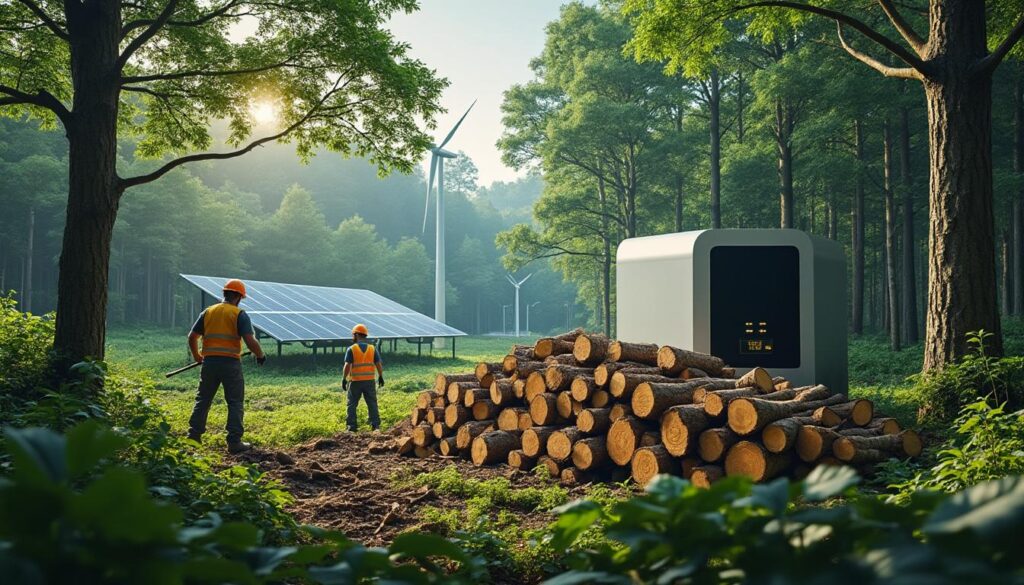
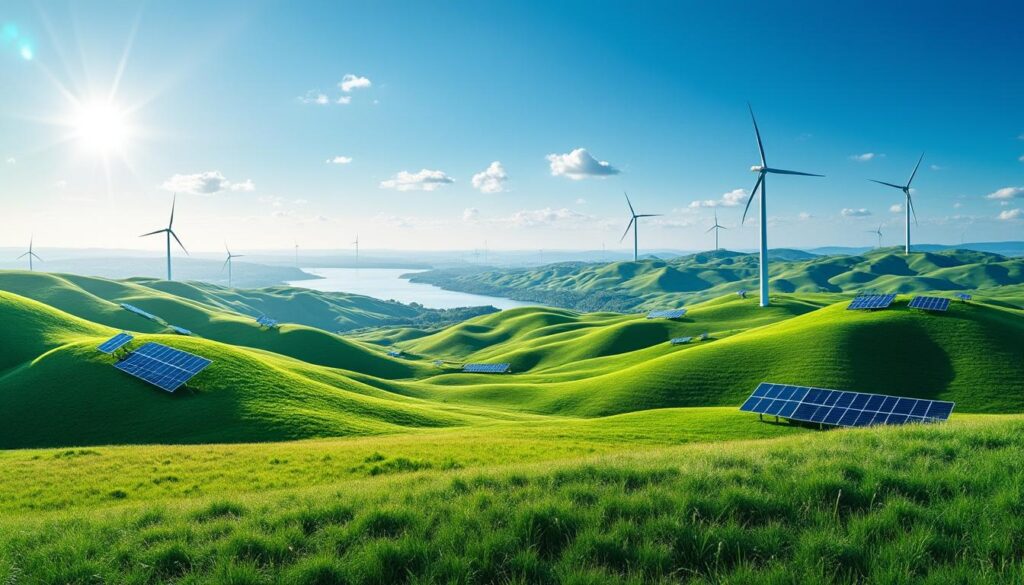
Uzbekistan has entered an accelerated energy transition cycle, combining ambitious goals with smart international investments and a natural environment favorable for solar and wind. For those following sustainable housing, it is a living laboratory of scalable solutions that can also inspire decisions in your home.
Short on time? Here’s the essence:
| ✅ Key Point | 🔎 Essence |
|---|---|
| 🚀 Clear goals by 2030 | Over 50% of electricity expected from solar, wind, and hydro; reduction of 10% in emission intensity compared to 2010 📉 |
| 🤝 Robust financing | PPPs and PPAs with consortia from Saudi Arabia, China, and Europe, mobilizing over €22 billion 💶 |
| ⚡ Projects on the ground | 11 solar plants and 5 wind farms already operational; expansion in regions like Namangan 🌬️☀️ |
| 🏠 Practical application | Combining building efficiency, self-production, and smart load management, the electricity bill decreases with energy security 📲🔋 |
Uzbekistan drives the renewable energy revolution: goals, investments, and timeline to 2030
The country has set a direct path: after ratifying the Paris Agreement in 2018, it committed to reducing emission intensity by 10% compared to 2010 by 2030, while expecting more than half of electricity to come from renewable sources. Instead of vague promises, contracts, auctions, and ongoing works are changing the reality of the power grid.
The numbers reflect the ambition. Among projects in operation and under construction, there are 11 solar plants and 5 wind farms already producing, with additional expansion expected over the next two years. Public-private partnerships (PPP) and power purchase agreements (PPA) have anchored the capital of investors from Saudi Arabia, China, and Europe, combining contractual guarantees with competitive auctions to lower tariffs and enable scale.
This launch addresses three simultaneous needs: modernizing the economy, reinforcing energy security, and reducing environmental impacts. Historically reliant on natural gas, the Uzbek electricity system finds in the desert’s solar resources and consistent winds a route of decreasing costs and low volatility, especially when associated with strengthened grids and storage.
Why this matters to your home and your electricity bill
National transitions have a direct impact on families. More predictable prices, fewer interruptions, and incentives for micro-production tend to grow as the grid incorporates more renewables. For those planning an efficient home, the time is right to integrate self-production solutions, water heating with heat pumps, and load control.
- 🔆 Optimize solar consumption time: wash clothes and charge batteries during peak photovoltaic production.
- 🧱 Invest in “first fuel”: insulation and airtightness reduce generation needs.
- 🔌 Prepare the electrical installation: panel with space for inverter, protections, and bi-directional measurement.
- 📲 Use simple automation: programmable outlets and smart thermostats adjust load to production.
| 🗓️ Milestone | 🎯 Goal/Result | 🌍 Impact |
|---|---|---|
| 2018 | Ratification of the Paris Agreement ✅ | Legal basis for transition ♻️ |
| 2024-2025 | 11 solar + 5 wind plants operating ⚡ | Renewable capacity accelerates 🚀 |
| 2030 | >50% of renewable electricity ☀️🌬️💧 | Reduction of emissions and imports 📉 |
To gain sustainable traction, the goals are detailed, with gradual milestones and stable contracts — the revenue that also reduces your bill when replicated on a domestic scale.
Solar and wind in the desert: technologies, costs, and applicable lessons for your home
On the ground, progress combines mature technology with locally adapted solutions. In solar energy, bifacial panels and single-axis trackers harvest more irradiation in arid landscapes, while central inverters simplify operation. In wind, large-diameter turbines exploit plain winds, reducing the cost per megawatt-hour and leveling nighttime production.
Beyond generation, the differentiator lies in the balance between production and consumption. Modular storage (lithium batteries and, in pilot projects, flow solutions) is beginning to appear in transmission hubs, ensuring stability. The same reasoning applies to homes: residential batteries of 5–10 kWh help shave peaks and use energy during the most expensive period.
What your building can adapt now
Efficient homes learn from plants: they orient, protect, and simplify. Roofs with proper tilt, shading that prevents overheating and light-colored surfaces reduce thermal load. Next, the electrical part: an inverter sized with a margin and a well-organized set of wires prevent losses and maintenance headaches.
- 🧭 Orientation: prioritize surfaces facing south (northern hemisphere) for PV.
- 🌡️ Passive comfort: use cross ventilation and low-emissivity glass.
- 🔋 Storage: size batteries for evening self-consumption (kitchen/bath).
- 🛠️ Maintenance: adopt simplified string and safe roof access.
| 🔧 Technology | 💰 Relative Cost | ✅ When it makes sense |
|---|---|---|
| Bifacial panel ☀️ | Medium | Roofs with reflection (light patios) and free space |
| 1-axis tracker 🔄 | Medium-High | Ground structures and flatter production throughout the day |
| 7 kWh battery 🔋 | Medium | Tariff with peak hours and evening consumption |
| Mechanical ventilation with recovery 🌬️ | Medium | Airtight homes, comfort, and air quality |
A simple example: an apartment in Samarkand combined 3.6 kW of PV, heat pump for DHW and roof insulation. Annual consumption dropped by 38%, with more stable comfort in summer. The lesson is clear: distributed generation only delivers its full potential when the building’s “shell” also works in its favor.
It is in the combination of good architecture with appropriate technology that the desert teaches homes to be resilient and economical.
Partnerships and financing in Uzbekistan: how PPAs and PPPs accelerate — and what you can replicate on a domestic scale
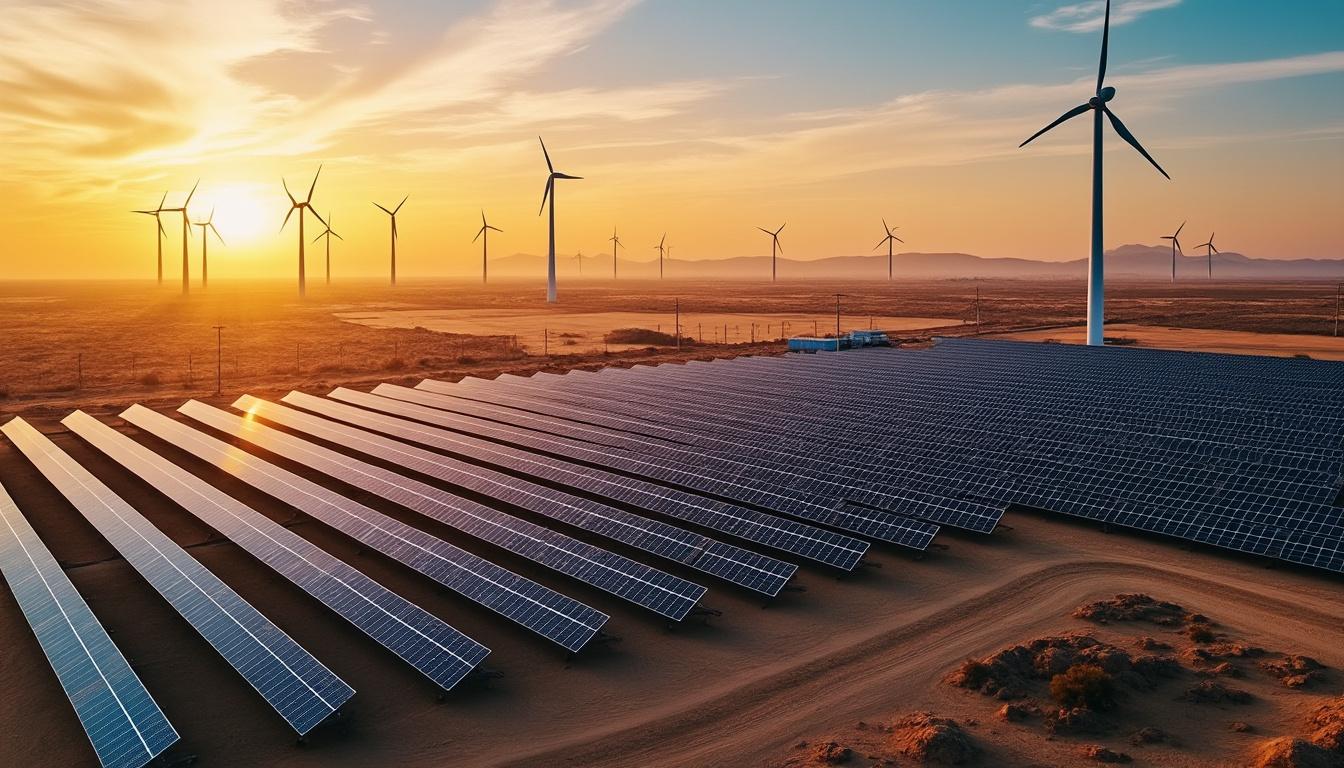
The Uzbek renewable expansion has a silent engine: well-designed contracts. Long-term PPAs, awarded through auctions, provide predictability to investors and competitive tariffs to the system. In PPPs, infrastructure (lines, substations) receives capital and management that shorten deadlines and reduce risks.
Consortia from Saudi Arabia, China, and Europe have brought not just money, but also operational, maintenance, and risk management standards. The result is a stable pipeline of projects, with phased schedules that feed the grid without bottlenecks. For a country that relied heavily on gas, this means diversifying without sacrificing reliability.
Tools you can leverage at the local level
There are direct parallels for condominiums, neighborhoods, and small towns. The “local PPA” figure appears in energy cooperatives and solar communities, where consumers sign contracts to purchase energy from a neighbor’s rooftop or a nearby park. Collective equipment purchases reduce costs and increase warranty.
- 👥 Form a group: neighbors + property manager + installer = purchase consortium.
- 📑 Contract right: use local PPA model with fixed price and annual review.
- 📍 Prioritize simplicity: 1 main meter and sub-metering to share gains.
- 🔎 Transparency: share production and consumption monthly in an accessible spreadsheet.
| 🧰 Instrument | 🏠 Residential Version | 🎁 Benefit |
|---|---|---|
| PPA of 10–15 years 📜 | Purchase agreement for the condominium’s solar rooftop | Predictable price with no initial CAPEX ✅ |
| Network PPP 🛠️ | Partnership with utility for bi-directional measurement | Simple integration and less bureaucracy 🔌 |
| Reverse auction 🧮 | 3 competitive quotes for the same solution | Reduction of 10–20% in final cost 💸 |
| Performance guarantee ✅ | Minimum production clause in the contract | Reduced technical risk 🔍 |
Those who structure the agreement well disarm the biggest enemy of clean projects: uncertainty. Collectively, small initiatives replicate the stability that, in Uzbekistan, is unlocking gigawatts.
Just transition, water, and landscape: how renewable development integrates into Uzbek territory
Speed is not enough without justice. The Uzbek transition is also an agenda for jobs, training, and respect for the territory. Technical courses in operation and maintenance, logistics, and safety prepare workers for activities that will remain in the country. At the same time, the planning of parks and lines must protect water resources and the biodiversity of the steppes.
The regional landscape reinforces the urgency. Asia led recent renewable capacity additions, accounting for over 70% of new installations, while other regions still struggle to attract capital. For Uzbekistan, positioning itself at this forefront means attracting investment and technology, cultivating industrial clusters, and creating local maintenance chains.
Good practices that translate into real benefits
Modern projects are born with strategic environmental assessment, monitoring of avifauna and migration routes, green corridors, and dust management. Water is conserved with dry robotic cleaning in solar plants and recirculation in substations. Neighboring communities receive improved access to roads and the internet, as well as funds for technical education.
- 🧑🎓 Local training: O&M academies with recognized certification.
- 💧 Water: dry cleaning and reuse where dust is intense.
- 🦅 Biodiversity: mapping migration routes and micro-adjustments in layout.
- 🏘️ Neighborhood: community funds and continuous communication.
| 👤 Actor | 🤝 Commitment | 🌱 Outcome |
|---|---|---|
| Government | Auctions and agile licensing ✅ | Predictability for investment 📈 |
| Investors | Continuous environmental monitoring 🔍 | Projects accepted by the community 💚 |
| Communities | Participation in hearings 🗣️ | Local benefits and jobs 👷 |
| Academia | Technical training and R&D 🎓 | Available talent and innovation 🔬 |
When the territory is respected, the transition ceases to be a map of cables and shovels and becomes a social pact that enhances the life where energy is generated.
From the grid to the building: practical strategies for an efficient home, prepared for renewables
What happens on the grid transforms what makes sense at home. If electricity becomes cleaner at noon, it makes sense to shift consumption, reinforce the thermal envelope, and electrify end uses. The home prepared for renewables is not futuristic: it is organized.
Start with the obvious that saves the most: reduce losses. Roof insulation, sealing gaps, thermal curtains, and mechanical ventilation with recovery stabilize comfort and decrease required power. Then, replace boilers with heat pumps, install well-sized PV, and, when it makes sense, add batteries to ride through peak hours.
Step-by-step action plan
- 🗓️ 0–3 months: energy audit, sealing, LED bulbs, smart strip.
- 🔧 3–6 months: roof insulation/shutter box, A+++ labels, thermostats.
- ☀️ 6–12 months: PV 2–5 kW, heat pump for DHW, preparation for EV.
- 🔋 12–18 months: 5–10 kWh battery and tariff with time slots to maximize self-consumption.
| 🏡 Measure | ⏱️ Typical Timeline | 💵 Approximate Payback | 🌍 Bonus |
|---|---|---|---|
| Roof insulation 🧱 | 1–2 days | 2–4 years | Immediate comfort ❄️🔥 |
| LED + automation 💡 | 1 day | < 1 year | Easy management via app 📲 |
| PV 3–4 kW ☀️ | 2–3 days | 4–7 years | Constant CO₂ reduction ♻️ |
| Heat pump DHW 🔥 | 1 day | 3–5 years | Stable hot water 💧 |
| 7 kWh battery 🔋 | 1 day | 6–9 years | Resilience during peaks ⚡ |
A case study in Tashkent illustrates the logic. A condominium of 24 units adopted shared PV on the roof, individual heat pumps for hot water, and sub-metering to share gains. Common consumption dropped by 55%, and residents’ expenses became more predictable. The secret was not exotic technology, but coordination and clear sharing rules.
If you wish to go further, consult practical guides on platforms like Ecopassivehouses.pt to size the system according to your climatic environment and consumption habits. Starting small and well is preferable to a big leap without a solid foundation.
Source: pt.euronews.com