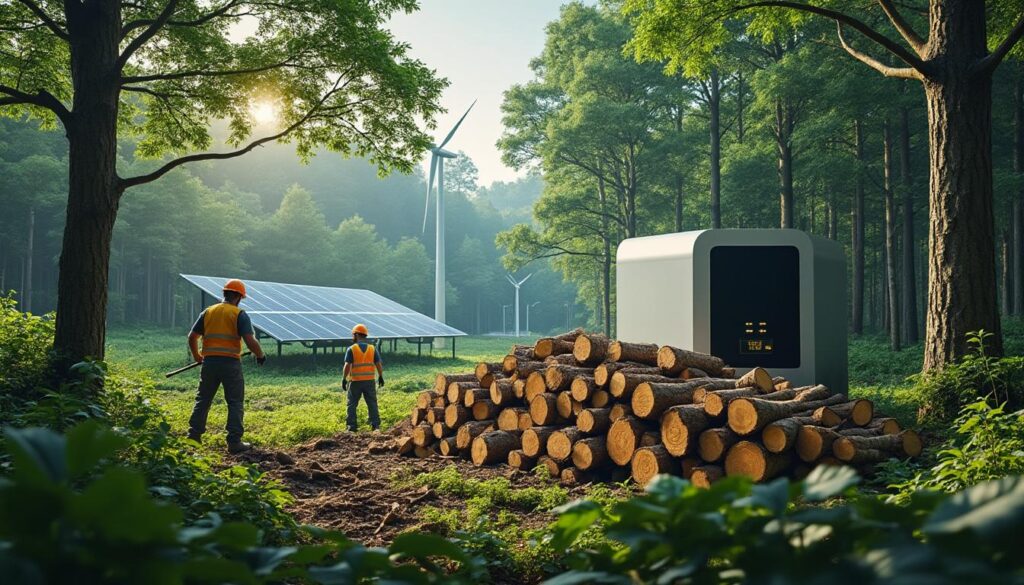
The French investment to build 1 GW of renewable energy in Portugal gains traction with construction, batteries, and new models of local participation. For you, this translates into cleaner electricity, more robust projects, and concrete opportunities for engagement.
| Short on time? Here are the essentials: | |
|---|---|
| ✅ Key points | What it means for you ⚡ |
| ✅ 1 GW in solar, wind, and batteries | More price stability and lower emissions 🌱 |
| ✅ Anchor projects: Santas (225 MW) and Margalha (147 MW) | Industrial start with hybridization and storage 🔋 |
| ✅ Local crowdfunding reached 5 M€ | Open doors to citizen participation 💶 |
| ✅ Agrivoltaics with Alcobaça apple | Food + energy on the same land 🍎☀️ |
| ✅ Licensing under scrutiny (Polvorão) | Good environmental practices and community dialogue 🧭 |
1 GW Mega Project in Portugal: Real impacts on your daily energy
The French plan to install 1 GW on Portuguese soil combines solar, wind, and batteries by 2032, with visible milestones already on the ground. In Santas (Monforte), the 180 MW solar plant operates and receives 45 MW of wind power for hybridization, totaling 225 MW. In Margalha (Gavião), commissioning is projected for the 1st quarter of 2026 with 147 MW, reinforcing the interior axis of the country with generation and storage.
In practice, 1 GW of renewable energy can produce annually between 1.7 TWh and 2.2 TWh, depending on the mix and hours of wind and sun. This is enough to supply between 350,000 and 500,000 households, considering average consumption profiles. For you, the message is simple: greater supply security and electricity with a lower carbon intensity, especially when the sun and wind cooperate.
The French experience in renewables provides strength to execution. At home, France is accelerating its goals to 48.1 GW solar by 2030 and projecting 140 GW by 2050, while entities like SNCF plan to have 1 GW of photovoltaic on their own to reduce energy costs. This track record helps frame the long-term commitment now materialized in Portugal, focusing on system resilience and reducing fossil fuel imports.
What changes in your daily life? Gains in tariff stability during critical hours and a smarter grid as batteries redistribute energy from excess hours to consumption peaks. On intensely sunny days, it prevents sharp price drops and wastage of production. At night, part of that stored electricity softens the reliance on more expensive plants.
- 🌞 More solar at noon: self-consumption on rooftops and charging of vehicles become more efficient.
- 🌬️ Wind complement: helps fill solar generation gaps at the end of the day.
- 🔋 Batteries: mitigate negative prices and enhance grid security.
- 🏡 Efficient homes: better take advantage of dynamic tariffs and local production.
- 🤝 Local participation: crowdfunding and energy communities create shared value.
| Project ⚙️ | Capacity 🔢 | Status 📍 | Value for you 💡 |
|---|---|---|---|
| Santas (Monforte) | 180 MW PV + 45 MW wind = 225 MW | Operation + hybridization | More useful hours of production and less volatility 🔁 |
| Margalha (Gavião) | 147 MW PV | Projected entry in 1Q 2026 | New supply in the interior, reinforcing the local grid 🗺️ |
| Agrivoltaics Alcobaça | PV + Alcobaça apple | Funded project (PRR) | Beneficial shading and agricultural + energy yield 🍎 |
| Batteries (Santas and Margalha) | Storage for peak hours | Approved public funding | Price stability and less curtailment ⚖️ |
Key idea: the better solar, wind, and batteries are integrated, the more predictable and accessible energy becomes for your home and the local economy.
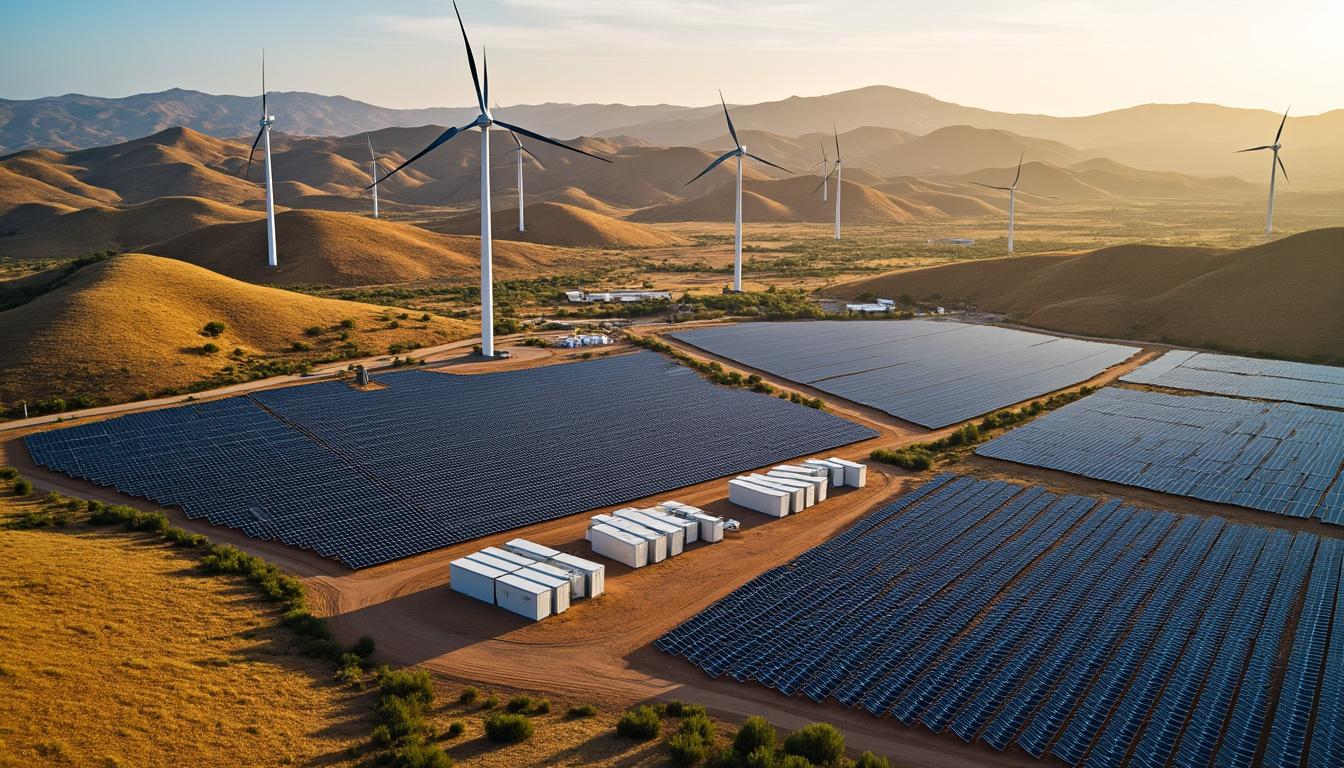
Financing and governance: how the French are structuring the 1 GW investment
The core of the plan results from the evolution of a strategy initiated when the French company won the first solar auction in Portugal with three lots (370 MW). Since then, the group changed shareholders with the entry of the Ardian fund and renewed the executive leadership, now with proven experience in major European renewable companies. The goal remains: invest around €1 billion by 2032 to build 1 GW in a mix that integrates photovoltaic, wind, and storage.
The financial engineering combines classic instruments and openings to the territory. On one hand, long-term contracts (PPAs) and market revenues; on the other, local crowdfunding — like the €5 million in Santas — to involve citizens and municipalities in the return on investment. The French experience with large renewable portfolios facilitates risk management, especially in a European context of ambitious targets and capital costs attentive to the predictability / social acceptance binomial.
For you, this translates into more solid projects, less prone to shocks, and with mechanisms that share value. The more diversified the financing, the greater the resilience against price cycles and regulatory changes. Additionally, there is the learning from a French market that has authorized hundreds of projects, maintaining the investment pace even in years of uncertainty — a sign of sector maturity.
- 💶 Stepped CapEx: construction and grid connection phases reduce execution risks.
- 🤝 Citizen participation: local instruments foster trust and belonging.
- 📄 Well-designed PPAs: help stabilize cash flows.
- 🧭 Environmental governance: continuous monitoring and independent audits.
- 🧩 Technological mix: more than solar, it’s the integration with wind + batteries that closes the cycle.
| Component 🧱 | Revenue sources 💵 | Main risk ⚠️ | Mitigation 🛡️ |
|---|---|---|---|
| Utility-scale solar | Spot market + PPA | Negative prices during excess hours | Batteries + curtailment management 🔋 |
| Onshore wind | Market + certificates | Wind variability | Opposite correlation to solar 🌬️ |
| Storage | Arbitrage + system services | Degradation and cycles | Optimized operation and availability contracts ⚙️ |
| Crowdfunding | Interest to local investors | Insufficient communication | Transparency and regular reporting 📊 |
Want to delve into how PPAs and capacity markets work? The European landscape helps understand the logic of this investment.
Final insight: a plural and transparent financial mix is as critical as the installed capacity; it guarantees that turbines spin and panels deliver value for decades.
Integration of solar, wind, and batteries: hybrid design for more stable prices
In recent years, solar penetration has caused episodes of very low or negative prices during lower consumption hours. By marrying photovoltaics + wind + storage, the French projects in Portugal tackle this problem at its source. This is the case of Santas (225 MW), where wind production smooths the evening and batteries shift energy to the evening peaks; and Margalha (147 MW), which is already being designed with planned storage.
This hybrid design preserves revenue and reduces energy waste, while supporting the grid with ancillary services. For the consumer, the most tangible effect is greater tariff predictability. Even though volatility never disappears, it diminishes when energy aligns with consumption profiles. And there is another gain: less need to activate fossil backup sources.
There are useful lessons for your home: size the self-consumption based on the daily curve, favor programmable equipment (thermal accumulators, heat pumps), and consider a small residential battery when it makes economic sense. In neighborhoods and villages, energy communities make local sharing more efficient, replicating on a domestic scale what these plants do at the utility level.
- 🧠 Load curve planning: schedule consumption for local production hours.
- 🔋 Strategic battery: prioritize useful services (night peak, critical backup).
- 🌡️ Thermal storage: hot water as an “invisible battery.”
- 🚗 EV as a buffer: smart charging at cheaper times.
- 🏘️ Energy communities: sharing excess and smoother internal rates.
| Configuration 🔧 | Main benefit ✅ | Useful indicator 📈 | Practical tip 📝 |
|---|---|---|---|
| Solar + Wind | More uniform production | Combined load factor ↑ | Combine local winds with radiation for siting 🌬️☀️ |
| Solar + Battery | Reduction of negative prices | Time-of-use arbitrage | 2-4 useful hours of capacity already make a difference 🔋 |
| Hybrid 3-in-1 | Grid services + stable revenue | Less curtailment | Data-driven operation in real-time 📡 |
To visualize examples of hybrid operation and storage strategies, it’s worth exploring recent technical analyses and comparable European cases.
Key phrase: intelligent integration is worth more than the sum of its parts — it transforms megawatts into tangible value for consumers and the grid.
Licensing, local acceptance, and planning: lessons from Polvorão and agrivoltaics
Robust projects require solid licensing and an honest relationship with the territory. The Polvorão (Gavião and Nisa) plant is suspended pending a court decision after the challenge to environmental, energy, and urban licensing. The Public Prosecutor invoked potential conflicts with territorial management instruments — such as Natura 2000, PROT Alentejo, and PDMs. The company expresses confidence that it has complied with the rules but acknowledges that “the world is not always ideal” and that delays due to litigation are part of the reality.
This episode, although challenging, brings a valuable lesson: social acceptance and ecological planning go hand in hand. When communities, municipalities, and promoters build solutions in co-authorship, impacts are minimized, and shared benefits are created. This is demonstrated by the agrivoltaics in Alcobaça, funded by the PRR, where panels and the Alcobaça apple coexist productively, using controlled shading to protect crops and reduce evaporation.
There is a clear pathway of good practices. Map sensitive areas, prepare cumulative studies, define ecological corridors, responsibly capture water, and design measurable ecological compensations. Do you know the key differentiator? An open governance, with public reports, guided visits, and continuous monitoring accessible to citizens. This elevates trust and accelerates consensus.
- 🗺️ Avoid biodiversity hotspots: prioritize already anthropized areas.
- 🌳 Ecological corridors: maintain habitat connectivity.
- 💧 Water management: properly sized drainage and retention basins.
- 📣 Structured dialogue: local assemblies with clear technical responses.
- 🧪 Post-construction monitoring: shared metrics and independent audits.
| Challenge 🧩 | Environmental risk ⚠️ | Recommended response 🛠️ | With local benefit 🤲 |
|---|---|---|---|
| Planning | Conflict with PDM/PROT | Map revisions and layout alternatives | Integration with municipal plans 🏛️ |
| Biodiversity | Pressure on habitats | Corridors, buffers, and compensatory biotopes | Measurable ecological gains 🪲 |
| Public perception | Distrust and litigation | Co-creation, technical visits, and open reports | Trust and acceleration of deadlines ⏱️ |
| Agrivoltaics | Conflict with crops | Appropriate height/angle and agronomic management | Agricultural + energy yield 🍎⚡ |
If you want to follow licenses and opinions, consult entities such as the APA and the DGEG. Summary: a good project is one that balances energy, ecology, and people — the three pillars of territorial development.
Participation and citizen financing: how to leverage crowdfunding and energy communities
The €5 million crowdfunding in Santas proved that it is possible to involve citizens in the energy transition without excessive complications. For you, this opens two pathways: to invest in utility projects with defined returns and, at the same time, join energy communities to lower bills and share local surpluses. In Portugal, the legal framework has been consolidating, allowing municipal and cooperative initiatives with access to technical and financial support.
In addition to financial participation, civic engagement happens daily. Choosing efficient appliances, scheduling consumption for hours of greater local production, and installing solar rooftops are impactful steps. In rural areas, producers can explore small-scale agrivoltaics, combining useful shading with valuable crops — a clear inspiration from the project with the Alcobaça apple.
- 💶 Citizen investment: diversifies savings and brings the community closer to the project.
- 🏘️ Energy community: shared and collective management of electricity.
- 🔌 Collective self-consumption: neighboring buildings optimizing a single generation.
- 📱 Smart management: apps to track production/consumption in real-time.
- 🎯 Public support: programs for audits, rooftops, and home batteries.
| Option 👇 | Practical steps 🧭 | Benefit 💚 | Estimated time ⏳ |
|---|---|---|---|
| Crowdfunding | Choose a project, invest, follow reports | Financial return + local impact 📈 | Minutes to join, years to reap |
| Energy community | Formation, shared measurement, internal rules | Lower bill and autonomy ⚡ | Months to launch, continuous benefits |
| Solar rooftop | Design, licensing, installation | Self-consumption and property appreciation 🏡 | 4-8 weeks on average |
| Home battery | Sizing based on load profile | Smoothing peak and backup 🔋 | 1-2 days for installation |
Want to see energy community experiences in action? There are good documented cases in Portugal and Europe that show practical gains and easy organization.
Operational summary: participation is the keyword — in investment, in consumption management, and in building resilient energy communities.
From vision to project: timeline, risks, and opportunities of the French 1 GW investment
Transforming vision into project requires schedule discipline and risk anticipation. The current plan combines operational assets, projects under construction, and a pipeline in the licensing phase. In parallel, the entry of the Ardian fund and executive leadership with experience at EDF and Vestas reinforces industrial execution capacity, from engineering to connection contracts and logistics.
Main risks? Delays due to litigation, grid constraints, cost inflation, and limited connection windows. To mitigate, there are four lines of action: joint planning with the system operator, long-term contracting with critical suppliers, value engineering to reduce CapEx, and a strong local acceptance strategy. The result is a program that learns from each project, adjusting timelines without losing the goal of 1 GW.
In terms of timing, the next milestone is the entry of Margalha in 1Q 2026, while batteries are consolidated in Santas and in Gavião itself. The agrivoltaics in Alcobaça, funded, serves as a living laboratory for energy-agriculture integration. The case of Polvorão will guide new approaches to design and community participation.
- 🗓️ Short-term: complete ongoing works and install priority batteries.
- 🧮 Medium-term: optimize PPAs and system services for stable revenues.
- 🌍 Long-term: replicate hybrid and agrivoltaic models in new municipalities.
- 🧰 Good practices: recurring technical and environmental audits.
- 📚 Capacity building: sharing knowledge on platforms like Ecopassivehouses.pt.
| Milestone 🏁 | Description 📝 | Main risk ⚠️ | Success measure 🏆 |
|---|---|---|---|
| Santas 225 MW | Operation + wind + batteries | System integration | Full hours + less curtailment 📊 |
| Margalha 147 MW | Entry in 1Q 2026 | Timeline and grid connection | COD within schedule ⏱️ |
| Agrivoltaics | Compatibility with crops | Agrarian acceptance | Stable agricultural productivity 🍇 |
| Polvorão | Court decision and redesign if necessary | Territorial compliance | Alignment with Natura/PDM ✅ |
For municipalities and for you, the message is one of opportunity: aligning energy efficiency, local generation, and citizen participation is the best antidote against volatility and external dependence.
If you can do just one thing today, choose one: join an energy community, study your consumption profile, or plan a solar roof. The path to autonomy begins with a simple and consistent gesture.
Source: jornaleconomico.sapo.pt