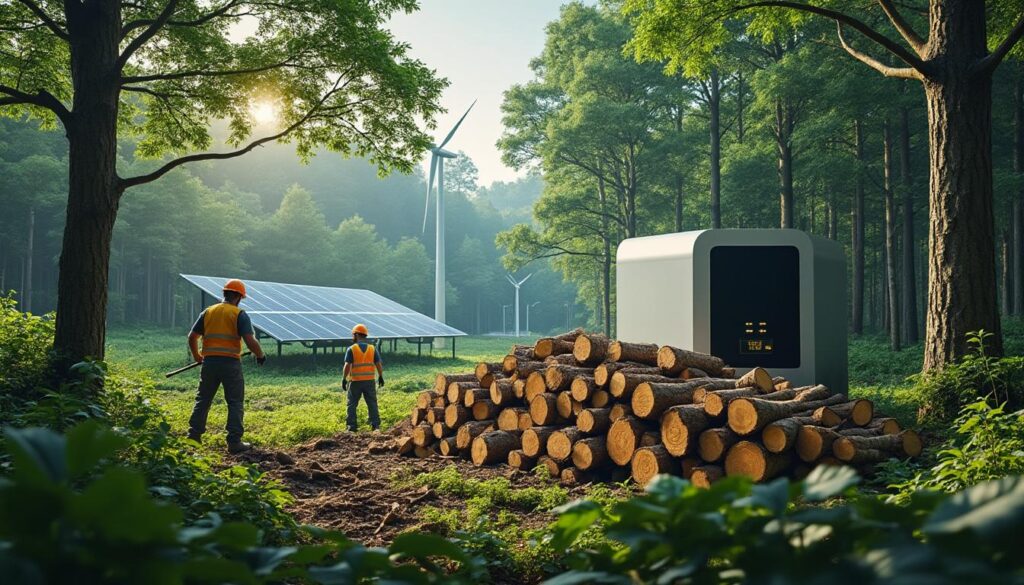
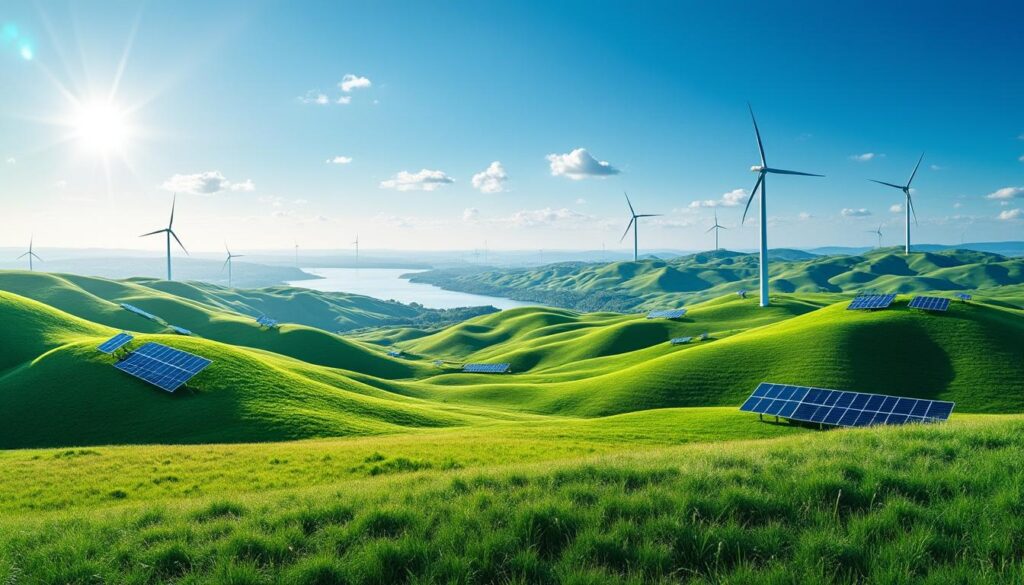
Portugal has once again confirmed the strength of renewables: in October, around two-thirds of the electricity came from wind, water, and sun. This has a direct impact on your bill and how you design or renovate your home.
| Short on time? Here’s the essential: |
|---|
| ✅ Renewables ≈ 2/3 of electricity in October ⚡ — more price stability and a lower carbon footprint. |
| ✅ Right timing = savings ⏰ — schedule consumption for periods of higher wind/hydro production. |
| ✅ Avoid the common mistake ❌ — installing panels without assessing shadows, orientation, and rates; conduct the study first. |
| ✅ Bonus 🌱 — energy communities in condominiums reduce costs and increase local autonomy. |
Renewables dominate in October: what explains two-thirds of electricity in Portugal
When wind and hydropower ramp up, the Portuguese electricity mix shifts to another level. Autumn offers more consistent winds and reservoirs with levels that allow steady turbine operation, which boosts clean production. Add in the photovoltaic generation that already represents a solid slice during the day, and the biomass that provides a base, and you get an October with about two-thirds of electricity from renewable sources.
Recent reports show that the annual Portuguese structure has exhibited a robust pattern: hydropower and wind lead, followed by solar. In 2023, hydropower was around 40%, wind above 35%, photovoltaic near 14%, with biomass hovering around 10% and residual geothermal. In 2024, the European Union reached about 47% renewable electricity, and Portugal stood out with over 70% in annual consumption, reinforcing its position among European leaders alongside countries like Denmark and Norway.
Wind, water, and sun: the trio that propelled the system
In October, Atlantic winds increase the productivity of turbines on the coast and plateaus. Hydropower responds when there is water in the reservoirs, regulating peaks and acting as the system’s “natural battery.” Solar, despite shorter days, already benefits from distributed photovoltaic expansion and large-scale plants that maintain relevant generation during the daytime.
The combined effect is both financial and environmental. Less fossil fuels means lower exposure to international gas volatility, in addition to reduced emissions. For you, this translates into opportunities: dynamic rates, well-sized self-consumption, and demand management strategies can turn a month favorable to the system into a practical advantage at home.
- 🌬️ Strong wind: more production at night and on windy weekends.
- 💧 Regulating hydropower: smooths peaks and stabilizes the grid.
- ☀️ Growing solar: even in autumn, capacity already matters during the day.
- 🪵 Base biomass: contributes to predictability.
| Source ♻️ | Role in October ⚙️ | Benefit for you 💡 |
|---|---|---|
| 🌬️ Wind | High production, especially at night | Schedule machines for windy hours ⏱️ |
| 💧 Hydropower | Flexibility and stability | Bi-hourly rates to take advantage of price valleys |
| ☀️ Solar | Consistent daytime generation | Self-consumption with management of daytime loads |
| 🪵 Biomass | Predictable base | Less volatility in monthly bills |
Key insight: months like October show that domestic energy planning and efficient architecture turn national statistics into real savings.
How to save when the grid becomes greener: tariffs, self-consumption, and batteries
When renewable production rises, prices tend to ease in wholesale markets. At home, this translates into three levers: the right tariff, load management, and own generation. Combined, they create a “staircase” effect: each step adds efficiency and reduces the bill.
Consider a simple plan: map consumption (DHW, laundry, climate control), adjust the tariff (simple, bi-hourly, or dynamic), and evaluate self-consumption with or without battery. If you live in an apartment, explore energy communities within the condominium. In houses, the photovoltaic pair + heat pump is particularly effective.
Step-by-step practical guide
The journey begins with the electricity bill. Identify peak consumption times and check if they coincide with periods of higher renewable production. Then, adjust the scheduling of devices and check self-consumption opportunities with a smart inverter.
- 🧭 Tariff: choose bi-hourly/dynamic to take advantage of valleys ⏰.
- ⚙️ Load management: wash and dry clothes during low-cost hours 🧺.
- 🔋 Battery: store excess solar for nighttime use 🌙.
- 🚿 Efficient DHW: heat pump + scheduling = savings 💧.
- 🔌 EV: night charging when there is constant wind 🚗.
| Measure 💡 | Estimated investment 💶 | Savings/benefit 📉 | Note ⚠️ |
|---|---|---|---|
| Bi-hourly tariff ⏰ | 0€–50€ (contract change) | 5–15%/year | Schedule washing machines 🧼 |
| PV 3–5 kWp ☀️ | 3,500€–6,500€ | 30–50% of the bill | Shadow study is crucial 🧭 |
| Battery 5–10 kWh 🔋 | 2,500€–6,000€ | +10–20% self-consumption | Analyze dynamic tariff 📈 |
| Heat pump DHW ♨️ | 1,500€–2,500€ | −60–70% vs. storage heater | Schedule during low hours ⏱️ |
Case study: the Silva family
In a T3 in Oeiras, a household switched to a bi-hourly plan, installed 4 kWp, and optimized laundry for the morning. In 12 months, the bill dropped by about 40%, with equal or better comfort. On windy days in October, they started heating DHW in the early morning and charging the electric vehicle at a reduced cost.
If you are looking to deepen strategies for smart consumption and self-consumption, you will find updated guides and practical schemes on platforms like Ecopassivehouses.pt.
Key insight: start with the tariff and scheduling; then scale to PV and battery based on real data from your home.
Passive architecture and natural materials: houses that respond to renewable peaks
A well-designed house reduces energy needs by 50–80% before any panel. In months with high renewables, passive solutions elevate the gain even further because they allow shifting minimal consumption to the greenest hours while maintaining comfort.
The principle is simple: insulate, seal, and ventilate in a controlled way, protecting against heat in summer and taking advantage of solar gains in winter. Naturally sourced materials — cork, wood, hydraulic lime, stabilized earth — combine thermal performance, low carbon, and indoor health.
Architectural gestures that make a difference
Orient main openings to the south, use movable shading, and maximize thermal inertia. In an Atlantic climate, a well-insulated envelope with windows of good solar factor prevents heating spikes. Mechanical ventilation with heat recovery keeps the air healthy with minimal losses.
- 🪵 Wood and cork: low carbon and excellent insulation.
- 🧱 Thermal inertia: massive interior walls stabilize peaks.
- 🪟 Active shades: blinds/brise-soleil control solar gains.
- 🌬️ MVHR: fresh air with reduced heat losses.
- 🔌 BIPV: photovoltaic integrated into the roof or facade.
| Solution 🏡 | Energy effect ⚡ | How to apply 🛠️ | Practical note 📌 |
|---|---|---|---|
| Insulation with cork 🌰 | Less thermal loss | Natural capoto 80–120 mm | Avoid thermal bridges 🧊 |
| Efficient windows 🪟 | Reduces infiltrations | Double/low-emissive glass | Installation with sealing tape 🧰 |
| MVHR 🌬️ | + Air quality | Recovery ≥80% | Filters with maintenance 🧽 |
| Heat pump + PV 🔆 | Efficient heating/DHW | Scheduling by hour | Almost zero energy house 🌿 |
BIPV and aesthetics: when energy becomes material
Integrated modules (BIPV) allow for photovoltaic roofs and facades with a clean design. In rehabilitation, solar tiles or panels with neutral texture preserve the building’s language and produce during the day. Integrated with a hybrid inverter, they power loads while the grid is more renewable and charge the battery when wind energy dominates at night.
Key insight: first passive efficiency, then active technology — this order reduces costs and maximizes the benefits of an increasingly clean grid.
Energy communities: condominiums and villages sharing sun and wind
With frequent and cheap renewables in the system, sharing local production reduces losses and bills. Energy communities allow a sunny roof to benefit multiple units, schools, or small businesses. The consumer becomes an active participant in the system, generating, consuming, and trading energy within the same network zone.
The model is simple: a group of members installs production (e.g., PV on the roof), defines sharing percentages, and uses a technical manager for communication with the network operator. Smart meters and management platforms handle the rest, ensuring transparent measurement and settlement.
How to start a community in your condominium
Start with a consumption diagnosis of all units and common areas. Map roofs, shading, and structures. With a preliminary study, invite a qualified company and the condominium administrator for a proposal on layout, share quotas, and estimated savings.
- 🧩 Organization: assembly, minutes, and simple regulation.
- ☀️ Technical project: dimension PV for daily load.
- 📡 Measurement: meters and data gateway.
- 📜 Contract: sharing and maintenance rules.
- 📈 Monitoring: app to see production and consumption.
| Actor 👥 | Responsibility 🧭 | Tool 🔧 | Benefit 🎯 |
|---|---|---|---|
| Condominium | Decision and quotas | Assembly + minutes | Collective savings 💶 |
| Designer | Dimensioning | PV simulation | Less oversizing 📐 |
| Technical manager | Operation and data | IoT platform | Transparency 🔎 |
| Network operator | Interconnection | Protocols | Secure integration 🔒 |
In villages with agricultural rooftops, sharing can feed water pumps and refrigeration units during cheap hours and sell excess when the grid is receptive. In schools, PV + heat pumps + load management shift consumption to periods of more sun and wind — education and efficiency hand in hand.
Key insight: the community multiplies the advantage of months like October, turning inactive roofs into shared value.
Electric mobility and demand management: charge when the wind blows
If you live with an electric vehicle, renewable October is an opportunity. Nighttime wind reduces prices and emissions per kWh, and programmed charges start to cost less and pollute less. In houses, daytime PV covers short trips; in condominiums, sharing charging points improves the use of rates and local production.
With smart home chargers, it is possible to set time windows and power limits. The same applies to heat pumps and DHW: schedule them to align with price valleys and renewable peaks. The sum of small adjustments creates significant annual savings.
Working routines
Organize a weekly routine and keep it stable. On windy days, extend nighttime charging; on sunny weekends, do laundry and dry clothes in the morning. Consider a small battery bank to absorb excess solar at lunch and cover evening peak.
- 🚗 EV: schedule 00:00–07:00 when wind is highest.
- 🧺 Laundry: sunny Saturday mornings = cheap kWh.
- ♨️ DHW: heating water during valleys avoids cost peaks.
- 📊 App: monitor production/consumption and adjust routines.
- 🔌 Smart plugs: cut nighttime standby.
| Equipment 🔋 | Strategy ⏱️ | Gains 📉 | Tip 💡 |
|---|---|---|---|
| EV charger | Windy night | −20–40% on kWh | Dynamic tariff helps 🎯 |
| Washing/drying machines | Solar morning | “Almost free” consumption with PV | Use delay start 🕒 |
| DHW heat pump | Scheduled | −60–70% vs. resistance | Have a well-insulated tank 🧊 |
| Smart plugs | Standby cuts | −5–8% annually | Automate by scenes 📲 |
In businesses, demand management goes further: refrigeration units pre-cool when there is excess renewable, and electro-intensive processes shift shifts. The logic is replicable at home, on a smaller scale, with timers and basic automation.
Key insight: scheduling is half the battle; the other half is measuring weekly and adjusting without dogmas.
Portugal 2025–2030: offshore wind, repowering, and homes that interact with the grid
The outcome of October points to the future. Repowering of wind farms, floating offshore wind, more distributed photovoltaic, and storage will make green months even more frequent. For families, the opportunity is to design or rehabilitate homes prepared to manage energy intelligently.
Repowering replaces old turbines with more efficient models, maintaining infrastructure and reducing impacts. Offshore floating expands wind resources in open waters, with more consistent capacity. On land, rooftop photovoltaic spreads generation across thousands of locations, bringing production and consumption closer.
What you can do now (and what’s coming)
There are simple actions that create a bridge between now and 2030: accessible energy audits, replacement of inefficient equipment, and joining energy communities. Combining this with passive architecture and light automation prepares your home for a 100% renewable system.
- 🛠️ Audit: uncover invisible waste.
- 🪟 Sealing: tape and thermal mats at critical points.
- 🔆 PV + hybrid inverter: ready for future batteries.
- 📡 Monitoring: sensors in key circuits.
- 🤝 Community: sharing production within the condominium.
| Trend 2025–2030 🚀 | Impact on home 🏠 | Immediate action ✅ | Avoid this ❌ |
|---|---|---|---|
| Wind repowering | More green hours | Flexible tariff | Ignore price hour ⏰ |
| Floating offshore | Nocturnal stability | Schedule DHW | Storage heater at peak 💸 |
| Distributed PV | Self-consumption | Studied shading | Install without design 📐 |
| Storage | More flexibility | Hybrid inverter | Buy battery without analysis 📊 |
To stay updated with practical solutions and inspiring projects, it’s worth consulting references in ecological architecture, real case studies, and construction guides on specialized platforms like Ecopassivehouses.pt. The simple action for today: check your bill, choose the right tariff, and schedule three devices for greener hours; it’s the first step to turning national statistics into real comfort and savings.
Source: pmemagazine.sapo.pt