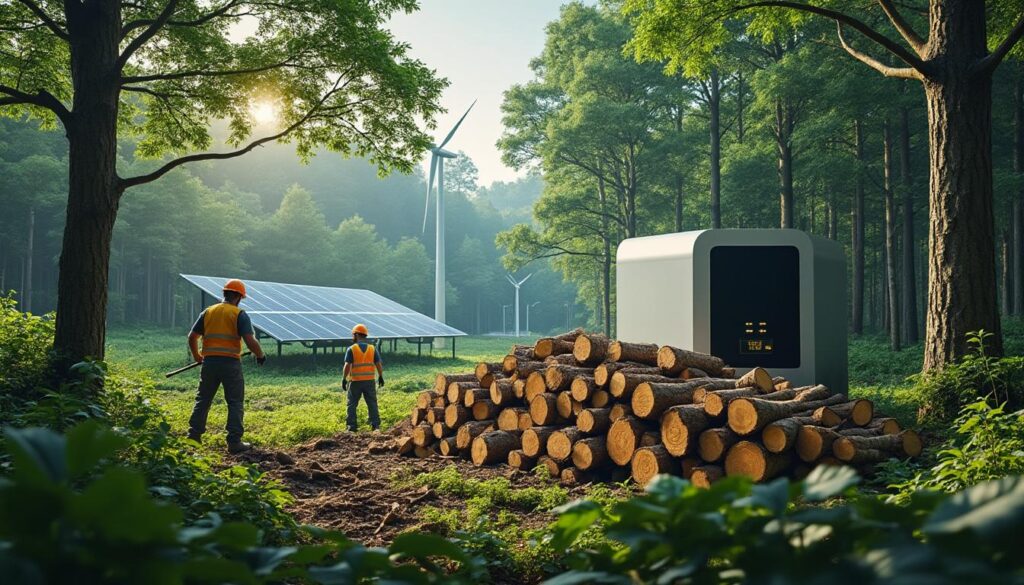
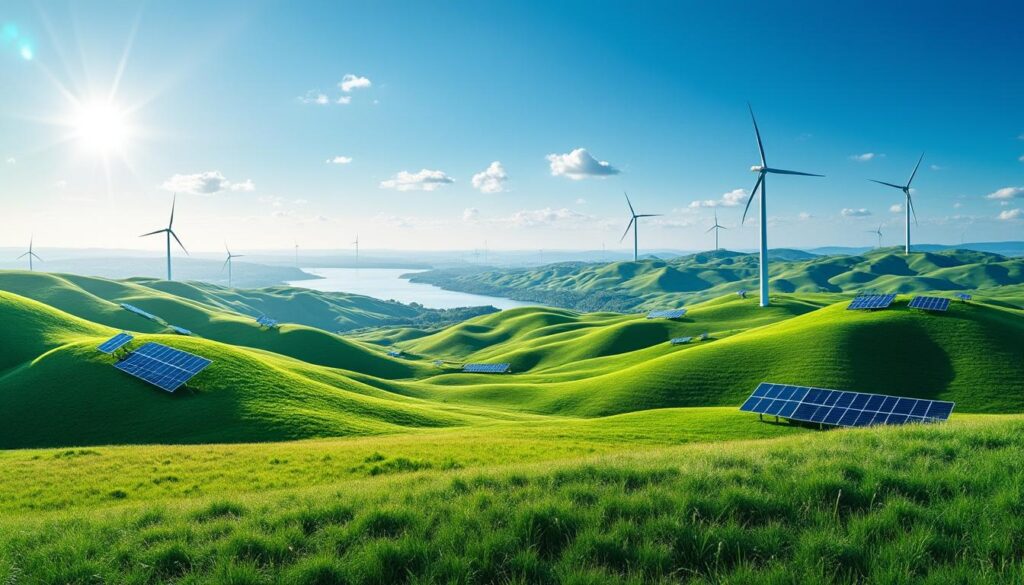
Viana do Castelo is at a decisive moment: the blue economy and renewable energies are becoming the new engine of development, with the port as a platform for innovation, talent, and investment. The goal is clear: to create sustainable value, qualified jobs, and direct benefits for families and companies.
| Short on time? Here’s the gist: |
|---|
| ✅ Viana do Castelo intensifies the blue economy focusing on the port, innovation, and offshore renewable energies ⚓💨 |
| ✅ The port–industry–technology link attracts investment, talent, and accelerates the energy transition 🚀 |
| ✅ Best practice: plan large-scale projects and partnerships (municipality, universities, companies) to reduce risk 🤝 |
| ✅ Avoid the mistake: starting without impact studies, licenses, and a long-term environmental monitoring plan 🌊🧭 |
Viana do Castelo intensifies commitment to the blue economy: real advantages for families and businesses
The blue economy is no longer just fishing and maritime transport, but encompasses technological innovation, ocean energies, and smart reindustrialization. In Viana do Castelo, this vision translates into offshore wind projects, technology acceleration platforms, and a strong articulation between the port, industry, and knowledge. The municipality has taken on the role of orchestrator, with a Maritime Agenda that structures priorities and clear goals.
Why does this matter to you? Because a consistent blue strategy tends to lower energy costs, create qualified jobs, boost local commerce, and improve urban infrastructures. When the port specializes in renewables and advanced services, maintenance, logistics, engineering, and digitalization companies multiply, generating effects that reach your street, your school, and, yes, your energy bill.
How the blue economy changes your daily life
The new cycle invests in local value chains. This means workshops that start manufacturing maritime components, shipyards integrating robotics and composite materials, and startups that monitor the ocean with AI. In parallel, technical courses, internships, and retraining emerge for those wishing to transition from traditional sectors to future jobs.
With the acceleration of the energy transition, energy communities, integrated electric mobility, and opportunities for efficient buildings arise. Instead of isolated projects, the city works on the complete ecosystem: applied research, training, testing at the port, and scalability.
- 🌊 Direct benefit: more local job offers with competitive salaries.
- 🔌 More stable energy: diversification of sources (offshore, solar, efficiency) reduces volatility.
- 🏗️ Useful works: the requalification of the port and surrounding areas improves services and mobility.
- 📚 Capacity building: accessible technical and retraining courses.
- 🌱 Climate and health: fewer emissions, better air quality, and well-maintained blue spaces.
Local examples that already inspire
In a warehouse by the dock, “BlueWave Labs” — a fictional company inspired by various real projects — set up a laboratory for ocean sensors that support the predictive maintenance of turbines. A metalworking company from the region adapted lines to manufacture modular supports, reducing waste with digital cutting. And a fishermen’s cooperative began collaborating on marine monitoring campaigns, articulating tradition and science.
These stories show how a consistent incentive policy and a prepared port create new economic niches, with measurable impacts in the city.
| Domain ⚓ | Impact 💡 | Opportunity 🚀 | Recommended action ✅ |
|---|---|---|---|
| Offshore wind | More qualified jobs | Manufacturing and maintenance | Technical training and certifications |
| Ocean digital | Data for quick decisions | Sensors, AI, digital twins | Partnerships with R&D centers |
| Energy efficiency | Lower costs for families | Thermal rehabilitation | Audit and a 90-day plan |
| Circular economy | Waste converted into value | Composite materials and recycling | Green purchase contracts |
The focus on the port as an anchor of innovation is what makes Viana’s blue cycle robust and replicable: it creates economic density and reduces risk for investors.
Offshore renewable energies at the Port of Viana: how to accelerate the energy transition safely
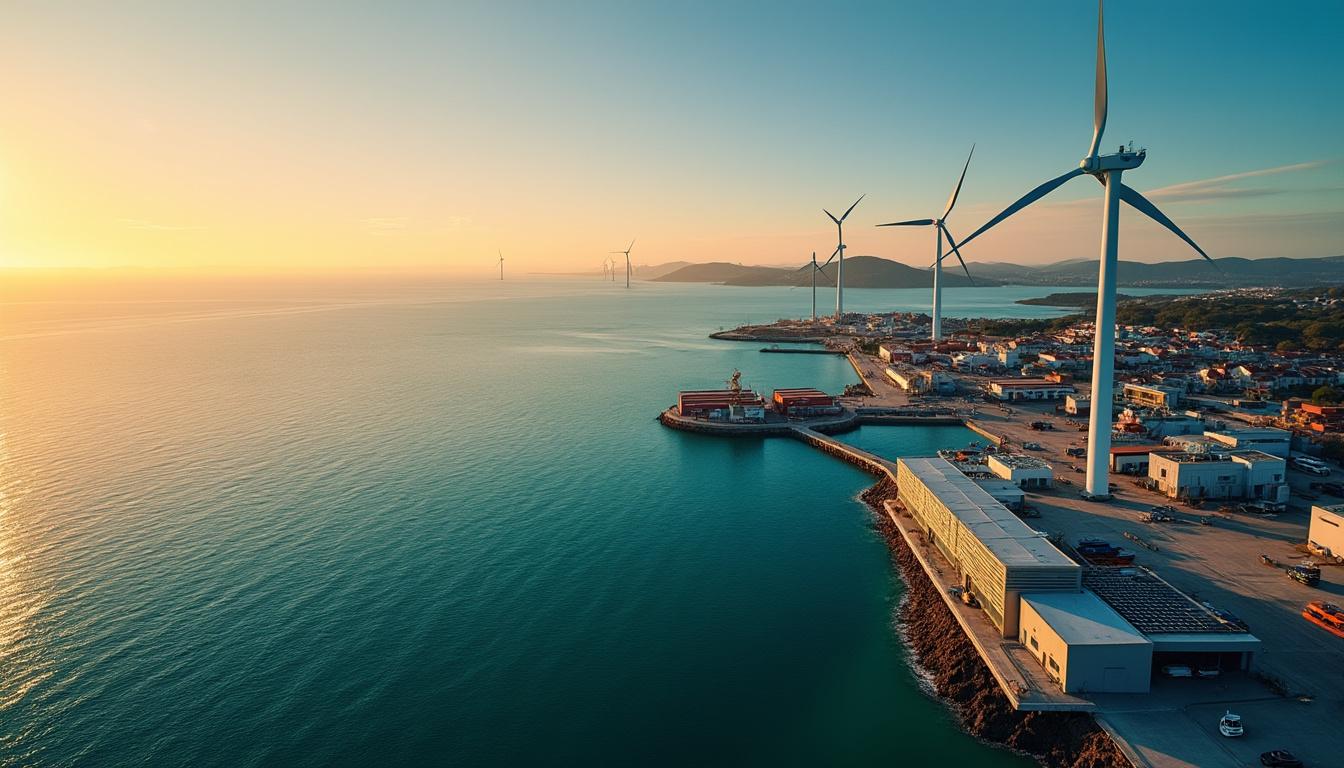
The Port of Viana emerges as a platform for competitiveness in offshore renewable energies, especially floating wind energy. The municipal strategy reinforces the link between the quay, industry, research, and financing, allowing for the testing, assembly, and operation of assets within an efficient logistical radius. The expected outcome is a local value chain that extends from engineering to O&M (operation and maintenance), focusing on quality, deadlines, and safety.
There are three key factors for success: rigorous environmental licensing, standardization of components, and integration with the electric grid. Companies that enter early in the standardization curve often reduce costs and secure long-term contracts. The ambition is not only to produce energy; it is to build lasting competencies that serve the Atlantic.
Value chain: from the quay to the turbine
A typical floating wind project requires the assembly of platforms, submarine cabling, anchoring, and commissioning. Viana, with its naval tradition, adapts shipyards to large-scale operations, integrating advanced welding, low-impact abrasive cleaning, and long-lasting coatings. Proximity to suppliers streamlines logistics and reduces emissions in transportation.
- ⚙️ Prefabrication: standardized modules for speed and quality.
- 🪝 Anchoring: solutions that respect biodiversity and coastal dynamics.
- 🔗 Interconnections: cables, substations, and synchronization with the national grid.
- 🛟 Safety: robust protocols for offshore operations and emergency response.
- 📈 Monitoring: real-time data for predictive maintenance.
Errors to avoid and lessons learned
International experiences show that underestimating maintenance and climate logistics is the shortcut to hidden costs. In Viana, operational teams incorporate weather windows into planning and adopt drone inspections to reduce human risks. Another lesson is not to disperse suppliers: contracts with shared goals and indicators improve overall performance.
| Project 💨 | Priority 🌐 | Benefit 📊 | Next step ✅ |
|---|---|---|---|
| Floating wind | Standardization and safety | Predictable costs and scale | Align protocols port–industry |
| Submarine cabling | Environmental protection | Less impact and failures | Mapping and continuous monitoring |
| Operation and maintenance | Data and talent upskilling | Greater availability | Shared command center |
| Support hydrogen | Local use and mobility | Flexibility and innovation | Pilots with technical partners |
When the port leads in efficiency and safety, the energy transition ceases to be a slogan and becomes a sustainable business, with benefits for the entire city.
From the coast to your home: practical solutions for energy efficiency and healthy comfort
The success of the transition is not measured only in megawatts; it is measured in the comfort and bills of each family. In the Atlantic climate, the right combination is competent thermal insulation, controlled ventilation, and accessible renewable energies. Rehabilitated homes with natural materials and well-sized systems ensure comfort throughout the year, reducing humidity and energy losses.
The path begins with a simple audit: thermal imaging, checking for leaks, and diagnosing thermal bridges. Then, set priorities: efficient windows, roof insulation, sealing corrections, and finally, energy production (photovoltaic) and efficient climate control (heat pump). In many homes, intervening in the envelope before the equipment yields the best results.
90-day plan for gaining efficiency
A clear roadmap helps advance without waste. In three months, it is possible to plan and implement high-impact measures, starting with what costs less and saves more.
- 🧭 Week 1–2: basic audit, savings goals, and budget.
- 🧱 Week 3–6: roof insulation, sealing doors and windows.
- 🌬️ Week 7–8: mechanical ventilation with heat recovery in homes with high humidity.
- 🔆 Week 9–10: photovoltaic with microinverters and monitoring.
- 🔥 Week 11–12: sized heat pump and seasonal balance.
Materials and solutions that work on the coast
Materials with good hygrothermal performance make a difference: cork for insulation, air lime in breathable plasters, treated certified woods, and mineral paints that prevent condensation. Combining this with shading, wind protection, and solar orientation reduces consumption without losing comfort.
| Solution 🏡 | Approx. investment 💶 | Estimated savings ⚡ | Practical note ✅ |
|---|---|---|---|
| Roof insulation | Medium | High | First step in cold homes |
| Efficient windows | Medium–high | Medium | Combine with shading |
| Photovoltaic 3–5 kW | Medium | Medium–high | Self-consumption with monitoring |
| Heat pump | Medium | High | Size according to thermal load |
- 🔋 Tip: bi-hourly tariffs + virtual battery can increase the self-consumption rate.
- 🚿 Hot water: solar thermal or dedicated heat pump enhance efficiency.
- 🚗 Mobility: pre-wiring for charging avoids future construction work.
- 🧪 Air quality: CO₂ sensors help fine-tune ventilation.
When you combine good envelope, efficient equipment, and monitoring, comfort improves and bills consistently go down.
Blue innovation ecosystem in Viana do Castelo: applied science, industry, and training
A port city becomes a reference when it connects science, industry, and public policies. In Viana do Castelo, cooperation with centers of excellence — such as OCEANID+ — and the vision of an International Technological Center for Offshore Renewable Energies create a knowledge corridor. This is complemented by incubators, living laboratories at the quay, and conferences that bring together investors and technicians.
The local Agenda for the Sea 2030 drives three reinforcing axes: offshore technology, integrated innovation platform anchored in the port, and blue reindustrialization with the construction and maintenance of maritime structures. Each axis has deliverables: patents, new courses, contracts, and transparent environmental metrics.
Partnerships delivering results
Multisector partnerships accelerate the learning curve. Shipyards collaborate with universities on composites; software companies create digital twins of the port; and training centers certify technicians in offshore safety. When there is alignment of goals and indicators, the probability of scaling solutions increases.
- 🧩 Co-creation: shared challenges among the port, companies, and academia.
- 🛰️ Open data: access to oceanic time series for applied research.
- 🛠️ Real testing: prototypes at the quay with quick feedback.
- 📜 Certification: common standards raise confidence and reduce costs.
Training and retraining for future jobs
The focus in Viana is on courses in offshore operator, rope access, drone inspection, advanced welding, and asset management. Professionals from traditional sectors find transition opportunities with grants and internships in blue cluster companies. The goal is clear: not to leave talent behind.
| Entity 🤝 | Role in the ecosystem 🧭 | How to get involved 🔎 | Direct benefit 🎯 |
|---|---|---|---|
| Municipality | Coordination and incentives | Programs and public notices | Favorable environment for investment |
| Universities/IPVC | R&D and training | Applied research projects | Talent and technical solutions |
| Port/Industry | Testing and production | Pilots and contracts | Scale and export |
| Startups | Rapid innovation | Incubation and acceleration | New market niches |
When each partner knows their role and shares metrics, blue innovation leaves the page and reaches the sea — and from there to your home and your business.
How to participate today: clear roadmap for citizens and SMEs to integrate the new blue wave
Transforming intention into action requires a simple roadmap. Citizens and small businesses can join the blue wave with short steps and informed decisions. The municipality has been promoting conferences, attracting diaspora investors, and aligning incentives, creating conditions for the movement to be inclusive and lasting.
The secret is to combine planning, financing, and partnerships. Instead of seeking “the perfect solution,” define the first good solution and execute it rigorously — then iterate. This method reduces risk and keeps the focus on what matters: visible results.
5-step roadmap
- 📝 Diagnose: energy audit and goals (home or business).
- 🤝 Partnerships: contact local associations, incubators, and training centers.
- 💰 Finance: apply for municipal incentives and green lines.
- 🧪 Pilot: start small (e.g., 3 kW PV, roof insulation, sensors).
- 📊 Measure and scale: monitor, correct, and grow with data.
Sources of support and best practices
To accelerate, use guides and support desks from the municipality and partners. Also consult agendas and calls for blue innovation. Avoid magical promises; focus on clear contracts, realistic deadlines, and quality execution.
| Step 📍 | Deadline ⏱️ | Expected outcome 🎯 | Tool/Link 🧰 |
|---|---|---|---|
| Audit | 2–3 weeks | Saving map | Energy Desk |
| Pilot project | 1–2 months | Measured results | Incentive Program |
| Training | 2–6 weeks | Certified skills | Blue Training Center |
| Scale | 3–6 months | Robust project | Agenda for the Sea 2030 |
- 🧾 Documentation: keep licenses, studies, and insurances accessible.
- 🧪 Iteration: improve based on real data and user feedback.
- 🌿 Longevity: think about maintenance from day one.
- 📣 Sharing: present results at local events; inspire and create networks.
If there’s one idea to take away: start small, measure everything, and grow with trusted partners — that’s how Viana do Castelo transforms ambition into blue and renewable, resilient, and lasting results.
Source: vianatv.pt