The European energy transition has turned a crucial page. Modern, smart, and well-integrated electrical grids have stopped being a technical detail to become the axis that enables everything else: electrification, renewables, industry, and mobility.
This article shows, with practical examples and clear numbers, why Europe has finally acknowledged that without grids, there is no competitive, stable, and truly sustainable energy future.
| Short on time? Here are the essentials: |
|---|
| ✅ Without robust grids, 310 TWh/year of renewables could be wasted by 2040 ⚡ |
| ✅ Plan and digitize first: technologies that increase the capacity of existing lines by 20–40% 💻 |
| ✅ Agile licensing (2–3 years) is the decisive unlock for new projects 🧭 |
| ✅ Distribution is the “last mile”: €730 billion by 2040 to integrate millions of producers and chargers ⚙️ |
The energy transition also depends on grids: why Europe has finally recognized the obvious
For a long time, public debate focused on installing more solar and wind. Gigawatts, auctions, and annual targets were counted, but the path to the customer was ignored. The result was a paradox known to those on the ground: parks ready, but with delayed connections; neighborhoods with self-generation, but without injection capacity; and prices that do not reflect renewable abundance because electricity cannot flow when and where it is needed.
The geopolitical shock of the war in Ukraine made the discussion unavoidable. It became clear that dependence on imported fossil fuels is not only a climatic issue: it is a social, economic, and political risk. Meanwhile, Europe surpassed the symbolic mark of hundreds of gigawatts of installed renewables and, in 2023–2024, several markets reached peaks close to half of the electricity generated from clean sources at certain times. However, without a strong and flexible electrical grid, this clean energy is often “trapped” on the production side.
There are numbers that speak for themselves. Studies cited by European regulators indicate that, without urgent reinforcement of grids, the European Union could lose up to 310 TWh of renewables by 2040, energy that does not reach consumers due to lack of capacity or coordinated planning. At the same time, the fragmentation of interconnections keeps Europe paying electricity 2 to 3 times more expensive than major industrial competitors, not due to lack of sun, wind, or water, but due to lack of cables, transformers, and integration.
This “invisible bottleneck” has concrete causes. First, licensing. Electric projects of common interest can take 4 to 10 years to obtain approvals, a timeline incompatible with climate targets and industrial urgency. Second, the lack of coordination among national and regional operators, resulting in cross-border interconnection gaps that can reach about 45% of needs by 2030. Third, the chronic neglect of distribution, where millions of new consumers and producers connect, from vehicle chargers to heat pumps.
Concrete cases help illustrate. In an inland Iberian region, a set of photovoltaic plants with over 400 MW was conditioned by a saturated substation and by lines without dynamic monitoring. On sunny days with low local demand, production cuts occurred to avoid overloading the system. A short-term solution — Dynamic Line Rating (real-time monitoring of line capacity), combined with flow controllers — would have allowed more energy to flow without building new infrastructures from scratch. The cost would have been a fraction of a new line, with implementation in months, not years.
Faced with this reality, the European Commission changed its tone. By presenting the European Grids Package and revising the TEN-E regulation, it acknowledged that the transition depends as much on grids as on generation. The message was reinforced by operators, investors, and sector associations, including Portuguese voices such as the leadership of APREN, who have warned for years about the urgency of modernizing and planning together. This shift in focus is not a political detail: it is the missing piece to connect climate ambition, industrial competitiveness, and supply security.
The current European consensus is clear and useful for you: more renewables only work with more grids and more intelligence. That is the turning point that paves the way for what really matters — clean, accessible, and reliable electricity in your home, your business, and your mobility.
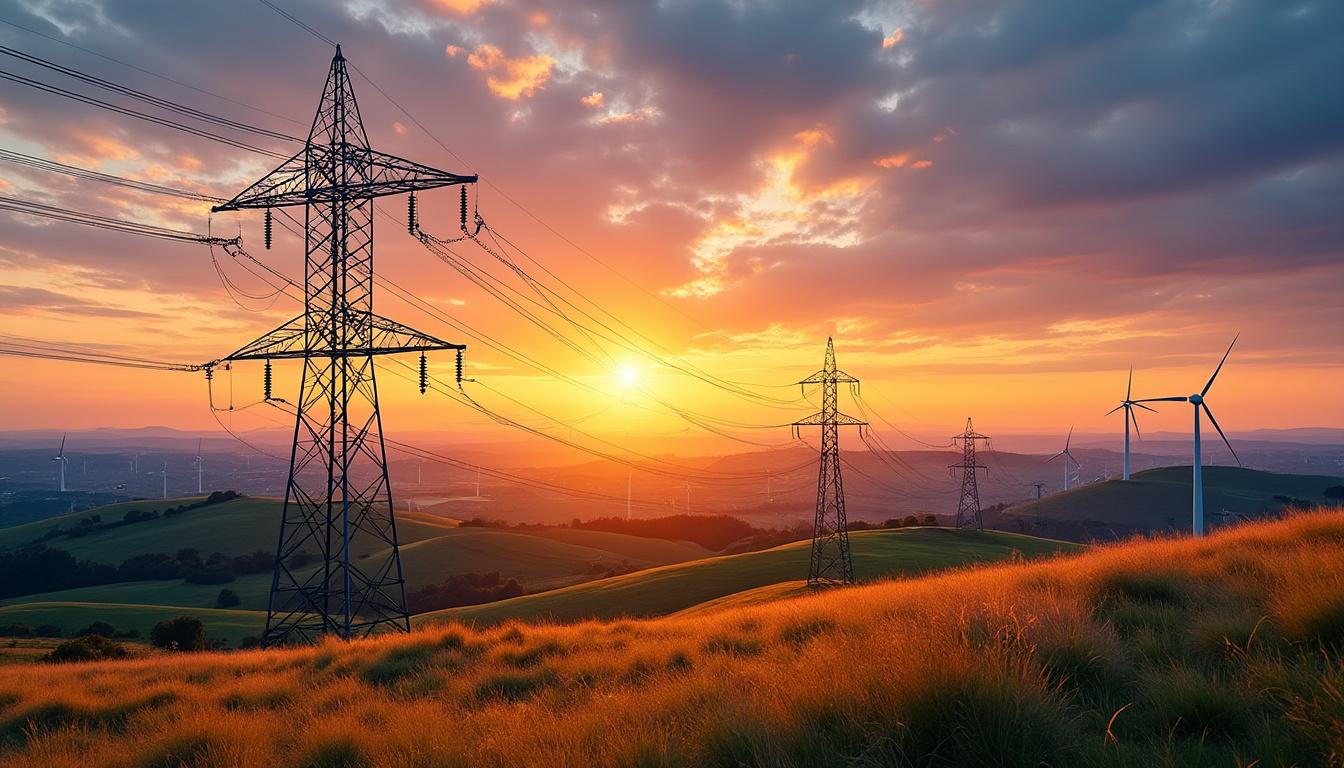
European Grids Package and TEN-E: investments, licenses, and technologies that unlock clean electricity
The new European package puts numbers, priorities, and deadlines on the table. By 2040, €1.2 trillion will be needed for electrical networks and another €240 billion for hydrogen infrastructures. This is not a technological luxury: it is the foundation to support the electrification of buildings, mobility, and industrial processes, and to integrate growing volumes of renewables stably. For those managing a building, a condominium, or a small industry, this translates into predictability: faster connections, fewer production cuts, more opportunities for self-consumption, and flexibility services.
Perhaps the most transformative point is licensing. The political objective is to limit deadlines to 2 years (or 3 in complex cases) for projects of common interest, integrated with clearer and more digital public participation processes. This means that grid reinforcements and interconnections do not get stuck in administrative labyrinths, without sacrificing environmental transparency and dialogue with communities. For the territory, there are real gains: planning that considers biodiversity corridors, land uses, and heritage, avoiding “blind” solutions that generate conflicts.
Another pillar is the intelligence applied to existing infrastructures. The so-called Grid-Enhancing Technologies (GETs) include thermal and wind line monitoring (Dynamic Line Rating), high-capacity conductors, flow controllers, topological optimization, and real-time dispatch software. Combined, they can increase capacity by 20% to 40% in already constructed networks and reduce costs by up to 35% compared to purely physical solutions. It is the difference between waiting years for a new line or unlocking capacity in months, something critical when each winter and summer brings peaks in consumption and generation.
The European package also broadens the concept of “strategic infrastructures”: smart grids, storage, large-scale electrolyzers and charging corridors for electric vehicles enter the core of policy. The transition stops being merely electrical and becomes systemic, linking electricity, industry, mobility, and data. Not by chance, data centers and AI computing enter the equation: the digital economy will be electric, and the grid must respond with quality and flexibility.
For municipal managers and local cooperatives, the message is direct: include grids in urban planning and energy renovation projects. A neighborhood that installs heat pumps, solar roofs, and chargers without coordinating with the distribution operator risks saturating the street. The right path goes through capacity studies, community storage solutions, smart metering, and load management schemes. The gain is twofold: more local autonomy and less expense with last-minute reinforcements.
At the national level, regulators gain the role of efficiency arbitrator. Execution targets, coordinated multi-year plans, and service quality metrics guide investments where social value is highest: reducing losses, eliminating recurring bottlenecks, and prioritizing connections for projects with systemic impact. For you, in practice, this translates into clearer deadlines, more predictable costs, and opportunities to participate in new flexibility markets.
How to already take advantage of the changes
Projects that combine self-consumption, batteries, and active load management tend to move faster when coordinated with the network operator from the start. Presenting load and generation curves, predicting electric vehicle charging times, and proposing peak shaving schemes can reduce the need for physical reinforcements. For condominiums and SMEs, active demand response contracts create additional revenue and shorten the return on investment.
In summary, the European package does not promise miracles. It creates conditions for well-designed projects to advance at the right time. And when the grid improves, everything else — from thermal comfort to the monthly bill — improves with it.
Smart grids, storage, and data: the triangle that accelerates renewable integration in Europe
Smart grids are not a gadget: they are the nervous system of the new energy. It works like this: sensors and meters communicate in real time, algorithms balance generation and consumption, and storage smooths out peaks. The result is a mesh that breathes with the climate and the life of cities, reducing waste and avoiding overloads. For Europe, where solar and wind vary by the minute, this tripod — digitization, flexibility, and storage — is what allows intermittent power to be transformed into continuous service.
Let’s start with digitization. Smart meters, advanced SCADA, condition-based asset management, and AI forecasting reduce failures and anticipate needs. An operator who knows, every 15 minutes, the flows in medium and low voltage can defer reinforcements with operational solutions: change topologies, activate selective curtailment, compensate consumption profiles that relieve the system. In residential neighborhoods, energy community platforms align loads — washing machines, pumping, and vehicle charging — with solar peaks, boosting the self-consumption rate and lowering the bill.
Storage is the other half of the equation. Distributed batteries in buildings, neighborhood batteries, and large-scale systems in substations shorten the “mismatch” between generation and consumption. In an urban cooperative that installed 2 MWp of solar and 3 MWh of batteries, excess midday energy became “fuel” for dinner time. Instead of exporting at low prices and importing at high costs, the community began managing its profile, reducing the need for reinforcements and increasing resilience to localized failures.
Data and flexibility close the circuit. Aggregators combine hundreds of small assets — home batteries, thermostats, heat pumps — and offer system services to the operator: frequency regulation, fast reserves, congestion alleviation. This flexibility is compensated, creating a new economy of the “smart” kilowatt-hour. For you, it means that a solar panel on the roof is no longer an isolated act: it is part of a value network that pays for your good electrical behavior.
To guide immediate actions, it is useful to have a set of simple and effective practices at hand:
- 🔌 Prioritize smart meters and real-time monitoring in the building or condominium.
- 🗓️ Schedule shiftable loads (DHW, washing, EV charging) to coincide with local solar generation.
- 🔋 Evaluate batteries based on consumption profiles and hourly prices; start small and scale up.
- 🤝 Consider an energy community to share surpluses and infrastructure costs.
- 🛰️ Use weather forecasts to plan production and use, especially in buildings with large usable areas.
On the ground, a pilot neighborhood in Braga showed the potential: with smart metering, 1 MWh of shared batteries, and electric vehicle charging rules, the local grid avoided overloads in summer and winter. The operator recorded fewer incidents, and residents felt the impact on their bills. The same arrangement, replicated in industrial zones with ovens and flexible refrigeration chambers, frees up capacity for new connections without immediate new lines.
When digitization, storage, and data work together, the transition stops being fragile and becomes predictable and scalable. And this paves the way for the next piece: interconnections that connect regions, equalizing prices and security.
Interconnections, prices, and autonomy: how European grids shape competitiveness and energy security
Europe is an electrical archipelago that needs better bridges. Cross-border interconnections reduce climatic asymmetries, share reserves, and smooth consumption peaks. When the wind blows in the North Sea and the sun shines in the Iberian Peninsula, connections should bring that energy to where it creates more value. Today, the reality is partial: interconnection deficits estimated up to 45% of needs by 2030 persist, which generates congestion and pockets of high prices.
The cost of inaction is high. Without reinforcements, the EU risks wasting 310 TWh of renewable production by 2040, with direct impacts on the wallets of families and businesses. This waste exacerbates the gap of electricity prices 2–3 times higher compared to competitors like the United States and China, eroding industrial competitiveness in electro-intensive sectors and new green chains, such as renewable hydrogen, batteries, and low-carbon materials.
When interconnections work, the story changes. The European Commission estimates that integrated planning with reinforced interconnections could generate €40 billion/year in savings, increase cross-border electricity trade by 50%, and add €18 billion to GDP as early as 2030. These numbers translate to more than accounts: they represent strategic autonomy, resilience to shocks, and decision-making power over the development model itself.
Practical examples point the way. Undersea interconnections that unite the Iberian Peninsula to the center of Europe allow for exporting afternoon solar surpluses and importing North Atlantic wind at night. In parallel, charging corridors for electric vehicles, articulated with storage and dynamic tariffs, smooth demand curves at borders and in logistics areas. In cities, new data centers — which must operate flexibly and with demand response contracts — can be anchors of stability in local grids, provided they are connected to substations prepared to manage variable loads.
Another relevant piece is renewable hydrogen. By investing €240 billion in infrastructures by 2040, Europe creates alternative routes to decarbonize hard-to-electrify sectors directly. Pipelines, backbones, and adapted ports generate systîmic resilience, reduce fossil fuel imports, and better integrate seasonal renewable production. All this only works if electrical and hydrogen grids are planned together, with realistic demand scenarios and interoperable technical standards.
At the regional level, Portugal and Spain have a concrete opportunity to lead pilot projects for smart interconnection, combining high capacity factor solar energy and Atlantic wind with storage and electrification of the ceramics, food, and textile industries. The desired result is an “Iberian balancing system” capable of exporting flexibility when central Europe needs it and importing when the Peninsula faces atypical heat or cold waves. This is the type of integration that brings prices closer and strengthens energy sovereignty.
The message to the reader is direct: when you hear about interconnections, do not think of abstract cables. Think of more stable prices, industries that stay, skilled jobs, and cities with better quality of life. Good grids make the continent work as one system — and that changes the game.
The “last mile” decides everything: distribution, self-consumption, and neighborhoods that function as small power stations
If transmission is the skeleton, distribution is the sensitive skin where life happens. It is in the streets and buildings that the energy transition is confirmed or fails. The European Commission estimates additional needs of €730 billion in distribution networks by 2040, to accommodate millions of generation points, vehicle chargers, heat pumps, and new urban micro-industries. Ignoring this layer is condemning the transition to stumble “at the front door.”
What changes when distribution is treated with priority? First, self-consumption connection ceases to be an odyssey. With smart meters, capacity reserves, and clear injection rules, residential and commercial projects connect in weeks, not months. Second, entire neighborhoods can act as energy communities, sharing surpluses and infrastructure costs and buying local flexibility services — for example, synchronizing EV charging with neighborhood photovoltaic production. Third, urban renewal plans start to include reinforced distribution boxes, prepared ducts, and physical space for shared batteries.
An illustrative case: “Solar Alameda,” an urban block with 12 buildings and 180 units, installed 1.5 MWp of panels and 2 MWh of community batteries, with digital management. Instead of each building requesting a larger connection, the neighborhood planned collectively with the local operator. The effect was immediate: fewer voltage drops in the late afternoon, dynamic tariffs rewarding good use of the grid, and, above all, greater energy comfort for families and commerce. By integrating high-efficiency heat pumps and a small fleet of electric vans with night charging, the neighborhood gained autonomy without isolating itself from the system.
For those managing buildings, here is a simple and effective sequence to start well and avoid frustrations:
- 🧭 Diagnose the electrical profile (peaks, seasonality, flexible loads) with granular measurement.
- 📡 Consult the distribution operator early, with growth scenarios and load management solutions.
- 🔋 Size the storage to cover peaks and provide services to the local grid when compensated.
- 🔌 Implement smart charging and priority rules by hours and available power.
- 🤝 Join or form an energy community to share investments and surpluses.
There is also a role for the construction industry and municipalities. New projects should include technical rooms, risers, and spaces for cabling and batteries, avoiding costly future works. Urban planning regulations may require pre-installation for EV charging and access to near real-time consumption data (with assured privacy), favoring active management of neighborhoods. Knowledge platforms such as Ecopassivehouses.pt assist owners and designers in making informed decisions and avoiding solutions that are “pretty on paper but incompatible with the grid.”
The guiding thread is practical: prepared neighborhoods and buildings function as small collaborative power stations. The grid benefits, the bill goes down, and comfort increases. Today’s action is simple: map your flexible loads and contact the operator to validate capacity and flexibility opportunities — it is the first step to integrating into the new European energy on the right foot.
From planning to reality: metrics, common mistakes, and concrete steps to accelerate the transition in grids
Modernized grids require disciplined execution. Without metrics, reforms become intentions. The good news is that there is already a set of indicators and practices that align ambition with delivery. In 2025, European operators and regulators will adopt control panels that combine service quality, capacity released per euro invested, connection time, and loss reduction. For those investing in buildings and communities, tracking these numbers provides predictability and helps choose the right moment to proceed.
Frequent mistakes are known and avoidable. Planning that ignores demand-side flexibility ends up oversizing infrastructures. Licensings that do not integrate local dialogue generate contestation and delays. Self-consumption projects that do not consider the neighborhood grid become a source of disturbances, leading to production cuts and frustration. The solution is to integrate data from the beginning, assume that software and operation solve a significant part of the problem and reserve physical reinforcements for what is structural.
To facilitate decisions, the table below summarizes typical investment choices and the expected effect on the grid and costs:
| Option ⚙️ | Effect on Grid ⚡ | Cost Impact 💶 | Implementation Time ⏱️ |
|---|---|---|---|
| Dynamic Line Rating | +20–30% in capacity on existing lines | Medium/low; avoids new infrastructure | Months |
| Flow controllers | Relief of local congestions | Medium; high cost-benefit ratio | Months |
| Distributed batteries | Smooths peaks; increases self-consumption | Medium; return with flexibility markets | Months–1 year |
| New line/transf. | High structural capacity | High; essential in critical axes | Years (including licensing) |
A narrative thread helps visualize. Imagine the “Solar Valley Cooperative,” with 6 MWp distributed across rooftops and a nearby textile factory. The local operator maps overloads in the late afternoon. The integrated solution includes: 4 MWh batteries, demand response contracts (1 MW reduction in 30 minutes) and Dynamic Line Rating over a stretch of 15 km. In four months, the cooperative channels 95% of generation without cuts, and the factory reduces costs with dynamic tariffs. The request for a new line remains in the plan but without the pressure of “all or nothing.”
In the end, what accelerates is the right combination: agile licensing, GET technologies, targeted storage, and strategic interconnections. The immediate action within your reach is simple and powerful: gather data on your consumption, identify flexible loads, and seek a partnership with the operator for an intelligent connection plan. It makes the difference between waiting and participating.
Source: observador.pt