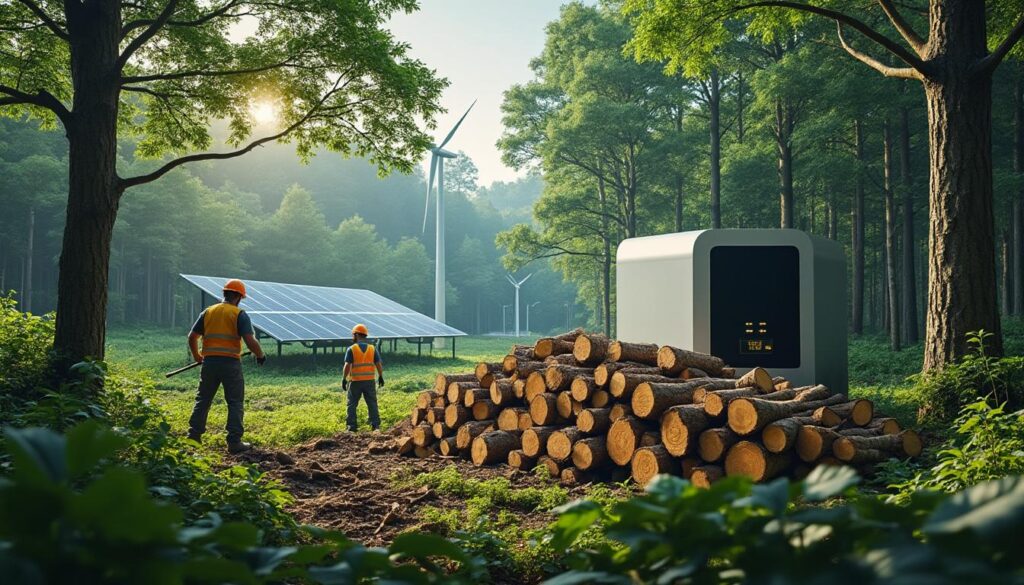
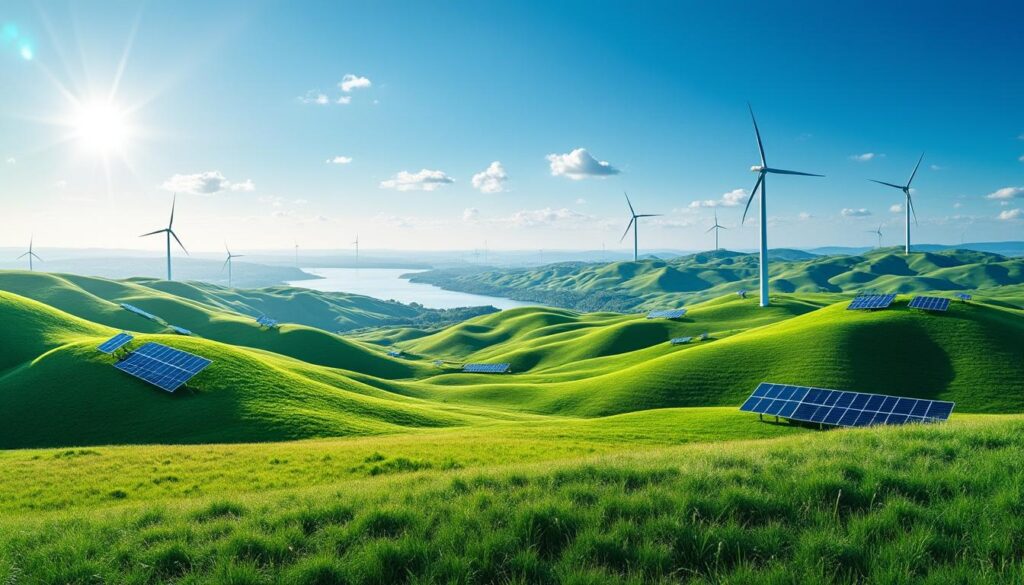
Renewable energies and nuclear energy are not rivals: when combined, they create a clean, stable, and accessible energy system for homes and cities. The goal is simple: reduce emissions now, with reliability 24/7 and controlled costs.
| Short on time? Here’s the gist: | Quick summary |
|---|---|
| ✅ Key point #1 ⚡ | Nuclear + renewables ensure continuous clean electricity: nuclear provides stability, solar/wind reduce costs and emissions 🌞🌬️. |
| ✅ Key point #2 🧰 | Use insulation, heat pump, and dynamically priced tariffs to align consumption with clean production and save 💡. |
| ✅ Key point #3 ❌ | Avoid relying solely on one source: intermittency requires storage and a stable base to prevent blackouts 🔋. |
| ✅ Bonus 🚀 | Keep an eye on SMR, long-duration batteries, and green hydrogen to enhance system security and flexibility 🧪. |
Renewable Energies and Nuclear Energy: why the combination accelerates decarbonization safely
The energy transition has three non-negotiable demands: reduce emissions, ensure reliability, and control costs. In a world still predominantly consuming fossil energy, the union of nuclear and renewables becomes a pragmatic path. Renewables provide cheap and clean electricity when there’s sunlight and wind; nuclear offers continuous, carbon-free baseload when the weather doesn’t cooperate. The result? Less gas on the grid, fewer price spikes, and reduced CO₂.
The European debate around the Green Deal has been intense, and the evaluation of the 10 years of the Paris Agreement highlighted one message: it is necessary to accelerate without losing stability. In this context, combining sources is more sensible than betting everything on a single technology. This reasoning applies both to countries with active nuclear plants and to regions importing electricity from nuclear origin through the European market.
The stable role of nuclear baseload ⚙️
The main strength of nuclear energy is its constant production with virtually zero operational emissions. In grids with a high proportion of solar and wind, the stable baseload reduces the need for fast-start gas plants to compensate for variations. There are discussions about costs and timelines, but the long lifespan and safety upgrades make nuclear a pillar of stability while expanding the renewable capacity.
For the consumer, stability translates into predictable tariffs, reduced volatility in bills, and less risk of interruptions. At the urban planning level, it means the capacity to supply heat pumps, electric mobility, and climate control networks without depending on the whims of the weather.
The elasticity of renewables and demand management 🌞
Solar photovoltaic and wind are quick to install and have competitive costs. By aligning consumption with production hours (e.g., scheduling the heat pump to heat water in the early afternoon), the system takes advantage of the clean surplus. Home and community batteries help shift energy from day to night, and flexibility aggregators coordinate thousands of small adjustments into a coordinated response that stabilizes the grid.
The ideal combination for the grid is this: renewables + storage + active management in the short term, supported by a nuclear baseload that prevents a return to expensive and polluting gas during prolonged calm periods.
Practical example: urban microgrid with 24/7 stability 🏙️
Imagine a block in Lisbon with photovoltaic roofs, heat pumps, electric vehicle chargers, and a shared battery. During the day, solar production powers consumption and charges the battery. As night falls, the neighborhood stays powered thanks to the battery and the nuclear energy from the grid, contracted through a retailer with a low-carbon PPA. When a cloudy, windless day arrives, the nuclear baseload secures the supply and the microgrid limits peaks, avoiding resorting to expensive and polluting gas.
- ⚡ Stable baseload: less volatility and fewer emissions.
- 🌬️ Expandable renewables: larger clean share quickly and at low cost.
- 🔋 Storage: day energy shifted to peak times.
- 🧠 Demand management: algorithms optimize loads without affecting comfort.
| Metric 📊 | Solar 🌞 | Wind 🌬️ | Nuclear ⚙️ |
|---|---|---|---|
| Life-cycle emissions (gCO₂e/kWh) | 20–50 | 10–20 | 5–15 |
| Capacity factor (%) | 12–25 | 25–45 | 80–95 |
| Land use (m²/MW) | high | medium | low |
| Expansion speed 🚀 | high | high | medium |
Key takeaway: the union between variable production and firm base eliminates the “ups and downs” of gas, accelerates decarbonization, and protects finances.
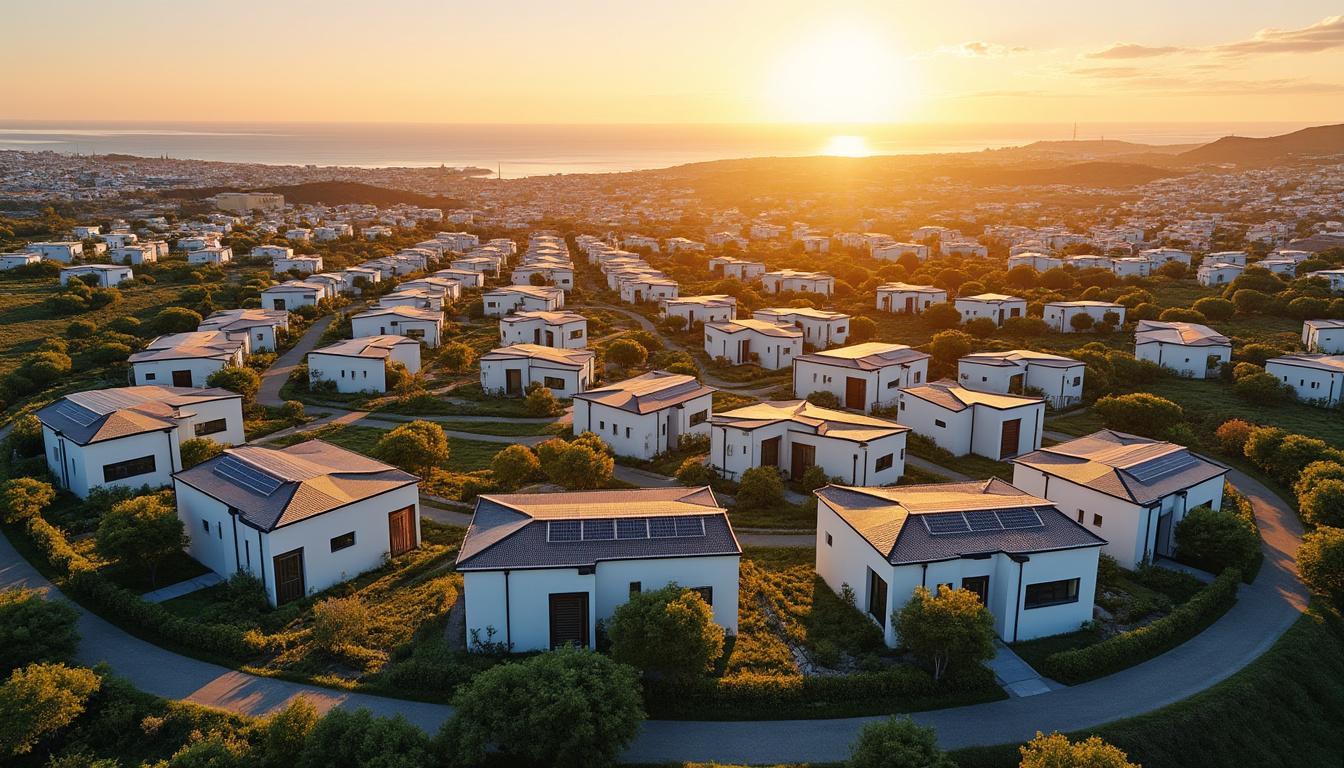
Efficient home + clean grid: how to integrate solar, batteries, and a stable base without complications
An efficient home multiplies the effect of clean sources. With good insulation and smart systems, it is possible to consume when there is excess solar and “sleep” on stored energy for the night. The secret lies in thermal design, correct equipment, and simple automation.
First, the envelope: energy that is not spent is the cheapest 🧱
Before thinking about panels, think about insulation and airtightness. Efficient windows, adjustable shading, and mechanical ventilation with heat recovery reduce thermal load. Less loss means smaller equipment, more modest batteries, and greater autonomy on cloudy days.
Key equipment: heat pump, hot water management, and EV charging 🚗
A well-sized heat pump heats the home and sanitary water with 3–4 times more efficiency than electric resistances. A thermal accumulator with scheduling “charges heat” when the sun is strong. Charging the electric vehicle scheduled for midday transforms the vehicle into a “consumption anchor” to absorb renewable peaks, reducing costs.
Smart automation: linking comfort to the energy clock 🕒
With a simple app from the retailer or a home hub, it is possible to align the use of appliances, heat pump, and charger with time-of-use tariffs and weather conditions. If the forecast indicates clouds, the house anticipates some cycles to take advantage of the solar window. And when production drops, the grid with nuclear baseload ensures the night without surprises.
- 🏠 Insulation first: less kWh, more comfort.
- 🔧 Right choices: heat pump, thermal accumulator, and scheduled charging.
- 🧠 Automation: simple rules align consumption and production.
- ⚡ Low carbon PPA: seek out retailers with guarantees of nuclear/renewable origin.
| Daily Scenario 📅 | Main Source ⚡ | Consumption Strategy 💡 | Result ✅ |
|---|---|---|---|
| Sunny morning | Solar + battery | Washing clothes, heating water, pre-heating the house | Almost zero consumption from the grid 🌞 |
| Windy afternoon | Solar + wind | Charging EV and home battery | Maximizes clean energy 🌬️ |
| Night | Battery + nuclear baseload | Maintaining efficient climate control | Stable comfort without gas 🌙 |
| Cloudy day | Nuclear + some wind | Adjust schedules | Predictable and clean tariff ⚙️ |
To explore passive housing solutions further, check out practical ideas at Ecopassivehouses.pt. A good design reduces the system size and increases autonomy, with benefits felt every day.
Costs, speed, and security: where nuclear and renewables win when working together
Some say that nuclear is “slow and expensive” and that the solution lies only in renewables. Others advocate for nuclear as the only pathway to reliability. The reality is more balanced. The rapid expansion of solar/wind reduces emissions in the short term, while nuclear offers a stable base and lifespan extension at competitive costs. In regions with an interconnected electricity market, long-term contracts with existing plants stabilize prices as new renewable parks come online.
An honest assessment recognizes variable costs by country and project. New nuclear plants may face long timelines, but life extensions and SMR (small modular reactors) promise tighter schedules. Renewables come in quickly and cheaply, but require grid reinforcements and storage. The best systemic cost arises from balance: less investment in peak gas, more predictability, and more use of clean kWh.
- 💶 Renewables: low LCOE, fast installation, weather-dependent.
- 🧱 Nuclear: high initial investment, long and stable operation.
- 🔒 Energy security: diversification reduces the risk of shocks.
- 🧮 Systemic cost: includes grid, storage, and reliability, not just kWh.
| Technology ⚙️ | Typical cost (LCOE) 💶 | Deployment time ⏱️ | System note 🧠 |
|---|---|---|---|
| Photovoltaic solar | Low–medium | Months–2 years | Requires storage/management |
| Onshore wind | Low–medium | 1–3 years | Good regional complementarity |
| Offshore wind | Medium | 3–5 years | More stable production |
| Nuclear (new) | Medium–high | 6–10+ years | Firm baseload, 24/7 |
| Nuclear (extension) | Low–medium | 2–4 years | High cost/benefit ratio |
Understanding costs also means looking at climate risks. Prolonged droughts affect hydropower; heat waves require more cooling; wind calms occur. Having a mosaic of technologies reduces the likelihood of simultaneous failure. It is precisely this reasoning that has guided European policies for energy security and the current updated discussion on the role of each source in the just transition.
Key message: focusing solely on the cheapest kWh is shortsighted; what matters is the right kWh, at the right time, with the least possible risk for the system.
Emerging technologies: nuclear fusion, long-duration storage, and green hydrogen
The near horizon is full of innovation. Nuclear fusion promises abundant and clean energy by combining light nuclei, mimicking the Sun. It is inherently safer but still requires advances to produce more energy than it consumes with commercially viable reactors. While waiting for its arrival, the right bets are on long-duration batteries, thermal storage, and green hydrogen for seasonal balances.
Fusion: a promise gaining traction, but still in development 🧪
The last few years have brought scientific milestones and record investments. Public and private projects are testing configurations to increase energy gain. The realistic outlook is to see fusion contributing after technical and regulatory maturation, first in demonstrators, then in commercial units. Until then, it is prudent to prepare the grid with technologies already ready and lay the groundwork for integrating fusion when it is ready.
LDES: how to “stretch” sun and wind for full days 🔋
Flow batteries, molten salt solutions, and thermal storage in rocks or sand allow storing large amounts for many hours or days. For neighborhoods and small cities, this means getting through cloudy periods without resorting to gas. In industries, stored heat in salt or thermal oil replaces fossil boilers with immediate carbon gains.
Green hydrogen: when electricity turns into molecules 🌐
When there is a renewable surplus, electrolysis produces hydrogen that can be stored, transported, and used in industrial processes, heavy mobility, or mixed into gas networks. It is not a silver bullet: it needs efficiency and infrastructure but fits where batteries cannot, especially in seasonal storage and very high temperatures.
- 🚀 Fusion: high potential, future maturity.
- 🔋 Long-duration storage: bridge between days and weeks.
- 💨 Hydrogen: strategic use in hard-to-electrify sectors.
- 🧩 Integration: digitalization to orchestrate all pieces.
| Technology 🔭 | Readiness (TRL) 📈 | Ideal use 🎯 | Main challenge ⚠️ |
|---|---|---|---|
| Nuclear fusion | Medium | Future clean baseload | Scaling and regulation |
| Flow batteries | High | Storage 8–24h | Cost per stored kWh |
| Thermal storage | High | Industrial heat and grids | Integration with processes |
| Green hydrogen | Medium–high | Seasonal storage | Efficiency and logistics |
Practical conclusion from this part: investing today in storage and efficiency prepares the ground for fusion without delaying decarbonization.
Public policies and local steps by 2030: how Portugal can lead with renewables + firm base
Portugal has a clear advantage in solar and wind, reshaping the energy bill swiftly. Even without domestic nuclear plants, it can benefit from the firm base of the European market via long-term contracts with nuclear generation from neighboring countries. This strategy frees up renewable expansion to grow even more, ensuring nighttime stability and during low production periods.
Practical agenda: from neighborhood to region 🧭
Local authorities can promote Renewable Energy Communities with shared storage, dynamic tariffs, and low-carbon supply contracts. Schools, health centers, and public buildings serve as anchors of flexibility, adjusting loads without compromising services. Municipalities can also encourage energy renovation in homes with simple incentives and clear technical criteria.
Case study inspired by practice: “Ribeira Neighborhood” 🌆
In a set of 140 rehabilitated dwellings, photovoltaic roofs, heat pumps, and a community battery of 2 MWh reduced peaks by 38%. At night, a PPA supplying low carbon mix (including nuclear from a European operator) stabilizes costs and ensures reduced emissions. Families use simple applications to schedule laundry and EV charging, and the results translate into constant comfort and predictable bills.
- 🏗️ Thermal rehabilitation: priority #1 for low consumption.
- 📡 Smart metering: data to manage flexibility.
- 🤝 Partnerships: municipalities, cooperatives, and retailers.
- 📜 Long-term contracts: PPAs for stability and decarbonization.
| Public action 🏛️ | Timeline ⏳ | Expected impact 🌱 | Partners 🤝 |
|---|---|---|---|
| Neighborhood rehabilitation program | 1–3 years | -30% consumption | Municipality + ESCOs |
| Energy communities with batteries | 1–2 years | Peaks -20%, more self-consumption | Cooperatives + DSO |
| Low carbon PPAs (includes nuclear baseload) | 6–12 months | Stable tariffs | Retailers |
| Dynamic tariffs and aggregation | 6–18 months | Flexibility +15% | Regulator + Retail |
At a time when European leaders are re-evaluating targets and timelines, the useful focus for each family is clear: better insulation, manage consumption, and choose providers with low carbon mix. A simple action to start today: schedule the heat pump for sunny hours, activate the dynamic tariff from your retailer, and inquire about your guarantee of origin. Small cumulative decisions build the energy system that everyone deserves — clean, stable, and accessible.
Source: www.dn.pt