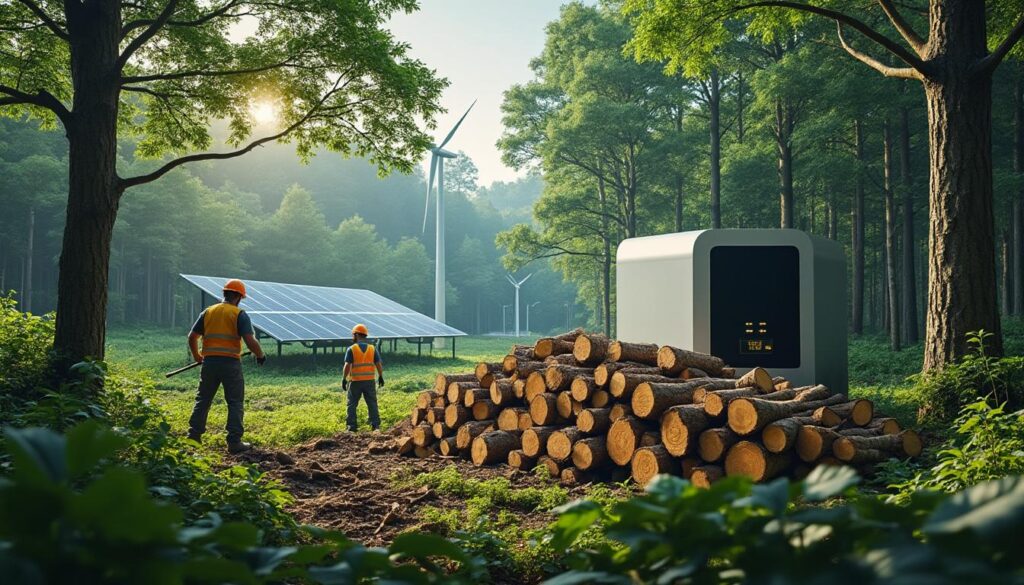
Portugal is experiencing a paradoxical moment: it is breaking records in renewable energy while simultaneously facing increased burned area and persistent difficulties in waste management. This environmental landscape calls for practical decisions at home, in the condominium, and in the municipality.
Short on time? Here are the essentials:
| ✅ Key Points | Why It Matters 💡 |
|---|---|
| ✅ More than 86% of electricity was renewable in 2024 ⚡ | Reduces energy bills and accelerates decarbonization ♻️ |
| ✅ Grids and storage are the bottleneck 🧠 | Without reinforcement, increases energy waste and the risk of outages 📉 |
| ✅ Fewer fire incidents, but more burned area 🔥 | Houses and communities need resilience and fuel management 🌲 |
| ✅ Waste is rising and recycling is missing targets 🗑️ | Separating biowaste and circular economy in buildings are crucial 🔄 |
Renewable energies at historic highs: numbers from 2024–2025, effects on consumption, and opportunities for families
The country is undergoing an unprecedented energy transformation. In 2024, electricity production from clean sources surpassed 86%, a historic level reflecting the maturity of sources such as hydropower, wind, and solar. Overall, renewables provided about 71% of national consumption, indicating a structural change in the energy mix.
Base data helps to understand the dynamics. In 2023, renewable energy amounted to about 7,281 ktep, with 42.5% from biomass, 39.4% from green electricity (hydropower, wind, solar, and geothermal), 12.7% from heat pumps, and 1.6% from solar thermal. That same year, energy dependence dropped to 66.7%, nearing the European target for 2030. The path is clear: produce more locally, consume more intelligently, and reduce emissions with stable costs.
The impact reaches every household. Periods of excess wind and solar generation make electricity cheaper during peak production times. Those who adjust their consumption – for example, scheduling the washing machine, charging electric vehicles in the afternoon, or integrating a home battery – realize real savings without sacrificing comfort. In buildings with good thermal envelopes and controlled ventilation, heat pumps operate efficiently, converting renewable electricity into effective heating and cooling.
From production to use: how the green mix enters daily life
The leap in renewables transforms how to renovate an apartment or design a house. Windows with low-emissivity glass, proper shading, and continuous insulation reduce thermal loads, allowing winter heating and summer cooling to be supported by low-consumption electric equipment. Add a small photovoltaic system, and you achieve partial autonomy with a calculable return between 5 and 9 years, depending on the consumption profile.
To take advantage of the new production curves, there are simple rules: shift consumption to when there is sunshine, use load controllers for electric vehicles, choose appliances with delayed start, and consider contracts with dynamic rates. In condominiums, collective self-consumption and energy communities distribute the energy generated on the roof among several residents, multiplying the efficiency of the initial investment.
There is also good macroeconomic news: fewer fossil imports soften the trade balance and reduce exposure to geopolitical volatility. The straightforward question remains: how to ensure that this clean energy is used without waste? The answer lies in grids, storage, and smart management, topics that gain relevance in the next point.
For practical resources on insulation, mechanical ventilation, and solar systems in housing, explore applied knowledge at Ecopassivehouses.pt, a platform designed for conscious decisions.
Electric grid, storage, and self-consumption: how to avoid bottlenecks and take advantage of clean electricity
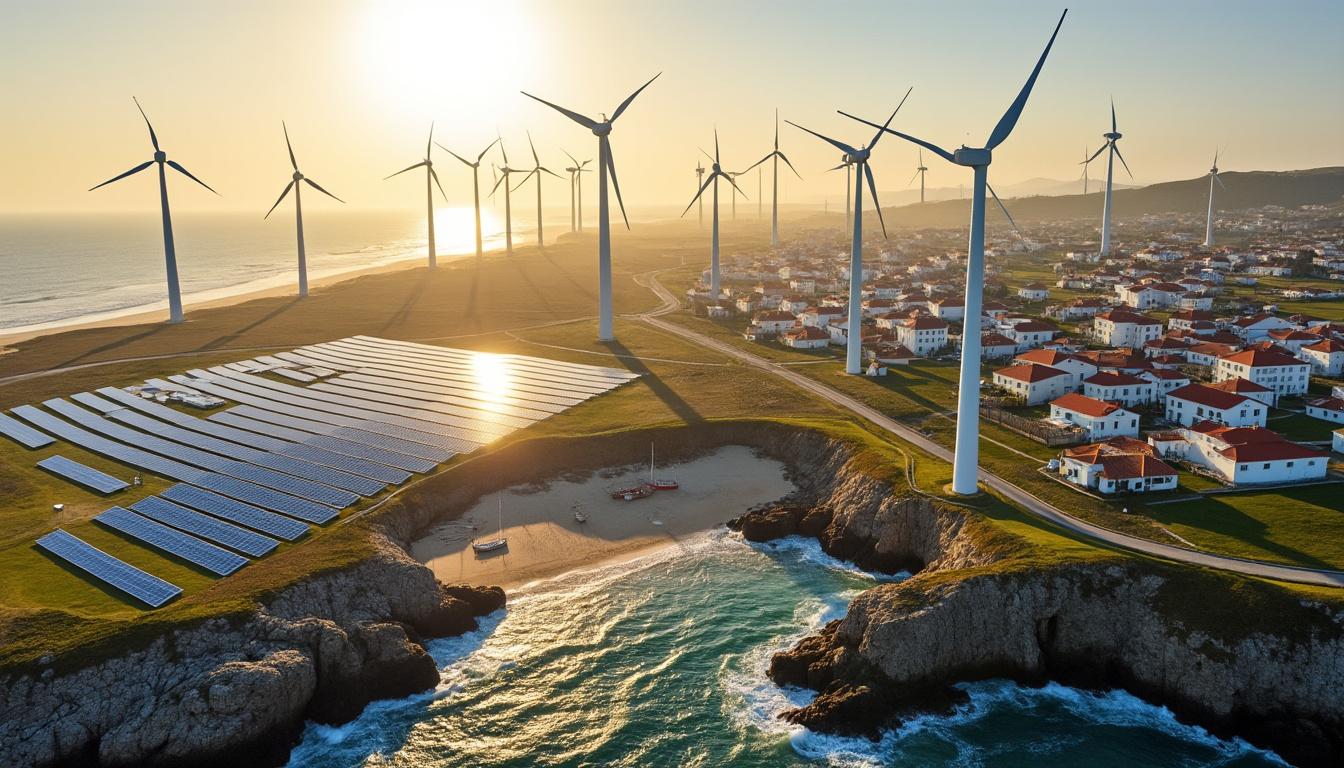
With the renewable acceleration, the country faces its biggest technical challenge: integrating production peaks without wasting energy. International reports have warned of grid bottlenecks, particularly in areas with strong wind and solar expansion. When supply exceeds the capacity for transport and consumption, cuts in generation (“curtailment”) and price volatility occur. This is where the combination of reinforced grids, batteries, and demand management makes all the difference.
The structural reinforcement of the grid is essential but takes time and planning. Meanwhile, consumption-side flexibility is the fastest route. In residential buildings, simple controls – like programmable thermostats and load scheduling – shift consumption to sunny hours. In services and small industries, energy management systems adjust climate control and non-critical processes to take advantage of periods of electric abundance.
Storage and flexibility: the pair that unlocks value
Home and condominium batteries, combined with photovoltaics, are becoming increasingly relevant. By storing energy during the day for nighttime use, they reduce grid injection during peak hours and stabilize the bill. For those charging an electric vehicle, the car’s battery can act as a buffer when bidirectional technology and appropriate tariffs exist. In buildings with heat pumps, the “pre-heating” or “pre-cooling” strategy during low-rate hours accumulates thermal comfort with optimized consumption.
In municipalities, thermal storage for renewable heating and cooling networks, community batteries, and centralized management of public lighting reduce nighttime peaks. In rural areas, microgrids with distributed generation are a solution for isolated locations and critical services, such as water pumping stations or health centers.
Energy communities and collective self-consumption
There is a qualitative leap when rooftop production serves several units in a building or several houses on the same street. Legislation for energy communities has evolved, and with the targets set by RED III for 2030, the figure of the active consumer takes center stage. Practical examples are multiplying: a neighborhood that installs 100 kW on the garage roofs and shares the energy according to defined rules; a municipal school that produces energy on weekends and provides it to needy families in the block.
To take the first step securely, focus on three concrete fronts:
- 🔌 Define the consumption profile of the household/condominium (24h/7d) and identify movable loads.
- 🌞 Dimension photovoltaics based on realistic self-consumption, anticipating future battery integration.
- 🤝 Structure the governance of the energy community (sharing rules, monitoring, maintenance).
When energy is abundant and cheap, those who can consume or store it win. The message is simple: flexibility is as valuable as generation.
Rural fires: fewer ignitions, more burned area – what to change in territory and construction
The year 2024 brought a difficult reality: there were fewer occurrences, but it was one of the worst decades in terms of burned area. The combination of heat waves, strong winds, and accumulated fuel created conditions for high-intensity fires. This highlights two complementary fronts of action: land management and building resilience, especially at the urban-forest interface.
In practice, prevention starts around houses. The fuel management strip must be clean and continuous, without debris accumulation, with a 5 to 10 meters “safety zone” immediately free of dry vegetation and combustible materials. Ceramic or slate roofs, facades with A1 class materials, metal flashings and gutters, firebreak grids in rooftop fans, and keeping firewood away from immediate surroundings are decisions that reduce risk. A metal fence with a mineral base, instead of wood, reduces ignition from projections.
In urban design, wide-access streets for emergency vehicles, clearly marked water points, and visible numbering accelerate response. In tourist accommodations and campsites, tested evacuation plans and ongoing maintenance of firebreaks are essential. Experience in inland territories shows that active forest management – mosaics, less flammable species, cleaning before the critical season – makes fires more controllable.
Exemplary cases and readily available solutions
Take the hypothetical case of Aldeia do Vale, on a slope with mature pine and scattered eucalyptus. In 2023, a discontinuous cleaning strip left houses exposed. In 2024, the local council coordinated teams to create a mosaic of cleared areas, introduced cork oak and strawberry tree in strategic zones, and promoted training for residents on maintaining gutters and protective grids. The following summer, a medium-intensity fire reached the village but lost strength upon entering low fuel load areas, saving the residential core.
In residences, enhancing smoke airtightness and installing tempered glass in exposed openings increase resistance. Built-in shutter boxes, if not carefully detailed, become weak points; replacing them with external shutters with metal guides and internal locking is a simple measure. For those planning construction, a plaster solution with mineral additives and perimeter stone base reduces the chances of ignition from radiation.
Practical education also makes a difference. Small community exercises – locating hoses, testing extinguishers, simulating evacuation – build confidence. When firefighters arrive and find unobstructed paths, accessible water points, and clear information, effectiveness multiplies. In summary, preparation and maintenance are the two words that prevent a spark from becoming a disaster.
If you live in a risk area, schedule seasonal cleaning tasks, gutter inspections, and reviews of exposed materials now. Safety starts in the yard.
Waste, recycling, and circularity: why we are falling short of targets and how to turn it around
While green electricity advances, the country stumbles on waste. Urban waste production continues to rise, and recycling rates are far from European targets. Correctly separating, collecting biowaste universally, and reducing upstream waste are the three most effective and still underutilized levers.
The first step is to ensure organic separation. Biowaste represents a bulky fraction, and when diverted from the mixed container, it lowers treatment costs and methane emissions. Door-to-door collection, combined with decentralized composting nearby, has shown superior results in several municipalities. It is essential, however, that logistics are clear: collection calendars, ventilated bins, training, and feedback to users.
In the construction sector, circular economy is both an opportunity and a responsibility. Rehabilitation works must plan for on-site sorting, with containers dedicated to inert materials, wood, metals, and plastics, ensuring traceability. Recovered materials – doors, tiles, sanitary ware – gain new life in contemporary projects with aesthetics and performance. In condominiums, installing internal recycling points in well-lit and accessible locations increases adherence and reduces contamination of fractions.
Frequent mistakes and effective best practices
Some errors are repetitive: inadequately sized containers, poor communication, and unpredictable collections. Correcting this is pragmatic. A simple panel with pictograms increases the accuracy rate; fill sensors in containers prevent overflow; quick waste audits in buildings allow adjustment of capacity and frequency of collections.
- 🟢 Implement organic separation with ventilated bins and compatible bags.
- 🔁 Create a condominium “ecopoint” with intuitive lighting and signage.
- 🧱 In construction sites, demand a waste management plan and source sorting with photographic records.
- 📊 Share quarterly performance reports to maintain user commitment.
There is also a direct gain for the family and condominium budget: reducing mixed waste decreases rates and penalties, freeing up funds for maintenance and energy efficiency improvements. In the end, recycling well is less about “politics” and more about organization, design, and routines.
Practical plan for 2025: from home to municipality, concrete steps to consolidate environmental gains
If the energy transition is the engine, daily execution is the transmission. Consolidating renewable records, reducing the burned area, and meeting recycling targets depend on hundreds of coordinated small decisions. A simple roadmap helps transform objectives into results.
In housing: comfort, savings, and autonomy
Start with the thermal envelope: sealing leaks, adjusting frames, and adding mobile solar protection. Add a well-sized heat pump and, if possible, 3 to 6 kWp of photovoltaics. Schedule consumption for midday and consider a battery of 5 to 10 kWh if the nighttime profile is high. Mechanical ventilation with heat recovery improves air quality and seasonal efficiency.
In the condominium: governance and scale
Form an energy community with clear regulations and a monitoring platform accessible to all. Establish a reserve fund for system maintenance and define indicators: self-consumption, technical losses, avoided emissions. Implement a cleaning calendar for roofs, gutters, and vegetation interface zones to reduce fire risk. Create a waste sorting protocol in common areas, with shared goals.
In the municipality: networks, logistics, and education
Municipalities can lead by example. Prioritizing grid reinforcements in areas with greater distributed generation, facilitating licenses for shared storage, and implementing hourly rates for municipal equipment accelerates renewable integration. In waste management, door-to-door selective collection in pilot neighborhoods, with clear communication and public metrics, improves trust. In fire risk areas, fuel management plans by block and annual exercises with residents create a culture of preparedness.
To inspire and facilitate action, seek applied content, construction guides, and case studies on specialized platforms like Ecopassivehouses.pt, where field experience translates into concrete steps. If the question is “where to start?”, the practical answer is: choose one measure you can implement this week and one quarterly goal – sustainable progress is built through iterations.
From the roof to the street, what matters is coherence: clean energy used wisely, territory prepared for fire, and waste circulating instead of accumulating. This is how records are transformed into lasting resilience.
Source: expresso.pt