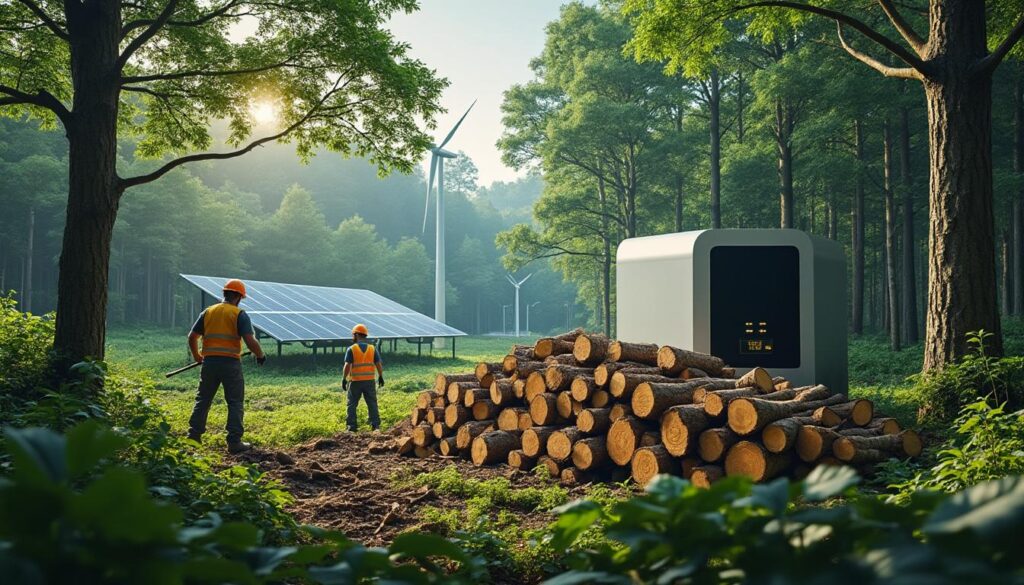
Portugal accelerates in the energy transition and inspires Europe with consistent results in the use of clean sources. This guide shows how these advancements reach your home in a practical and smart way.
| Short on time? Here’s the essence: |
|---|
| ✅ Portugal is among the European leaders in renewable electricity, with annual figures above 65% and record monthly peaks ⚡ |
| ✅ Key difference: renewable electricity is not equal to final energy consumption; the EU recorded 25.2% and Portugal about 36.3% overall 🔍 |
| ✅ For your home: insulation, solar orientation, heat pumps, and photovoltaic systems reduce bills and emissions 🏡 |
| ✅ Avoid the mistake of installing panels without first reducing the building’s energy needs 🚫 |
Portugal: Leading with High Consumption of Renewable Energy — what the numbers really mean
When discussing Portuguese leadership, it’s vital to separate indicators. The share of renewables in electricity is one, the gross final energy consumption is another. In electricity, recent data consistently place Portugal above 65%, with wind, hydro, and solar sharing the spotlight depending on the season. In the overall energy aggregate (including transport and heating), the country is around 36.3%, clearly above the European average, which hovers around 25.2%.
It’s normal to see headlines with impressive peaks. There were periods when wind generation covered over 80% of consumption on a windy day, and months when hydropower, after heavy rains, boosted renewable contribution to almost total levels. These records demonstrate installed capacity and grid management, but what matters for investment decisions at home are the annual averages and the system’s resilience.
Comparing with the European context, renewable electricity in the EU reached nearly 47.5%, while countries like Sweden stand out in total energy with over 60%. Portugal ranks well among the top ten, reinforcing the idea of a transition that combines natural resources and good network policies. The goal for 2030 remains demanding — the EU reference for energy is 42.5%, and getting there requires action in transport and heating.
To organize the reading of data and avoid confusing indicators, this table summarizes the essential differences and points out where Portugal is gaining ground.
| Indicator 📊 | Portugal 🇵🇹 | EU Average 🇪🇺 | Notes 🔎 |
|---|---|---|---|
| Electricity from renewable sources | ~65–70% | ~47.5% | Varies with hydro/wind; monthly peaks can be >90% ⚡ |
| Gross final energy consumption | ~36.3% | ~25.2% | Includes transport and heating; greater challenge 🚗🔥 |
| EU 2030 target (energy) | ≥42.5% (reference) | ≥42.5% | Requires accelerating heat pumps and electric mobility 🛠️ |
This portrait places the country on a solid path and, above all, indicates real savings and comfort opportunities for families. The next step is to transform this systemic advantage into well-planned works in housing.
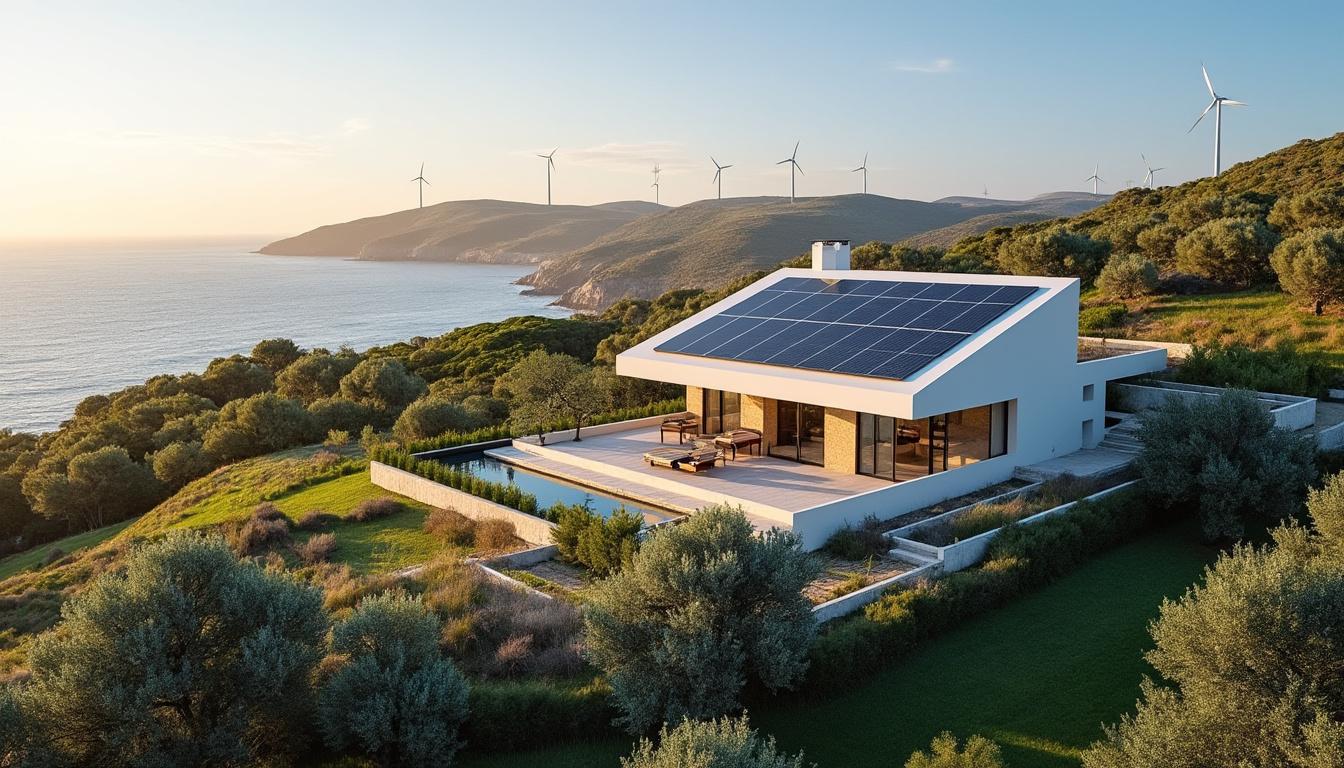
How to reduce your bill with renewable energy at home — practical steps and reliable results
Your home can directly benefit from the national dynamics. The secret lies in starting with the basics: reduce the need and only then install generation. Many projects fail because they reverse this order. With a simple plan, you can achieve lasting gains without surprises.
The first step is a thermal balance of the dwelling. Check insulation, thermal bridges, window frames, and shading. In Portugal, cork is a natural insulator that combines performance and low environmental impact. Placed in roofs and walls, it reduces heat spikes in summer and losses in winter.
For heating and cooling, the heat pump is now the most efficient solution. When combined with photovoltaic systems, it provides a winning “combo”: clean electricity powering equipment with a performance coefficient of 3–4, which means three to four units of heat for each unit of electricity consumed.
Simple sequence that avoids costly mistakes
Instead of spreading the budget too thin, prioritize interventions with higher returns. A family in Braga, in a T3 from the 90s, reduced 40% of consumption just with efficient windows and air tightness, before installing 3 kWp of panels.
- 🧭 Energy diagnosis: consumption measurements, air leaks, and solar gains.
- 🧱 Thermal envelope: insulation (cork, wood wool), frames with thermal break, and external shading.
- ♻️ Efficient systems: heat pump, DHW with storage tank, and ventilation with heat recovery.
- ☀️ Photovoltaic: size according to daytime consumption profiles; microinverters help in shaded roofs.
- 🔋 Storage (optional): batteries or thermal storage to “save” excess solar.
- 📱 Smart management: schedule consumption (washing machine, DHW) during solar hours.
Two precautions speed up returns: sizing the panels correctly (avoids excess with low utilization) and adjusting the consumption curve to match production. A charging station for an electric vehicle, for example, can preferably operate during peak sunlight hours.
Energy communities are growing in neighborhoods and condominiums. Sharing excess among neighbors allows scaling generation even when your roof space is limited. In Lisbon, a group of three buildings managed to approach daytime self-sufficiency with shared solar coverage and centralized management.
For you, the practical indicators are clear: good insulation and shading reduce the required power of the heat pump; well-sized photovoltaic systems shift consumption to clean hours; a simple management closes the cycle. Done right, the bill drops and comfort rises — it’s the right combination.
How much it costs and when it pays off — real scenarios of ROI and incentives for renewables in Portugal
Investing wisely involves two elements: total costs and payback time. In housing, the average payback for residential photovoltaic systems is around 5–8 years, depending on the consumption profile and tariff. When a heat pump is added and gas is removed, the savings increase, as a whole bill is reduced and maintenance is simplified.
Start by looking at the “cost per avoided kWh.” Improving the home envelope can cost less and save more, over decades, than installing additional solar capacity. In homes with well-oriented roofs, 3–5 kWp cover a large part of daytime needs; beyond that, it only pays off if there are significant loads during the day (DHW, electric vehicle, pool equipment).
Public support has favored measures with greater cumulative impact: insulation, windows, heat pumps, photovoltaics, and solar water heating. Municipalities and national programs adjust caps and contributions based on income and property type. At the same time, marketers offer self-consumption products with integrated financing.
Simplified numerical example
Imagine a T3 apartment with an annual consumption of 4,500 kWh. A photovoltaic system of 3.2 kWp with microinverters can generate 4,800–5,200 kWh/year in areas with good radiation. If half is self-consumed and the rest injected with modest remuneration, annual savings can exceed 700–900 €, depending on tariffs. With installed costs around 4,500–6,000 €, the payback is between 5–7 years.
Now, replace a gas water heater with a heat pump for DHW and schedule it to heat water between 11 AM and 4 PM. The self-consumption rate rises and savings increase, without changing the number of panels. The smart investment lies in orchestrating technology and habits.
Renewable Energy Communities offer another path. In a street of houses, a microgrid with 20 kWp shared allows those with less roof access to benefit from energy credits at fair prices. Digital management and clear contracts are essential for trust among neighbors.
To take the step, align three pieces: diagnosis, detailed budget, and timeline for work during the dry season. Avoid haste caused by seasonal promotions. A coherent project, even if in phases, delivers robust and predictable results.
At the end of the day, what pays off is what aligns with your home, your local climate, and your goals. That coherence pays for itself over time.
Passive architecture in the Portuguese climate — comfort, health, and clean energy working together
The design of the house dictates the energy it needs. In Portuguese climates, the passive strategy combines solar orientation, effective shading, thermal mass, and controlled ventilation. The south facade captures sunlight in winter; eaves, canopies, and exterior shutters prevent excessive gains in summer. Floors and walls with thermal mass stabilize temperature, reducing peaks and the need for air conditioning.
Local materials make a difference. Cork is exemplary: in addition to thermal and acoustic insulation, it regulates moisture and improves sensory comfort. Treated wood coverings and lime plasters contribute to healthy indoor environments, with less VOC and easy maintenance. Together with frames with thermal breaks and solar control glass, a highly efficient envelope is created.
Consider the case of “Rita’s House” in Minho, designed for low impact. With 18 cm of cork insulation in the roof, 12 cm in the walls, and mechanical ventilation with heat recovery, the thermal load dropped to less than 15 W/m². The climate control by heat pump operates at low power, and the photovoltaic system of 5 kWp comfortably covers annual consumptions. Even during heat waves, the indoor temperature remains stable with automatic shading and night ventilation.
Design gestures that multiply gains
In openings, a combination of exterior shutters and low-emissivity glass allows natural light without excess heat. Pergolas with deciduous plants provide living shade in summer and let sunlight in during winter. The arrangement of spaces also matters: living areas facing south and west, technical zones to the north and east, reducing undesired losses and gains.
Acoustic comfort accompanies thermal comfort. A well-sealed envelope reduces noise and filters dust, which is crucial in urban areas. Ventilation with heat recovery ensures constant fresh air without penalizing energy, controlling CO₂ and humidity — a decisive point for respiratory health.
When architecture does the heavy lifting, technology becomes simpler and cheaper. It is this balance that sustains efficiency over decades, with less maintenance and a better quality of life.
To deepen good practices and construction details, specialized resources such as Ecopassivehouses.pt aggregate solutions, materials, and Portuguese examples focused on real outcomes.
From the home to the grid: self-consumption, electric vehicles, and the path to 2030–2050
The future involves connecting homes, neighborhoods, and mobility. A house with photovoltaics, a heat pump, and an electric vehicle can become an active node in the grid. On sunny days, the panels power the home and charge the car; during off-peak hours, lower tariffs offset nighttime charging. Smart management, with real-time measurement, optimizes every kWh.
At the national scale, the diversity among hydro, wind, and solar creates a system with significant renewable participation. However, final energy consumption still heavily depends on transport. Electrification and sustainable biofuels come in here as they have led other countries to rapid gains. The European goal of ≥42.5% in final consumption by 2030 requires accelerating the replacement of fossil fuel boilers with heat pumps, and renewing the vehicle fleet with electric and plug-in hybrid.
There are also new developments in storage. Residential batteries and “thermobattery” solutions (hot water as a backup) help to smooth the load curve. In multifamily buildings, shared systems can efficiently handle peaks, distributing costs and benefits. In rural areas, small hybrid solar parks with light wind contribute to agricultural and agro-industrial self-consumption.
And what about hydrogen? Its role is complementary in processes difficult to electrify and as seasonal storage, but it does not replace the direct efficiency of electricity in homes. Pragmatism calls for starting with what is simple and proven: insulation, heat pumps, solar thermal or photovoltaic systems, and consumption management.
A pilot neighborhood in Setúbal shows the way: each building has photovoltaics on the roof, cascading heat pumps, shared charging, and a digital system that adjusts loads in real-time. The result was a reduction of 35–45% in the collective bill and greater thermal stability, with elevated comfort even during summer peaks.
With this thread — efficient home, right technology, and intelligent connection to the grid — the country transforms statistical leadership into daily benefits for families and businesses. The opportunity is now, with mature and accessible solutions.
Source: www.theportugalnews.com