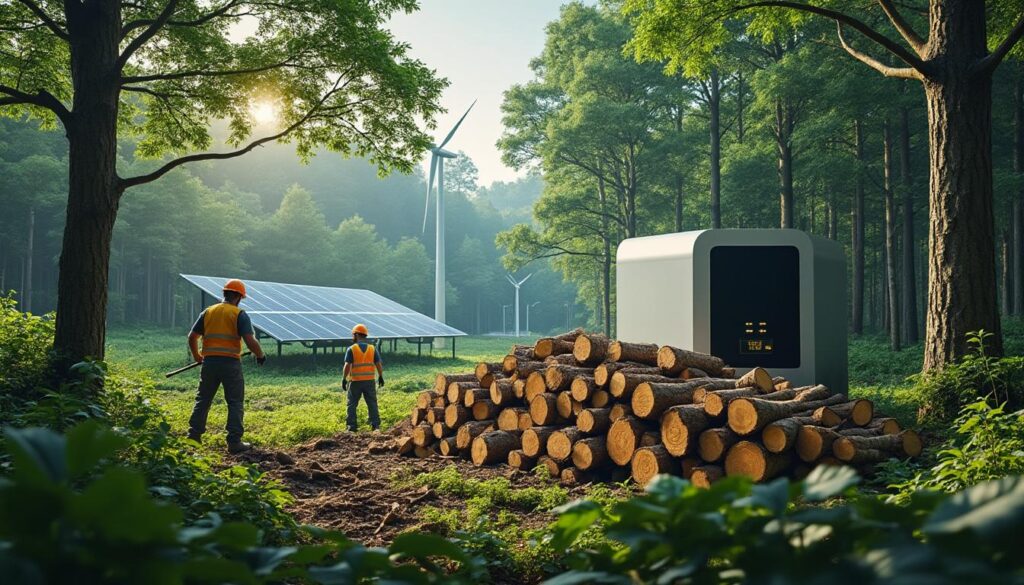
The latest edition of the REN Award focused on where the sector needs it most: the integration of variable renewable energies and the transition to hydrogen. The distinguished theses bring practical tools for networks, buildings, and territories seeking to accelerate decarbonization with technical rigor and controlled costs.
What follows is a clear guide, inspired by the winners, to help you transform academic knowledge into useful decisions — from the grid to the neighborhood, all the way to your home.
Short on time? Here’s the essence:
| ✅ Key Points | 💡 Practical Value |
|---|---|
| Integration of variable renewables without losing reliability ⚡ | Capacity planning, interconnections, and active demand management. |
| Path to 100% hydrogen in the gas network 🧪 | Transition methodologies and pilot cases like CelZa 🇵🇹🇪🇸. |
| Avoiding common mistakes in H2+NG mixing 🚫 | Materials, leakage detection, and ventilation designed right from the project stage. |
| Bonus: valuing wave energy 🌊 | OWC in ports and coastal fronts with benefits for nearby neighborhoods. |
Highlights of the REN Award: Variable Renewable Energies and the Transition to Hydrogen in 2025
The REN Award, one of the oldest scientific awards in Portugal, recognized the best Doctoral and Master’s theses in the field of energy conducted at Portuguese universities. The ceremony for the 30th Award took place in the Noble Hall of the Hotel Ritz, in Lisbon, with the presence of the Minister of Energy and Environment, reinforcing the connection between science and public decision-making.
The first highlight goes to Amadou Bissiri (University of Coimbra), recognized for the thesis “Catalyzing variable renewable energy in the West African Energy Pool,” which combines capacity expansion planning with institutional reforms. In the master’s category, the main award went to André Dias (FEUP), for “The transition from gas to 100% hydrogen: network planning methodologies and challenges for the energy system,” applied to the CelZa project, a green hydrogen transport corridor between Portugal and Spain.
The podium was completed by Catarina Cartaxo (IST), who studied Oscillating Water Columns (OWC) for wave energy conversion, and Pedro Marques (IST), who employed imaging to assess NG+H2 blends under real conditions. Honorable mentions distinguished Sofia Andrade (FCUL) and Miguel Tavares (IST), highlighting the diversity of useful topics for networks and buildings.
The REN Scientific Merit Medals – Science LP – FCT valued young talents from Portuguese-speaking African countries: in the Women Researchers category, Leila Jossias won with a study on methanol synthesis via direct methane oxidation; in Students and Researchers, Gafar Muganharia won with simulation of cryogenic removal of H2S and CO2, and Alberto Filimão stood out with ocean renewable energies off the coast of Mozambique.
- 🏆 Doctorate: €30,000 — structural and regional impact.
- 🎓 Master’s: €25,000 (1st), €15,000 (2nd), €10,000 (3rd) — applicable innovation.
- 🔖 Honorable mentions: €2,500 — relevance and potential.
- 🌍 REN Medals – Science LP – FCT: €5,000 (1st) and €2,500 (2nd) — Lusophone talent.
| 🏅 Category | 👤 Winner | 🧭 Topic | 💶 Prize |
|---|---|---|---|
| Doctorate | Amadou Bissiri | Integration of variable renewables in West Africa | €30,000 💼 |
| Master’s (1st) | André Dias | Transition from gas to 100% hydrogen (CelZa) | €25,000 🚀 |
| Master’s (2nd) | Catarina Cartaxo | Oscillating Water Columns (waves 🌊) | €15,000 |
| Master’s (3rd) | Pedro Marques | Assessment of NG+H2 blends via TAC | €10,000 |
| Honorable mentions | S. Andrade, M. Tavares | Clean energy and systems | €2,500 🔖 |
These results demonstrate a complete agenda: integration of VRE, networks prepared for hydrogen, and new vectors such as wave energy. It is the roadmap that the country needed.
How to Catalyze Variable Renewable Energies Reliably: Lessons for Networks and Neighborhoods
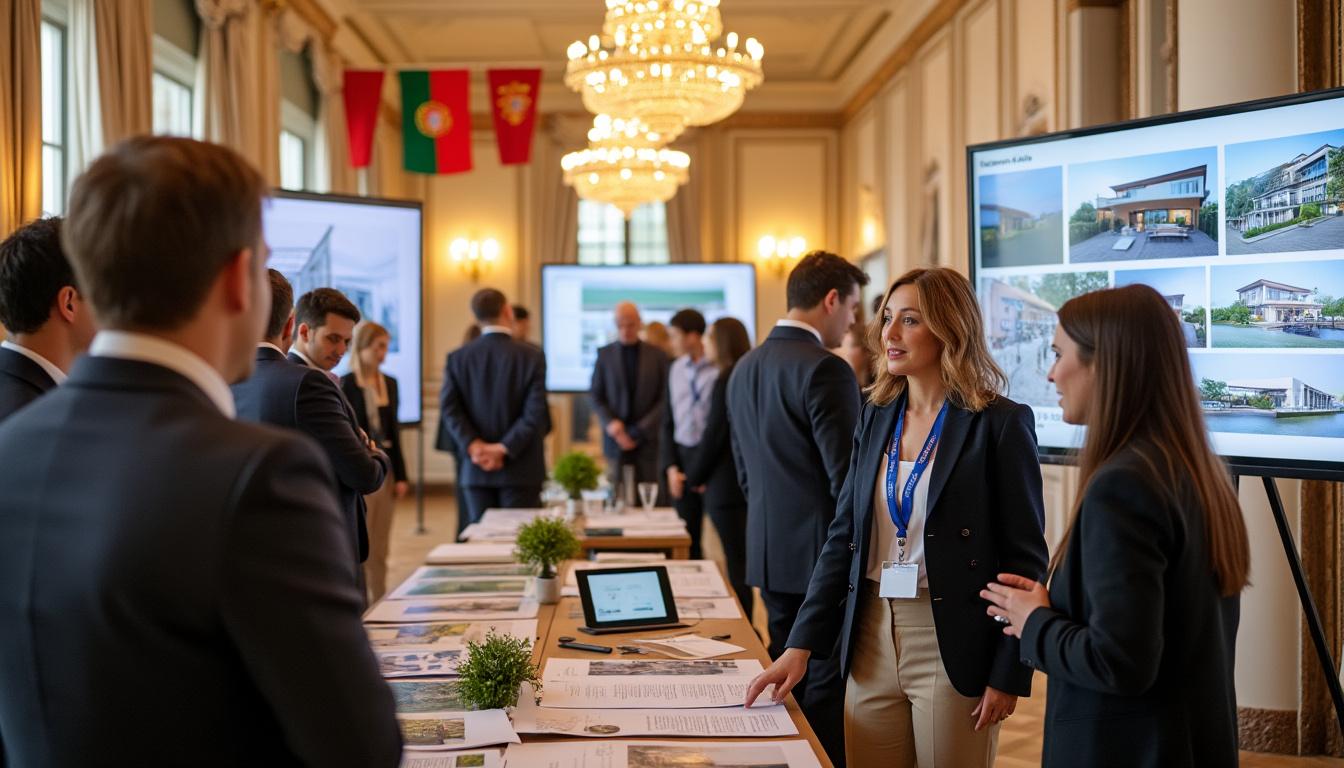
When it comes to variable renewable energies (solar and wind), the crucial question is: how to increase the share without causing instability? The awarded doctoral thesis answers with data and method: integrated capacity expansion planning combined with market reforms and regional cooperation. It applies to West Africa and is highly transferable to the Iberian Peninsula.
On the technical front, three levers are decisive. The first is the mix of generation: distributed PV, onshore/offshore wind, and some firmness through storage or demand flexibility. The second is the grid: reinforcements, interconnections, and digitalization (smart metering and predictive control). The third is governance: rules that pay for system services and encourage demand-side response.
To make this tangible, consider the “Solar Neighborhood of Lapa,” a fictitious block in Lisbon. With 1 MWp of PV on rooftops, 300 kWh of community batteries, and load management (heat pumps and EV chargers), the neighborhood reduces peaks, shifts consumption to times of higher production, and cuts losses. On windy days, interconnection with a coastal wind farm ensures predictability; on cloudy days, storage covers dinner without pushing the bill to the national peak.
- ⚙️ Step 1: size PV and wind based on real profiles (12 months).
- 🔌 Step 2: install smart meters and define tariffs with time signals.
- 🔋 Step 3: add community batteries and load control (EV and DHW).
- 🤝 Step 4: flexibility contract with the grid operator for system services.
| 🔧 Lever | 📈 Benefit | 🧪 Practical Metric | ✅ Tip |
|---|---|---|---|
| PV+wind mix | Reduces net variability | Daily/seasonal correlation 📊 | Combine inclinations and orientations ☀️ |
| Storage | Soothes ramps | Autonomy hours 🔋 | Prioritize valuable services (peak) ⏱️ |
| Demand management | Cuts peaks and costs | Flexible kW per household 🏠 | Schedule DHW and EVs during sunlight hours 🌞 |
| Interconnections | Regional stability | Exchange capacity 🔄 | Schedule maintenance during low demand 🛠️ |
For those designing buildings, this translates into active rooftops, facades with effective shading, and electrical infrastructures prepared for bidirectionality. In the “Solar Neighborhood of Lapa,” managers managed to reduce the annual bill by 22% with an investment that pays back in 6 to 8 years when flexibility services are added to the operator.
If you’re looking to deepen your understanding of planning and simulation of VRE in regional networks, it’s worth exploring content that synthesizes good international practices.
The guiding thread is simple: reliability stems from the whole — technology, grid, and rules. This is how the percentage of VRE grows without upheavals.
Transition from Natural Gas to Hydrogen: Methodologies, CelZa, and Impacts on Buildings
The thesis by André Dias provides a roadmap for converting gas infrastructures to 100% hydrogen, with case studies applied to the CelZa project, which will link Portugal and Spain with a green H2 corridor. The method intertwines techno-economic analysis, conversion schedules by phases, and safety and material criteria.
Why is this important for constructors or renovators? Because the network transition alters specifications for appliances, piping, and ventilation in buildings. The opportunity is to prepare today to be “hydrogen-ready” without excessive costs, choosing components and pipe routes that won’t need to be reopened tomorrow.
A concrete example: the Atlântica Cooperative, a set of 120 housing units in a coastal municipality, decided that new kitchens would come with reinforced electrical pre-installation and technical space for micro-CHP to hydrogen when gas is converted. Thus, the marginal adaptation cost drops by half and the downtime during construction reduces to 24 hours per unit.
- 🧰 Materials: opt for steels and polymers compatible with H2 (avoid embrittlement).
- 🕳️ Ventilation: plan for high grilles in compartments with appliances (H2 is light).
- 📟 Detection: piping with testing points and sensors calibrated for H2.
- 🔄 Routing: accessible piping paths, without long hidden passages.
| 🏗️ Component | 🔍 Status with NG | 🔁 Change with H2 | ✅ Recommended Action |
|---|---|---|---|
| Piping | Standard carbon steel | Risk of embrittlement | Specify compatible alloys 🧪 |
| Burners | Jets for NG | Special jets and valves | “H2-ready” models 🔧 |
| Ventilation | Low / door | High and cross | Upper grilles ↗️ |
| Detection | Methane | H2 (fast sensors) | Redundancy and testing 🧯 |
In networks, phased conversion minimizes risks: less dense sectors first, adapted regulation stations, and communication campaigns for appliance exchanges. The CelZa case shows that transboundary corridors can give scale to industrial projects and create investment signals for buildings and mobility.
To visualize trends and ongoing work in the Iberian Peninsula and the EU, it’s worth seeking a synthesis overview of hydrogen corridors and network adaptation.
The message for building projects is straightforward: plan today to avoid rework tomorrow. The cost of foresight is always less than that of redoing.
Wave Energy and NG+H2 Blend: Opportunities for Ports, Coastal Neighborhoods, and Safety
The research by Catarina Cartaxo on Oscillating Water Columns (OWC) identifies this concept as the most promising for converting wave energy into electricity. OWC integrates well into jetties and breakwaters, with limited visual impact and the potential to power port communities and coastal neighborhoods. In parallel, the work by Pedro Marques on NG+H2 blends using TAC helps clear assumptions: mixtures require careful material design and measurement to avoid micro-leaks.
Imagine the Port of Maré (hypothetical case): an OWC module embedded in the jetty provides predictable energy that complements PV in warehouses. An adjacent neighborhood, with 600 units, uses this electricity for heat pumps and nighttime charging. When the local gas network begins to introduce 20% hydrogen, the pipelines are already compatible, and the detectors calibrated.
- 🌊 OWC in ports: good civil integration and low visual footprint.
- 🔬 NG+H2 Blend: test materials and leak-tightness before raising percentages.
- 🏘️ Local synergies: OWC + PV + batteries for coastal micro-grids.
- 🛡️ Safety: fast sensors and proper ventilation in homes and public buildings.
| 🌐 Technology | ⚡ Typical Use | 📊 Advantage | 🚧 Attention Point |
|---|---|---|---|
| OWC | Ports and jetties | Existing civil integration 🧱 | Seasonal power curve 📆 |
| NG+H2 Blend | Urban networks | Gradual CO₂ reduction 🌍 | Materials and detection 🔎 |
| 100% H2 | Industry and clusters | Deep decarbonization 🏭 | Standards and conversion 🔐 |
The architectural design must accommodate homes with ventilated technical rooms, accessible shafts, and space for batteries and inverters. In coastal neighborhoods, the base electricity from the OWC soothes nighttime consumption, and demand management aligns with the forecast of local wave energy — a marriage between climate and engineering.
To see cases and visual concepts of wave energy conversion in urban-port contexts, look for videos that show integration with jetties and combined uses with PV.
When ports and neighborhoods collaborate, local energy is obtained with Atlantic identity and safety prepared for the future of gas.
REN – Science LP – FCT: Lusophone talent accelerating the energy transition
The REN Scientific Merit Medals – Science LP – FCT strengthen an essential bridge: knowledge that flows between Portugal and Portuguese-speaking African countries. In Women Researchers, Leila Jossias simulated methanol synthesis via direct methane oxidation, assessing energy viability — an interesting shortcut to valorize resources and reduce emissions. In Students and Researchers, Gafar Muganharia modeled cryogenic removal of H2S and CO2 in synthesis gas, and Alberto Filimão mapped ocean energies along the coast of Mozambique.
This ecosystem creates solutions that Portugal can adopt and co-develop. Imagine the “Solar School of Maputo” (illustrative example): roofs with PV, natural ventilation, and an educational lab testing CO2 capture membranes and micro-electrolysers. The knowledge exchange with Portuguese universities accelerates the learning curve and avoids costly mistakes.
- 🤝 Collaboration: mixed teams and open codes for model sharing.
- 🧭 Pilots: small projects with rigorous measurement and replication.
- 📚 Training: short courses for construction and maintenance technicians.
- 🪙 Funding: combine local funds, philanthropic investments, and private innovation.
| 🏅 Category | 👩🔬/👨🔬 Project | 🌱 Relevance | 💶 Prize |
|---|---|---|---|
| Women Researchers | Leila Jossias — methanol from methane | Valorization of resources and clean chemistry ⚗️ | €5,000 🥇 |
| Students/Researchers | G. Muganharia — cryogenic removal of H2S/CO2 | Clean gas for synthesis and H2 🧊 | €5,000 🥇 |
| Students/Researchers (2nd) | A. Filimão — ocean renewables | Coastal mapping for projects 🌊 | €2,500 🥈 |
For the reader, the message is pragmatic: more than awards, there is a repository of solutions and talent available for partnerships. By aligning rehabilitation projects with active research, the margin of error decreases and efficiency increases.
The result is a virtuous circle: innovation with public utility, solid technical training, and tangible benefits in real communities.
Applying the Highlights of the REN Award to Your Home and Neighborhood: Immediate Steps
The awarded ideas become truly valuable when put into practice. In urban rehabilitation, the strategy can start with a simple audit and end with an energy-smart condominium. The good news: much of what matters is organization and phased decision-making, not exotic technology.
Consider the “Cedro Block” (example): a set of 6 buildings decides to create an energy community. They start with PV on the rooftops, smart metering, and flexibility agreements with the operator. In parallel, they specify kitchens and technical rooms as “H2-ready,” with ventilation and detection. The 36-month plan includes a 200 kWh battery and 12 charging points for EVs with tariffs aligned to local production.
- 📊 Diagnosis: measure consumption by use (DHW, heating, appliances).
- ☀️ Generation: PV on the roof with inverters prepared for V2G/V2B.
- 🔋 Storage: sized for 1–2 hours of local peak.
- 🧯 H2 Safety: high grilles, sensors, and accessible piping.
- 🤝 Flexibility Contract: monetize peak cuts and system services.
| 🧱 Element | 🎯 Objective | 📐 Practical Rule | 💡 Tool |
|---|---|---|---|
| PV and inverters | Cover daily base | Mixed orientations (E/W) ➕ south | Open PV simulator 🧮 |
| Batteries | Smooth peaks | 1–2 hours of the building’s peak | EMS with light AI 🤖 |
| H2-ready | Avoid rework | Accessible and ventilated shafts | Material checklists ✅ |
| Flexibility | Additional revenue | 30–120 min events | Contract with DSO/aggregator 🤝 |
Simple tools can make a difference: spreadsheets with hourly profiles, Wi-Fi sensors for intensive uses (DHW and heat pumps), and a shared panel for the community. If you need references and practical guides, explore useful content at Ecopassivehouses.pt.
Start small, measure, and scale up: this is the path to transform the inspiration from the REN Award into concrete value in your building.
Today, choose a step: measure a critical circuit in your home or request the installation of smart meters in the condominium. The rest follows with discipline and method — clean energy appreciates common sense and clear plans.
Source: www.ren.pt