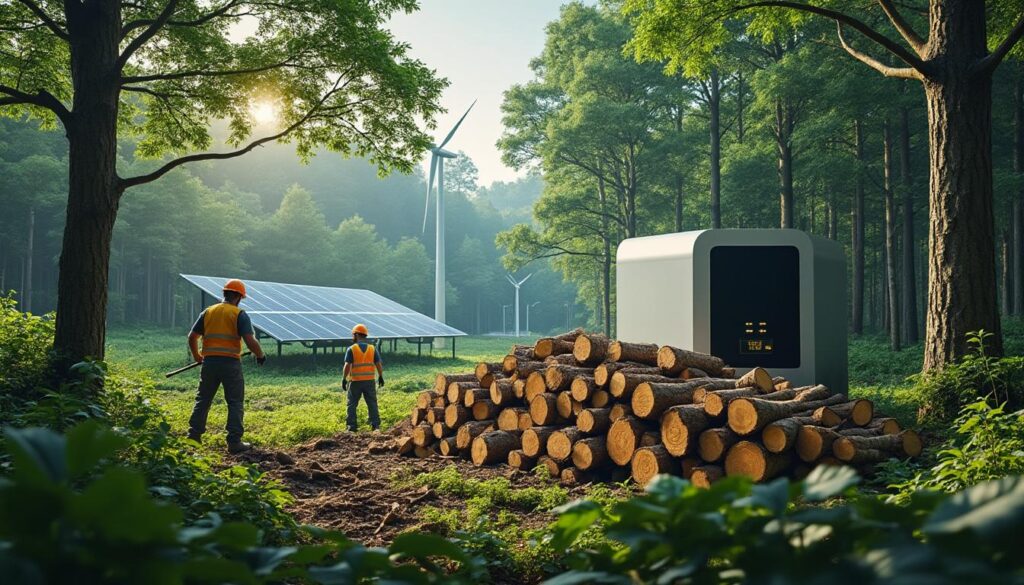
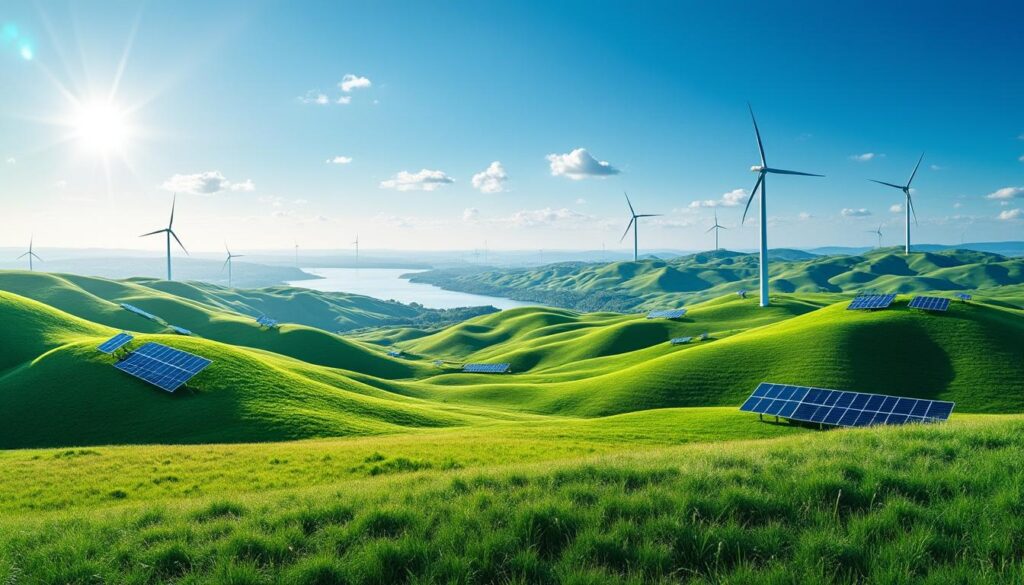
Germany Innovates: a quarry lake in Bavaria has just become a showcase for clean energy by receiving floating solar panels in a vertical position. The solution addresses a real challenge: expanding renewables without occupying agricultural land or putting pressure on forest areas.
| Short on time? Here’s the essentials: ⚡️ |
|---|
| ✅ Lake covered by vertical solar panels in Starnberg (Bavaria), powering 1.87 MW, operating at peaks at sunrise and sunset 🌅 |
| ✅ Complementary generation to the midday standard: relieves the grid during critical times and reduces electricity purchases by 60–70% in an industrial unit ⚙️ |
| ✅ Environmental protection: only 4.6% of the water surface covered (well below the 15% limit) to allow light and oxygen 💧🐟 |
| ✅ Replicable model: East–West orientation, integration with rooftops, local PPAs and water monitoring as best practice 🧭 |
Germany Innovates: Lake covered by solar panels balances the grid and frees productive land
The expansion of renewables in Europe faces a simple obstacle: lack of space. Reserving thousands of hectares for photovoltaics on land conflicts with agriculture and conservation. The solution found in Germany was to use artificial lakes from old quarries and mines to install floating solar parks.
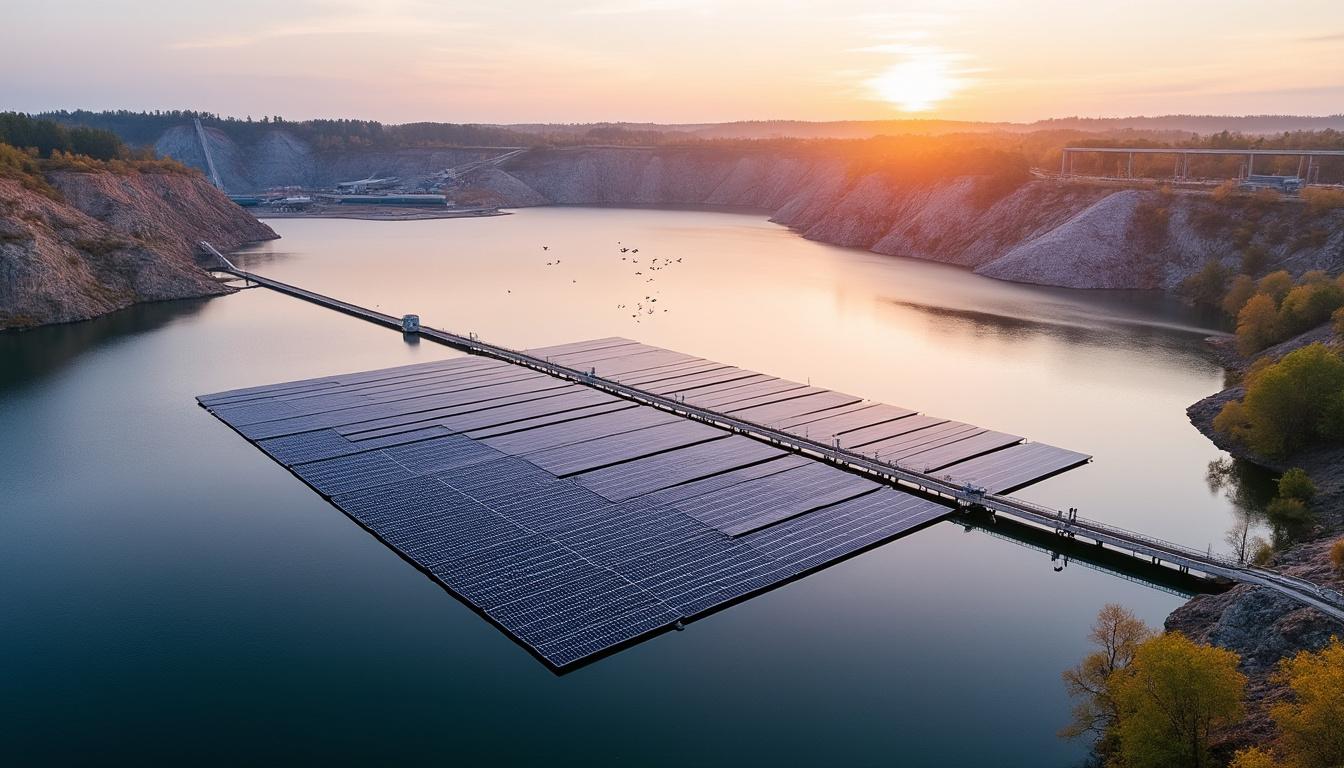
In Starnberg, Bavaria, an industrial lake received 2,500 vertical panels on floating platforms, creating passages in the water. The installed capacity of 1.87 MW stands out not only for its ingenuity but also for its electrical utility: the East–West orientation shifts generation peaks to dawn and dusk, when demand rises and the grid needs support the most.
The case of Starnberg, Bavaria: energy at crucial times
While traditional installations concentrate production at noon, the vertical arrangement of the lake distributes energy better throughout the day. Practical result: the local crushing plant now buys 60–70% less electricity from the grid, approaching an operation with high self-consumption. This reduces costs, emissions, and load peaks.
The project also respects water: only 4.6% of the surface was occupied, maintaining the passage of light and oxygen and remaining well below the legal limit of 15%. Instead of competing with the land, the solution rehabilitates an industrial space, making it useful for the climate and the economy. In summary, it is a strategy that frees fertile land, stabilizes the electric grid, and gives a smart purpose to previously underutilized areas.
Environmental benefits of the solar lake: less evaporation, cooler water, and protected ecosystem
During dry periods, lake surfaces lose water through evaporation and heat up more quickly, affecting fish and microorganisms. By creating shaded areas with solar platforms, the average temperature of the water column tends to stabilize and evaporation losses decrease. This is particularly useful in industrial or irrigation reservoirs.
Another key point: the limited coverage of 4.6% preserves the light balance and oxygenation. German legislation allows up to 15%, but the conservative design shows ecological prudence. Open corridors between rows allow fish circulation, light passage for macrophytes, and flight paths for waterfowl, reducing disturbances to wildlife.
Good environmental practices that make a difference
- 🌿 Monitor dissolved oxygen and temperature at different depths to adjust coverage over time.
- 🐟 Maintain light corridors for aquatic photosynthesis and feeding routes for fish and invertebrates.
- 🦆 Respect nesting areas, avoiding noisy operations during sensitive times.
- 🧪 Quarterly sampling plan (chlorophyll, turbidity, pH) to monitor algal blooms.
- 🔩 Ecological moorings and corrosion-resistant materials to minimize maintenance and microplastics.
When well sized, the floating park reduces the risk of harmful algal blooms, contains evaporation, and does not degrade habitats. It is proof that it is possible to combine clean energy and ecosystem services in the same location.
If you want to see visual explanations about floating systems and their positive impacts, search for independent analyses and technical documentaries.
Architecture and engineering of the park: East–West orientation, operation, and integration with the city
Solar projects usually point to the South, but the Bavarian lake bets on a East–West vertical geometry. This reduces mutual shading, improves capture at low solar angles, and decreases dust accumulation on surfaces, a gain for operation and maintenance. In cold climates, the vertical position also helps snow to slide off.
The anchoring is a separate chapter: it is necessary to respect depth, winds, and variations in water level. Modular floaters create maintenance walkways, allowing quick inspections, cleaning, and module replacement. Secure electrification (channels, cables, and inverters) must comply with standards for humid environments and protect wildlife.
Step by step to replicate in your region
- 📈 Map the load curve of the consumers (industries, water treatment plants, neighborhoods) and identify peaks at dawn/dusk.
- 🧭 Simulate East–West versus traditional arrangements, seeking complementarity with rooftops and on-ground parks.
- 🌊 Assess bathymetry, prevailing winds, water quality, and access for O&M.
- 🛡️ Define coverage limits (e.g.: 5–10%) and continuous environmental monitoring plan.
- 🤝 Forge local partnerships with water operators, industries, and energy cooperatives.
German designers and companies like SINN Power have shown that careful engineering combined with local management expands clean energy without new land use conflicts. It is engineering of cohabitation with water, not occupation.
For those looking for technical comparisons and integration studies, it is worth exploring videos of conferences and field tests with vertical orientation.
Economics of the solar lake: costs, returns, and working business models
The absence of land acquisition expenses and the appreciation of idle assets (industrial lakes) work in favor of the CAPEX. O&M can be competitive when vertical positioning decreases dirtiness, reducing cleanings. The main gain, however, lies in self-consumption and the perfect fit with the load curve of factories and water services.
There are various ways to make viable: power purchase agreements (PPA) with the local company, municipal cooperatives with citizen participation, or consortia among water managers and heating networks. Generation at critical times brings indirect revenues, such as lower peak demand and relief for the grid, especially useful in regions where the “duck curve” is already a reality.
Objective comparison: land, rooftop, and floating lake
| Option 🌞 | Key advantage ✅ | Alert/limit ⚠️ |
|---|---|---|
| Rooftop | Uses already built area, proximity to load 🏠 | There may not always be orientation or sufficient area |
| Land | Quick scale, simple logistics 🚚 | Conflict with agriculture and biodiversity |
| Vertical floating lake | Peaks in dawn/dusk, cools the water 💧 | Requires environmental monitoring and good anchoring |
When local consumption aligns with production, returns accelerate and energy resilience improves. In summary: less regulatory risk, savings on bills, and a healthier water asset.
From quarry to neighborhood: what this innovation teaches for eco-friendly houses and communities
If the Bavarian lake proves that it is possible to generate more without occupying solid land, what does this mean for your neighborhood? It means that good orientation choices, intelligent use of forgotten spaces, and load management make a difference at the end of the month and for the climate. In a condominium, for instance, East–West rooftops spread generation throughout the day, serving heat pumps, vehicle chargers, and electric kitchens at the right times.
Simple actions to apply now
- 🧭 Prefer East–West arrangements when the goal is morning and evening self-consumption.
- 🕒 Schedule loads (pumps, hot water, batteries) for times of higher local generation.
- 🌊 Utilize existing water mirrors (tanks, private reservoirs), respecting legislation and biodiversity.
- 🤝 Organize energy communities with local PPAs and sharing benefits.
- 📚 Consult technical guides and best practices on trusted platforms, such as Ecopassivehouses.pt 📎
To illustrate, think of the “Lake of Quinta Nova,” a farm with an irrigation reservoir. By installing a small floating array with water monitoring and limiting coverage to 5–8%, management can pre-heat domestic water and charge a community battery at dusk. Nighttime consumption decreases, bills shrink, and the lake stays cooler during peak summer. Here’s the final message of this trend: right energy, in the right place, at the right time.
A simple action to start today: map your daily load and check if the East–West orientation delivers more value than a south-facing rooftop. It’s a design adjustment that pays off for years.
Source: www.terra.com.br