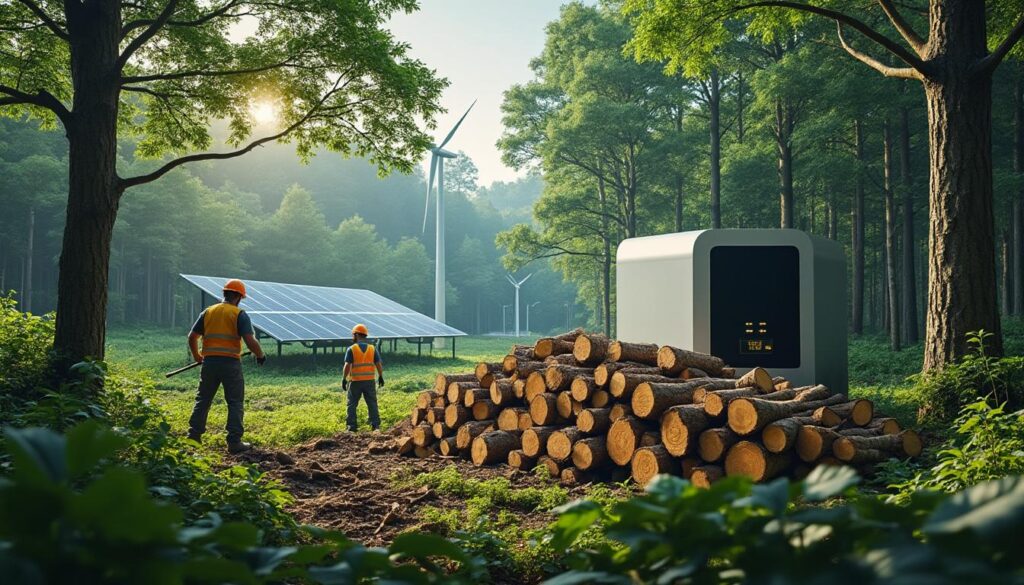
The transition to renewable energies is advancing quickly because it reduces costs, cuts emissions, and strengthens energy resilience. The challenge is technical, social, and regulatory — and requires smart, step-by-step decisions.
This practical guide organizes the essentials for you to implement renewable solutions clearly, take advantage of incentives, and avoid common mistakes, both at home and in business.
| Short on time? Here’s the essentials: | |
|---|---|
| Key Point | Practical Action |
| ✅ Reduce the bill with photovoltaics + heat pump 🔆 | Conduct an energy audit and size the system for 70–90% of annual consumption ⚙️ |
| ✅ Use storage to deal with intermittency 🔋 | Combine battery + dynamic pricing; schedule flexible loads (DHW, EV) ⏱️ |
| ✅ Electrify processes and transport 🚚⚡ | Replace boilers with heat pumps/electric ovens; prioritize smart charging |
| ✅ Avoid the mistake of “just install” without management 📉 | Integrate EMS/monitoring, PPAs, or collective self-consumption for stability and ROI 📊 |
Reduce costs and emissions with renewables: quick wins and right choices
The increase in volatility in energy prices confirmed a simple rule: those who produce and manage part of their electricity pay less and have predictability. In homes, the combination of photovoltaic panels with a heat pump for DHW and heating immediately reduces dependence on gas. In small businesses, rooftop photovoltaics, a dynamic pricing contract, and a management system (EMS) already create savings without compromising operations.
Realistic example: “Atlantic Bakery,” with 60 m² of usable space, installed 15 kWp, a 10 kWh battery, and scheduled the ovens for pre-heating during lower-cost hours. The result was a 35% reduction in the annual bill and less exposure to seasonal peaks. In residences, the Silva family replaced their water heater with a 200 L heat pump and integrated 5 kWp, prioritizing daytime consumption with washing machines and electric vehicle charging. The savings accompanied the reduction in emissions — a double benefit.
To avoid mistakes, sizing must consider the consumption profile and the season of the year. In climates with intense summers, solar production compensates for cooling, but in winter the focus shifts to thermal envelope and fine management of loads. It’s worth thinking about the “kilowatts you don’t need to produce”: smart insulation and shading provide lasting gains.
Practical steps for consistent ROI
A successful implementation starts with measuring: smart meters, bill analysis, and energy audits reveal hidden loads and critical times. From there, set realistic goals — partial self-sufficiency of 60–80% is an excellent level for homes and microbusinesses. Then, integrate the right pieces: photovoltaics, heat pump, potential solar thermal, battery, EMS, and, when applicable, electric vehicle charging with scheduling.
- 🔎 Conduct a simple energy audit (7–14 days of measurement) to map peaks and waste.
- 🔆 Prioritize photovoltaics for daytime consumption and optimize habits (laundering, DHW) for solar hours.
- 🔋 Consider battery to cover late afternoon/night and negotiate rates during low-demand hours.
- 🧠 Install an EMS to orchestrate loads, prices, and weather forecast to reduce grid purchases.
- 🧱 Invest in the envelope (insulation, window frames, shading) to cut thermal needs.
| Solution 🔧 | Typical Investment | Average Payback | Key Benefit | Attention ⚠️ |
|---|---|---|---|---|
| Photovoltaics (5–15 kWp) | €5k–€20k | 4–7 years | Less grid purchase 🌞 | Shadows and orientation matter 🧭 |
| Residential heat pump | €1.5k–€5k | 3–6 years | High thermal efficiency ❄️🔥 | Sizing and noise |
| Battery 5–15 kWh | €3k–€12k | 6–10 years | Autonomy at the end of the day 🔋 | Cycles/warranty and safety |
| Solar thermal DHW | €1.2k–€3k | 4–6 years | Almost free hot water 🚿 | Annual maintenance |
Short and direct: focus on reducing consumption, local generation, and active management — it’s the triad that sustains savings and comfort.
Smart electrification of industry and mobility: efficiency that pays for itself
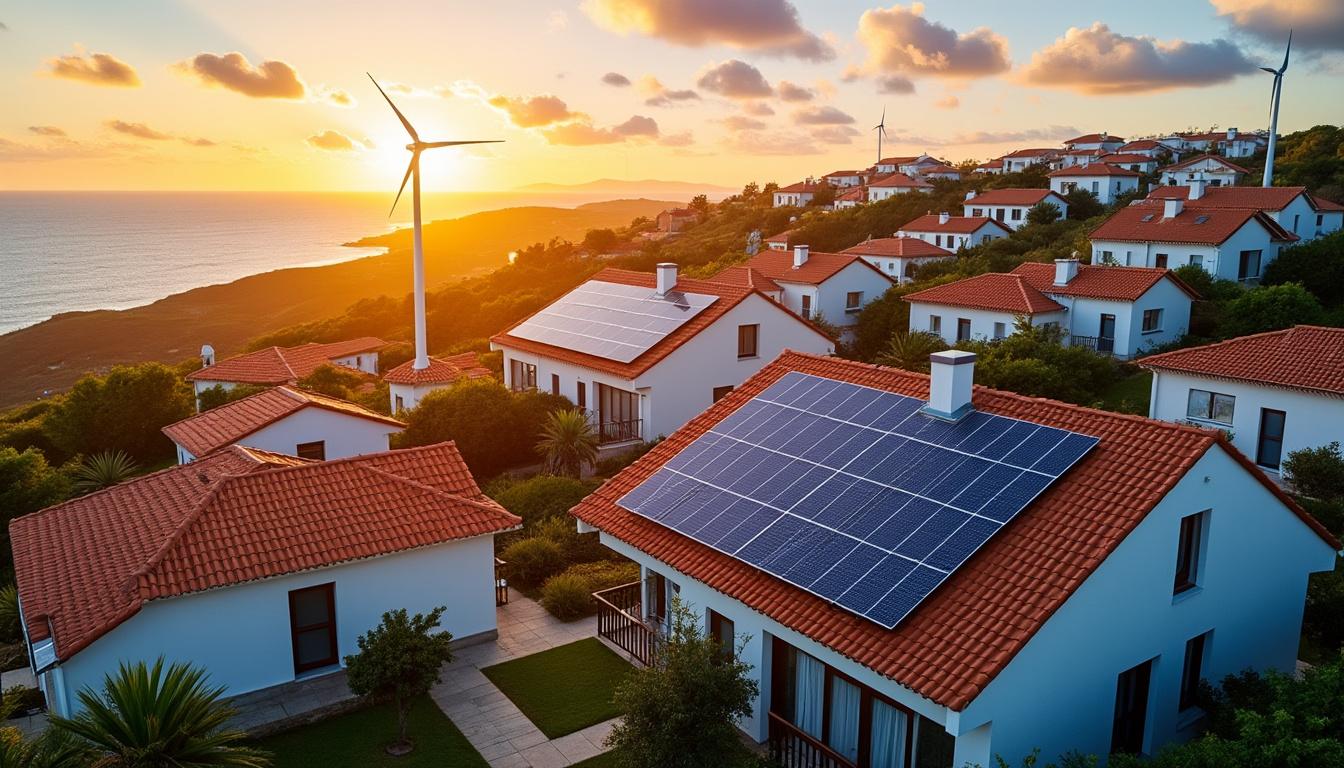
Electrifying is not just about replacing fuels with outlets; it’s about redesigning processes to extract efficiency. In industry, high-temperature heat pumps, modulated electric resistors, and induction furnaces are gradually replacing gas boilers, especially in textiles, food, and ceramics. By combining roof-mounted photovoltaic production with dynamic pricing contracts and an EMS, the factory starts to “buy well” and “consume when it’s cheap.”
Case study: “Atlantic Ceramics” upgraded dryers and finishing furnace with finely modulated electric resistors and installed 800 kWp of solar in the park. The EMS started scheduling intensive cycles for solar hours and low-cost periods. Result: 28% less energy per produced unit and lower emissions. Green hydrogen was reserved for thermal peaks above 800 ºC, where it makes sense, avoiding additional costs where electricity already delivers good performance.
In mobility, strengthening the charging network and smart charging are decisive. In urban fleets, the “step” of cost disappears when vehicles charge during off-peak periods and return energy with V2G during expensive moments. Municipalities that electrify buses with route planning, pre-heating, and battery containers maintain reliability and savings, in addition to improving air quality in dense areas.
How to plan the transition in practice
The business roadmap must align licensing, CAPEX, training, and digital integration. A transition by production lines is preferable to a complete halt. At the same time, partnerships with marketers for onsite PPAs and local storage provide predictability for energy costs throughout the equipment’s life cycle.
- 🧭 Define target processes (drying, heating, steam) with the highest electric potential.
- ⚙️ Upgrade motors and variable frequency drives; the kWh saved is the cheapest of all.
- 🔌 Implement smart charging for the fleet and evaluate V2G for peak hours.
- 📑 Use PPAs and contracts indexed to periods where you operate with more flexibility.
- 👷 Train teams for digital operation (EMS, SCADA, cybersecurity).
| Technology ⚡ | Application | Gain | Limit | Tip 💡 |
|---|---|---|---|---|
| HT Heat Pump | Hot water/processes 60–120 ºC | 3–4× more efficient | Maximum temperature | Use heat recovery 🔁 |
| Electric furnace | Thermal treatment/ceramics | Fine control and quality | Peaks >800 ºC | Schedule for cheap hours ⏱️ |
| V2G/V2B | Fleets and buildings | Revenue from flexibility 💶 | Regulation/battery warranty | Start with pilots |
| Green hydrogen | Thermal peaks and backup | Decarbonizes hard-to-abate uses | Cost/kWh and efficiency | Use where there’s no alternative |
When electrification is selective and supported by software, the return comes from efficiency, predictability, and product quality — it’s efficiency that pays for itself.
Integration into the grid: storage, flexibility, and smart grids
More renewables require storage and active management. The critical step is shifting from “producing a lot” to “using at the right moment,” while maintaining grid stability. In 2025, enhancements to public programs will direct funds to batteries and management systems, recognizing that the electrification of electro-intensive industries (AI and data centers) needs flexibility. In Portugal, the reprogramming of the PRR added about €40 million for electrical storage, a clear signal of priority.
In practice, the optimal architecture combines photovoltaics, battery, EMS, dynamic pricing, and flexibility contracts with an aggregator. In condominiums, the “Ribeira Verde Community” installed 120 kWp on the roof and a shared battery of 200 kWh. Residents joined a plan with an app that informs times of cheap energy and integrates heat pumps and EVs. The result was a flatter consumption curve, fewer peaks, and a significant reduction in the common bill.
Smart grids connect production, consumption, and storage, with price signals and weather forecasts guiding automatic decisions. And when there is too much wind and sun? Services such as reserves and regulation compensate distributed assets with quick responses. It’s a new “agriculture” of electrons, where every kWh finds the best time to circulate.
Choosing the right storage technology
For daily profiles, lithium batteries (LFP) dominate due to decreasing costs and good density. For long durations (6–12 hours), flow batteries and thermal solutions gain traction in buildings with specific needs. In large-scale scenarios with favorable topography, pumped hydroelectric remains unbeatable. The secret lies in matching technology with use: short backup, peak shaving, tariff arbitrage, or self-consumption.
- 🔋 LFP for daily (2–4 hours) in homes/microbusinesses: robustness and good cost per cycle.
- 🌊 Pumping for large volumes and stability of the electrical system.
- 🧪 Flow/Na-ion for intensive cycles and enhanced safety.
- 📶 EMS with weather forecast + dynamic pricing = automatic arbitrage ⏱️.
- 🤝 Aggregators to monetize flexibility (reserves/adjustments).
| Storage 🔋 | Typical Duration | Use Case | Strong Point | Cautions ⚠️ |
|---|---|---|---|---|
| Lithium (LFP) | 2–4 h | Self-consumption, peaks | High cost/efficiency | Temperature and cycles |
| Flow | 4–12 h | Long duration | Low degradation 🛡️ | CAPEX and space |
| Thermal | 6–24 h | DHW/heating | Integration with BC ♨️ | Precision control |
| Pumping | 8–72 h | Grid/markets | Scale and robustness | Environmental/licenses |
Strong integration means combining technology and market: price, weather, and flexibility work together to deliver stability and savings.
Policies and business models that unlock renewable energy projects
Good ideas need viable business models. In renewables, PPAs, collective self-consumption, energy communities, and well-designed auctions accelerate investments and lower capital costs. Regulation must be clear and stable, allowing technical merit and fair returns to those who generate and those who provide flexibility. It’s also critical that licensing is straightforward, with predictable deadlines and stringent environmental criteria.
For multi-family buildings, collective self-consumption dilutes costs and democratizes benefits. The “Ribeira Verde” condominium adopted a resident association as a legal entity, contracted an operator for the shared battery, and established clear rules for distribution. Predictability generated trust: more participants, better payment, and capacity to reinvest in shading and natural ventilation.
In the business sector, onsite and offsite PPAs allow locking in competitive prices for 8–15 years, reducing risk and meeting ESG goals. For smart grids, schemes that reward demand management (Demand Response) and aggregators that consolidate small flexibilities into large blocks make the system more stable and cheaper for everyone.
How to choose the ideal model
The starting point is the consumption profile and organizational maturity. Small projects benefit from “turnkey” packages with O&M included. Medium companies tend to prefer PPAs with availability clauses and production targets; while consumers with night peaks derive value from batteries and dynamic pricing. Local policies with incentives for storage and simplification of licenses accelerate the timeline and improve ROI.
- 📦 For homes/microbusinesses: turnkey with O&M and monitoring.
- 📝 For industry: PPA + EMS + performance targets.
- 🏘️ For buildings: collective self-consumption and shared battery.
- 📉 For variable profiles: dynamic pricing and flexibility contracts.
- 🔁 Reinvestment: part of the savings in efficiency and management.
| Model 💼 | For whom | Advantage | Risk | Good Practice ✅ |
|---|---|---|---|---|
| Turnkey | Residence/microbusiness | Speed and simplicity | Less customization | Require monitoring 📱 |
| Onsite/offsite PPA | Industry/services | Fixed long-term price | Clauses and indexations | Legal/technical audit |
| Collective self-consumption | Condominiums | Economies of scale | Governance ⚖️ | Clear rules and app |
| Aggregator/DR | Flexible consumers | Revenue from flexibility 💶 | Predictability | Start with pilots |
When regulation rewards flexibility and self-consumption, the transition accelerates in a fair and financially solid manner.
Passive architecture and natural materials: the invisible foundation of renewable energy
The cleanest energy is the one that doesn’t need to be generated. Passive architecture reduces thermal loads, multiplying the effect of renewables. Solar orientation, shading, cross ventilation, natural materials insulation, and thermal mass create comfort with fewer devices. This opens up space for smaller panels and more compact heat pumps to perform the service, reducing CAPEX and maintenance.
In a school rehabilitation project — “Renewed Valley School” — the replacement of window frames, creation of brise-soleil, and installation of skylights with automatic control reduced cooling needs by 38%. The roof received 60 kWp photovoltaic and heat recovery in the controlled mechanical ventilation (CMV) system. The heat pump works fewer hours, prolonging its lifespan and reducing noise — also a gain in quality of life.
Materials such as cork, certified wood, and lime plaster help regulate humidity and indoor temperature, decreasing thermal peaks. In addition to comfort, there are life cycle gains: fewer embedded emissions and ease of maintenance. For those rehabilitating, the path is phased: first envelope and airtightness, then CMV, only then climate control and electric generation equipment. The order matters to avoid oversizing systems.
Strategies that add to renewables
Buildings with BIPV (building-integrated photovoltaics) transform facades and skylights into generators. Balconies with adjustable shading prevent summer overheating and let in winter sun. Cool roofs and green coverings reduce urban emissions by mitigating heat islands and protect waterproofing, increasing the lifespan of the whole. Each well-designed detail eliminates energy waste.
- 🌿 Prioritize natural materials (cork, wood, lime) with low embodied energy.
- 🪟 Use efficient window frames and movable solar protections.
- 🌀 Ensure controlled ventilation (CMV) with heat recovery.
- 🔆 Apply BIPV on roofs/facades without shade.
- 🧭 Adjust the project for winter solar gains and summer protection.
| Measure 🏗️ | Energy Impact | Relative Cost | Compatibility | Construction Tip 💡 |
|---|---|---|---|---|
| Natural insulation | Reduces losses 20–40% | Medium | BC, solar thermal | Treat thermal bridges |
| CMV with recovery | Recovers 70–85% heat | Medium-high | Airtight buildings | Filters and maintenance |
| Shading | Cuts summer gains | Low | Photovoltaic/BIPV | Orientable brises 🧭 |
| BIPV | Generates without extra area | Medium-high | Window frames, facades | Avoid shadows |
Designing to spend less energy makes any renewable solution cheaper, simpler, and more aesthetically pleasing to operate.
From pilot to scale: management, data, and culture to sustain the transition
Implementing renewables is a technical project and, also, a human one. A team that knows its consumption and has autonomy to decide timings and set points transforms technology into results. The right culture comes from transparency: simple dashboards, achievable goals, and incentives that reward efficient use. Small, well-measured pilots pave the way for bigger decisions with confidence.
To ensure a stable transition, integrating energy management into daily operations is crucial. Deviation alarms, monthly reports, and seasonal reviews of parameters maintain gains. In buildings with residents, an app that shows when energy is cheapest and rewards efficient habits creates real engagement. And when the grid demands, the response is compensated: it’s the new flexibility economy.
No less important, safety and preventive maintenance maintain reliability. Clear O&M plans, annual thermal inspections of photovoltaic fields, battery testing, and firmware upgrades prevent surprises. And cybersecurity must accompany digitalization: segmenting networks, strong authentication, and regular updates are as important as the right inverter.
Simple roadmap to advance now
Whether residence, condominium, or business, a four-step roadmap simplifies decisions and accelerates results. The key is to close the loop: measure, act, measure again, and adjust. By combining public incentives and competent technical design, the transition shifts from “expensive idea” to “self-funding project.”
- 🧪 Pilot: 90 days with measurement, goals, and one measure (e.g., BC or 5 kWp).
- 📈 Scale: add battery, CMV, or more kWp based on data.
- 🤝 Partnerships: aggregator/supplier for PPAs and flexibility.
- 🛠️ Maintenance: annual plan, thermal inspection, and firmware.
- 🔐 Cybersecurity: segmented networks and access management.
| Step 🚀 | Objective | Indicator | Tool | Risk/mitigation ⚠️ |
|---|---|---|---|---|
| Measurement | Map profile | 15 min curve | Smart meter | Faulty data → redundancy |
| Execution | Install and integrate | kWh saved | EMS/SCADA | Halting → phasing |
| Optimization | Rates and timings | € per MWh | Dynamic rates | Volatile price → limits |
| Scale | More kWp/kWh | ROI and payback | PPA/financing | CAPEX → phases |
With data, discipline, and an engaged team, the transition ceases to be a risk and becomes a lasting competitive advantage.
Today’s action: schedule a simple energy audit, set a savings goal of 20%, and choose one measure to install in the next 60 days. If you want to delve deeper, explore ideas and practical guides at Ecopassivehouses.pt — every step counts, and starting well makes all the difference.
Source: sapo.pt