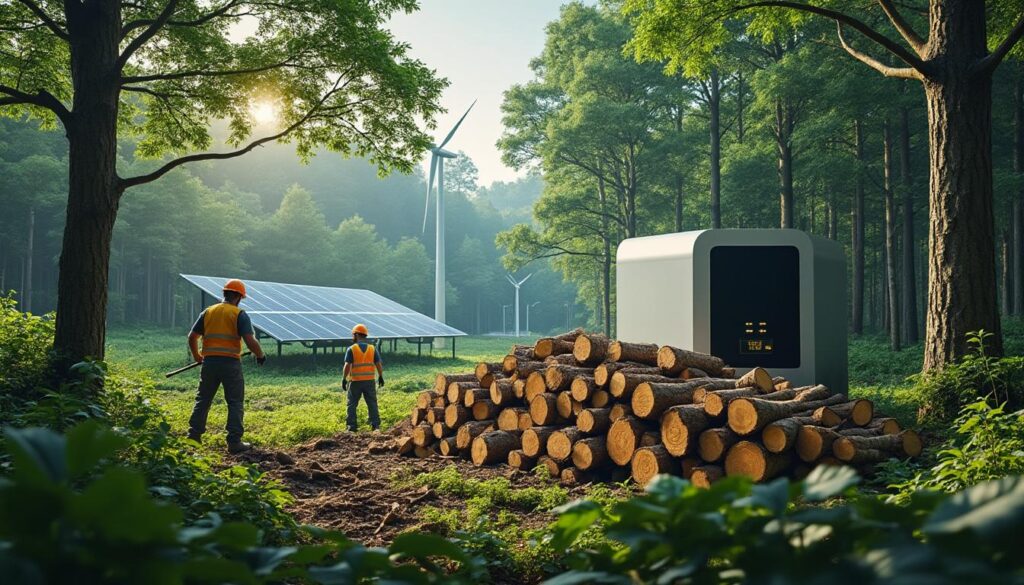
An environmental organization criticizes the Government for reducing the national target for renewable energies to 49% by 2030, contrary to the PNEC 2030 and the principle of climate non-regression. The issue is more than political: it directly influences how much you will pay on your bill and how homes will be designed and rehabilitated.
| Short on time? Here’s the essentials: |
|---|
| ✅ 49% target may delay investments and keep energy costs high for families and businesses ⚡ |
| ✅ Use efficient buildings, solar self-consumption, and heat pumps to reduce bills in 12–24 months 🏠 |
| ✅ Avoid relying solely on biomass without sustainability criteria; prioritize solar + wind with storage 🌞🌬️ |
| ✅ Form energy communities and push for targets consistent with PNEC 2030 (51%) and RED III 🤝 |
49% target by 2030: practical impacts on your wallet and habitat quality
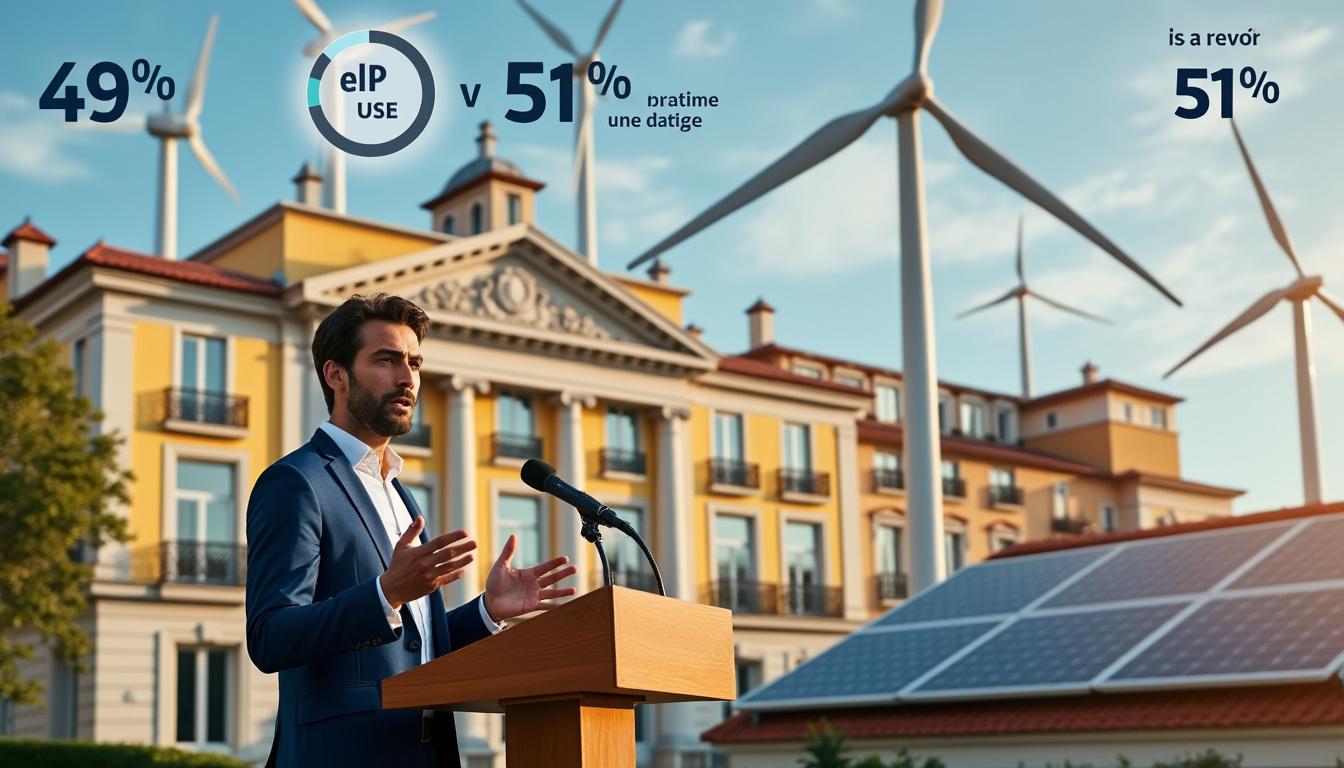
The proposal that sets 49% renewables in gross final consumption by 2030 raises alarms for falling short of the 51% from PNEC 2030. Two percentage points may seem little, but in practice, they mean less installed capacity, more fuel imports, and greater exposure to price volatility. For those managing a household, the effect translates into less predictable bills and the need to accelerate efficiency interventions.
Gross final consumption includes electricity, heating/cooling, and transportation. In other words, it is not enough to have more green electricity; it is necessary to decarbonize mobility and building heating. In 2023, total renewable production reached approximately 7,281 ktep, with 42.5% biomass and 39.4% electricity (hydropower, wind, solar, geothermal). For 2030, the discussion is not just about quantity but also the quality of the mix and consistency with climate targets.
When the goal is less ambitious, many local projects remain on hold. There are municipalities waiting for a strong political signal to open calls for energy communities, cooperatives that are stalling investments due to regulatory uncertainty, and families delaying heat pumps due to fears of changes in support. In this void, costs multiply: maintenance of old boilers, thermal losses in windows without proper frames, and daily commutes with fossil fuels.
How this target affects your home and street
Imagine a neighborhood of 100 apartments. With 51% renewables, the local grid is reinforced with solar on rooftops, small batteries, and flexible tariffs that pay those who shift consumption to windy hours. With 49%, part of these solutions get delayed. The result? Less savings on the bill and more emissions. This effect is even more notable in poorly insulated buildings, which consume a lot during peak cold and heat.
There is good news: it is possible to reduce risk now, with measures under your control. Experience in rehabilitating passive homes in Portugal shows that by combining insulation in roofs and facades, double glazing with thermal break, external shading, and heat pumps, energy needs can drop by 40–70%, regardless of political zigzagging.
- 🧭 First step: conduct an energy diagnosis (municipal counters or qualified technicians) to map losses and gains.
- 🌞 Self-consumption: install 2–6 kWp of photovoltaic solar with micro-inverters and simple monitoring.
- 🔥 Efficient heating: replace boilers with heat pumps with high COP and zone control.
- 🪟 Envelope: enhance insulation in the ceiling and replace windows with thermal break solutions.
- 📱 Management: use smart plugs to shift consumption to cheap and windy hours.
| 📊 Scenario | 💶 Average monthly bill | 🌍 CO₂ avoided/year | ⚠️ Gas price risk |
|---|---|---|---|
| 51% target (PNEC 2030) | -10% to -15% compared to 2024 | ⬆️ High (rapid network evolution) | ⬇️ Low |
| 49% target (proposal) | -3% to -7% | Medium (projects at a slower pace) | ⬆️ Medium/High |
| Efficient home + self-consumption 🏡 | -25% to -45% | ⬆️⬆️ Very high | ⬇️⬇️ Very low |
For a stable path, it is worthwhile to take control in the building and community. A lower target does not prevent your home from functioning as a micro-plant for clean energy.
High-performance buildings: save now with simple and robust solutions
If politics slows down, buildings can speed up. The essence of an efficient habitat is to lower the thermal load before electrifying everything. Start with the envelope, then move to systems, and only then comes local generation. By applying this order, a typical 90s T3 reduces heating to less than 25 kWh/m².year and cooling to 10–15 kWh/m².year, making it viable to operate almost entirely with solar + heat pump.
Realistic practical case: the “House of Ana and Miguel” in Évora. Roof insulated with 14 cm of wood wool, facades filled with cellulose, thermal break frames, metal brises on the south elevation, and 4 kWp of PV. Result: 62% reduction in overall consumption, stable comfort in August and January, and an annual bill dropping over €700. There are no miracles, just project and correct priorities.
Sequence of intervention that works
To reduce risk and costs, the sequence matters. Insulating first avoids oversizing equipment. Ventilation with heat recovery eliminates moisture and improves air quality. Then, well-sized heat pumps with climate curves and thermostatic valves. Finally, the solar ceiling generates and pulls the rest of the equation down.
- 🧱 Envelope: roof and facades first; windows with appropriate solar factor and exterior shading.
- 💨 Ventilation: units with heat recovery, F7 filters, and nighttime bypass in summer.
- 🔁 Systems: air-water heat pumps for underfloor heating or fan coils; thermostats by room.
- 🔋 Generation: 3–6 kWp photovoltaic, micro-inverters, 3–5 kWh battery if there are electric vehicles.
- 📊 Monitoring: applications that show consumption by circuit; data-driven decisions.
| 🛠️ Intervention | 💰 Typical investment | ⏱️ Return (payback) | 🌿 Effect |
|---|---|---|---|
| Roof/facade insulation | €2,500–7,000 | 4–7 years | ⬇️ 20–35% energy, comfort +++ |
| Windows with thermal break 🪟 | €3,000–8,000 | 6–10 years | ⬇️ Losses, noise, and condensation |
| Heat pump 🔥 | €2,500–6,000 | 3–6 years | ⬇️ 30–60% heating consumption |
| PV 4 kWp 🌞 | €4,500–6,500 | 4–8 years | Self-consumption 30–50%, bill ⬇️ |
If you want practical inspiration, the platform Ecopassivehouses.pt gathers ideas, construction details, and simple guides to apply now. In an uncertain political scenario, decisions in the building remain your greatest ally.
Energy communities and participation: putting citizens at the center of the transition
One of the main criticisms from environmental organizations is the little emphasis on energy communities and citizen participation. The RED III, whose transposition is discussed in 2025, opens doors to shared self-consumption, flexibility aggregators, and priority connection to the grid for citizen projects. When these instruments are timid in the legal framework, speed is lost and, above all, social inclusion.
Inspiring example: the cooperative “Ribeira Solar” in a municipality in Minho. Twenty neighbors installed 80 kWp in a municipal pavilion, with sharing by hourly coefficients and clear contracts for vulnerable consumers. Result: savings of 18–35% on bills, energy education for youth, and revenue generation for maintenance of the equipment. This type of solution replicates in schools, nursing homes, markets, workshops, and condominiums.
Practical steps to create your community
First of all, you need a consumption point with good coverage and structure. Then, choose the management model (associative, cooperative, or municipal company), define the sharing of surpluses, and install monitoring accessible to everyone. Finally, hire operation and maintenance to ensure performance. All of this can advance even while the national target is under discussion.
- 🧩 Organization: simple statutes, transparent voting, quarterly assemblies.
- 🛰️ Technology: PV with 15 min measurement, platforms that show production/consumption in real-time.
- 📜 Regulation: adhesion contracts, data protection, clear exit and entry rules.
- 🌍 Social impact: include vulnerable families with energy discounts.
- 🤝 Partnerships: municipality, IPSS, schools; facilitating roofs and licenses.
| 🏗️ Model | 👥 For whom | ✅ Advantages | 🧠 Complexity |
|---|---|---|---|
| Cooperative | Neighbors/condominiums | Shared ownership, democratic decisions | Medium |
| Local Association 🤲 | Neighborhood/community | Social focus, access to support | Low/Medium |
| Municipal Company 🏛️ | Municipality | Scale, access to grid and funding | High |
To delve deeper and find nearby examples, it is worth researching Portuguese and Spanish projects with similar backgrounds.
By placing citizens at the center, the energy transition ceases to be a distant promise and becomes a real benefit, on the everyday street.
Sustainable biomass and reinforcement of solar/wind: choices that reduce emissions and costs
Criticism of the government proposal highlights weaknesses in the sustainability of biomass. Biomass counts and will continue to count, especially in forestry and industrial waste. But when criteria are lax, it opens doors to inefficient uses, pressures on forests, and underreported emissions. The strategic focus for 2030 needs to prioritize photovoltaic solar, onshore and offshore wind, storage, and active demand management.
In Portugal, wind already provides a significant share of annual electricity. The next leap is in offshore, with auctions and licenses prepared for mid-decade. In solar, operational capacity is rapidly increasing — public plans aim to rise from about 8.4 GW to around 20 GW in the second half of the decade, accompanied by network reinforcement and flexibility solutions. Every clean and cheap kilowatt-hour that enters the system reduces consumers’ bills and the country’s balance of payments.
What to do now in municipalities and companies
Municipalities can adopt energy performance contract models to modernize public lighting, integrate batteries in critical buildings (schools, health centers), and create rooftop registries for PV. Companies with significant thermal consumption can install industrial heat pumps, replace diesel boilers, and use thermal storage to shift consumption peaks.
- 🌞 Solar on public rooftops: schools, pools, markets — self-consumption with local sharing.
- 🌬️ Wind: reinforcement of repowering in existing parks with more efficient turbines.
- ⚡ Storage: low-voltage batteries to alleviate peaks and improve service quality.
- 🪵 Sustainable biomass: only traceable waste, with audits and efficiency >80% in heat.
- 🧭 Planning: maps of environmental restrictions and best practice guides for installation.
| 🔌 Technology | 🎯 Role by 2030 | ⚠️ Risks | 🛠️ Immediate action |
|---|---|---|---|
| Solar PV | Rapid scaling on rooftops and land | Network congestion at noon | Aggregation + batteries + dynamic tariffs |
| On/offshore wind 🌬️ | Stable base and complement to solar | Licensing and social acceptance | Acceleration zones and local participation |
| Biomass 🪵 | Support for process heat | Sustainability and emissions | Rigid criteria and independent audits |
| Storage 🔋 | Network balance and self-consumption | Cost and regulation | Pilot projects and flexibility remuneration |
With the right technical choices and coherent targets, the system gains resilience and the consumer gains predictability. It is the combination that makes the difference: clean production + efficiency + flexibility.
Transport, aviation, and maritime: integrating omitted sectors to meet climate goals and save
Another central criticism of the current proposal is the omission of key sectors such as aviation and maritime transport. If left out, the climate bill does not add up, and cities continue to suffer from noise and pollution. Integrating transport means integrating real life: those who leave home need safe, accessible, and clean solutions to work, study, or care for families.
Direct electrification is unbeatable in light urban and interurban transport: electric buses, “last mile” logistics fleets, and modernized railways. In ports, shore power allows ships to shut down auxiliary engines while docked, reducing emissions and noise in waterfront neighborhoods. For aviation and long maritime routes, sustainable fuels (SAF and e-fuels) come into play, with gradual targets and long-term contracts to build confidence for producers and operators.
Measures with a direct impact on your life
When the city invests in electric BRT corridors, travel becomes more reliable and cheaper. When the condominium installs shared charging and condominium tariffs, the real possibility arises to swap the old car for a used electric vehicle at a lower total cost. And when the nearby port implements dock electrification, air quality improves — something that can be felt on mornings without the smell of fuel.
- 🚌 Electric public transport: predictable, quiet, less maintenance, and zero emissions on-site.
- 🚆 Railway: increasing regional capacity reduces car dependency.
- ⚓ Shore power: better public health near ports and historic centers.
- ✈️ Mandatory SAF: increasing annual targets for airlines.
- 🔌 Shared charging: condominium solutions with simple management and fair payment.
| 🚗 Sector | 🧩 Key Measure | 📉 Potential Reduction | 💚 Co-benefits |
|---|---|---|---|
| Urban | Electric buses + BRT | ⬇️ 30–60% CO₂/line | Less noise, clean air |
| Railway 🚆 | Electrification/regeneration | ⬇️ 50–80% compared to diesel | Punctuality, comfort |
| Ports ⚓ | Shore power in docks | ⬇️ almost zero local emissions | Public health + tourism |
| Aviation ✈️ | SAF + operational efficiency | ⬇️ 10–20% by 2030 | Innovation and jobs |
To visualize real cases and replicable solutions, numerous European examples with conditions similar to those in Portugal are available.
Integrated transport, with clear targets and available technology, results in calmer cities and lower energy bills for everyone.
Coherent climate governance: how to align goals, projects, and lives
Targets matter because they guide investments. When a proposal lowers the ambition from 51% to 49%, it sends contradictory signals to municipalities, businesses, and families. A solid path involves three pillars: legal coherence with the PNEC 2030 and the Climate Framework Law, accelerating licensing where there is minimal environmental impact, and citizen participation from the project design stage.
Environmental criticism refers to climate non-regression — a basic principle: not to take steps backward on goals that protect the future. This does not mean ignoring feasibility; rather, it means removing real blockages: predictable grid connection timelines, rigorous criteria for sustainable biomass, flexibility contracts that remunerate the demand side, and large-scale municipal energy rehabilitation agendas.
Decision-making tools that avoid “back and forth”
Local energy planning with rooftop maps, wind corridors, and congestion points; one-stop shops for rooftop PV licenses; simple contracting models for energy communities and phased rehabilitation with results verification. It is also useful to link financial supports to concrete indicators: reduction of kWh/m², peak cuts, and improvements in thermal comfort.
- 🧭 Alignment: annual targets by sector (buildings, industry, transport) with public reporting.
- 🧱 Rehabilitation at scale: entire neighborhoods, bulk purchasing of materials, and standardized audits.
- 🕒 Agile licensing: maximum timelines and positive silence for rooftop PV.
- 💡 Flexibility: dynamic tariffs and payment for reducing consumption during peaks.
- 📣 Participation: local assemblies and digital platforms for co-creation of projects.
| 📐 Pillar | 🎯 Objective | 🧰 Tool | 🏁 Outcome |
|---|---|---|---|
| Legal coherence | Avoid setbacks | Sectoral targets aligned with PNEC | Stable signal to investors |
| Licensing ⏳ | Accelerate good projects | RED III acceleration zones | More clean kW installed |
| Participation 🗳️ | Include citizens | Energy communities | Justice and social acceptance |
| Efficiency 🏠 | Reduce consumption | Phased rehabilitation | Comfort and bills ⬇️ |
Coherent governance transforms goals into works and works into comfort. This is what ultimately matters to those who inhabit, work, and pay bills.
Immediate action: choose one concrete step today — schedule an energy audit, gather neighbors to evaluate an energy community, or replace the boiler with a heat pump. Small cumulative decisions make more impact than any percentage on paper.
Source: observador.pt