Reducing the national renewable energy target to 49% by 2030 has reignited an essential debate: how to balance climate ambition, energy costs, and quality of life without stifling innovation. For those designing, rehabilitating, or living in homes, the Government’s choices have practical effects in daily life.
| Short on time? Here’s the essence: |
|---|
| ✅ 49% target by 2030 is seen by activists as a regression compared to the 51% of the NECP 2030 ⚠️ |
| ✅ Focus on building efficiency, solar photovoltaic and energy communities to reduce bills 💡 |
| ✅ Avoid reliance on uncritically sourced biomass: there are risks of emissions and urban health 🌫️ |
| ✅ Bonus: design your home with efficient ventilation, heat pumps, and well-designed shading for quick gains 🏡 |
Renewable targets at 49% by 2030: real impact for families, projects, and energy bills
The public consultation proposal that sets the renewable quota at 49% of gross final consumption by 2030 replaces the reference of 51% of the NECP 2030. Environmental activists, such as the Zero association, criticize the measure for reducing ambition and ignoring relevant emission-intensive sectors. The Government advocates for modernization of the system and security, but the rollback may affect confidence, investment, and the pace of integrating new projects.
In practice, what changes for your home and your condominium? A lower target may mean less pressure to accelerate self-consumption, smart grids, and efficiency programs. This translates into fewer incentives, slower licenses, and potential delays in energy communities, precisely where families achieve direct savings. Conversely, the difficulty in meeting more stringent targets could also generate integration costs and network reinforcements. The balance is delicate, but a reduction of 2 percentage points sends a signal that, according to experts, goes in the wrong direction.
Even with the revision, the European Union points to a strong trajectory: the updated legislation encourages a level close to 42.5% to 45% of renewables in the European mix. In countries with excellent solar and wind resources, like Portugal, falling below the previous national plan undermines competitive advantage and a just transition, with benefits in bills and air quality.
Expected consequences and how to prepare
The effects are not automatic, but they are plausible: projects with longer payback periods may be postponed, and local efficiency policies may lose priority. On the other hand, nothing prevents municipalities, cooperatives, and citizens from maintaining high ambition. It’s worth getting ahead, because the household economy will benefit. In buildings, every kWh saved reduces dependence on the grid and price volatility.
- 🔧 Focus on the “efficient triangle”: insulation, air tightness, and heat recovery ventilation.
- ☀️ Install solar photovoltaic tailored to the consumption profile, prioritizing collective self-consumption.
- 🔥 Replace fossil boilers with high COP heat pumps.
- 🧠 Use smart load management (schedule machines, charge EVs during sunny hours).
- 🤝 Explore energy communities in the neighborhood for sharing excess energy.
| Indicator ⚙️ | With 51% 📈 | With 49% 📉 | Probable impact for you 🏠 |
|---|---|---|---|
| New PV projects | Accelerated pace | Slight slowdown | Fewer local offers and potential delays |
| Smart grids | Higher priority | Variable prioritization | Integration of self-consumption may take time |
| Incentives | Possible reinforcement | Risk of containment | Plan investments without relying on subsidies |
| Energy bill | Downward trajectory | Slower decline | Savings will mainly come from efficiency |
For those rehabilitating or building, the key term remains efficiency first. Even if national targets fluctuate, the best homes are those that spend less and produce locally. That is the safe path, with or without 49%.
Climate Framework Law, non-regression, and European transposition: why ambition matters on the ground
The principle of climate non-regression, linked to the Climate Framework Law, is cited by activists as a pillar that is being violated. The main criticism: reducing targets, omitting diffuse sectors, and weakening criteria for biomass could compromise neutrality and increase costs for consumers. The discussion is not academic; it affects investment priorities and the type of city people want to live in by 2030 and beyond.
The transposition of the European Renewable Energy Directive should go beyond the minimum, civil society recommends. Integrating aviation and maritime transport, promoting sustainable fuels, and strengthening citizen participation avoid gaps that later require costly corrections. In Portugal, with sun, wind, and a construction industry in renewal, the coherence between law, targets, and practical implementation is decisive.
Regulatory coherence that reaches construction
A timid directive encourages timid projects; an ambitious directive unlocks innovation. Municipal managers, developers, and designers respond to signals. Including sectors currently less regulated (like regional flights or ferries) makes the distribution of effort fairer and allows residential buildings not to bear the entire burden of national compliance.
- ⚖️ Demand goals aligned with the NECP 2030 and comply with the Climate Framework Law.
- 🛫 Incorporate aviation and maritime in the calculation of efforts.
- 📢 Ensure citizen participation in public consultations and licenses.
- 🌿 Define clear criteria for biomass with environmental safeguards.
- 🏙️ Coordinate energy goals with housing and mobility plans.
| Legal element 🧾 | What is expected ✅ | Risk in the proposal ❗ | Practical effect in the city 🏙️ |
|---|---|---|---|
| Non-regression | Preserve or elevate targets | Reduced target (49%) | Weak signal to investors and municipalities |
| Emission sectors | Include aviation and maritime | Noted omissions | Effort falls more on buildings |
| Biomass | Careful and sustainable | Debatable exceptions | Risk of urban pollution |
| Communities | Citizens at the center | Insufficient focus | Less collective self-consumption |
For housing, regulatory coherence translates into predictable licensing, funding lines focused on efficiency, and speed in grid connection. This is what moves projects forward on time and with controlled costs. The next section shows why energy communities are the missing piece.
Energy communities and citizen participation: the forgotten engine of a just transition
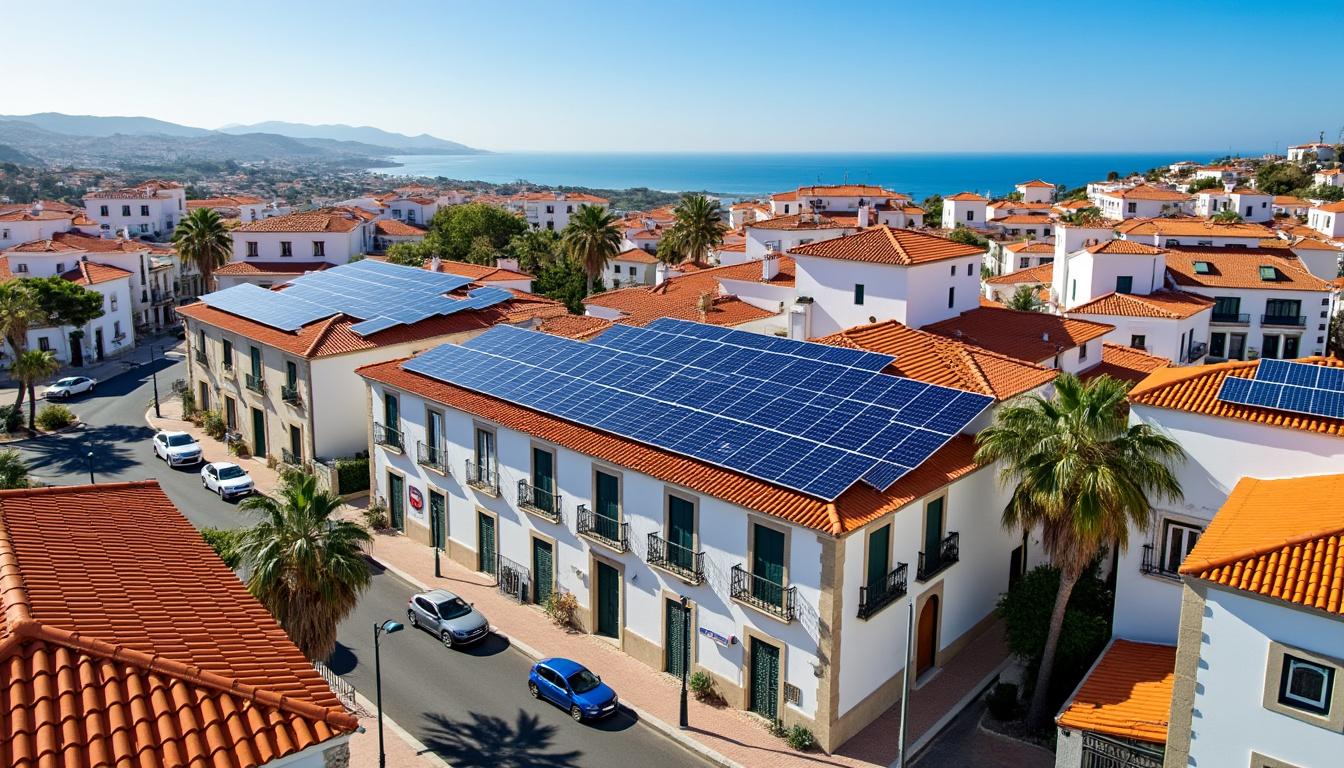
Energy communities allow neighbors, condominiums, and small businesses to produce, share, and consume renewable electricity. By placing citizens at the center, they generate savings, resilience, and social cohesion. The activists’ criticism of the rollback of targets underscores precisely the lack of focus given to this mechanism. Ignoring local participation is wasting the most powerful asset: organized people.
Imagine a block in Setúbal with 60 units. A photovoltaic system on top of block A powers elevators, common lighting, and part of the homes. The excess flows to block B in the late afternoon. With smart metering and simple rules, everyone wins. When heat peaks arise, the community adjusts consumption schedules and uses shared batteries. Result: fewer peaks on the grid, predictable bills, and comfort.
How to create an energy community in 6 steps
- 🧭 Map rooftops, shading, and consumption profiles of the building and the street.
- 🤝 Organize a core group of neighbors and a simple sharing regulation.
- 📐 Size PV and storage based on real data (avoid over-sizing).
- 📜 License and formalize the entity (cooperative/association) as per regulation.
- 🔌 Connect to the grid with smart metering and sharing rules.
- 📊 Monitor consumption, losses, and gains; update the plan annually.
| Model 🤝 | Where it works best 🗺️ | Main benefit 💶 | Point of attention ⚠️ |
|---|---|---|---|
| Condominium | Buildings with a common roof | Savings in common areas | Consensus in assembly |
| Neighborhood | Streets with houses | Collective self-consumption | Management of excesses |
| Local cooperative | Mixed neighborhoods | Scale and negotiations | Transparent governance |
Digital tools and clear regulations are the key to reducing friction. An ambitious national target signals municipalities to create support desks and practical roadmaps. In the meantime, the essential elements are within reach: organization, consumption data, and the will to make it happen.
To deepen implementation in efficient buildings, there are guides and practical studies on specialized platforms like Ecopassivehouses.pt. The next step is to focus on heat and clean air inside homes, where biomass requires rigor.
Sustainable biomass: serious criteria, urban risks, and clean alternatives for heating
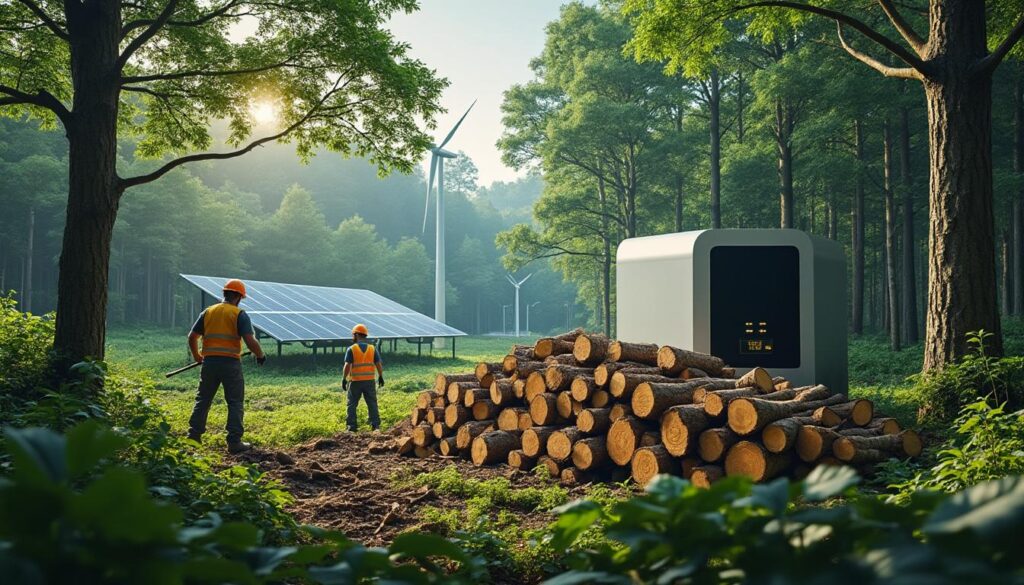
Biomass is often treated as “renewable by definition.” Without criteria, this is a half-truth. In an urban context, burning pellets or wood can exacerbate PM2.5, impacting health, especially in closed valleys and cold nights. Activists warn against loose exceptions that undermine the sustainability of biomass and disguise emissions. The solution is not to ban indiscriminately but to adjust criteria and contexts of use.
In modern homes, heating with heat pumps, combined with good insulation and mechanical ventilation with heat recovery, offers comfort with very low emissions. Where does biomass make sense? In rural areas with responsible forest management, certified appliances, and air quality plans. Even there, measurements and maintenance should be demanding.
What to consider before opting for biomass
- 🌲 Certified origin and forest management with replenishment and biodiversity.
- 🏙️ Location: avoid intensive use in critical urban air quality areas.
- 🛠️ Appliance with high efficiency and appropriate filters, annual maintenance.
- 📊 Measurement of emissions and consumption for continuous adjustments.
- 🔄 Alternatives: compare with heat pump and PV before deciding.
| Solution 🔥 | Local emissions 🌫️ | Efficiency ⚡ | Ideal context 🧭 |
|---|---|---|---|
| Modern biomass | Medium to high | Medium | Rural with forest management |
| Heat pump | Very low | High (COP 3–5) | Efficient buildings |
| Solar thermal | None | High | Domestic hot water and support for heating |
In a neighborhood study, replacing 40 stoves with 40 heat pumps connected to PV resulted in a drastic reduction in particles and noise, as well as constant monthly savings. In Portugal, efficient electrification combined with local renewables is the route with the best relationship between comfort, health, and total ownership cost.
If the national target slows down, the right choice in the building gains even more value: it avoids emissions, reduces bills, and creates a “thermal shield” against climate extremes. To guide decisions, a simple roadmap helps.
Practical roadmap to exceed 49% in your building: efficiency, self-consumption, and smart management
With clear rules in the building, it is possible to surpass any slowdown of the national targets and reap benefits this season. Think in three layers: reduce needs, electrify efficiently, and manage energy well. This roadmap applies to homes and condominiums, with minimal adaptations.
Step-by-step outcome-oriented guidance
- 🧱 Envelope: enhance insulation in roofs and facades; eliminate thermal bridges.
- 🚪 Air tightness: test for leaks (blower door) and seal critical points.
- 🌬️ Ventilation: install MVHR for clean air with low energy loss.
- ⚡ Electrification: migrate heating and DHW to efficient heat pumps.
- ☀️ PV: size to cover base consumption; integrate into community when possible.
- 🧠 Management: schedule loads, use dynamic tariffs, and simple sensors.
| Action 🛠️ | Typical savings 💶 | Payback time ⏳ | Implementation tip 💡 |
|---|---|---|---|
| Roof insulation | 15–25% energy | 3–6 years | Prioritize mineral wool or cellulose |
| MVHR | 8–15% heating | 5–8 years | Adjustable flow by room |
| Heat pump | 30–60% vs. gas | 4–7 years | Size by thermal load |
| PV + management | 20–40% bill | 5–9 years | Collective self-consumption |
In a condominium in Braga, the sequence “envelope → MVHR → heat pump → PV” cut annual consumption by more than half. With less tense national targets, the project’s economics remained solid. Efficiency does the invisible work: constant comfort, clean air, and cost predictability.
If you are looking for a starting point, begin with what is measurable. A simple energy survey reveals waste and guides priorities. The essential: an action today is worth more than a distant promise. And for ongoing inspiration, it is worthwhile to follow technical content and examples on Ecopassivehouses.pt.
Source: www.publico.pt