A dedicated edition on what truly lowers bills and emissions: energy efficiency and renewable sources applied to homes and condominiums. The focus is practical, with decisions you can make right away and digital tools that accelerate each project.
Short on time? Here’s the essentials:
| ✅ Key points ⚡ | Practical value 🛠️ |
|---|---|
| ✅ Thermal envelope and efficient ventilation | Less waste, more comfort, and healthy air 🏡 |
| ✅ Photovoltaic solar + heat pump | Clean heat with competitive leveled cost ☀️ |
| ✅ Datachek 2.0, ETIM, and Digital Product Passport | Error-free specifications and faster decisions 💻 |
| ✅ Low-carbon materials | Cork, structural wood, and optimized concretes 🌱 |
| ✅ Community and energy literacy | Habits + tools = immediate gains 👨👩👧👦 |
Edition 213 — Energy efficiency in housing: how to achieve quick and lasting gains
Efficiency is the first investment: it reduces the need for energy before producing it. By enhancing insulation, controlling infiltrations, and optimizing ventilation, the house becomes thermally stable, and the climate control system operates fewer hours.
The starting point is the thermal envelope. Well-insulated coverings cut heat exchanges and prevent overheating in summer. Walls made of cork or mineral wool balance inertia and acoustic performance. Windows with double low-emissivity glass and airtight frames reduce losses and condensation.
Next comes heat recovery ventilation (HRV). In coastal climates, HRV ensures fresh air without taxing energy. A unit with 80% efficiency recovers the heat from extracted air to warm the incoming air, keeping the home cool in summer and cozy in winter.
Envelope, air, and light: the triad that sustains comfort
LED lighting replaces old bulbs with reductions of over 70% in consumption. In kitchens and offices, occupancy sensors and flow regulation prevent waste. The combination with tubular skylights or movable shading improves natural light and reduces thermal loads.
A useful guiding principle is measurement. Smart plugs and sector counters reveal hidden consumption from refrigerators, pool pumps, and routers. When you can see what each circuit consumes, priorities shift from theoretical to interventions with returns.
- 🧭 Prioritize roofing: insulation in roofing can reduce heating by 15–25% and avoid summer peaks.
- 🪟 Well-fitted windows: seals and shims prevent infiltrations; solar control film on west-facing facades.
- 💨 HRV with filters: consistent indoor air quality, less humidity, and mold.
- 💡 LED and dimming: fewer watts, more visual comfort.
- 📊 Measurement: identify “vampires” and eliminate unnecessary standby.
| Measure 🔧 | Typical savings 📉 | Estimated payback ⏱️ | Notes 🗒️ |
|---|---|---|---|
| Roof insulation (8–12 cm) | 15–25% heating ❄️ | 3–6 years | Clean and quick work, immediate impact |
| HRV with recovery (80%) | 10–20% climate control 🌬️ | 5–8 years | More comfort and healthy air |
| LED + sensors | 70–85% lighting 💡 | 1–2 years | Low cost, high return |
| Infiltration control | 5–10% heating 🧱 | 2–4 years | Tapes and seals well applied |
Case study: the “Atlantic House,” renovated in Aveiro, combined spray cork, airtight frames, and HRV. Annual heating dropped by 28%, and comfort improved even on humid days. All with short construction interventions and rigorous planning.
If you have doubts about where to start, a simple thermal diagnosis with thermography and blower door gives you a decision map based on facts.
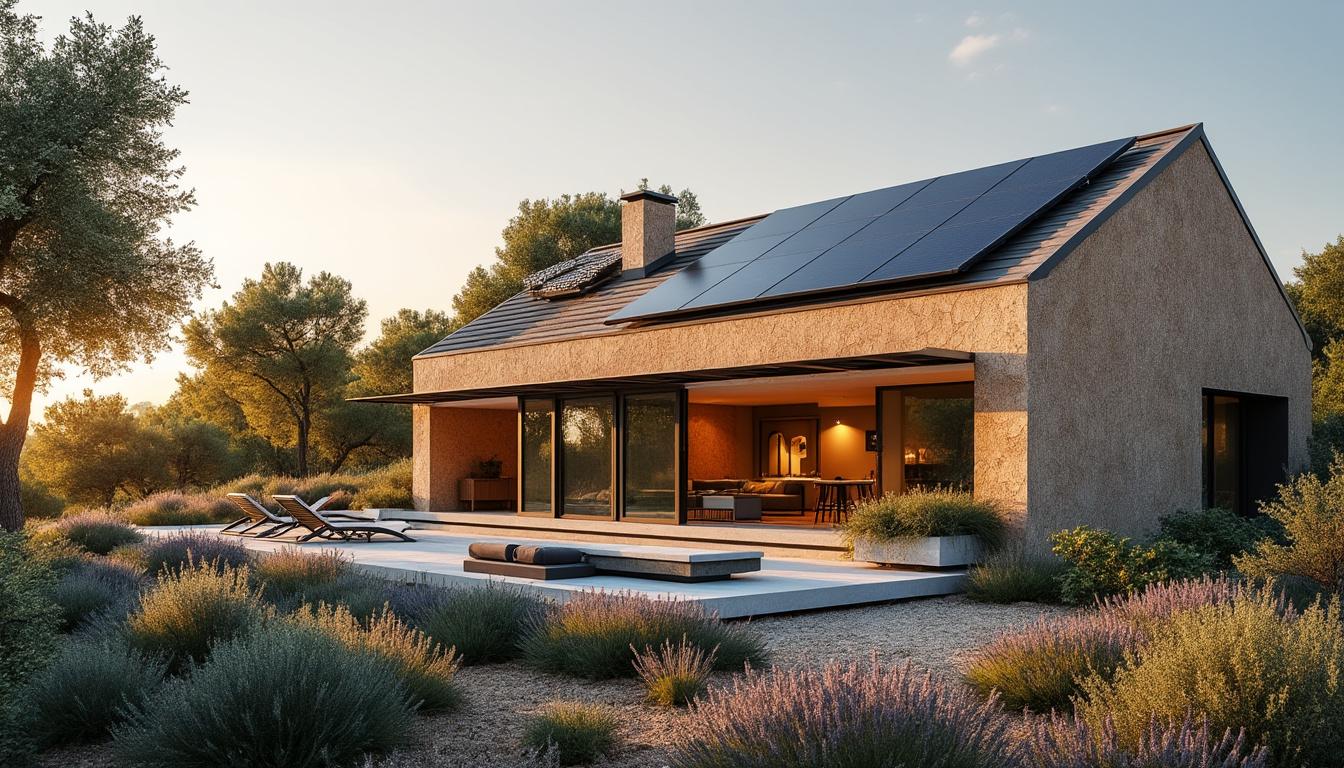
Edition 213 — Renewable sources for homes and condominiums: solar, urban wind, and smart biomass
With the efficient base, clean production comes into play. Residential photovoltaic has become widespread and south-facing orientations with an inclination of 10–30° deliver good yields. In Portugal, 1 kW of panels can generate about 1,300–1,600 kWh/year, depending on the region.
For hot water, solar thermal remains unbeatable in simplicity. A field of 2–3 m² per unit covers most showers during sunny months. In hybrid systems, a heat pump completes the service on cloudy days with high COP.
Solar + heat pump: the “perfect pair” for clean climate control
Air-water or air-air heat pumps with COP 3.2–4.5 reduce heating and cooling costs and, when powered by PV, achieve a levelized cost of heat that is very competitive. Integration with inertial storage and controlled timing maximizes self-consumption.
And urban wind? In many scenarios, turbulence in cities and noise restrictions reduce viability. There are exceptions on open slopes or tall buildings exposed to constant winds, where microturbines can complement the mix, but they require careful wind studies and licensing.
- ☀️ Photovoltaic: prioritize daytime consumption (wash/vacuum during sunny hours) to increase self-consumption.
- 🔥 Solar thermal: thermosiphon in houses, forced in buildings with technical rooms.
- 🌬️ Urban wind: use only with prior anemometric measurement and CFD modeling.
- 🪵 Modern biomass: sealed pellet stoves, 85–90% efficiency and emission control.
- 🔋 Storage: batteries + load management to take advantage of solar peaks.
| Technology ⚙️ | Average indicator 🇵🇹 | Levelized cost 💶/kWh | Observations 📝 |
|---|---|---|---|
| Residential PV | 1,300–1,600 kWh/kWp/year ☀️ | 0.04–0.08 | Self-consumption is king; inclination 10–30° |
| Solar thermal | 400–600 kWh thermal/m²/year ♨️ | 0.03–0.06 | Ideal for AQS; simple maintenance |
| Heat pump | COP 3.2–4.5 ❄️🔥 | 0.05–0.07 (heat) | Excellent with PV; requires good installation |
| Urban wind | Highly variable 🌬️ | 0.15–0.30 | Use only in very favorable sites |
| Pellet biomass | Efficiency 85–90% 🪵 | 0.06–0.08 | Check fuel quality |
Real case: in the “Ribeirinha Condominium,” in Greater Porto, the combination of 20 kWp of shared PV, air-water heat pumps, and solar AQS reduced common energy by 42% and invoices by 25% in participating units. Active load management for elevators and the garage made a difference.
If you consider storage, size it to cover evening peaks, not to “zero” the grid. The grid is an asset; the goal is to reduce costs and emissions sensibly.
Edition 213 — Digitalization of the sector: Datachek 2.0, ETIM, and Digital Product Passport
Connectivity between designers, suppliers, and builders is now crucial. The Datachek 2.0 has been relaunched with a more robust architecture, linking Manufacturers, Distributors, Designers, Builders, and Owners, and bringing reliable and updated data for decision-making.
With ETIM classification, the shared catalog avoids description ambiguities and ensures technical comparability. The Digital Product Passport aggregates environmental performance, EPD, and critical features, preparing the sector for regulatory requirements and the circular economy.
Fewer errors, more right decisions
In a competitive market, response times matter. Projects working with harmonized catalogs reduce conflicts on site and RFIs. Dynamic updates prevent obsolete specifications and ad-hoc replacements that risk incompatibility.
Practical example: in the rehabilitation of the “Ria School” in Aveiro, the team integrated Datachek 2.0 into BIM. Result? 35% fewer requests for clarification, 22% reduction in material waste, and deadlines met, thanks to consistent technical sheets and aligned logistics.
- 📚 Normalize data: adopt ETIM and minimum fields for all suppliers.
- 🧩 Integrate with BIM: models with verifiable items and attributes.
- ♻️ Include EPD: capture embedded emissions and durability.
- 🔍 Validate compatibilities: tested systems and certifications on the same sheet.
- 👥 Train the team: short guides and weekly update routines.
| Actor 👤 | Direct benefit 🎯 | Datachek 2.0 functionality 🧠 | Impact on site 🚧 |
|---|---|---|---|
| Designer | Consistent specification ✅ | ETIM catalog + Digital Passport | Fewer RFIs and revisions |
| Distributor | Error-free orders 📦 | Harmonized product lists | Accurate deliveries with no returns |
| Builder | Clear workflow 🗓️ | Versioning and compatibilities | Fewer stoppages and rework |
| Owner | Cost and carbon transparency 💶🌍 | Environmental performance and EPD | Choices with returns and traceability |
This movement is also cultural: more Digital, more Sustainable, and more Proximity. Platforms like Ecopassivehouses.pt consolidate knowledge and share tested solutions in construction, accelerating the sector’s learning curve.
When data flows without noise, the project focuses on spatial quality and performance. This is where value happens.
Edition 213 — Ecological materials and low-impact construction: from cork to low-carbon concrete
Materials are not neutral: they carry embedded energy, emissions, and hygroscopic behavior that shapes comfort. The right portfolio reduces carbon, enhances durability, and facilitates maintenance.
Cork stands out as a renewable insulator, with excellent acoustic performance and moisture resistance. In interior walls, lime-hemp plaster balances vapor diffusion and thermal inertia. For structure, engineered wood (CLT/GLT) combines lightness and reversible fittings, contributing to circularity.
Choosing based on data
The EPD and Digital Passport allow for rigorous impact comparison. Concretes with additions (fly ash, limestone filler) achieve 30–50% reductions in CO₂ compared to conventional mixes. Low VOC paints improve air quality, while recycled flooring closes cycles without sacrificing aesthetics.
In rehabilitation, the golden rule is to preserve what exists and improve point by point. Non-intrusive and reversible interventions respect the building and the budget. Compatibility between layers is decisive: vapor barriers in the right places and certified systems prevent pathologies.
- 🌱 Expanded cork: thermal and acoustic insulation with low footprint.
- 🪵 CLT/GLT: lightweight structure, quick and dismantlable assembly.
- 🧱 Lime-hemp: hygrometric regulation and summer comfort.
- 🧪 Low-carbon concrete: partial clinker replacement for less CO₂.
- 🎨 Low VOC paints: cleaner indoor air.
| Material 🧰 | λ (W/m·K) 🔥 | Embedded CO₂e 🟩 | Moisture behavior 💧 | Notes 📝 |
|---|---|---|---|---|
| Cork | 0.037–0.040 | Low/negative 🌳 | Good diffusion; resistant | Renewable origin, local production |
| CLT | ≈0.12 | Carbon storage 🌲 | Hygroscopic | Requires details against rising moisture |
| Lime-hemp | 0.07–0.10 | Low 🪴 | Vapor regulation | Excellent summer comfort |
| Low-carbon concrete | — | −30% to −50% 🧯 | N/A | Mixtures with additions and CEM II/III cements |
In a project in Bragança, the combination of CLT in upper floors and low-carbon concrete in the basement reduced structural weight and emissions. Breathable mineral finishes kept humidity under control without resorting to aggressive barriers.
A useful question: which layers are unnecessary? Removing the superfluous is often the most ecological measure.
Edition 213 — Community, proximity, and energy culture: from sector dinners to home literacy
Lasting changes happen when the community participates. In the sector, technical meetings and celebrations strengthen networks that support innovation. The traditional Christmas Dinner of material commerce in Aveiro, with visits to reference facilities like those of Saint-Gobain, reinforces this culture of collaboration and sharing.
At home, the spirit is similar. Families that combine smart habits with technology achieve solid reductions. An “Energy Evening” in the condominium — two hours reviewing bills, adjusting thermostats, and planning investments — unlocks informed decisions.
Literacy that pays for itself
Training to look at monthly consumption and hourly profiles helps to perceive peaks and lulls. Scheduling machines for sunny hours, lowering heating by 1°C, sealing gaps with tape, and installing faucet aerators brings quick and tangible returns.
Digital tools help. Monitoring applications, plugs with measurement, and knowledge platforms like Ecopassivehouses.pt provide clear guides, checklists, and real cases, without magical promises.
- 🗓️ Energy Evening: monthly agenda of 60–90 minutes to review consumption.
- 🧼 Washing at 30–40°C: fewer kWh, same effectiveness for most loads.
- 🌡️ −1°C on heating: savings up to 7% without losing comfort.
- 🪟 Seals and curtains: low costs, noticeable gains in winter.
- 🔌 Turn off standby: plugs with scheduled cut-off for TV/router at night.
| Action 🏁 | Estimated savings 📉 | Cost 💶 | Practical tip 💡 |
|---|---|---|---|
| Schedule machines during sunny hours | +15–25% self-consumption ☀️ | 0 | Use “deferred programming” |
| Adjust thermostat −1°C | ≈5–7% heating ❄️ | 0 | Combine with thermal clothing |
| Seals on frames | 3–5% heating 🧱 | Low | Focus on dominant openings to the north |
| Aerators and efficient showers | 20–40% AQS 🚿 | Low | Look for flow rate 6–9 L/min |
| Plugs with measurement | Identifies 5–10% wastage 📊 | Medium | Automatic night cut-off |
In the end, the cheapest and cleanest energy is the energy not consumed. Gather the family, set three actions for this week, and put a reminder in the calendar — small victories build big changes.
Source: www.apcmc.pt