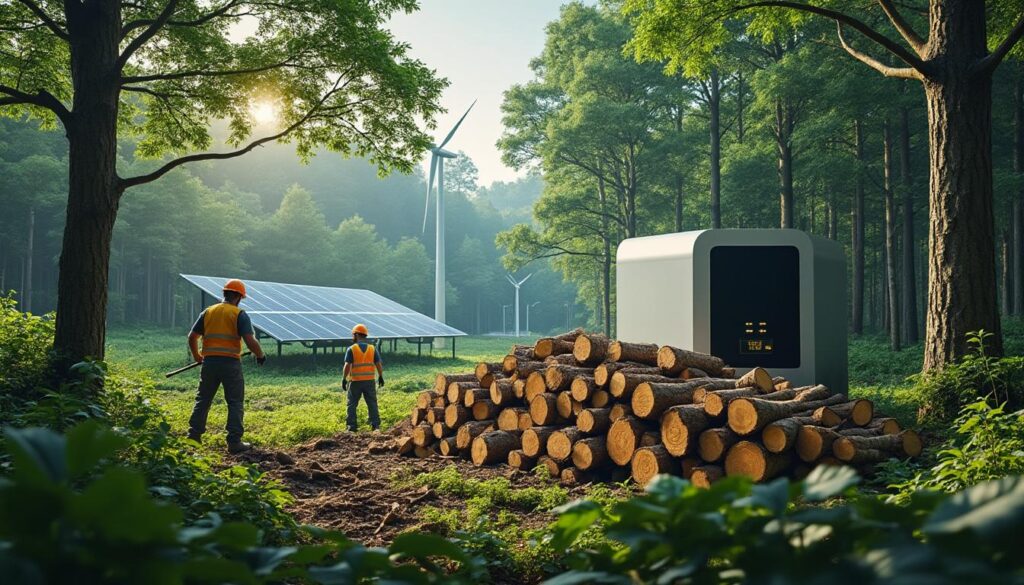
The discussion about the advancement of renewable energies gained new momentum with the clear position of the CEO of EDP: even with geopolitical tensions, the energy transition continues steadily. What changes, then, is the way to communicate value, reduce risks, and accelerate projects that deliver jobs, affordable prices, and energy independence.
| Short on time? Here’s the gist: |
|---|
| ✅ Renewables remain competitive 💶 — Costs are falling, long-term contracts shield against volatility. |
| ✅ Talk about value 💼 — In the US: jobs and cheap electricity; in Europe: supply security and stable bills. |
| ✅ Avoid fossil dependency ⛽ — Expensive gas imports and geopolitical risks press final prices. |
| ✅ Batteries and smart grids 🔋 — Essential for integrating wind/solar and increasing local resilience. |
Geopolitics and Renewables: Why the EDP CEO Says Nothing Stops the Transition
When a major utility claims that geopolitics does not hinder the transition, it’s not bravado: it’s a diagnosis based on costs, markets, and recent learnings. Since 2022, Europe has seen natural gas prices become more volatile and more expensive compared to the United States, reinforcing the urgency to reduce fossil fuel imports. The message is pragmatic: energy cannot be a weapon, and the solution involves accelerating clean sources with storage and smarter grids.
In this context, EDP, with a presence in 12 countries in Europe and a visible focus on Iberia, operates with half of its renewable generation already in the US. This diversification is not by chance: markets with stable rules and long-term contracts (PPAs) make renewable energy a solid economic bet for businesses and communities. The CEO’s reading is clear: political rhetoric changes, but economic fundamentals push in the right direction.
There are numbers to support this: auctions and PPAs continue to reveal competitive levelized costs of electricity (LCOE) for solar and wind, even with material inflation and high interest rates post-2021. Supply chain adjustments and “reshoring” of critical components have been mitigating risks, and the competition for strategic minerals (lithium, nickel, rare earths) fosters new governance and partnerships. Instead of a brake, geopolitics reconfigures routes and accelerates innovations.
It’s worth noting that energy independence has changed its position on the public agenda. By switching suppliers after the Russian invasion of Ukraine, Europe learned that diversifying sources without reducing dependency on fossil fuels resolves little. The more robust response has been to expand renewables and storage, shortening the gap between production and consumption. The result is price predictability for families and industries, and lesser exposure to gas “shocks”.
For you, who follow the evolution of sustainable habitats, this panorama means more secure decisions: photovoltaic systems with batteries, heat pumps, and smart energy management provide stable bills, comfort, and resilience. In buildings, this translates into projects with high-performance thermal envelopes, heat recovery ventilation, and load integration (climate control, DHW, EV) with simple prioritization algorithms.
The bottom line here is simple: the competitiveness of renewables surpasses the turbulence of geopolitics. Where the rules are clear and engineering is well done, projects advance — and multiply local impacts in job creation and pricing.
Jobs, Prices, and Access: The Language That Convince in the US and Europe
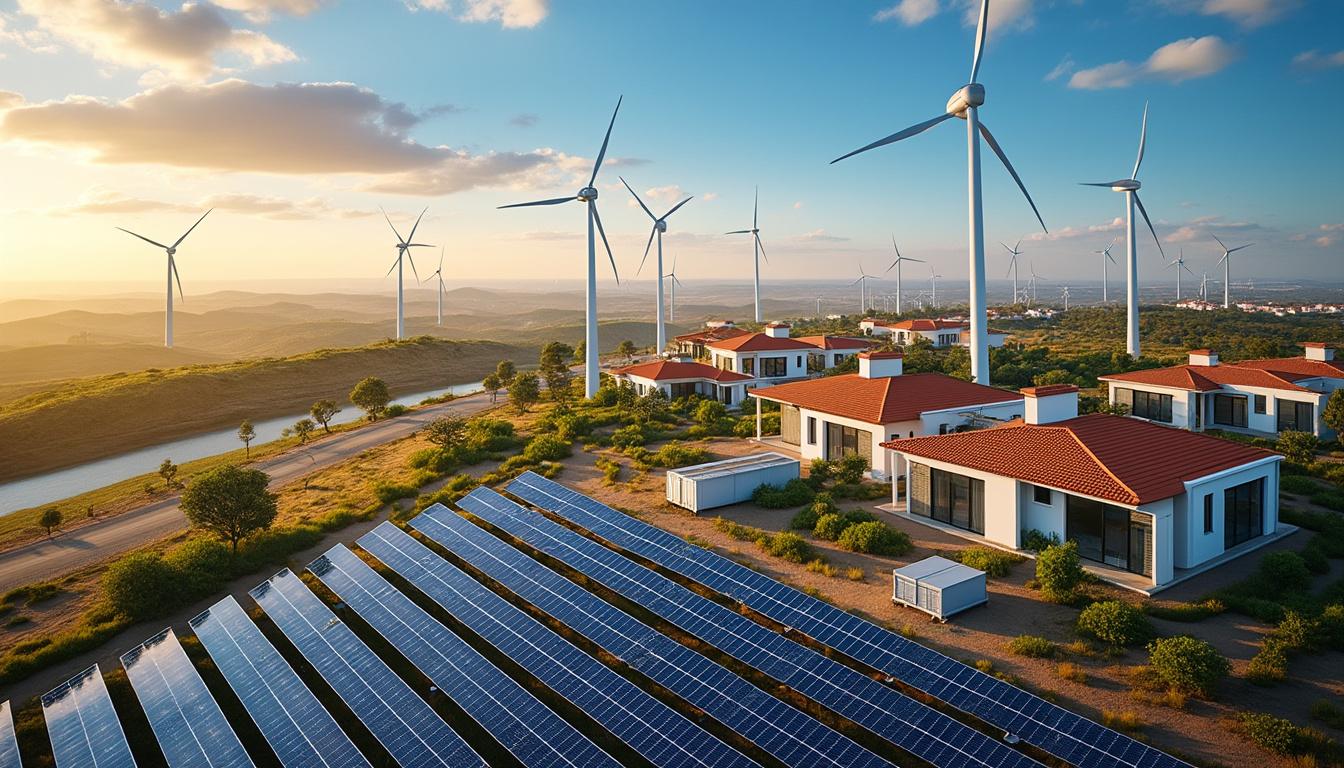
There’s a decisive detail in communication: in the US, the focus is on jobs, industrial value, and cheap electricity; in Europe, the same arguments exist, but the emphasis is tempered by energy independence and supply security. Those designing homes and neighborhoods need to adapt this narrative to the territory, without losing sight of the essentials: how much it costs per month, who benefits from the project, and how secure the system becomes.
In the US, the abundance of oil and gas makes the discussion about security less urgent, but price and jobs are strong flags. Upgraded wind farms, reopened solar module factories, and local maintenance chains are examples of how the transition creates skilled labor. For a condominium in Ohio, for example, a 15-year PPA with solar + storage brought a predictable rate, making local electricity competitive compared to the state average.
In Europe, the reality is different: more expensive gas and imports vulnerable to external events. The efficient solution has been to combine efficiency in buildings (insulation, air tightness, shading) with on-site generation and collective self-consumption contracts. In Lisbon, a set of six rehabilitated buildings integrated solar on the roof, heat pumps, and high-efficiency ventilation, reducing the average bill by 42% per year — and decreasing exposure to peaks in the wholesale market.
To make everything tangible, it’s worth recalling the case of the Almeida Family, in a house from the 90s in Braga. With 7 kW of photovoltaic, 8 kW heat pump, thermal storage, and a 10 kWh battery, grid consumption fell by 68% and comfort increased. The investment was amortized with an 8-year green loan, and even including maintenance, the monthly payment was below the old energy bill. This equation — predictable monthly cost with improved comfort — is the key you can use in any region.
- 🔎 Define the goal in euros per month — the decision becomes clearer for families and managers.
- 🧰 Prioritize passive measures (insulation, windows, shading) before equipment.
- 🔋 Size the battery based on needs (night peak, backup, dynamic rates), not trends.
- 🤝 Unite neighbors in collective self-consumption — scale reduces costs and increases impact.
- 📊 Long-term contracts shield against geopolitical volatility.
In summary: by adjusting the language — sometimes jobs and prices, sometimes independence and predictability — you build convergence around the same project.
Energy Independence and Grid Resilience: Lessons for 2026
If Europe has learned something recently, it’s that interconnections, storage, and grid management are as critical as installing panels and wind turbines. Congestion events or partial blackouts demonstrate that the transition requires reinforced grids and evolved control systems. It’s the same lesson that applies to Brazil when discussing Northern-Southern transmission, bringing consumption centers closer to regions with greater generation potential.
Locally, neighborhoods with microgrids and shared batteries have proven effective to smooth peaks and ensure service continuity during extreme events. Inverter technology with “grid-forming” capabilities and load coordination (EV, DHW, and climate control) enable operations in island mode for hours. In condominiums in Porto, 250 kWh systems have held up during instability periods without comfort losses.
What’s the practical path for you? First, treat building efficiency as security infrastructure: less thermal loss means less load during critical moments. Second, distribute generation (roofs, facades, photovoltaic shading) and plan for modular storage, starting small and scaling according to the budget. Third, use a simple EMS (Energy Management System) that prioritizes loads and reserves energy for essential services when the grid is expensive or unstable.
The competition for critical minerals also requires attention. In 2026, lithium and rare earths will remain strategic, but shorter supply chains and battery recycling reduce risks. When choosing systems, prefer suppliers with traceability and collection/reuse plans. Where possible, consider less mineral-intensive technologies, such as LFP batteries, which offer good lifespan for residential and community use.
Architecture and the grid reinforce each other. A passive school with heat recovery ventilation, effective shading, and sensors adjusting lighting reduce peaks and stabilize the neighborhood’s microgrid. By multiplying this logic in health centers and public buildings, the city gains buffers against price or supply shocks.
The underlying thread is this: resilience is not a luxury, it’s part of the total cost of ownership — and it avoids “surprises” when geopolitics shakes the board.
When exploring materials on microgrids and storage, look for cases in climates similar to yours. The transfer of solutions works best when it respects thermal and regulatory contexts.
Applying Renewable Energy in Homes and Neighborhoods: Practical Steps That Work
Winning projects start at the envelope: continuous insulation, air tightness, solved thermal bridges, and windows with suitable solar factor. This reduces the cooling power needed and allows an efficient heat pump to cover heating and cooling with low consumption. Next, movable shading and thermal mass stabilize the natural temperature, reducing the need to turn on equipment during critical hours.
For local generation, roofs with 15–35° and sunlit facades are natural candidates. Roofs with integrated panels (BIPV) prevent overloads and maintain aesthetics. In backyards or patios, photovoltaic pergolas add shade and production. The ideal is to match the solar curve with the usage profiles of the house: heating DHW in the morning and scheduling washing machines during peak sun hours.
When the neighborhood cooperates, the gain scales. In communities of 20–40 homes, a shared battery of 200–400 kWh can absorb daytime surpluses and cover nighttime peaks. Collective self-consumption formalizes energy sharing and lowers costs. To manage the whole set, an EMS with simple rules (priority for essential loads, charging EVs during solar hours, minimum battery reserve) handles the task without complication.
From Problem to Solution: An Objective Roadmap
Problem: unpredictable bills, peaks in the market, and discomfort during heatwaves. Solution: renovate the envelope, migrate to a heat pump, integrate solar with battery, and implement an EMS. Example: in “Figueiras Neighborhood,” a cluster of 32 homes in Aveiro combined thermal rehabilitation, 180 kW of PV, and 320 kWh of batteries. Result: an average reduction of 61% in grid consumption and maintaining 22–25°C in summer without continuous air conditioning.
For those who want to start now, an initial kit works: 3–5 kW of PV, heat pump for DHW, window upgrades, and automation of 3 critical circuits (outlets, DHW, and climate control). Over 24 months, complete with 5–10 kWh of battery, EV with solar first charging, and additional panels on facades. The cumulative effect stabilizes the bill and improves thermal and acoustic comfort.
There’s a useful certainty here: passive measures multiply the value of every renewable kWh. The less a house wastes, the closer it gets to real autonomy.
Financing, Batteries, and Smart Grids: Making Good Decisions in Uncertain Times
For many projects, the brake is not technological — it’s financial. In 2026, the solution lies in long-term contracts, green credit with terms matching the lifespan of the systems, and risk sharing with suppliers. In residences, options like equipment leasing, rooftop PPAs, and energy cooperatives lower the entry barrier. The decision should compare the monthly payment with the old bill, including maintenance and insurance.
About batteries, the message is pragmatic: size them for the desired service. Critical backup? 5–10 kWh prioritizing lighting, router, pumps, and occasional air conditioning. Rate arbitrage? Use consumption and irradiance data to assess if 10–15 kWh provide a return. Maximum self-consumption? Consider expanding PV before doubling the battery. And pay attention to chemistry and warranties: stable LFP, 6–12 thousand cycles, and well-defined recycling plans.
Smart grids do the rest. A simple EMS, with real-time monitoring and automated loads by schedule/price, delivers 10–20% additional savings. In condominiums, the coordination of EV chargers prevents peaks that would trigger penalizing rates. For local artisanal industries (bakeries, workshops), flexible contracts combined with solar + storage shield margins during months of higher volatility.
And what about geopolitics? Although it may change the market’s mood, the assets you control — efficiency, local generation, demand management — create a “cushion” against shocks. This is where the vision advocated by EDP meets the everyday lives of homes: less dependence on imported fuels, predictable prices, and more balanced grids. To find inspiration and delve into efficient architecture solutions, it’s worth exploring technical and practical content at Ecopassivehouses.pt, focusing on natural materials, comfort, and energy autonomy.
Avoid common traps and prioritize the essentials:
- ⚠️ Don’t buy a giant battery without data — log consumption and production before sizing.
- 🧱 Insulation first — every extra centimeter yields years of savings and comfort.
- 📄 Read warranties — cycles, temperature performance, and after-sales service matter.
- 🔌 Think of the whole — PV, heat pump, DHW, and EV should communicate via EMS.
- 🧭 Phase plans — starting very small is better than not starting at all.
The golden rule withstands uncertainty: invest in what reduces risk and delivers value day-to-day — efficiency, generation close to consumption, and smart management. This is how external turbulence transforms into stability at home.
Action for today: choose a simple, measurable goal — for example, “reduce the bill by 30% in 12 months” — and define three immediate steps: energy audit, PV proposal with EMS, and insulation plan. Small consistent decisions made now build the energy independence you desire. ✨
Source: jornaleconomico.sapo.pt