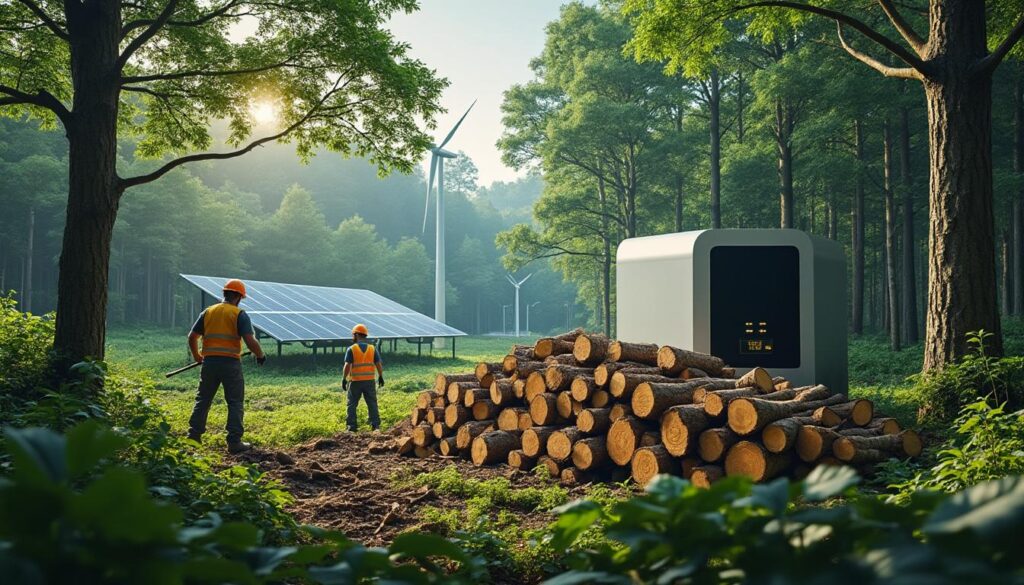
Brussels financed a practical turn towards local energy: 5.4 million euros allocated to FEUP to coordinate INNO-TREC and accelerate Renewable Energy Communities with digital tools that are simple and free.
| Short on time? Here’s the essential: ⏱️ |
|---|
| ✅ 5.4 million € for FEUP to coordinate INNO-TREC and simplify REC with free web tools 🌞 |
| ✅ Testing in 6 countries with 20 partners: solutions tailored to each regulatory reality 🌍 |
| ✅ Focus on shared photovoltaics and local transactions: less bureaucracy, more value for the neighborhood ⚡ |
| ✅ Avoid the mistake of starting without clear governance, metrics, and cost-sharing rules 🧭 |
| ✅ European launch expected in January 2026: prepare statutes, rooftops, and data now 📅 |
Brussels invests 5.4 million in FEUP: what changes for Renewable Energy Communities
The investment from the European Commission scales up a simple objective: making Renewable Energy Communities (REC) easier to create, manage, and make profitable. Coordination by FEUP brings the necessary technical expertise to put technology at the service of neighborhoods, condos, and small businesses.
INNO-TREC was born with a consortium of 20 partners and trials in Portugal, Greece, Belgium, Ireland, the United Kingdom, and Italy. By covering distinct markets, the tools can be adjusted to local regulations and tariffs. In straightforward terms: what works in Matosinhos must make sense in Antwerp or Cork.
There is also a quality label that matters. The project was chosen in a Horizon Europe call with only a 3.9% approval rate, having received a maximum score (15/15). For consumers and municipalities, it means trust: validated technology, meticulous documentation, and governance designed for daily operations.
Practical impact: less paperwork, more useful kilowatt-hours
The tools under development are free and web-based. They will simplify everything from data collection (meters, photovoltaic production) to fair distribution of benefits. The focus is on shared photovoltaics, as it is the technology with the best cost-benefit ratio in RECs. Everything converges into easy decisions: who invests what, how costs are shared, when to add batteries.
Imagine the “Valley Condo,” with 40 units and two available rooftops. INNO-TREC allows simulating the best mix of panels, inverters, microgeneration, and sharing agreements, considering real consumption profiles. The result is clear rules and predictability, with no surprises on the first community bill.
- 🌞 Local production: adds value to energy at the point of consumption.
- 📉 Low operating costs: web apps reduce repeated consulting and audits.
- 🧑⚖️ Simplified compliance: model documentation for statutes and contracts.
- 🧪 Testing in 6 countries: transferable lessons for your neighborhood.
| Key Element 🔑 | Benefit for REC ✅ | When to use ⏳ |
|---|---|---|
| Free web tools | Reduce costs and decision time 💸 | Before photovoltaic installation |
| Sharing simulation | Fair and transparent distribution ⚖️ | When designing community rules |
| Legal guides | Less bureaucracy, more action 📑 | When formalizing the REC |
Insight: when technology is clear and governance is simple, participation grows and savings appear.
Free digital tools from INNO-TREC: how they work and how they can help your neighborhood
The platforms proposed by INNO-TREC integrate three layers: data, decision, and execution. In practice, they connect smart meters, consumption and production profiles, and transform information into operational rules for the community.
First, the data layer consolidates consumptions by type (residential, commercial, services). Next, the decision layer recommends sharing scenarios, answering questions like “what changes when installing a 20 kWh battery?”. Finally, the execution layer creates model contracts and accountability reports.
The “Cedar Neighborhood”: a realistic use case
In a set of semi-detached houses with a grocery store and a daycare, energy needs vary. The tools help to set up a plan in three steps: measure (reading consumptions), model (simulating sets of panels and batteries), and decide (sharing rules with self-consumption and emissions targets).
The result is pragmatic: monthly self-consumption targets, cost limits per family, and alerts for spikes on hot days. Everything is recorded on a dashboard that any member can understand.
- 🧰 Simulators: optimize power, tilt, and orientation of the panels.
- 📊 Dashboards: show savings, surpluses, and avoided emissions.
- 🔁 Transaction rules: internal prices for buying/selling surpluses.
- 🔒 Privacy by design: aggregated and anonymized data.
| Functionality ⚙️ | For whom 👥 | Direct advantage 🎯 |
|---|---|---|
| PV sizing | Condos and municipalities | Avoids overcost and underutilization 💡 |
| P2P rules | Mixed communities | Clarity in local buying and selling ⚡ |
| Reports | REC managers | Transparency and trust 📈 |
For those wishing to delve deeper into the topic and see comparable experiences, it is worth exploring European energy sharing projects.
Additionally, transactional energy is gaining ground, with platforms that balance internal price and grid operation in a user-friendly manner.
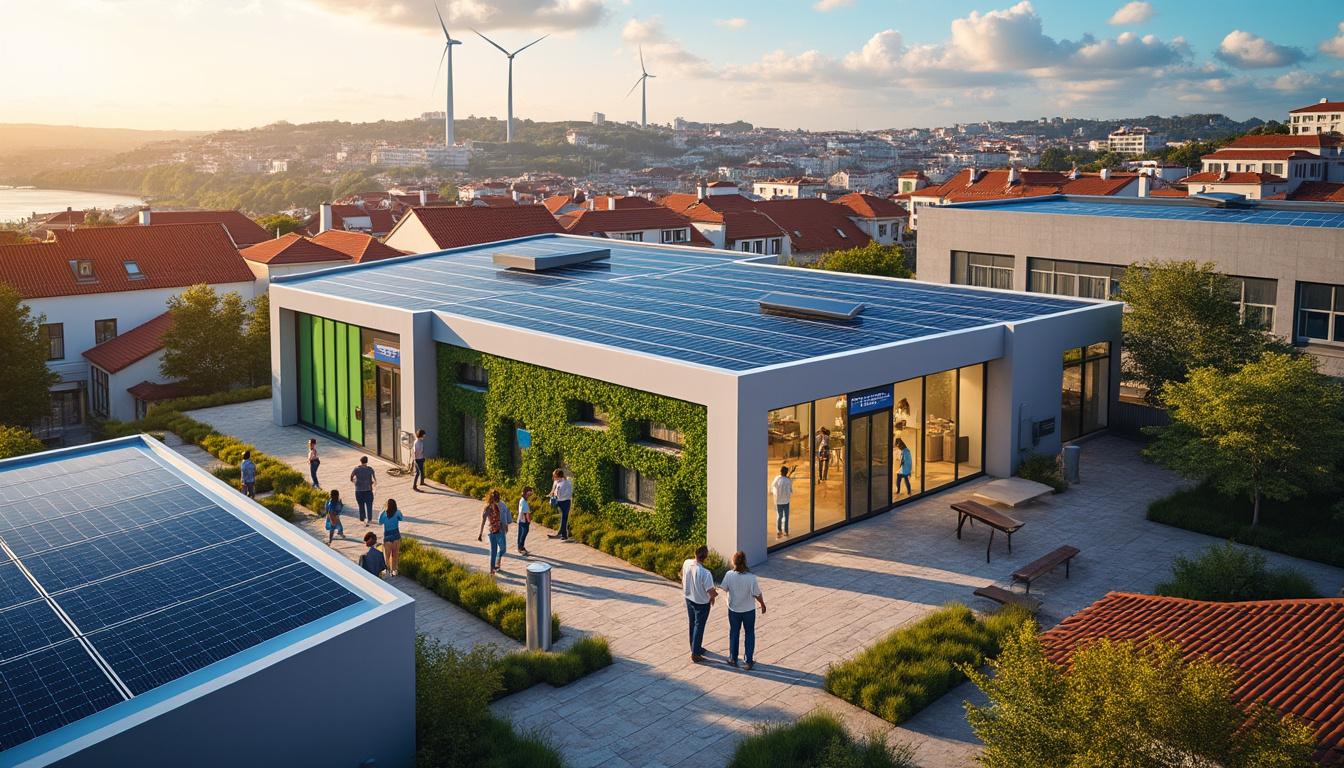
Governance and business models: less bureaucracy, more local value for RECs
A solid energy community starts with clear rules. European experience shows that success depends on how decisions are made, recorded, and benefits are distributed. INNO-TREC includes ready-to-use governance models compatible with different municipal and condominium realities.
At the center is the idea of participation: each member knows how much they invest, what they receive, and how they can leave without loss. Simple statutes, clear language, and objective metrics avoid conflicts and accelerate adherence.
Three common forms of organization and when each works
Cooperatives are strong in neighborhoods with a community identity and medium-sized projects. Non-profit associations are suited for condominiums and villages where the goal is cost reduction. Consortia or vehicle companies can help when SMEs or municipalities enter with larger investments.
Good practice is to combine sharing rules with solidarity mechanisms: for example, funds for vulnerable families, supported by summer surpluses. This reinforces social impact without compromising financial viability.
- 🧭 Transparency: regular assemblies and accessible reports.
- 🪙 Exit rules: predictable valuation of shares.
- 📐 Metrics: shared kWh, self-consumption, avoided emissions.
- 🧩 Social fund: 1–3% of surpluses for local support.
| Model 🏛️ | Advantages ✅ | Risks/attentions ⚠️ |
|---|---|---|
| Cooperative | Broad participation; local reinvestment 🤝 | Requires dedicated management and continuous training |
| Association | Light structure; low administrative costs 📉 | Limits on raising larger capital |
| Vehicle company | Facilitates partnerships with SMEs and municipalities 🏗️ | More formalism and compliance |
In summary: governance that fits on a page and is understood by all is worth more than lengthy contracts that few read.
Energy transactions and shared photovoltaics: practical scenarios for your block
With solar energy as a base, sharing among neighbors gains traction when the internal price is fair and predictable. INNO-TREC focuses on intuitive transaction mechanisms, where the surplus of one roof finances the battery of another, and everyone benefits from stability.
A typical scenario: the “Olive Neighborhood” installs 50 kWp on top of the supermarket and 15 kWp on neighboring buildings. The community sets an internal price per kWh below the grid tariff but above the export price. Result: producers get returns and consumers save, without relying exclusively on external tariffs.
How to define internal prices and balancing rules
The internal price should consider three variables: levelized cost of energy from the system (LCOE), average grid price, and the value of flexibility (batteries, load adjustments). To maintain balance, the community can apply a seasonal adjustment factor and reserve a margin for maintenance.
Integrations with electric vehicle chargers and heat pumps make the system more efficient, shifting consumptions to times of higher production. This enhances self-consumption and reduces import spikes, benefiting the entire neighborhood.
- ⚡ Smart internal price: below the grid, above the export.
- 🔋 Flexibility: community batteries and load management.
- 🚗 Electric mobility: internal tariffs for local charging.
- 🌥️ Seasonal plans: adjust rules for winter/summer.
| Scenario 🔍 | Configuration ⚙️ | Practical effect 🧪 |
|---|---|---|
| Midday sun | PV + exhaust fans + heat pumps | Higher self-consumption; less export 🟢 |
| Windy night | Battery + internal pricing | Reduced import; stable price 🌙 |
| Cloudy day | Essential load management | Controlled costs; maintained comfort ☁️ |
To track trends and comparable European examples in transactional energy:
Practical conclusion of the section: well-designed internal pricing rules transform local kWh into real social and financial value.
Pilots in 6 countries and start in 2026: checklist to prepare your community today
With the European start expected in January 2026, the time to prepare the ground is now. Local maturity—evaluated rooftops, consumption measurements, draft statutes—accelerates entry into programs and maximizes benefits when tools are open to the public.
FEUP leads the scientific and technological aspect, with coordination by João Catalão and Cláudio Monteiro, and the articulation with other excellent projects like EU-DREAM reinforces synergies. Together, the two efforts reach nearly 10 million € in budget, with about 1.2 million € directly benefiting the Porto institution. For municipalities and collectives, this means robust support and continuity.
Quick checklist to gain months of advance
Well-prepared teams arrive first and make fewer mistakes. A REC that validates measurements, identifies roofs with better orientation, and closes a framework agreement with qualified installers starts ahead. Next, a concise roadmap to act now.
- 🧭 Map assets: rooftops, shading, electrical panels, space for batteries.
- 📡 Measurement: record hourly consumptions by type (residential, commercial, services).
- 📑 Draft statutes: simple model with rules for entry/exit and sharing.
- 🤝 Partnerships: contact with municipality, local associations, and installation SMEs.
- 🧮 Scenarios: 2-3 options for PV power and storage for informed decision-making.
| Country 🌍 | Pilot focus 🎯 | Local opportunity 💡 |
|---|---|---|
| Portugal | Condos and local commerce | Shared PV with electric mobility 🚗⚡ |
| Greece | Isolation and seasonality | Hybridization with batteries and load management 🔋 |
| Belgium | Dense market and complex tariffs | P2P rules and transparency reports 📊 |
| Ireland | Humid climates and wind | Integration of PV + light wind 🌬️ |
| United Kingdom | Historical buildings | Discrete and community installations 🏘️ |
| Italy | Urban centers and villages | Neighborhood PV with municipal funds 🏛️ |
If you want to keep up with ideas and practical guides on passive houses, natural materials, and local energy, it is worth visiting specialized resources like Ecopassivehouses.pt, which gather solutions that make practical sense.
Practical closing: already reserve a condominium meeting to approve measurements and map rooftops — it’s the spark that ignites the project.
Source: dinheirovivo.dn.pt