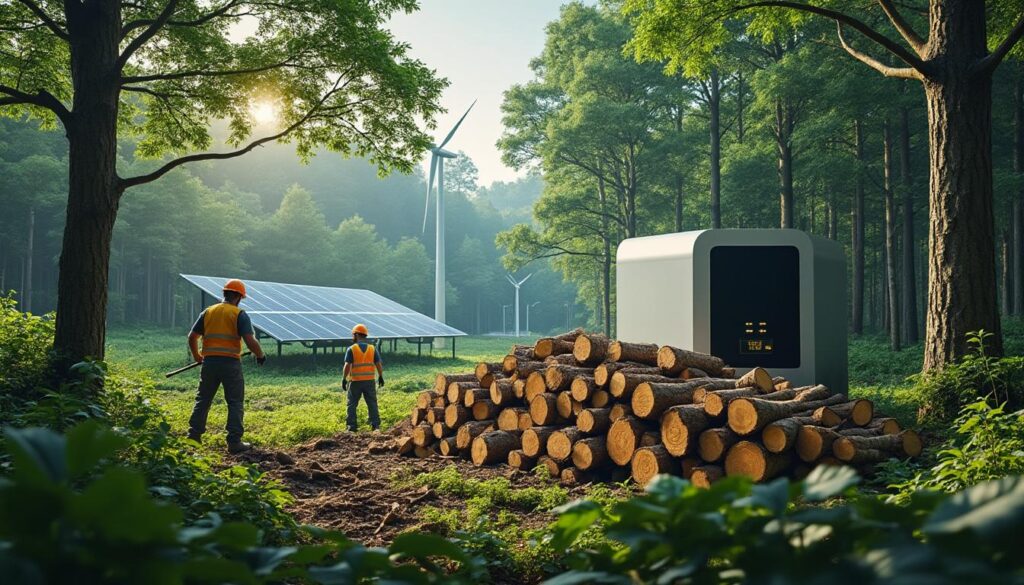
The consolidation of Copenhagen Infrastructure Partners in the European market, with the acquisition of Ørsted’s onshore wind segment, changes the landscape of clean energy and creates new opportunities for those wanting a more efficient, comfortable home with predictable costs.
This move combines industrial scale, complementary technologies, and a clear project acceleration strategy — a combination that can directly benefit your energy budget and renovation or construction decisions.
| Short on time? Here’s the gist: 🌍 |
|---|
| ✅ CIP strengthens its presence in Europe with the purchase of Ørsted’s onshore wind business, accelerating projects in various markets 🇪🇺. |
| ✅ Multi-technology portfolio with wind, solar, and BESS 🔋 enhances grid stability and creates new tariffs and PPAs for consumers. |
| ✅ Robust pipeline: over 800 MW in operation and construction, and several gigawatts in development in Ireland, UK, Germany, and Spain 🌬️. |
| ✅ Opportunity for your home: take advantage of dynamic tariffs, energy community, and hybrid self-consumption to reduce your bill 🏡. |
Copenhagen Infrastructure Partners strengthens its presence in Europe: practical impacts for your home and electricity bill
When a manager like Copenhagen Infrastructure Partners (CIP) scales up with onshore wind assets, concrete effects emerge in daily life: more renewable capacity on the grid, better-managed price volatility, and new commercial offers that can align consumption and production more intelligently. This is relevant for those planning a passive house, replacing windows, installing a heat pump, or evaluating a photovoltaic system.
The closed deal integrates a portfolio with over 800 MW already operational and under construction, and a pipeline of several gigawatts distributed across Ireland, UK, Germany, and Spain. In simple terms, it means that more projects will quickly move from paper to reality, in a set of countries that influence the entire European electricity market. The network effect mitigates price spikes and provides long-term predictability, essential for those investing in efficiency.
How this acquisition can lower your bill ⚡️
More renewable capacity, especially when combined with battery storage (BESS), smooths peak hours and adds value to consumption outside of those periods. This tends to expand tariffs with clear hourly signals, opening up space for simple strategies, such as programming the heat pump to pre-heat sanitary water during cheaper energy hours. At the same time, operators and marketers start offering supply contracts with a greater green component and, in some markets, micro-PPAs for residential consumers.
Practical example: imagine a family adopting a variable hourly tariff and installing a well-insulated hot water tank. With basic home control, the heating of water shifts to periods with abundant wind. Comfort remains, expenses decrease, and the carbon footprint is reduced. This isn’t distant theory; it’s the convergence of stable renewable supply with smart habits.
Stability and independence: benefits felt at home 🏡
Besides the price, there is the issue of reliability. The strengthening of CIP’s portfolio with wind, solar, and BESS creates a multi-technology platform. When the wind dies down, solar power covers part of the demand. In times of excess, batteries absorb and release later. This balance reduces the need for fossil peak power plants and improves resilience. For you, this translates into confidence that the investment in heat pumps, heat recovery ventilation, and home charging of electric vehicles will be supported by a more prepared grid.
Case Study: “Casa Plátano” and opportunistic consumption
The “Casa Plátano,” a renovated T3 house with cork insulation and efficient window frames, decided to pair a small photovoltaic system with a 5 kWh home battery. By opting for an hourly tariff, the joint management of self-production and purchase from the grid during windy hours resulted in a 22% reduction in annual costs. The trick was not exotic technology, but synchronization: washing and drying laundry, charging the EV, and heating water during low-cost windows.
As CIP’s pipeline progresses in Ireland and UK, markets that frequently export surpluses via interconnections, southern Europe benefits from more stable prices by the end of the day. This context is fertile for thoughtful construction decisions, such as reinforcing ceiling insulation before increasing contracted power, harvesting efficiency before power.
Key takeaway: renewable capacity with scale and integrated storage is not just a newspaper headline, but the foundation for more predictable tariffs and clear savings opportunities in your home.
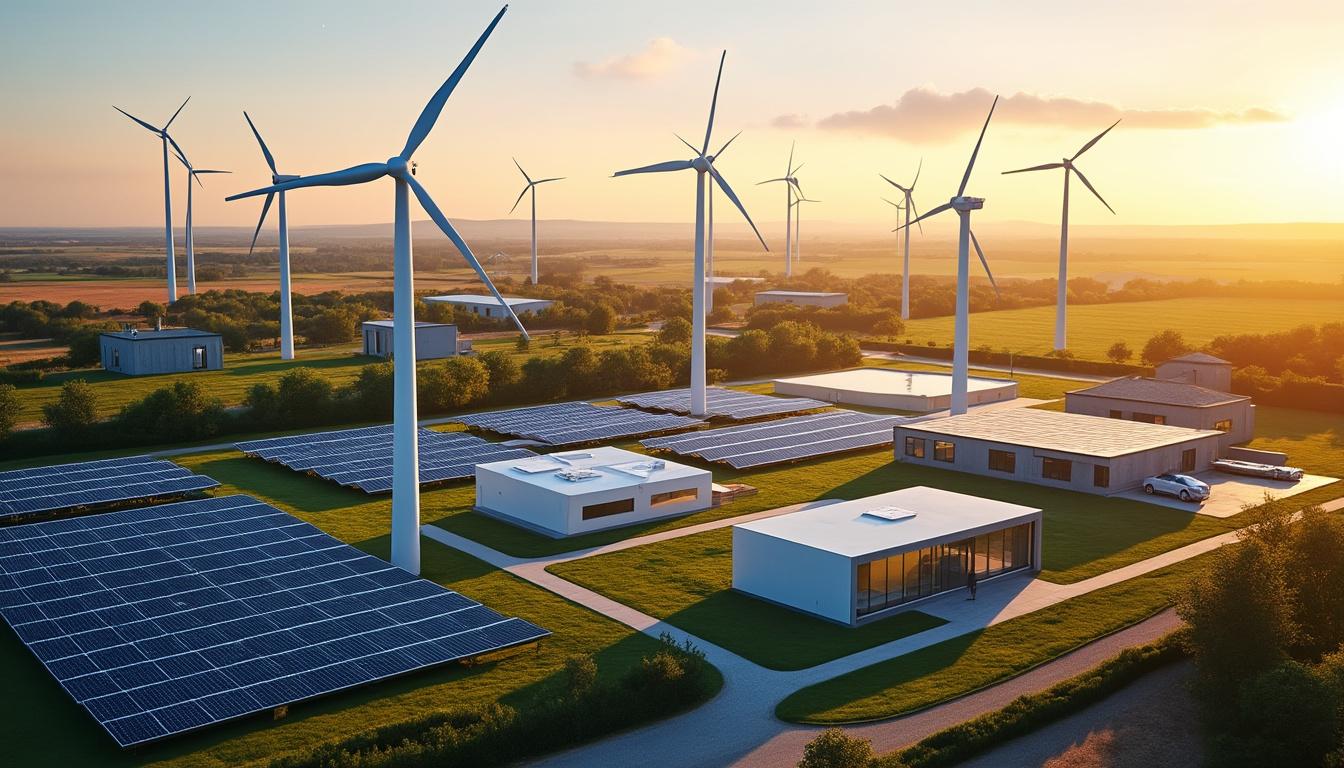
CIP’s acquisition of Ørsted’s onshore wind business: numbers, markets, and what to expect in 2026
The agreement incorporates into the Copenhagen Infrastructure V (CI V) fund an integrated business covering development, construction, and operation of onshore wind assets, as well as solar projects and BESS systems. This integration accelerates deployment in markets with strong demand and good regulatory frameworks. At the European level, it’s the kind of move that reinforces the ambition for energy independence and decarbonization at scale.
The numbers deserve attention: in addition to the 800 MW already in operation and under construction, there is a significant pipeline in Ireland, UK, Germany, and Spain, totaling several gigawatts. These geographies are strategic. Germany is pushing for industrial electrification, Spain leads in hybrid solar-wind, the UK has market maturity, and Ireland serves as a laboratory for renewable integration in an island system. The combined effect is a Europe with greater renewable cushion, less external dependence, and a smoother price curve.
The CI V finalized its closing in March 2025, exceeding the 12 billion euros target, with a potential total commitment nearing 24 billion euros. It invests in energy infrastructure in North America, Europe, and Asia-Pacific, allowing for the sharing of tested solutions across various contexts. For the consumer, this translates into accelerated learning: what works in one market is adapted to another more quickly, creating better quality in contracts and services.
The new operational arrangement and Ørsted’s focus 🌬️
After the operation closes, the business will operate as an independent company, with its own name and brand. Ørsted, by concentrating efforts on offshore wind in key European markets, reinforces a specialization that has been a global reference. For the ecosystem, this is healthy: each actor focuses on where they deliver the most value, and the consumer benefits from a more efficient system.
What changes for consumers and small communities
Scale and technological diversity increase the availability of green tariffs, contracts with prices indexed to the market, and demand response programs. Energy communities — neighborhoods, villages, condominiums — now negotiate better, with access to more robust management and measurement toolkits. Small cooperatives can, for example, establish energy purchase agreements with local wind production and combine it with local storage to cover nighttime consumption peaks.
- 🌱 Dynamic tariffs: take advantage of low prices during windy hours by scheduling high-consumption equipment.
- 🔋 Home or community battery: absorbs excess energy and increases autonomy without losing comfort.
- 🏘️ Energy community: share local production and reduce transport losses.
- ⚙️ Simple automation: timers and controls to align consumption with low-cost periods.
By 2026, the expectation is to see more contracts with flexibility and service clauses that reward smart consumption. No magic promises: the essentials remain good thermal wrapping, efficient equipment, and habits aligned with the grid. CIP’s scale fuels this engine of change.
Key takeaway: solid numbers and the right geographic focus translate into predictability for you, as long as you combine efficiency at home with informed energy choices.
Wind, solar, and BESS integration: how to turn CIP’s new offering into real comfort in your home
The multi-technology portfolio — onshore wind, solar, and battery storage (BESS) — is not just a mosaic of assets. It’s a smart design to stabilize production and match supply and demand at different times. In layman’s terms: better energy quality when turning on the heat pump on a windy night; fewer price spikes when charging your vehicle; greater predictability for planning renovations and investments.
A grid with integrated BESS dampens fluctuations and improves the load curve, creating room for contracts that provide you with clear hourly signals. This, in turn, makes it easier to optimize three fronts at home: heating/cooling, hot water, and electric mobility. The sum of these decisions can reduce costs and emissions without sacrificing comfort.
Step by step to take advantage of integration 🔧
1) Start with an energy check-up: identify losses in the envelope (ceilings, walls, frames) and replace first what wastes the most. 2) Install or adjust the heat pump to operate with stable setpoints and low differential, favoring cheap hours. 3) If possible, adopt a small PV system with an inverter prepared for hourly tariffs. 4) Consider a modest home battery (3–7 kWh) to absorb cheap energy and handle morning peaks. 5) Set the charge of your EV and appliances to operate when the wind blows.
Realistic example: a family programming comfort without complication
The Correia family renovated a T2 with wood wool insulation, heat recovery ventilation, and a 6 kW heat pump. By opting for a dynamic tariff and installing a 4.8 kWh battery, they now “push” 60% of hot water consumption and 70% of the EV charge to times of intense wind. The result was a significant cost reduction and an improvement in nighttime thermal comfort, without daily micromanagement — just simple rules on the controller.
Where do CIP’s projects fit into this puzzle?
The capacity reinforcement and the pipeline in Ireland, UK, Germany, and Spain are likely to create more windows with abundant energy. This fuels the engine of flexible tariffs and energy communities that sell local surpluses. The advantage is circular: more projects generate more price signals; more signals generate better habits; better habits enable even more renewables. It’s the virtuous cycle of well-designed transition.
If you’re looking to delve deeper, it’s worth exploring technical content on BESS and demand response. Platforms like Ecopassivehouses.pt gather guides on insulation, sizing heat pumps, and integration with changing tariffs — useful for turning grid signals into measurable comfort.
Key takeaway: wind-solar-BESS integration only translates into direct benefit when domestic routines and equipment are tuned to follow network signals.
How to make the most of CIP’s new wave of projects: a practical roadmap for homeowners, designers, and condominiums
More than just following the news, the important thing is to translate the renewable expansion into concrete works and choices. An efficient home starts with the envelope and ends with consumption management. CIP’s reinforcement creates fertile ground for more favorable contracts and innovative services, but it is your design decision that captures the value.
7-step roadmap for an efficient home in 2026
- 🏗️ Prioritize the envelope: well-insulated roofs and facades, quality windows, and controlled airtightness provide permanent savings.
- 🔥 Size the heat pump: adequate capacity and well-defined climate curve reduce consumption and peaks.
- ☀️ Photovoltaic with strategy: install with an inverter prepared for hourly tariffs and future integration with battery storage.
- 🔋 Small battery, well used: 3–7 kWh to shift key consumption to cheap hours; you don’t need to start big.
- 🕒 Simple automation: timers and rules for hourly costs for AQS, EV, and laundry.
- 👥 Study energy community: in your neighborhood or condominium, share production and contract regional wind energy.
- 📄 Read the contract: look for tariffs with clear signals, protection against spikes, and options to sell surpluses.
Condos and neighborhoods: opportunities with the new context
In buildings and urban developments, the expansion of CIP assets can enable small-scale PPAs with local wind production, combined with rooftop PV and a battery cabinet in the technical floor. The result is reducing energy purchased during the most expensive hours and increasing local sharing. Additionally, a phased envelope improvement plan — starting with the roof, then facades — makes the compounded effect tangible.
Sensitivity studies: when does the battery pay off?
For typical residential profiles, a battery between 4 and 7 kWh pays off when there is consistent hourly difference, with nighttime windows favored by wind. If the contract allows, arbitraging between cheap and expensive hours, along with reserving for short peaks, usually suffices for acceptable returns, especially when aligned with PV. In markets with high wind penetration, this difference tends to remain stable.
To explore practices and solutions in depth, resources like Ecopassivehouses.pt gather tried-and-tested ideas, without easy promises, focusing on measured comfort and efficiency.
Key takeaway: renewable expansion creates opportunity, but it is your project — simple, well-sized, and automated — that materializes savings and comfort.
Risks, best practices, and vision for 2026: how to navigate tariffs, intermittency, and project quality
Not everything is rosy. The rapid influx of renewables can induce curtailment during excess hours, pressure prices in certain windows, and expose poorly-designed contracts. The merit of CIP’s acquisition lies in combining wind, solar, and BESS, reducing these risks. Still, consumers and designers must adopt best practices to capture the best of this new phase.
Real risks to be aware of
The risk of cannibalization of prices occurs when too much energy is generated simultaneously. Batteries and interconnections help, but the quality of the contract is decisive: clauses that recognize consumption flexibility and the right time windows mitigate surprises. Another point to consider is local network congestion — in some areas, connections may take time, which reinforces the value of well-sized behind-the-meter solutions.
Best practices for homes and condominiums
First, thermal stability: a home with thermal mass and good insulation can tolerate shifting consumption without comfort loss. Second, minimum automation: simple rules that obey hourly pricing. Third, diversity: rooftop PV, access to wind energy via contract, and, if possible, a small battery to “tie” the system. Fourth, maintenance: clean filters, calibrated pumps, updated inverters.
A short list to guide daily decisions helps maintain focus:
- 🧭 Comfort first rule: don’t sacrifice comfort; adjust setpoints intelligently.
- ⏱️ Scheduled consumption: wash, heat, and charge when the wind is blowing.
- 🧰 Quarterly check-up: keep filters, climate curves, and firmware up to date.
- 📊 Measurement and feedback: track kWh and costs by period; adjust rules as needed.
Vision for 2026 and beyond: the role of CIP and yours
With CI V fully operational since March 2025 and resources exceeding 12 billion euros (with a total potential of about 24 billion euros), CIP has the muscle to accelerate projects and incorporate good operational practices. Ørsted’s decision to focus on offshore wind makes it clear that specialization matters. For you, the practical consequence is a market with more options and greater technical competence — an ideal opportunity to consolidate your home’s efficiency.
In practical summary: align your home’s project with the new grid reality — efficiency first, simple automation, and contracts that value flexibility. CIP’s expansion doesn’t solve everything, but it accelerates the right path. When the grid improves, those who are prepared reap the rewards more quickly and securely.
Key takeaway: prepare your home for flexibility and stability; the European grid is moving in the same direction, and with CIP’s scale, the benefits tend to reach your door sooner.
Source: eco.sapo.pt