The debate on renewable energies is no longer a “trend”: it is critical infrastructure for comfort, energy security, and air quality. At the same time, legitimate doubts arise about impacts on territory and biodiversity.
| Short on time? Here’s the essentials: ⚡ | |
|---|---|
| ✅ Key Point ✨ | How to apply 🧭 |
| Prioritize solar self-consumption on rooftops | Use well-oriented south-facing roofs; combine with heat pump and smart monitoring 📊 |
| Plan for intermittency | Integrate batteries and “load shifting”; contract PPA or community energy 🤝 |
| Avoid poorly located projects | Request ENVIRONMENTAL ASSESSMENT, consult maps of biodiversity and noise 🦉 |
| Value agrovoltaics and rehabilitation | Maintain productive soil; first efficiency, then energy generation 🌾 |
Advantages of renewable energies: lower emissions, lower bills, and improved comfort
Renewables stand out for reducing greenhouse gas emissions, cutting fossil fuel imports, and boosting innovation. In housing, they are combined with insulation, efficient ventilation, and shading to create stable thermal comfort. This trio increases energy autonomy and protects against price volatility.
In an urban context, solar rooftops, heat pumps, and local sharing networks allow for lower consumption peaks. The result is a more predictable bill and a city with cleaner air. In multi-family buildings, collective self-consumption distributes benefits across several units, reducing losses on the grid.
Concrete examples are multiplying. A condominium in Setúbal converted its roof into a photovoltaic central for collective self-consumption, cutting 35% off the common bill. With batteries, it began to shift elevator and pumping consumption to solar hours. A house in Évora combined thermal solar for AQS with a heat pump, reducing gas use to nearly zero.
The advantages are also economic and regional. Installations and maintenance create qualified local jobs and proximity services. For municipalities, distributed generation enhances resilience in climate events, reducing the risks of prolonged outages.
There are less visible but daily quality of life gains. With insulation and high-efficiency systems, sound and thermal comfort improves. Stable environments reduce humidity and mold, aiding respiratory health. For many families, this “silent comfort” becomes the greatest asset.
From the perspective of the built environment, starting with efficiency before generation is a golden rule. It is common for a well-insulated house to need half the panels originally planned. This saves investment and simplifies operation, without compromising autonomy.
If you are looking for an objective sequence, here is a proven path:
- 🏠 Improve the envelope: insulation, efficient frames, external shading.
- 🌀 Update systems: heat pump and ventilation with recovery.
- 🔆 Add solar: photovoltaic and/or thermal according to consumption profile.
- 🔋 Integrate storage: batteries sized for nighttime consumption.
- 📲 Monitor: real-time optimization and preventive maintenance.
Result? Lower emissions, more financial predictability, and consistent comfort throughout the year.
Integration challenges: intermittency, power grid, and smart storage
Solar and wind energy is variable by nature. Intermittency is not a defect; it is a feature that requires flexible systems. Houses and neighborhoods benefit from batteries, load management, and time-of-use tariffs. On a grid scale, pumped storage plants, large batteries, and green hydrogen for industrial uses come into play.
In Portugal, islands like Graciosa have shown that wind-solar hybrids with storage dramatically reduce dependence on diesel. On the mainland, the key is to plan the grid for bidirectionality and implement local flexibility markets. This allows aggregators to coordinate hundreds of home systems as if they were a single “virtual central.”
For a family, two decisions make a difference: sizing and consumption profile. Oversized panels without smart management generate lost surpluses. Batteries that are too small do not last through the night. A simple load study reveals when to cook, heat water, or charge the electric vehicle to optimally use the sun.
Storage is evolving. Besides lithium-ion, sodium-ion solutions are gaining traction due to cost and abundance, and flow batteries promise long durations with less degradation. For buildings, there are pilot projects with “thermal” as battery: hot water tanks and thermal masses that store energy without complex electronics.
The grid also needs reinforcement. Transformation posts and old conductors were not designed for thousands of micro-generators injecting simultaneously. Distributors are installing voltage regulators and mapping capacity neighborhood by neighborhood. Transparent planning avoids frustrations in connection requests.
Practical example: in a neighborhood in Braga, an aggregator contracted with 60 houses to manage flexible loads. In exchange for discounts, heat pumps and EV chargers adjust power in minutes. When dense clouds pass, aggregation smooths out fluctuations, preventing circuit breakers from tripping and maintaining service quality.
To visualize solutions and obstacles, it’s worth checking out large-scale battery and smart grid projects.
Note how operators coordinate storage, weather forecasting, and flexibility contracts to transform variability into useful predictability.
Controversies and impacts: territory, biodiversity, and critical materials highlighted
Renewables are not immune to conflicts. The mega photovoltaic project “Sophia”, planned for Fundão, Penamacor, and Idanha-a-Nova, generated more than 10,000 submissions in public consultation by November 20, 2025. The promise to supply more than 370,000 homes/year, with an investment of 590 million euros and an estimated start in 2030, coexists with legitimate concerns.
Criticism focuses on fertile land occupation, biodiversity loss, and landscape alteration. In territories where nature tourism is an economic driver, the scale of the project is seen as a reputational risk. The questions are fair: aren’t there rooftops, degraded areas, or abandoned quarries to prioritize?
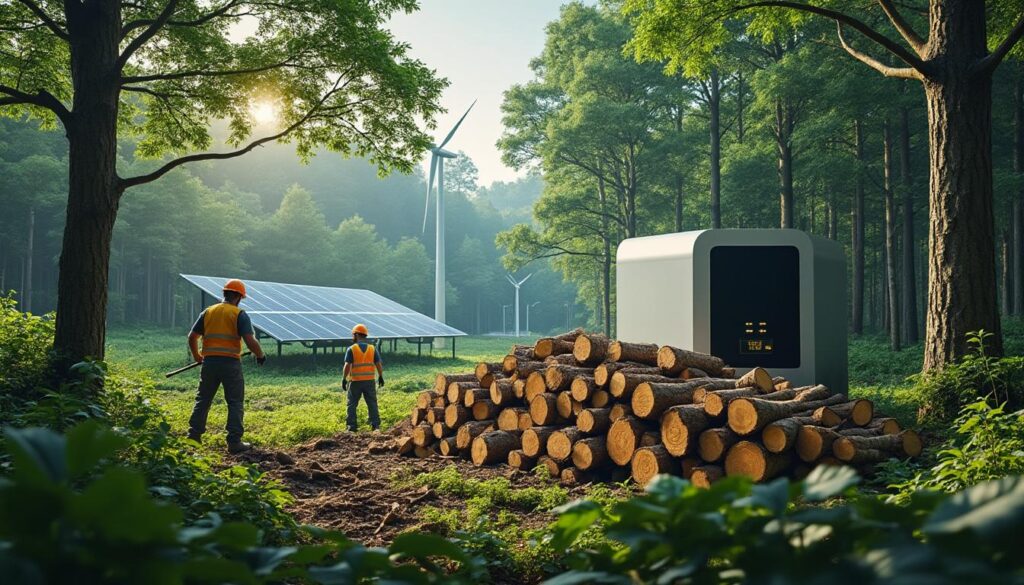
There are technical responses to consider. Agrovoltaics allow for maintaining crops under elevated structures, reducing evapotranspiration and extreme shading. Ecological corridors between panel blocks preserve fauna circulation. Reforestation plans and indistinctly public monitoring build trust.
Wind farms also face scrutiny. The visual impact of large wind turbines and the mortality of birds and bats require studies of migratory routes and fine micro-siting. Radar tools and algorithms can pause turbines during critical periods. For communities, noise and vibration need independent measurements and ongoing transparency.
Upstream of electrification, there is the issue of critical minerals. Portugal holds relevant lithium reserves, and projects in Boticas, Serra d’Arga, and Covas do Barroso have prompted petitions and revision requests from the European Commission. Concerns include soil and waterline pollution and the effects of open-pit mining on sensitive ecosystems.
How to move forward? Four practical principles help balance climate urgency and territorial protection:
- 🌍 Location hierarchy: first rooftops, parking lots, and degraded areas; only then productive agricultural land.
- 🦋 Net positive biodiversity: measurable ecological improvement targets, with independent annual audits.
- 🤝 Local benefit: financial participation from communities, social tariffs, and technical training for local employment.
- 🔎 Total transparency: real-time data on production, noise, and monitored fauna, open to the public.
When these pillars are included in the specifications, acceptance grows, and the transition gains lasting legitimacy.
How to choose where and how to install: from diagnosis to well-executed construction
A solid decision begins with energy diagnosis. Measurements of consumption by circuit, seasonal patterns, and thermal surveys reveal where energy “escapes”. Only then is generation and storage sized. The common error is to design the panel capacity without reducing base needs.
The site dictates much. For solar, the ideal orientation is south with an inclination close to latitude, but it is worth optimizing for self-consumption, sometimes preferring slopes that extend production into the afternoon. In houses, inclined structures on ventilated roofs protect waterproofing and facilitate maintenance.
In ground projects, a criteria matrix avoids surprises: agricultural value of the land, proximity to sensitive habitats, distance to dwellings, access for construction, connection capacity, and risk of overshadowing. Agrovoltaics deserves attention where water is scarce, as partial shade can reduce evaporation and protect crops.
For wind projects, micro-siting defines outcomes. Obstacles, terrain roughness, and wind corridors require CFD modeling and minimum 12-month measurements. Noise mitigation systems and operational limits by hour preserve local tranquility. Whenever possible, concentrate equipment in less exposed visual axes.
In rehabilitation, there are powerful synergies. Replacing gas with a heat pump, installing photovoltaics, and adding mechanical ventilation with recovery creates an efficient “domestic ecosystem.” Management systems adjust loads: laundry and EV charging during solar hours; AQS prepared before peak evening.
A quick list to take to the construction site helps ensure quality:
- 🧩 Integrated project: architecture, engineering, and landscape working on the same model.
- 📐 Shadows: annual solar mask study, including chimneys and trees.
- 🛡️ Waterproofing: fixation passages with guarantee and photographic inspection.
- 🪫 Batteries: ventilation, fire protection, and maintenance access.
- 🎛️ Commissioning: tests, IV curve of the panels and firmware verification.
- 📑 Documentation: manuals, single-line diagrams, and O&M plan with contacts.
If you wish to delve into agrovoltaics and integration in the field, this video offers good examples and joint productivity metrics.
Notice how the compatibilization between agricultural and electrical production depends on the height of the structures, crop density, and rotation.
Financing, incentives, and business models to accelerate in 2026
The cost of technologies has fallen and financing options have multiplied. In Portugal, collective self-consumption and Energy Communities allow neighbors to share production and costs. Residential PPA contracts stabilize prices for 10 to 15 years, transferring technical risks to the supplier.
For those rehabilitating, banks are already evaluating energy savings as part of creditworthiness. Green lines with grace periods make sense when savings on the bill start right in the following month. For companies, “as a service” models convert CAPEX into OPEX with maintenance included.
Incentives change, but there are standards. Projects with efficiency first receive better ratings and avoid oversizing. Coupling with electric mobility and heat pumps amplifies gains, as the solar kWh covers heating and transportation. Condominiums that plan roofs for the next 20 years gain scale and durability.
In operation, monitoring pays back quickly. Alerts for abnormal production and preventive cleaning of panels recover 3-7% of annual yield. In buildings, clear sharing rules and reserve funds for O&M reduce conflicts and downtime.
And the connection to the grid? Anticipate. Check connection capacity, deadlines, and technical documentation. Where the grid is saturated, temporary solutions include limiting exports and favoring local consumption while waiting for reinforcements. Projects contributing to grid flexibility tend to receive better regulatory frameworks.
Three moves to close the financial and technical cycle:
- 📉 Energy audit to size accurately and reduce CAPEX.
- 🤝 Sharing model (community or PPA) for price stability and risk management.
- 🛠️ O&M plan with KPI for availability and response to failures in hours, not days.
This way, the transition becomes a solid investment, with benefits distributed and measured over time.
Simple action for today: request a pre-energy diagnosis of your home or condominium and set a priority: efficiency, generation, or both. Small, well-planned steps build the autonomy needed tomorrow. ⚡
Source: www.jn.pt