The consumption of electricity from renewable sources has reached an unprecedented level, with national and global indicators confirming the strongest moment ever for clean energy. This dynamic is already changing the way efficient homes are built, equipped, and lived in.
| Short on time? Here’s the summary: |
|---|
| ✅ Record for renewable electricity: 68% share in annual consumption and 37 TWh production in the SEN ⚡ |
| ✅ Practical strategy: combine solar self-consumption + heat pump + insulation to cut costs and emissions 🏡 |
| ✅ Avoid common mistake: misdimensioning batteries and photovoltaics without analyzing consumption profile and tariffs ⛔ |
| ✅ Bonus: use dynamic tariffs and schedule loads for times with more renewables, enhancing the system and your savings ⏱️ |
Renewable energy consumption reaches historic record: practical reading of the numbers and what changes for you
The consolidated data for 2025 shows the highest value ever in the National Electric System. Network-supplied consumption reached 53.1 TWh, surpassing the previous maximum set in 2010 and remaining 3.2% above the previous year (or 2.3% after correction for temperature and working days). In December, the monthly jump was significant, with +6.9% compared to the same month the previous year.
To sustain this level, renewable sources were decisive: total production reached 37 TWh, which accounted for 68% of total electricity consumption. The distribution by technologies confirmed the balance of the mix: 27% hydropower, 25% wind, 11% solar, and 5% biomass. On the non-renewable side, mainly natural gas, 7.9 TWh was recorded – +54% compared to the previous year, but still only 15% of consumption, acting as a security backup.
Photovoltaic expansion stood out with +25% production, driven by new parks and distributed self-consumption. A favorable hydrological regime returned prominence to reservoirs, ensuring flexibility on days of weak wind and limited sun. Wind energy, in turn, stabilized close to a quarter of consumption, proving maturity and increasing predictability thanks to better forecasting management.
What’s behind the renewable leap
Three vectors help understand the record: investment in capacity, system efficiency, and consumption behavior. First, the strengthening of solar and wind power increased generating availability throughout the year. Second, the network of Iberian interconnections and the digitalization of the grid facilitated optimal dispatch and integration of peaks. Third, the residential and tertiary sectors adopted more efficient equipment, particularly heat pumps, LED lighting, and smart control.
Nonetheless, the system is not isolated. The import balance remained high, at around 9.3 TWh, reflecting economic market decisions and windows in which importing was more advantageous than activating internal plants. This context reinforces the importance of demand management and storage, especially on days of significant climatic variability.
Immediate implications for residents
The record is not just a statistical curiosity: it translates into more stable prices during periods of wind and sun, and an opportunity to align consumption with hours of greater renewable penetration. How about scheduling the washing machine, the water heater, or charging the electric vehicle during times of lower price and higher green quota? The combination of bi-hourly or dynamic tariffs with basic scheduling is already yielding visible results.
For those managing a building, it’s worth considering: if the grid is cleaner and more flexible, the home should be prepared for low thermal consumption and electric self-production. The opportunity is clear: less dependence on fossil fuels and greater active autonomy. In summary, more renewables in the system only delivers its full potential when the house consumes intelligently.
How to take advantage of the renewable energy record in your home: concrete and hassle-free solutions
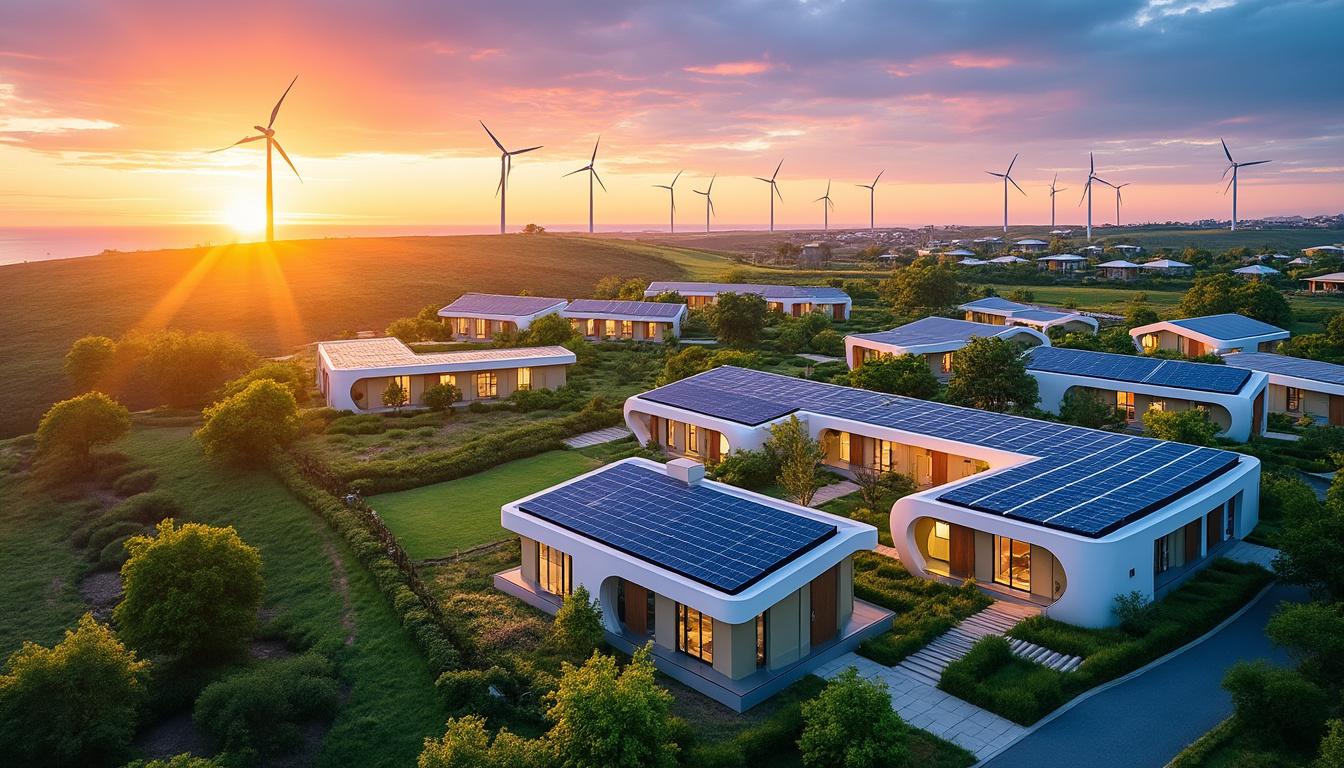
A well-thought-out home transforms the renewable record into affordable comfort. The first pillar is the envelope: continuous insulation, absence of thermal bridges, efficient window frames, and external shading. These measures significantly reduce the need for heating and cooling, allowing renewable electricity to cover most of the needs.
In the second pillar, the systems come into play. High-efficiency heat pumps for heating/cooling and hot water replace old boilers and resistances, multiplying the effect of clean electricity. Solar photovoltaic production in self-consumption (with or without battery) reduces the bill and aligns usage with sunny hours. To avoid frustrations, it’s advisable to size the system based on the real load profile and not just the peak power.
To illustrate, consider the “Orange Tree House,” a 90s home renovated in Évora. With 8 cm of extra insulation in the roof, automated external shutters, 6 kW of photovoltaic panels, and a heat pump with 3.5 COP, the family began heating and cooling with half the previous energy. By scheduling the hot water heating and the washing machine for sunny hours, they captured up to 70% of self-consumption on typical spring days – without batteries.
Simple actions that work
- 🔧 Seal infiltrations in window frames and facade joints to reduce invisible losses and increase comfort.
- 🌞 Use external shading (brises, shutters) to avoid unwanted thermal gains in summer and protect the glass.
- ⚡ Schedule consumption (washing clothes, hot water) for sunny hours or off-peak times to increase renewable participation and save.
- 🔋 Size batteries prudently: start small, assess real data, and adjust later.
- 📊 Monitor energy with smart meters to help identify peaks and waste.
And if there’s no space for panels? The role of Energy Communities is growing rapidly. It is possible to subscribe to shares of shared generation on neighboring roofs or condominiums, benefiting from the same logic of virtual self-consumption.
To guide choices, seek tariffs with differentiated prices by period and confirm compatibility with your equipment. Small gestures, like preheating water between 12 PM and 4 PM or charging the vehicle late at night, become valuable practices in a system with a lot of wind and solar.
Note how a simple migration to a heat pump and scheduling loads can reduce annual costs without altering routines. Renewable energy is there; the home just needs to receive it efficiently.
Record annual growth in renewable capacity worldwide and local impacts on energy consumption
The movement is not isolated. In 2024, global renewable capacity added about 585 GW, reaching a total of over 4,448 GW, the fastest annual growth rate in decades. It is estimated that over 90% of the net expansion was renewable, reflecting falling costs and more robust energy transition policies.
This scenario positively pressures regional markets. With more solar and wind in operation, low price windows tend to extend, especially when the weather is favorable. The Iberian Peninsula benefits from complementarity: Atlantic wind, abundant sun, and hydropower capacity to adjust peaks.
International cases help contextualize. In Brazil, for example, national consumption in February 2025 was around 47,850 GWh, with hydropower, solar, and wind taking a central role. The message is transversal: when renewables grow, the grid requires more flexibility in demand and short-term markets. This same logic reinforces the relevance of storage and dynamic contracts.
What this means for everyday life
With large portions of the year dominated by renewables, price predictability improves at certain times, encouraging the electrification of home heating and mobility. Those adopting heat pumps, electric vehicles, and self-consumption will benefit from significantly lower carbon footprint electricity.
At the same time, coordination demands increase. Correct tariffs, smart meters, and home management applications become tools almost as important as the solar panel itself. And when the sun is lacking for a few hours? This is where the grid shows its strength: compensating with wind, hydropower, and imports when economically sensible, ensuring stability.
The local numbers for 2025 – 53.1 TWh of consumption, 37 TWh of renewable production, and 68% share – fit into this global acceleration framework. More renewable capacity worldwide means more robust supply chains and, generally, more affordable equipment for the end consumer. In practice, it becomes easier and more advantageous to smartly equip your home.
The essential lesson: record capacity only converts into solid benefits when linked to efficient buildings and informed habits. It is this bridge that transforms statistics into real comfort.
Efficient architecture and eco-friendly materials: multiplying the effect of the renewable record in your home
Architecture plays a decisive role in how green energy translates into comfort. Bioclimatic design, solar orientation, thermal inertia, and cross ventilation reduce energy needs even before installing any equipment. When the envelope is robust, each kWh of renewable energy “yields” more.
Natural-based materials, such as cork, treated wood, and clay plasters, contribute to hygrometric comfort and circularity. Cork, for instance, provides insulation with low embedded energy and excellent acoustic performance. Window frames with thermal breaks, windows with optimized solar factors, and adjustable external shading complete the set.
In systems, the contemporary trio is clear: heat pumps, mechanical ventilation with heat recovery, and photovoltaics. Mechanical ventilation ensures indoor air quality without excessive thermal losses. Heat pumps deliver 3 to 5 units of heat for each electrical unit consumed under typical conditions, exactly the kind of multiplier desired when the grid is full of renewables.
Practical example and guiding numbers
Imagine an apartment from the 2000s in Lisbon, with 85 m². By reinforcing the roof with 6–8 cm of insulation, replacing old windows with models featuring a U factor lower than 1.3 W/m²·K, and installing a 5 kW heat pump with a seasonal COP of 3.5, the thermal load can drop by more than 30%. If you add 3 kW of photovoltaics, the solar fraction for hot water and daytime appliances rises rapidly.
The next step is control: schedule ventilation to intensify air renewal when there is sun, heat hot water in the early afternoon, and use the thermal storage heater as a “thermal battery”. This orchestration costs little and aligns the home with periods of greater renewable availability. And if there’s space and budget, a small battery (3–5 kWh) can soften evening peaks, reducing imports on the bill.
Avoid the trap of oversizing. An oversized system increases initial costs and may frequently operate in partial mode, reducing efficiency. The best approach is to measure, start with a contained solution, and expand as per real consumption data. The right energy, in the right place, at the right time: it is this precision that transforms the national record into value within the home.
In the end, efficient architecture is not synonymous with complexity. It is about adding good simple decisions: less loss, more control, better use of the clean electricity that already dominates the mix for much of the year.
Demand management, smart grids, and energy communities: making the renewable record even more useful
With renewables at unprecedented levels, demand management has shifted from a technical topic to a daily tool. The logic is clear: consume more when there is renewable abundance and less when the grid needs support. Smart meters, tariffs with periods, and automation applications make this accessible.
Dynamic tariffs reflect the hourly cost of electricity. By synchronizing heat pumps, hot water, electric vehicle charging, and appliances with periods of wind and sun, savings are achieved, and stability of the grid is contributed to. This behavior also reduces the need to trigger gas plants during critical moments, keeping the carbon footprint low.
Energy Communities take it a step further, allowing generation sharing between neighbors, buildings, and nearby businesses. In the “Solar Condominium on Flower Street,” a representative example, a 50 kW rooftop supplies fractions with different profiles: offices consume more during the day, while residential stoves and hot water take advantage of the rest. An algorithm distributes the energy, and participants see their bills drop measurably without complex internal works.
Practical steps to start today
- 🧭 Map consumption: identify the 3 largest appliances and their usage times.
- ⏱️ Choose a tariff: bi-hourly or dynamic, confirming rules and cycle costs.
- 📲 Automate: schedule hot water, machines, and electric vehicles for renewable windows.
- 🤝 Join a community: evaluate shared self-consumption solutions in the neighborhood.
- 🔄 Review data: adjust the plan each season and adapt goals.
An essential note: the import balance of 9.3 TWh observed in recent statistics serves as a reminder that the electrified grid operates in an open system, where imports and exports balance availability and price. The more demand responds to hourly signals, the more predictable and clean global operations become. It is precisely at this point that each residence makes a difference.
To put it into practice, choose a simple action today: schedule an appliance to operate in a window of higher renewables and check the impact on your bill next month. Small actions, when added up, help transform a national record into a more comfortable and sustainable daily reality.
Source: www.sabado.pt