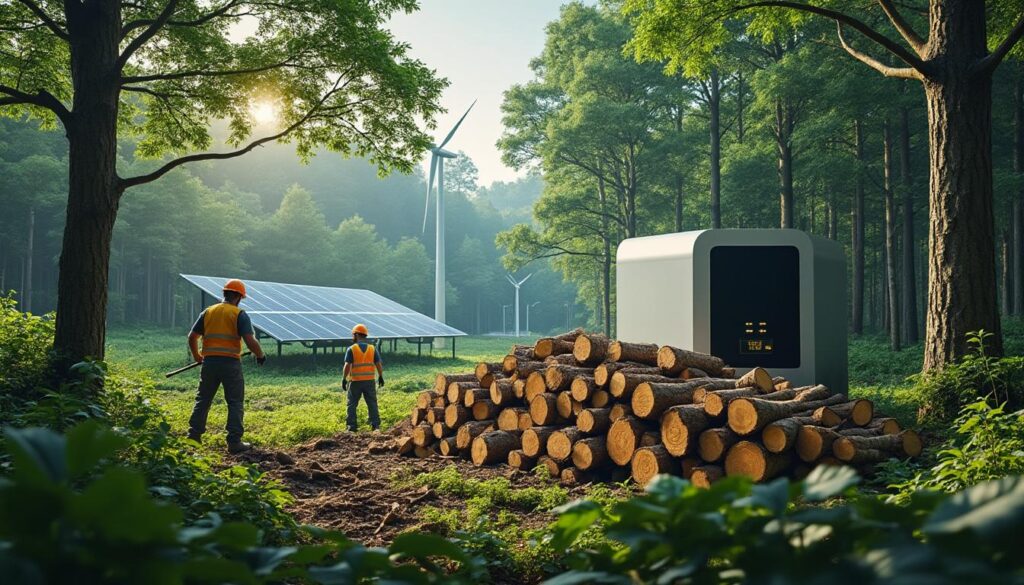
In a year saturated with bad news, five climate victories have silently changed the course of the conversation and opened the door for practical solutions in daily life. This overview brings together what has truly advanced, what it means, and how you can turn hope into concrete actions at home, in the neighborhood, and at work.
| Short on time? Here’s the gist: | |
|---|---|
| Key Point | Summary |
| ✅ ICJ Advisory Opinion ⚖️ | Right to a clean environment recognized; paves the way for accountability and protection of vulnerable communities. |
| ✅ High Seas Treaty 🌊 | Path to protect 30% of oceans and halt biodiversity loss in international waters. |
| ✅ Renewables surpass coal ⚡ | Solar and wind exceed new demand; minimal costs and competitive storage with gas. |
| ✅ Decoupling the economy 📉📈 | GDP grows with stable or declining emissions in much of the world; it works and is replicable. |
| ✅ Green turtles 🐢 | Species moves off endangered status after decades of conservation; lessons applicable on land. |
Historic Advisory Opinion of the International Court of Justice: climate rights that empower communities and cities
The advisory opinion from the highest UN court brought a powerful statement: a clean, healthy, and sustainable environment is a human right. In practical terms, this means that public and private decisions must now be scrutinized through a clear legal lens, which recognizes climate impacts as a violation of rights, just as it does for water, food, and housing.
More than symbolic, the document consolidated a legal foundation supported by dozens of states, organizations, and civil society. For municipalities and regions facing heat waves, water scarcity, and extreme events, the message is unequivocal: protecting climate and health is a legal duty, not an option. This understanding changes priorities, from urban design to the way infrastructure is financed.
In practice, adaptation policies — urban shading, cool roofs, ventilation corridors, natural drainage — gain legal robustness. Projects that ignore climate risks can be challenged, and investments that reduce vulnerabilities now have normative and economic justification. This establishes a new standard for buildings, neighborhoods, and critical infrastructures, from hospitals to schools.
What changes in practice for cities and families
When a right is recognized, tools are created to demand implementation. Neighborhoods with little tree cover and higher temperatures can claim priority in urban plans. Condominiums that suffer from recurring flooding have grounds to demand nature-based solutions and retention basins. Consumers exposed to extreme events can demand risk information in contracts and insurance.
For households, the impact is direct: energy efficiency, cross ventilation, adequate insulation, and shading become part of a legally supported resilience. In simple renovations, exterior blinds, brises, high-selectivity films, and light-colored roofs reduce heat and consumption. In new projects, proper orientation, thermal mass walls, and nighttime ventilation make a difference in comfort and bills at the end of the month.
In the financial sphere, the opinion strengthens access to climate funds and the issuance of municipal green bonds. Banks tend to value projects with explicit climate risk management, reducing the cost of capital. In simple terms: projects that care for the climate become cheaper to finance; those that ignore it become more expensive.
From case law to real stories
Recent cases show the shift. The action of Belgian farmer Hugues Falys against a major oil company brought to court the discussion about direct climate damage in agricultural exploitation. Besides seeking compensation for losses, the case signals that business practices incompatible with climate goals can lead to concrete liability. Alongside precedents like Urgenda, a legal corridor opens that should accelerate private sector transition plans.
Municipalities that document damages, plan adaptations, and prove cost-effectiveness tend to win budget disputes, because now climate is at the heart of the right to a decent life. In summary: the ICJ opinion transformed the defense of resilient neighborhoods into an agenda of rights and duties. The message that remains is crystal clear: protecting people and cities from heat, drought, and floods has become an obligation.

High Seas Treaty: protect 30% of the oceans to stabilize climate and biodiversity
With ratification by the European Union and several states, the agreement to protect the high seas has ceased to be a promise and is now part of international law. The relevance is enormous: almost two-thirds of the ocean is outside national jurisdictions and, until now, vulnerable to overfishing, pollution, and climate change.
The treaty creates mechanisms for marine protected areas, impact assessments, and equitable sharing of benefits. In translation: there are legal means to limit destructive activities, safeguard biodiversity hotspots, and coordinate science and enforcement. The global goal of protecting at least 30% of oceans by 2030 gains a viable route, with governance and technical cooperation.
Blue carbon: why the ocean is a climate insurance
Reefs, seagrasses, and mangroves capture and store carbon for long periods. Protecting these areas means avoiding emissions and maintaining ecosystem services, such as coastal protection and fish breeding. When reefs degrade, coastal communities are exposed to storms and erosion; when mangroves are destroyed, one of the most efficient carbon sinks on the planet is lost.
Besides climate, there is an impact on food: sustainable fisheries depend on recharge areas and ecological corridors. The treaty allows redesigning temporary exclusion zones, migration corridors, and low-impact fishing methods, aligning conservation and income.
From the couch to the beach: simple actions that help
Even far from the coast, it’s possible to support this advance. Consumer choices, pressure for transparency, and citizen participation create demand for marine destruction-free supply chains. Here’s a practical roadmap:
- 🌍 Prefer fish with recognized certification and open season; conscious demand reduces incentives for overfishing.
- 🧴 Avoid cosmetics with microplastics and opt for refills; less plastic, less diffuse pollution.
- 🗳️ Demand from municipalities filters in storm drains and green infrastructure to contain waste before it reaches the sea.
- 🤝 Support local NGOs for beach clean-ups and monitoring; community data strengthens oversight.
For those living in coastal areas, nature-based solutions — such as dune restoration, riverbank revegetation, and elevated crossings — reduce risk and maintenance costs. Housing projects that respect flood zones and maintain marine ventilation corridors prove that adapting is also a way to save.
With governance and clear rules, time and stability are gained for the energy and food transition. The synthesis is simple: without healthy oceans, there is no stable climate. Protecting the high seas is securing the invisible foundation of our common home.
Renewables surpass coal: solar and wind lead to cheaper and more reliable energy
The numbers are eloquent: the combined production of solar and wind has grown more than global electricity demand and has surpassed coal in generation. Solar energy, in particular, has reached minimum costs, with studies indicating values per kWh in the order of euros cents, becoming the key driver of the transition. The drop in lithium-ion battery prices since 2010 — close to 90% — has placed solar+storage systems in direct competition with gas plants in many markets.
What does this mean for you? More predictable electricity bills, less exposure to fuel shocks, and a new range of housing solutions. By combining rooftop photovoltaics, home storage, and smart management, homes can shift consumption to periods of higher production, reducing peaks and tariffs.
How much it costs and how to size it
With affordable solar modules, sizing is no longer a barrier. The point is to align production and use: heating water with a heat pump during solar hours, scheduling washing machines, and charging electric vehicles off-peak. Smart meters and bi-hourly tariffs are silent allies in this account.
In multi-family buildings, collective self-consumption and energy communities democratize technology. A neighborhood cooperative can install panels on a school roof and distribute credits on participants’ bills — a solution that reduces network losses and strengthens social fabric.
Practical checklist for an efficient home
Before photovoltaics, consolidate the foundation: roof insulation, frames with thermal break, exterior shutters, and controlled ventilation with heat recovery. The rule is clear: first reduce the need, then produce. Light-colored or green roofs lower the temperature of the top floor; adjustable brises mitigate overheating without losing light.
For those already with panels, a battery bank or a smart water heater can absorb excess during midday. And, if the dwelling allows, a small air-water heat pump replaces old boilers with immediate emissions cuts, as well as more comfort. In hot climates, cross ventilation and shading of south/west facades are quick-return investments.
The message of these numbers is pragmatic: it’s not just about environmental ideals, it’s about good engineering and solid finances. Those who anticipate the transition are less exposed to volatility and build lasting comfort.
Decoupling: when the economy grows and emissions shrink
For years, it was repeated that reducing emissions would halt growth. The most recent data show the opposite: most of the global economy is already experiencing some degree of decoupling, whether relative (emissions rising more slowly than GDP) or absolute (emissions falling while GDP grows). European countries, in particular, maintain a consistent trajectory in this regard.
This change results from three forces: cleaner electricity, energy efficiency in buildings and industry, and a shift in consumption patterns. Urban renewal policies, energy labeling, and sectoral targets have created a virtuous circle, where companies innovate to reduce costs, and heads of households adopt solutions that, in the end, save money.
What this changes in daily life
The decoupling reinforces the idea that growth in well-being does not depend on burning more fuel. For cities, it means a more predictable budget: less spending on health due to heatwaves and more resources for public spaces and mobility. For housing, it translates to buildings that consume less, protect from heat and cold, and maintain stable bills.
Construction and rehabilitation companies are already incorporating carbon targets into their specifications. Materials with low carbon content — certified wood, natural-origin insulation, low-clinker cements — are gaining scale and lowering in price. The cascading effect is clear: when the supply chain adjusts, the end customer receives more performance for the same value.
European lessons to apply locally
Examples of cities that replaced collective boilers with large-scale heat networks show emission reductions on the order of several percentage points. Deep renovation programs in social neighborhoods, with controlled mechanical ventilation and reinforced thermal envelopes, deliver comfort, health, and lower bills.
For families, a simple plan helps: energy audit, low-cost interventions first (seals, shutters, shading adjustments), then insulation and efficient windows, and finally electric generation and clean heating. Along the way, choose A-rated appliances or higher and consider consumption monitoring. The cadence matters more than immediate perfection.
Overall, the message of decoupling is liberating: prosperity can — and should — go hand in hand with less emissions. It is a strategy of competitiveness and public health, not a sacrifice.
Green turtles in recovery: a victory that teaches how to rebuild nature
After decades of decline, green turtles have been reclassified to a status of least concern. What explains this turnaround? Consistent focus on protecting nesting females and eggs, reducing capture for consumption, and mitigating accidental catches in fisheries. It was not a miracle; it was persistence, science, and coordination.
There is a powerful lesson here for life on land: when policies are clear, measurable targets set, and supervision present, ecosystems respond. The same applies to urban rivers, riparian forests, and parks: restoring native vegetation, controlling surface runoff, and reducing diffuse pollution brings back biodiversity and services like shading, thermal regulation, and water infiltration.
From beach to neighborhood: solutions that work
In coastal areas, adapted public lighting prevents disorientation of hatchlings; in neighborhoods, warm-spectrum lamps and presence sensors reduce light pollution, benefiting pollinating insects and birds. In fishing, nets with turtle exclusion devices have reduced accidental catches; in cities, grids and rain gardens catch debris before it reaches rivers and, from there, the sea.
Housing projects that incorporate permeable patios, cisterns, and green roofs decrease flooding and heat islands. Small repeated interventions at scale — well-chosen street trees, permeable sidewalks, rain gardens — create green infrastructure that is as valuable as pipes and concrete. Besides thermal comfort, the neighborhood gains meeting spaces and well-being.
Actions within everyone’s reach
There are simple steps that, multiplied, make a difference: reduce disposable plastics, prefer returnable packaging, separate organic waste, compost at home or in neighborhood points. In the yard or patio, native species attract local wildlife and require less water. Rainwater harvesting for irrigation and surface cleaning lowers consumption and alleviates networks on stormy days.
For those working in tourism, responsible observation routes and guide training generate income without degrading. Schools can adopt stretches of beach or riverbanks for citizen monitoring. The message echoing from the recovery of turtles is inspiring: when the life cycle is protected, nature responds. It is this type of continued commitment that, applied to the city and home, multiplies resilience and hope.
Final message to take with you
Five victories, one common thread: serious governance, accessible technology, and coherent daily choices. If you choose just one step today, let it be this: make a simple efficiency plan for your home and talk to your local council about green infrastructure in the neighborhood. Change begins where we live and continues to gain strength when shared.
For practical ideas on thermal comfort and clean energy at home, it’s worth exploring open and collective references, such as technical shares on sustainable habitat platforms. The path is laid out; it’s up to each to take the next step.
Source: pt.euronews.com