The Japanese government presented an incentive package to accelerate industries and data centers towards 100% carbon-free electricity, pragmatically combining renewables and nuclear. The measure aims to reduce energy costs, strengthen strategic production chains, and revitalize regions with untapped electrical potential.
| Short on time? Here’s the essence: | |
|---|---|
| 🔎 | Summary |
| ✅ | Subsidy of up to 50% of the investment for factories and data centers using 100% carbon-free electricity (renewable or nuclear) ⚡ |
| 🧭 | Budget of 210 billion yen over five years, starting from fiscal year 2026 💴 |
| 📄 | Eligible with long-term PPA (e.g., 20 years) directly with wind, solar, or other firm sources 📝 |
| 🏭 | 50% if the factory is in the same area as the source; ~20% if it is outside. Goal: local economic benefits 🌱 |
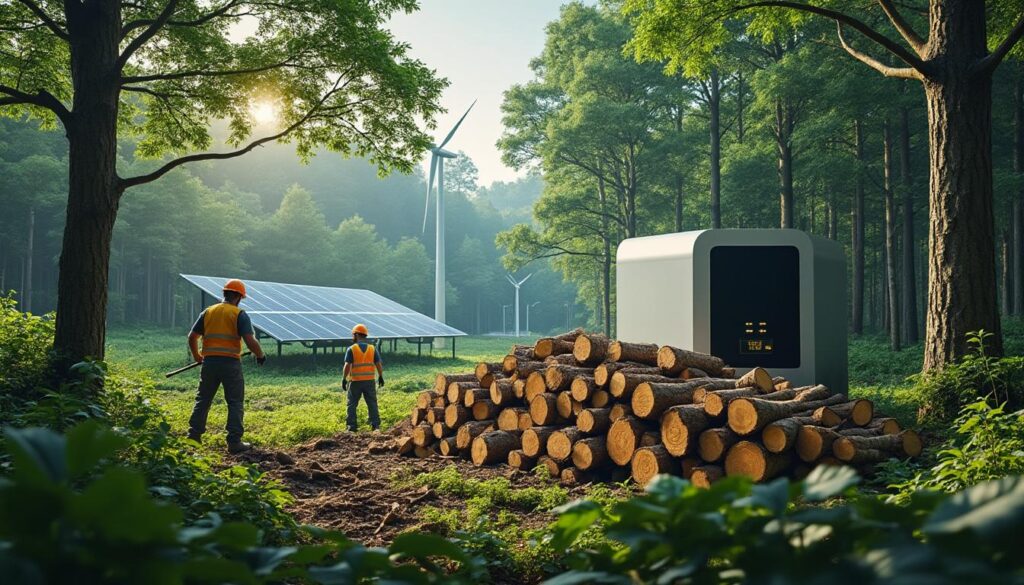
| 🧪 | Includes cutting-edge technologies, such as perovskite (flexible panels), and integration with forests for CO2 absorption 🌳 |
Japan announces incentives for 100% renewable or nuclear industries: who benefits, how to join, and what changes in practice
The Japanese package focuses on a clear point: rewarding those proving 100% carbon-free electricity when operating factories and data centers. The design is straightforward yet ambitious: the state covers up to half of the CAPEX when the industrial unit is located in the same area as the electrical source (an onshore wind farm, a solar park, a nuclear plant, or a hybrid hub). If the plant is outside this area, support drops to around one-fifth of the investment, encouraging proximity between consumption and generation.
To enable stable contracts, the government accepts long-term PPAs (for example, 20 years) with direct electricity delivery. A semiconductor manufacturer that closes a deal with a coastal wind consortium, securing firm supply and origin certificates, fits the profile. Projects that combine renewables with forest programs for monitored CO2 absorption, aiming for almost zero emissions, also qualify. The package includes cutting-edge technologies, such as perovskite solar cells — thin, lightweight, and foldable, promising for complex facades and roofs.
The numbers support the ambition. Tokyo will allocate 210 billion yen over five years, starting in fiscal year 2026. An initial allocation of about 3.5 billion yen already appears in the budget proposal, and a call for local governments to present areas, countermeasures, and licensing schedules will be launched. There is also a plan for regulatory streamlining — for example, facilitating water for industrial purposes — to make parks more attractive and quicker to implement.
Eligibility, steps, and a concrete example
The criteria focus on three pillars: 100% clean energy contract, strategic location, and regional impact. Imagine “Akari Chips,” a microelectronics company. When deciding to build a unit in Hokkaido, next to an onshore wind farm, the company signs a 20-year PPA with direct delivery and hourly certification. The plant includes rooftops with perovskite and a small battery system to smooth peaks. With the unit next to the source, Akari qualifies for the 50% subsidy on eligible investment, reducing payback and bringing jobs to the region.
- 🧩 Step 1: map nearby electrical sources and available grid capacity.
- 📑 Step 2: structure a long-term PPA (targets, guarantees, emission verification).
- 🏗️ Step 3: plan for co-production on site (perovskite, BIPV, storage) to reduce losses and curtailment.
- 🤝 Step 4: engage with the municipality and METI/JETRO for access to incentives and attracting suppliers.
- 🌳 Step 5: integrate certified forest projects to close the carbon balance when necessary.
The package also aims to convert decommissioned petrochemical complexes into new clean industrial hubs. By repurposing existing infrastructure, such as docks and substations, projects gain speed and reduce costs. For data centers, there is a parallel effort in new transmission lines, acknowledging that AI and high-performance computing require abundant, stable, and traceable energy. This care avoids that the PPA on paper does not translate into real electricity at the outlet.
The summary is clear: the subsidy rewards solid contracts, smart location, and measurable local impact — a triangle that reduces risks and accelerates industrial decarbonization.
Competitiveness: predictable costs, energy-intensive AI, and strategic production chains
By promoting 100% clean electricity, Japan seeks cost predictability and a robust image of decarbonization for industries competing globally. Semiconductors, robotics, and pharmaceuticals are at the center of the plan — sectors where energy cost and supply security weigh as much as technical qualification. A 20-year PPA with a firm source reduces price volatility and protects margins in challenging market cycles.
Data centers, the engine of AI, enter the equation strongly. Training models and operating massive inferences require almost continuous electricity supply, preferably with low emissions. The Japanese strategy recognizes this by prioritizing dedicated transmission and expediting permits. Nuclear electricity, whose share the country aims to raise to about 20% by 2040, contributes firm power, while renewables should reach the 40%–50% range. In 2023, nearly 70% of electricity came from thermal sources; the aim is to reduce this level to 30%–40% by around 2040.
Stable costs and low-carbon image
With global supply chains pressured by reindustrialization and geopolitics, consolidating factories near clean sources lowers operational costs and avoids disruptions. Additionally, brands with controlled footprints are preferred in markets with stringent climate goals. In carbon audits, traceable PPAs with hourly granularity and complementarity between wind, solar, and nuclear become competitive differentiators. Those producing chips, pharmaceuticals, or medical equipment do not want energy controversies or unpredictable costs on their balance sheets.
Even so, there are obstacles. The cancellation of a large offshore wind project, led by a Japanese trading company, exposed pressures from material costs and supply chain issues. Meanwhile, some solar plants have had to reduce production due to low market prices at certain times, a warning for the need for storage and active demand management. Hence the design of incentives aligned with grid infrastructure and cooperation with local governments.
AI, data centers, and energy security
The electrical demand associated with AI is growing rapidly. To avoid bottlenecks, the program foresees reinforced networks and quicker permits in areas with generation potential. The combination of base nuclear and complementary renewables provides stable energy with reduced emissions, crucial for digital clusters. The strategic message: digital competitiveness relies on guaranteed clean energy, not just on cutting-edge software.
Overall, the country uses energy as an industrial lever. Predictable costs, a low-carbon image, and reinforced networks create the environment that manufacturers and digital operators need to invest confidently and with a long horizon.
Regional and urban impact: network, redevelopment of hubs, and forests as allies of zero carbon
There is a territorial principle behind the program: where energy is, development should be. By offering maximum subsidies to factories located in the electrical source area, Japan channels investment to areas with stable wind, good solar resources, or returning reactors. The consequence is visible: skilled jobs, local revenue, and the reanimation of services that had contracted due to the decline of fossil industries.
Reconfiguring decommissioned petrochemical complexes is another axis. These areas have access points, docks, substations, and land already anthropized — a shortcut to establish clean industrial parks with lower ecological impact. By transforming liabilities into assets, the policy reduces construction timelines and infrastructure costs. In addition, industrial memory is preserved and reframed, which facilitates the social acceptance of new ventures.
Industrial water appears as a critical factor. The national plan promises to deregulate and simplify access for municipalities wishing to attract clean industries and data centers. When aligned with water efficiency and recycling goals, this measure prevents economic expansion from pressuring sensitive ecosystems. The message is clear: energy transition and water management walk together.
Forests come in as carbon and landscape partners. Reforestation and sustainable management projects can help neutralize residual emissions, provided they follow robust criteria for measurement, reporting, and verification. Beyond the climate balance, well-maintained forests strengthen resilience against extreme events and preserve ecological corridors. When integrated with paths and bike lanes, they also become social infrastructure, attracting talent and technical tourism.
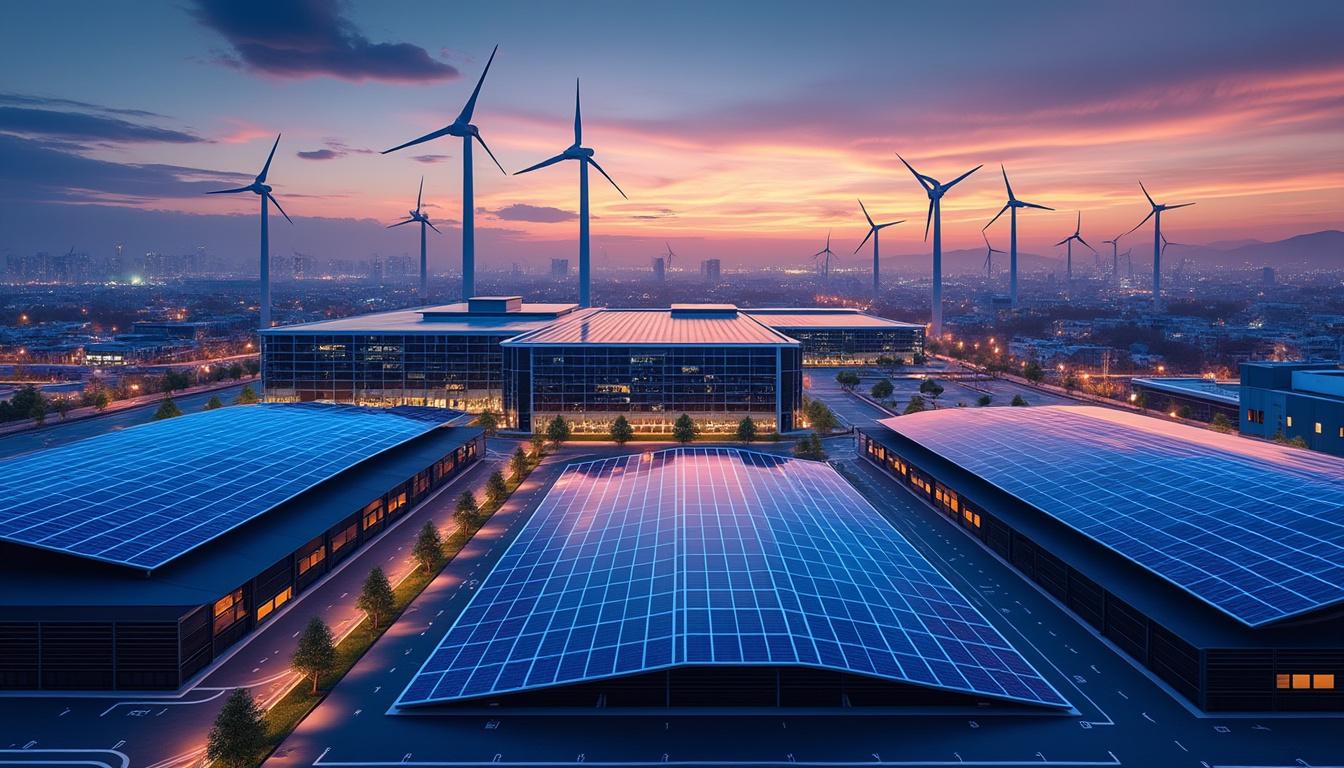
From an urban perspective, the arrival of data centers and efficient factories calls for integrated planning: public mobility, affordable housing, technical education, and communal spaces. Parks with local energy production (wind, solar on perovskite rooftops, small batteries, recovered waste heat) can operate as microgrids, alleviating the main grid during critical times. This logic of energy neighborhood allows the community to participate, for example, with collective self-consumption and smarter hourly tariffs.
Finally, there is the opportunity to strengthen energy culture. Technical museums, wind farm visitor centers, and fab labs associated with schools create vocations and bring the population closer to the theme. A transition gains traction when it is seen, understood, and lived in the neighborhood.
The anchor effect for the regions is clear: clean energy as a driver of jobs, innovation, and quality of life, without losing focus on environmental integrity.
From the lab to the building: perovskite, collective self-consumption, and PPAs that fit your neighborhood
Perovskite cells stand out in the Japanese package for a simple reason: they make it feasible to generate energy on previously “useless” surfaces. Lightweight and flexible, they can cover facades, skylights, and even shading, integrating into architecture without compromising aesthetics. When combined with silicon panels and intelligent management, they help increase production during low sunlight hours, reducing peak imports from the grid.
In industrial areas, this integration facilitates microgrids with BIPV (Building-Integrated Photovoltaics), storage, and load control. Waste heat from manufacturing processes can warm neighboring neighborhoods through low-temperature heat networks. In residential environments, thermal accumulators and heat pumps work in synergy with photovoltaic production, flattening the consumption curve. It is the logic of using each watt twice.
Local PPAs — tailored to the context of condominiums, business parks, and universities — are lessons that come well from the Japanese model. A cooperative can sign a 10–15 year contract with a regional solar park, with virtual delivery and origin certificates aligned with consumption. The same applies to a business park that closes a wind-solar-battery mix with hourly granularity, ensuring more accurate coverage and reducing curtailment on days of excess production.
In practical terms, the key lies in the sequence: audit consumption, prioritize efficiency in the envelope (insulation, air tightness, shading), size generation and storage, and only then contract supplemental energy. For buildings with high air conditioning demand, mechanical ventilation with heat recovery and inverter heat pumps enhance comfort with little energy, opening space for more aggressive clean electricity goals.
How to replicate the Japanese logic in your context
The replicable elements are clear: clean supply contracts with robust tracking, local production integrated into the building, and community participation in consumption. Even where there are no subsidies, the right structuring shortens payback. Perovskite, for instance, can cover lightweight skylights in logistics pavilions, adding energy without structural reinforcements. Collective self-consumption transforms neighborhoods into co-producers, trading part of external dependency for local energy governance.
When buildings and industries learn to speak the same energy language — PPAs, BIPV, batteries, active management — the whole city becomes more resilient. It is in this convergence that innovation leaves the lab and begins to illuminate streets, homes, and factories.
Risks, limits, and best practices to ensure 100% carbon-free without surprises
Ambition without diagnosis leads to frustration. Recent Japanese experience shows that large projects can get tangled in material costs and logistical pressure, as seen with the withdrawal of an offshore wind consortium. Meanwhile, some solar plants reduced production during negative or very low price hours — the infamous curtailment. These facts reinforce the importance of three pillars: storage, demand flexibility, and contracts with hourly granularity.
Another sensitive point is licensing. Although there has been progress in bringing reactors like Kashiwazaki-Kariwa and Tomari back online, several facilities are awaiting inspections and local approvals. Nuclear expansion aims to reach approximately 20% of the grid by around 2040, and this requires regulatory predictability and social confidence. At the same time, there are discussions about ending subsidies for new large solar plants starting in 2027, pushing the sector to focus on efficiency, grid integration, and smarter contracts.
To mitigate risks, it is worth adopting a simple and objective checklist:
- 🕒 Time guarantee: prefer PPAs with hourly matching and complementary sources (wind + solar + battery).
- 🧮 Load curve: align operation with production profile (flexible processes, fleet charging off-peak).
- 🔋 Storage: size batteries or thermal storage to absorb surpluses and avoid curtailment.
- 📡 Measurement and verification: adopt platforms that track emissions in near real-time.
- 📜 Licenses and acceptance: plan community involvement, local compensations, and continuous transparency.
- 🗺️ Location: whenever possible, bring load closer to the source to access larger support and reduce losses.
- 🌳 Forest carbon: use only projects with robust MRV and permanence and fire risk plans.
Finally, medium-term strategies need to recognize that national targets are demanding. To meet the levels set by the government, Japan will need to more than double current renewable production and effectively reactivate its entire viable nuclear fleet. This requires fine coordination among the central government, municipalities, investors, and communities — exactly what the new package seeks to catalyze by redesigning incentives and networks.
If you are going to build, renovate, or just choose an electricity contract, the most helpful move now is simple: map your consumption curve, cut waste, and contract clean energy with hourly tracking. The rest — comfort, cost predictability, and real environmental impact — comes as a natural consequence of this first step. 💡
Source: valor.globo.com