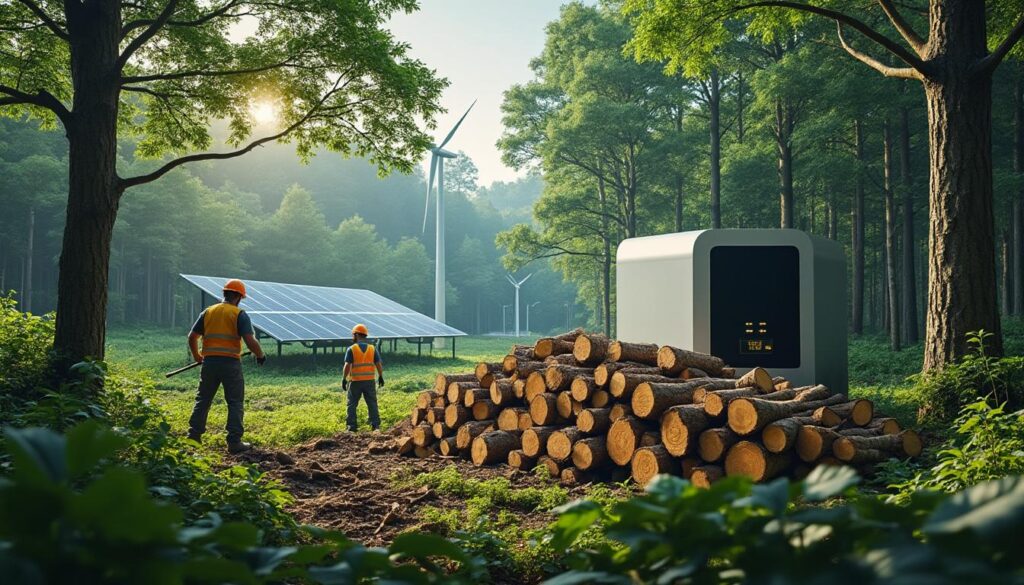
Renewables have reached a historic peak and are changing the way we live, build, and consume energy. The good news: when the grid becomes cleaner, every improvement at home yields more.
To make things easier, here is the essential information that helps you decide on the next steps with confidence.
Short on time? Here’s the essential:
| ✅ Key Points | Why It Matters |
|---|---|
| ✅ 86.2% of renewable electricity ⚡ | Reduces emissions and energy dependence, stabilizes prices, and increases the value of efficient homes 🏡 |
| ✅ -4.4% in GHG emissions 🌍 | Real progress in 2024, even with growing domestic demand; efficiency and renewables work ✅ |
| ✅ Prioritize insulation + heat pumps 🔧 | Quick and measurable gains: less consumption, more comfort, and lower peak load on the grid |
| ✅ Electric car + solar 🚗☀️ | Smart charging reduces costs and relieves the grid; prepare the home for V2H |
| ✅ Recycling at 37% still far from the target ♻️ | Correct separation and reduction at the source have immediate and measurable impacts in 2025 |
Renewable Sources Reach 86.2% and Drive a 4.4% Drop in Emissions: What This Changes in Your Home
Reaching 86.2% of renewable electricity meant, in 2024, more than just a nice number: it translated into a 4.4% drop in emissions compared to 2023, despite growing domestic demand. This combination reveals a turning point for those planning renovations or improvements: the grid is becoming cleaner and more resilient, meaning every euro invested in efficiency yields returns not only economically but also environmentally.
With the strengthening of renewables, energy dependence has decreased to 64.3%, reducing exposure to external shocks and the volatility of energy costs. For the consumer, this means less unpredictability and a favorable context for solutions like heat pumps, solar panels, and insulation. Meanwhile, 2024 was the third hottest year of the last decade and, although almost half of the days had air quality classified as “good”, thermal demand in homes grew. In summary, a more renewable yet hotter country calls for smarter homes.
There is also a data point that reinforces the urgency: the number of rural fires was the lowest in the decade, but the area burned was among the largest over that period. This highlights the need for projects with passive protection — appropriate vegetation, fire-resistant materials, and construction details that minimize risk. When architecture accompanies the energy transition, the impact multiplies.
Compared to the global landscape, where renewable electricity hovers around one-third of production and solar is growing at a record pace, Portugal ranks among the leaders. The European Union has accelerated for energy security and renewable cost competitiveness, and countries like Brazil are already operating with quotas close to or above 80% in electrical generation. This international context confirms: solutions exist, they are mature, and their prices are descending; what is often missing is transforming intention into project and execution.
How to Harness Clean Energy Inside Your Home: Priorities That Work
In rehabilitation or new construction, the recommended sequence remains simple and effective: envelope, systems, renewables, and management. Start with efficient walls, roofs, and openings; move to heating and AQS with heat pumps or hybrid systems; integrate photovoltaic solar; cap off with basic monitoring and automation to cut peaks and optimize timings.
Realistic example: a T3 in Setúbal from the 90s, with window frame replacement, roof insulation, and heat pump for AQS, reduced annual consumption by 35% and eliminated the need for a gas water heater. By installing 3.6 kWp of photovoltaic panels with microinverters and a bi-hourly rate, the household achieved 45% coverage of annual consumption with self-production and plans a modular 5 kWh battery to increase autonomy in winter.
The structural point is clear: with a grid that is already 86.2% renewable, your decision to improve your home has a “double effect” — lower bills and consistently low emissions throughout the year.
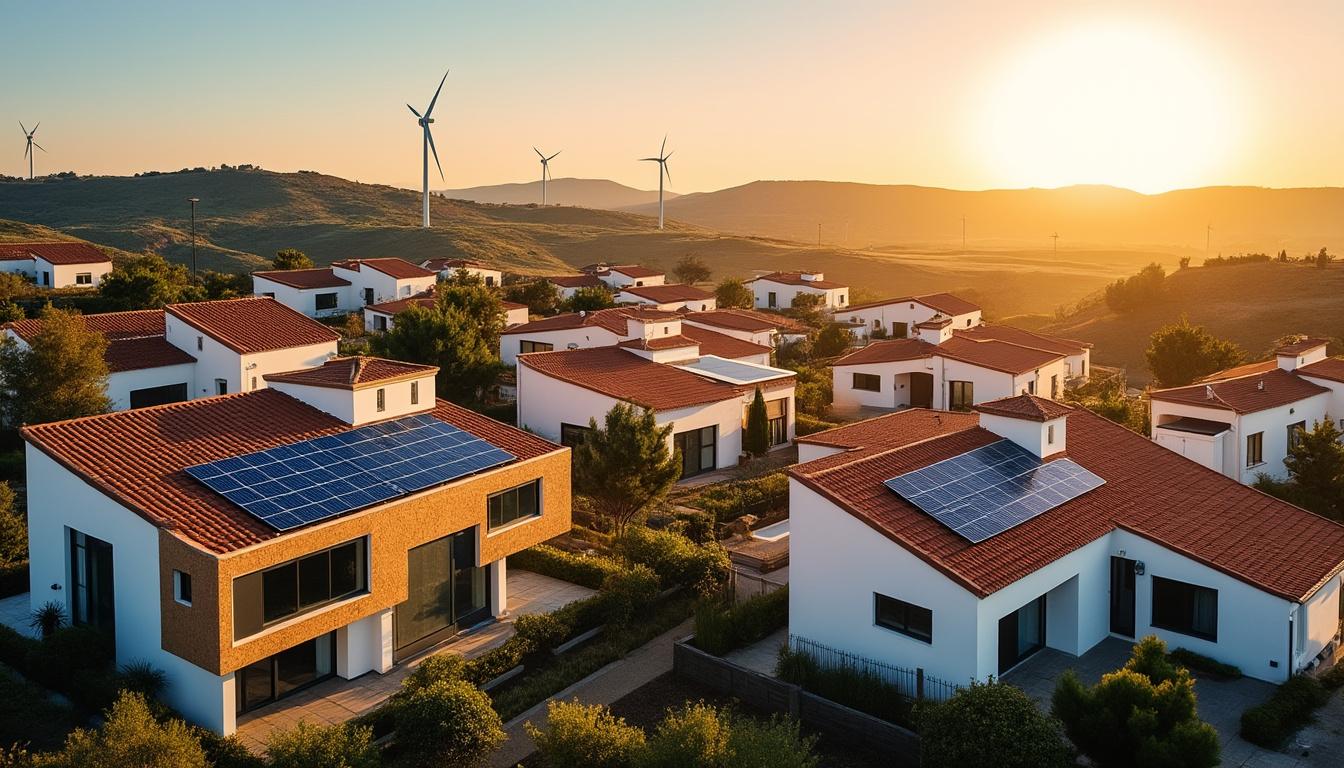
Efficient Architecture and Passive Houses: Turning Percentages into Daily Comfort
When renewables dominate the grid, architecture stops “remediating” consumption and starts designing stable comfort with less energy. The key lies in the thermal envelope, construction details, and management of light and air. All of this is measurable: more hours of comfort, lower installed power, and equipment operating in softer regimes, resulting in a longer lifespan.
In the Portuguese climate, three pillars guarantee quick results. First, awning and orientation: movable solar protections in summer and passive solar gain in winter. Second, insulation with low embodied energy materials — cork, wood fiber, or blown cellulose — that improve acoustic comfort and regulate humidity. Third, balanced ventilation, preferably with heat recovery in urban areas or passive projects, to reduce losses and maintain air quality.
Imagine the “Laranjal House,” a single-story home in Aveiro. By combining 12 cm of exterior cork, windows with optimized solar factors, and calibrated eaves, a gain of 5 to 7 ºC in winter comfort was achieved without active heating. In summer, shading and nighttime ventilation reduced peak temperatures by over 6 ºC. Result: the heat pump operates fewer hours, with gentle starts, using less energy and lasting longer.
The integration with photovoltaics and heat pumps takes the next step. When hot water is produced during peak sunshine hours and cooling operates with realistic setpoints (for example, 25–26 ºC), the consumption curve follows the production curve. This reduces peaks on the grid, improves local balance, and creates space for more heat pumps and more electric mobility in the neighborhood without heavy infrastructure reinforcements.
Another often-overlooked gain is thermal inertia. Walls with mass and green roofs stabilize temperatures, reducing equipment cycles. If we add automated exterior blinds and cross-ventilation, the results multiply. And everything starts with a simple energy audit: checking thermal bridges, locating air leaks, and measuring relative humidity in bedrooms and bathrooms.
Practical Steps to Apply Now
To guide the intervention at home, prioritize actions with the highest benefit/cost ratio. Test the house on a windy day to detect leaks through the window boxes; install temporary low-thickness seals and measure comfort differences. Replace aerators with low-flow models to save hot water and alleviate the power required for AQS. On windows, combine blinds, thermal curtains, and selective films where there are excessive solar gains.
When planning electrification, size the heat pump for the real load and prefer low-temperature radiators or underfloor heating. In rehabilitation, a small inertia tank air-to-water unit with climate curve control allows for almost constant operation in high-efficiency regimes. Monitoring with smart plugs and sub-metering by circuit helps correct what remains to be optimized.
This is the key point to remember: every gesture that reduces losses and aligns consumption with the sun converts national percentages into comfort felt daily.
Environmental Taxes, ISP, and Public Investment: How to Navigate Incentives and Avoid Waste
In 2024, revenue from environmentally relevant taxes reached 5.9 billion euros, about +8.7% compared to the previous year, driven by ISP. In contrast, public spending on environmental protection decreased to 1.610 billion (down from 1.774 billion). This scenario calls for pragmatism: better utilize available support, plan investments with clear returns, and reduce exposure to fossil fuels at home.
The safest way to avoid wasting resources is to follow an investment order that minimizes regrets: first, reduce the need (envelope), then choose efficient systems, only then install renewables, and finally, automate. Doing it the other way around often costs a lot: panels on poorly ventilated roofs, oversized heat pumps, and batteries that do not resolve base losses.
Data from INE also indicates a structural change: companies in environmental goods and services generated 13.9 billion, with 8.1 billion related to resource management. There is technological maturity and local supply; what is lacking is rigorous project and construction oversight to ensure that the expected gains materialize.
| 📊 Indicator | Value | Useful Reading |
|---|---|---|
| ⚡ Renewable Electricity | 86.2% | Ideal environment to electrify heating and AQS |
| 🌫️ GHG Emissions | -4.4% vs 2023 | Efficiency + renewables deliver results |
| 💶 Environmental Taxes | 5.9 billion € (+8.7%) | Pressure to reduce fossil consumption and car use |
| 🏛️ Public Environmental Spending | 1.610 billion € | Plan based on what exists, not on what will come |
How to Decide Where to Invest First
Use a simple decision grid: if a measure reduces contracted power, lowers peaks, and improves comfort, it has priority. Practical examples: roof insulation and airtightness often pay for themselves in 2–4 winters; a properly sized heat pump with a bi-hourly rate replaces the water heater and reduces dependence on ISP; photovoltaic systems of 3–5 kWp increase self-sufficiency and improve the footprint of each kWh consumed.
- 🧱 Priority 1: Insulation and Airtightness (less losses, smaller equipment)
- 🔥 Priority 2: Heat Pumps for AQS/heating (clean electricity utilized)
- ☀️ Priority 3: Photovoltaic Solar with load management (wash/dry between 11 am–4 pm)
- 📉 Priority 4: Automation and sub-metering (tackle “phantom loads”)
It is this decision discipline that transforms a limited budget into tangible comfort and predictable bills.
Electric Mobility Grows 49.4%: Integrating the Electric Car into Your Home’s Energy
The automotive fleet grew 4.6% and 100% electric light vehicles increased by 49.4%, representing 2.7% of the total. A sales figure of 209.7 thousand new passenger cars was recorded (+5.1%). The opportunity is clear: smart charging, planned with solar production and off-peak hours, cuts costs and lowers peaks. Preparing the house for V2H/V2G (when available) amplifies the effect, turning the vehicle into a mobility battery and home support.
In the “Calçada Condominium” in Setúbal, five neighbors organized a simplified energy micro-community: shared sockets with individual metering, charging between 12am and 7am, and panels on the parking roof. In six months, the average cost per 100 km dropped below €2, and two heat pumps in the building began to operate with greater predictability, as the charging peak no longer coincided with dinner peaks.
How to apply it at home? Ensure a dedicated circuit, a wallbox with power control and scheduling by price. If you have photovoltaics, synchronize daytime charging on sunny days, especially in spring. In apartments, promote a condominium regulation with ring cabling and separate measurements — it avoids disputes, simplifies audits, and prepares the building for a gradual increase in electric vehicles.
Three Precautions That Make a Difference
First, contracted power: adjust to avoid trips, but don’t overdo it — scheduling resolves more than extra power. Second, firmware and updates for the wallbox and vehicle: they maintain security and optimize compatibility with dynamic rates. Third, fire safety in the garage: ventilation, signage, and access to adequate extinguishers; it’s not alarmism, it’s risk management.
Charging intelligently is more than saving: it’s helping the grid, home by home, to accommodate an increasingly electric fleet without losing comfort.
Waste, Extreme Heat, and Fires: Building a Resilient Home in a Warming Country
With internal consumption of materials decreasing (-5%) and sectoral production of waste increasing (+4.9%), 2024 showed how the economy reorganizes. Urban waste collection grew 3.4%, and the preparation and recycling rate reached 37%, still far from the 55% target set for 2025. There is a huge opportunity to act at home: reduce at the source, separate carefully, and value flows that often go unnoticed — textiles, bio-waste, electrical equipment.
An effective domestic strategy begins with purchasing. Choose durable and repairable materials, prioritize certified wood, cork, and lime mortars for small works. In the kitchen, composting reduces waste volume and returns nutrients to the soil; in apartments, compost bins with activated charcoal filters prevent odors. Batteries and small electronic devices should be taken to collection points — they are valuable raw materials and hazardous if discarded with regular trash.
In designing the house, be prepared for heat waves and fire smoke. Use A1/A2 materials on exposed facades, integrate firebreak grilles in eaves, and create a vegetation management strip at least 10–15 meters if the residence is in a risk zone. Inside, ensure ventilation with F7 filtration or higher in smoke scenarios — comfort is not just temperature, it’s also air quality.
Practical Resilience to Apply Now
In bedrooms, thermal curtains and selective films on west-facing windows reduce solar gains. On roofs, continuous insulation without thermal bridges and reflective white in areas not visible to the public reduce cooling loads. For water, install flow reducers and, if possible, rainwater collection for irrigation — each liter saved alleviates the system and your bill.
At “Monte da Azinheira” in the Alentejo interior, a small extension made of stabilized rammed earth with generous eaves and a shaded patio reduced peak internal temperatures by 7 ºC. A 5,000-liter tank for rainwater ensures timely irrigation and light evaporative cooling on extreme days. The combination of thermal mass, live shade, and night ventilation showed, in the first summer, a 38% reduction in the operating time of the existing split-units — an example of careful evolution without changing the entire system.
The goal is clear: more efficient, cooler, and safer homes that respond to a demanding climate and an economy that values circular resources.
Action for today: conduct a mini-audit of 30 minutes — check window frames, leaks, timings of major consumption, and plan an improvement. One step per week is enough to transform national percentages into real comfort in your home. If you want to delve deeper, explore ideas and practical solutions on reference platforms like Ecopassivehouses.pt and advance with a simple, measurable plan with a set date.
Source: www.cmjornal.pt