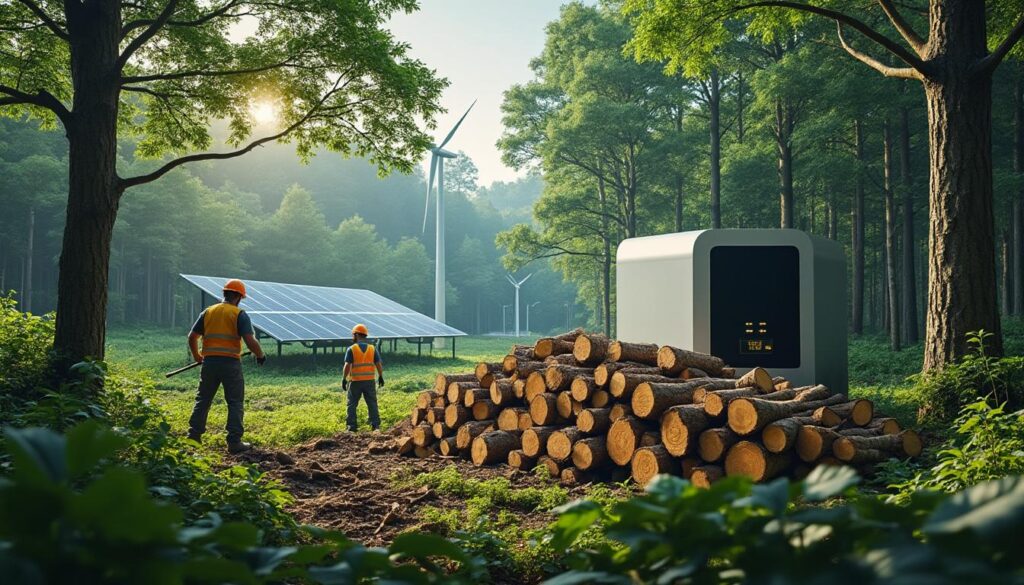
The recognition by Science Magazine of the “seemingly unstoppable growth of renewable energy” as Progress of the Year marks a turning point: clean energy has ceased to be a promise and has become the dominant practice. This advancement has direct impacts on how electricity is generated, inhabited, and managed in homes and cities.
Short on time? Here’s the gist:
| ✅ Key Point | 🧭 What it Means | 🌍 Why it Matters |
|---|---|---|
| Solar and wind surpass coal ⚡ | Global share of 34.3% vs. 33.1% for coal in the first half | Structural drop in emissions and cheaper energy |
| Solar installations +64% ☀️ | Renewables cover all growth in demand | Cost reductions for families and businesses |
| Clean technologies = economic option 💶 | Modularity, speed, and energy autonomy | Local resilience and less fossil dependence |
| Renewable capacity by 2030 🚀 | Projection of +4600 GW by IEA | Network planning, storage, and green jobs |
Relentless expansion of renewable energy: why 2025 is historic according to Science Magazine
When Science places energy transition alongside milestones such as the Higgs boson or RNA vaccines, it indicates that we are facing a shift in industrial and social patterns. For the first time, solar and wind energy have surpassed coal in global electricity generation, with 34.3% share in the first half, compared to 33.1% for coal. This is not a circumstantial achievement: it results from falling cost curves, matured value chains, and an adoption dynamic that resembles the rise of smartphones.
The growth of 64% in new solar installations in the first half of the year not only covered the entire increase in global electricity demand but also signaled the robustness of the model: more modules, more decentralized production, and more consumers becoming producers. With the modularity of renewable systems, small and medium-scale projects now compete in timelines and prices with large conventional plants, accelerating clean electrification without waiting for mega-works.
The price factor has become decisive. Solar panels, wind turbines, and batteries have reached cost levels that position them as the reference solution for new capacity. In many regions, installing photovoltaics is already the cheapest way to generate an additional kWh. The International Energy Agency projects +4600 GW of renewable capacity by 2030, double the expansion of the last five years, at a pace that changes grid logistics and urban design.
Energy autonomy and resilient urban design
Renewable energy is, by nature, modular and distributed. This opens up space for neighborhoods with local generation, energy cooperatives, and buildings that combine solar roofs, micro-inverters, and batteries to reduce consumption peaks. In remote areas of the Global South, solar kits have brought stable electricity where the grid did not reach, with immediate impacts on health, education, and economic activity. For architects and engineers, it means rethinking the building as an active system: the roof is not just shelter; it is also a generator; the façade can provide shading and energy; the garage houses a bidirectional charger that interacts with the home.
Why does Science call this the “advance of the year”? Because the positive externalities overflow from the electrical sector to industry, mobility, agriculture, and domestic life. And when the transition “stalls” the advance of emissions and brings the world closer to carbon peak, the choice becomes not just technological but also a matter of public health and competitiveness. The end of this story points to clean, cheap, and abundant electricity as the foundation of new ways of living and building.
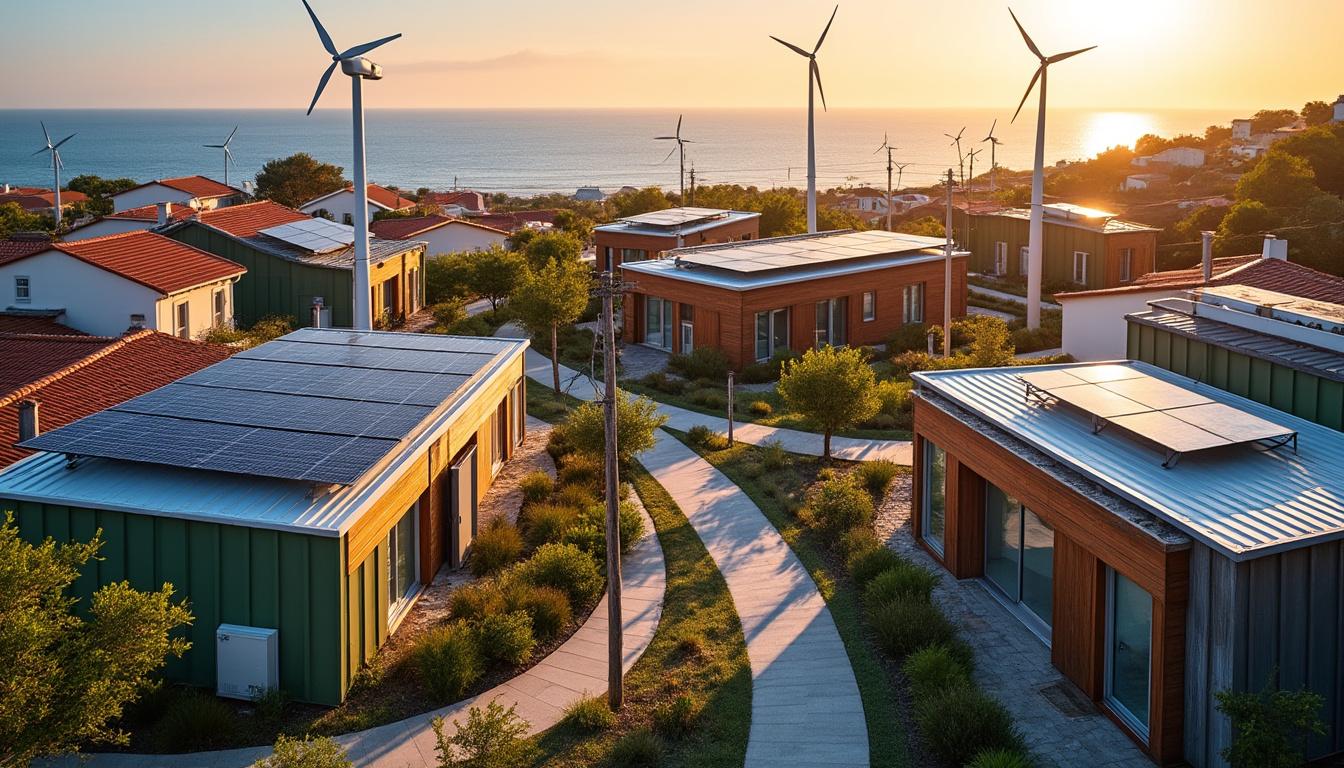
From rooftop to neighborhood: how to transform homes into clean and efficient hubs
When talking about “unstoppable growth”, the impact on daily life begins at home. A south-facing roof with good ventilation and minimal shading can generate a significant fraction of annual consumption. The secret lies in combining local production with passive efficiency: insulation, airtightness, movable shading, cross-ventilation, and smart load management. In simple terms, reducing demand and then covering the rest with your own renewables.
Consider the case of a small urban condominium. By installing shared photovoltaics, a community battery, and a management system that shifts washing machine and heat pump consumption to sunnier times, the condominium reduces its bill and peak on the grid. Adding a parking space with smart charging and vehicle-to-home (V2H) integration: vehicles help stabilize the microgrid without compromising daily mobility. This is available technology, gaining traction due to falling costs and sharing business models.
Practical steps to enable a residential project
Planning begins with a simple energy audit and a shading study. From there, the optimal photovoltaic power, the type of inverter, and, if it makes sense, the storage are defined. In efficient homes, smaller batteries manage peaks and enhance self-consumption; in homes with high nighttime usage, larger systems compensate for seasonal variations. Plug-and-play solutions for balconies and flat roofs expand access in dense areas.
- ☀️ First the envelope: insulate, seal, and use well-dimensioned shading.
- ⚙️ Dimension the solar: match consumption profile with local irradiation.
- 🔋 Tailored storage: batteries for peaks and backup.
- 📲 Smart management: shift loads, use time-of-use tariffs.
- 🚗 Electric mobility: V2H/V2G to maximize flexibility.
- 🤝 Energy cooperative: share surpluses in the neighborhood.
In a fictitious neighborhood, the “Solar Village of the West,” 40 homes adopted panels of 6 kWp, batteries of 10 kWh, and heating by heat pump. The result was an average reduction of 65% in purchases of electricity from the grid and improved thermal stability in summer. On hot days, the coordinated operation of pumps during sunlight hours prevented overload on the regional grid. The investment cost was spread over six years thanks to self-generation and collective maintenance contracts.
Architectural integration without compromising aesthetics
Integrating technology without “polluting” the architectural reading is possible with integrated photovoltaics (BIPV), solar tiles, co-planar structures, and brises with cells. In renovations, eaves and façade rhythms are maintained, positioning modules in discreet planes and respecting heritage conditions. Controlled ventilation and passive solar gains reduce thermal load, avoiding over-sizing the electrical system. For deeper solutions, resources like Ecopassivehouses.pt gather ideas tested in the field and practical guides applicable in the Portuguese context.
The common thread here is simple: consume less, generate close, manage intelligently. As one scales from the lot to the block, more resilient microgrids and more predictable energy bills are created — a realistic foundation for the transition that is already happening.
Geopolitics of the transition: Chinese leadership, impasses in the USA, and opportunities in Latin America
The acceleration of 2025 has a clear protagonist: China. Responsible for almost 60% of global growth, the country has consolidated its leadership in solar panels, wind turbines, and lithium batteries, driving down costs and expanding supply. The Chinese industrial scale, combined with efficient logistics and competitive financing, has made clean technologies the cheapest on the planet, impacting investment decisions from Berlin to Brasília.
In contrast, the United States has experienced a political and economic retreat under the Trump administration, with incentives for fossil fuel exploration on federal lands and a withdrawal of incentives for electric mobility. Beyond the symbolic, there is a practical effect: the country risks losing export revenue and technological power in value chains it helped invent. The explosive growth of AI, with data centers hungry for energy, has intensified the tension: guidelines that keep coal plants active to feed data centers clash with competitive decarbonization targets adopted by other regions.
Meanwhile, Latin America and the Caribbean show strength: about 17% of electricity comes from wind and solar, above the global average, built on a hydroelectric base of 41%. Several countries have set the target of 80% renewable by 2030, an opportunity for green industrialization and local jobs, as long as grids and storage advance at the same pace. The global mosaic is uneven, but the direction is clear: clean electricity gaining ground, coal yielding.
| 🌐 Region | ⚡ Renewable Share | 🏗️ Industrial Dynamics | 🔎 Highlight 2025 |
|---|---|---|---|
| China 🇨🇳 | Dominant expansion in solar, wind, and batteries | Scale, low costs, leadership in the chain | Nearly 60% of global growth 🌱 |
| USA 🇺🇸 | Continual progress, but with political brakes | Pressure from data centers and existing fossil infrastructure | Debate on coal for AI and loss of traction 📉 |
| Latin America & the Caribbean 🌎 | 17% wind/solar; 41% hydro | Potential for green industrialization | Targets of 80% renewables by 2030 🎯 |
| Europe 🇪🇺 | High penetration and network effort | Regulation and auctions evolving | Integration with storage and green H2 ⚙️ |
Tensions around the supply chain — from lithium to rare earths — call for international cooperation. But the benefits are already tangible: renewable advancement has helped dampen the growth of emissions, tilting the curve towards carbon peak. Where countries align industrial policy, grid regulation, and professional training, innovation hubs arise capable of competing with scale and quality.
AI, energy security, and competitiveness
Data centers and high-performance computing impose new rules of the game. Regions that supply this infrastructure with firm renewables — combining solar, wind, batteries, and demand response contracts — attract investment and build an image of clean technology. Those that insist on prolonging coal and gas to meet peaks may buy time but lose the learning curve effect and the cost advantage that already favors those decarbonizing quickly. In the end, the geopolitics of energy converges with the geopolitics of computing.
For consumers and cities, the message is pragmatic: diversify sources, invest in efficiency and plan networks. This is how a global trend becomes a lower electricity bill and cleaner air.
Electricity networks, storage, and flexibility: the technical tripod of new electricity
The renewable pace requires infrastructure to match. Grids need modernization to manage bidirectionality, localized peaks, and new uses such as heat pumps and chargers. Storage smooths out intermittency, while flexibility in consumption avoids costly reinforcements. The network-battery-demand triangle relates to reliability, price, and service quality — issues that define the success of the next cycle.
In practical terms, there are three layers of solution. The first is local optimization: home batteries, time-of-use tariffs, and load control (hot water, heating, compressed air). The second is neighborhood coordination: community batteries, microgrids, and aggregators that trade flexibility. The third is regional scale: reinforcement of interconnections, pumped hydro, and green hydrogen for seasonal and industrial uses.
Case study: Green Cooperative of Alentejo (hypothetical but realistic)
A cooperative of 800 homes and small businesses implements 5 MWp of distributed solar, 2 MWh of community batteries, and demand response contracts with three wineries and two bakeries. On sunny days, the cooperative exports surplus and charges batteries. In the late afternoon, it uses the stored energy and shifts the refrigeration of wineries to sunny hours, preserving product quality. In grid events, the aggregator “turns off” non-critical electric resistances for 30 minutes, receiving regulated remuneration.
The result: a 20% reduction in peaks at the local substation, mitigated voltage drops, and a more predictable collective bill. The cooperative invests in smart meters and open protocols (like Modbus and OCPP) for future integrations. In 24 months, the community prepares to adopt vehicles with V2H, further increasing flexibility.
How to start without oversizing
The most common pitfall is oversizing. A streamlined roadmap helps avoid errors and unnecessary costs:
- 📊 Measure load profiles for at least 30 days.
- 🧩 Act on demand: shift 10–20% of loads to sunny hours.
- 🔋 Store what is essential: 1–2 hours of autonomy for local peaks.
- 🔌 Prioritize open protocols to ensure interoperability.
- 🛠️ Iterate: review semi-annual data and adjust capacities.
When grids, storage, and flexibility walk together, clean kWh become not only cheap but reliable. That’s how unstoppable growth becomes lasting infrastructure.
Just transition, critical materials, and best practices for a sustainable future
If the technical advancement is indisputable, the transition needs to be just. The expansion of infrastructure brings social and ecological costs that require safeguards. The supply chain of lithium, cobalt, and rare earths involves sensitive communities and ecosystems; therefore, criteria for responsible sourcing, recycling, and circular design must be at the center of projects. Sustainable public procurement programs and traceability through blockchain are beginning to align incentives to avoid human rights violations.
At the building level, material choices reduce pressure on mines and emissions. Biogenic-based insulations, certified wood, low-clinker mortars, and reuse solutions decrease the footprint without compromising performance. Combined with own clean energy, they turn homes and schools into living examples of decarbonization. In renovations, selective deconstruction and local material banks increase the circularity rate and cut timelines.
Best practices that balance environment, cost, and performance
A balanced approach avoids magic promises and focuses on measurable gains. Three axes help guide decisions:
- ♻️ Circularity: modularity for repairing, upgrading, and recycling components.
- 🧭 Responsible sourcing: contracts with social and environmental auditing.
- 📐 Design efficiency: less material for the same function, more durability.
For indigenous and rural communities close to extractions, prior consultation and local benefits (employment, social infrastructure, environmental compensations) are minimum conditions. In urban areas, social energy tariffs and thermal retrofit programs in affordable housing prevent the transition from weighing more heavily on those with less.
From an economic perspective, investing in battery recycling and regional refining creates high-value chains close to consumption. Cities that focus on inverter repair centers, battery refurbishment, and technical training open doors to quality jobs and less external dependency. Knowledge platforms like Ecopassivehouses.pt help translate principles into concrete solutions, focusing on real efficiency and sensible construction.
A transition that respects people and places gains legitimacy and speed. By combining clean energy, intelligent design, and social responsibility, a virtuous circle that is hard to stop is created — exactly what distinguishes this moment as a remarkable progress.
Immediate action: take a quick survey of your consumption and identify a device to shift to solar hours tomorrow. A small gesture today — repeated every day — yields a more efficient home and a lighter bill. 🌞
Source: www.publico.pt