In five years, a physicist transformed the electrical matrix of an entire country and showed that stability, fair prices, and climate can go hand in hand. This real case offers concrete clues for cities, condominiums, and families that wish to obtain clean energy with intelligence and pragmatism.
Short on time? Here’s the gist:
| ✅ Key Points | 💡 What You Gain | ⚠️ Avoid |
|---|---|---|
| 98% renewable electricity in 5 years 🌬️☀️💧 | More stable bills and independence from fossil fuels | Planning without clear goals and without binding timelines |
| Long-term capacity markets 📄⏳ | Predictability for investors and competitive rates | Short auctions and regulatory uncertainty |
| Network simulation tool 🖥️⚙️ | Electricity security with intermittent sun and wind | Relying only on “gut feelings” and myths about blackouts |
| Gradual phasing out of fossil fuel subsidies 🔄 | Renewables competing on equal footing and winning on price | Incentives that distort the market and stifle innovation |
How 98% renewable energy in 5 years lights up your home and city
An energy transformation that seemed unlikely has become a model case: in just five years, a medium-sized country reached 98% of electricity from renewable sources. The engine of change was not a technological miracle but the combination of vision, clear rules, and a political pact that transcended governments. When clean energy receives stable market conditions, it delivers scale, competitive pricing, and supply security.
The starting point was tough: the economy was suffering from high oil and gas prices. In such contexts, many respond by building new thermal plants; here, the response was different. By redesigning the market and prioritizing long-term contracts, wind, solar, and biomass entered the game seriously. The result was an electricity grid that began to operate almost entirely with clean sources and with a smart complementarity between wind, sun, and water.
One often-forgotten element was the system simulation tool developed to test scenarios. It assessed intermittency, load ramps, stability, and reserves, showing skeptics that the grid could remain stable with the right mix of technologies. Planning with data, not slogans, built trust and accelerated decisions.
Cross-party support was the shield against setbacks. Without this foundation, any election could dismantle investments, raise energy costs, and discourage suppliers. It is a valuable lesson for municipalities and states: when the clean energy agenda is about the country and not about a party, capital trusts, projects mature, and deadlines are met.
For the consumer, the benefits came quickly. The final bill over the electricity lifecycle decreased in relation to the fossil scenario, and the economy stopped swaying with the price of oil barrels. Additionally, the grid became less vulnerable to prolonged droughts by combining hydropower with wind farms in regions with stable wind regimes. In a few years, wind provided up to 40% of annual electricity.
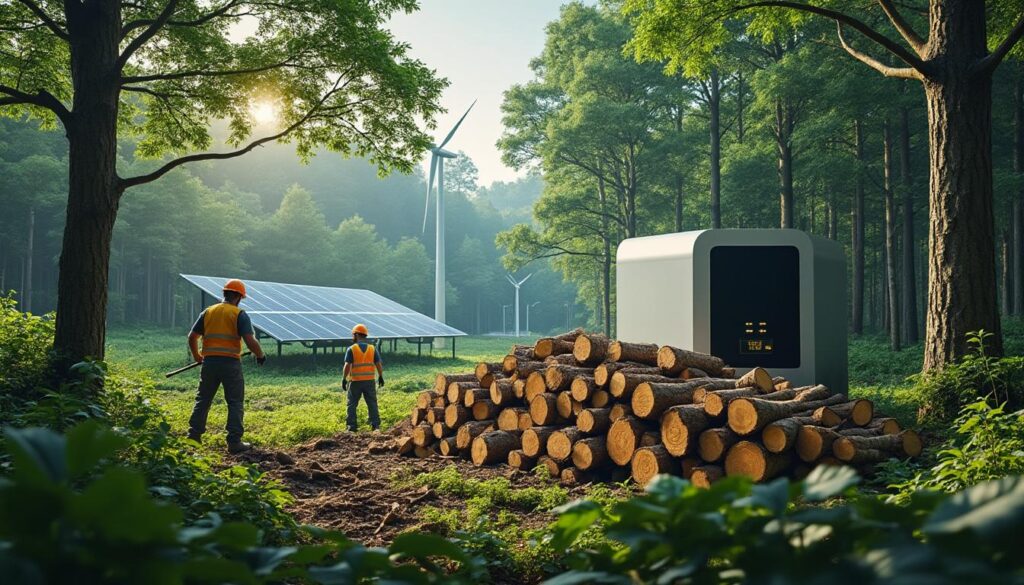
Another pillar was the creation of flexible thermal plants (natural gas peaking plants) that operate only a few hours a year, solely as backup for days without wind and with shy sunlight. This corresponds to about 1% to 3% of generation, serving as insurance that maintains reliability while storage progresses. In parallel, transmission lines and substations received upgrades to accommodate the new renewable generation without bottlenecks.
There is also a direct message for those who design and inhabit buildings: when the grid becomes greener, every kilowatt-hour that heats water, lights up a room, or moves a heat pump eliminates emissions. In homes with adequate insulation, shading, and good ventilation, renewable electricity increases comfort and reduces consumption peaks. Bioclimatic design becomes a natural partner of the renewable electric system.
In summary, the turnaround did not emerge from slogans but from rules, data, and consistency. It is this package that transforms ambition into reality, from the national scale to your rooftop.
Step-by-step replicable: from municipality to condominium, how to accelerate clean energy
The case of 98% renewables provides a replicable roadmap suitable for medium-sized cities, neighborhoods, and condominiums. The difference lies in the design of the rules and in the governance of the project. By making energy purchasing predictable, a queue of investors ready to install plants is created; when demand is organized, costs drop, and risks diminish.
First, it is worthwhile to structure long-term contracts (PPAs) for consortia of municipalities, hospitals, and schools. This collective purchase provides scale and reduces price. A consortium of three cities can, for example, close a 15-year PPA with a wind farm, ensuring a lower tariff and carbon neutrality for public services.
Next, it is crucial to remove barriers for energy communities. In residential condominiums, it is possible to install shared photovoltaic generation with smart distribution among units. Clear rules for excesses and seasonality prevent conflicts and reduce real payback. When a set of buildings shares batteries in the parking lot, late afternoon peaks are smoothed out.
It also helps to create annual public calls for efficiency projects in buildings. Each cycle selects packages that combine insulation, efficient windows, heat pumps, and simple automation. The result? A reduction of up to 30% to 50% in demand during critical hours. With less peak demand, the grid requires less thermal backup.
A practical narrative can illustrate. The “Bairro Horizonte,” with 12,000 residents, organized an energy auction to supply public lighting, schools, and a health center. A hybrid solar + wind project won with a 20-year PPA and micro-storage of 2 MWh. The annual public electricity bill fell by 22%, and the health center became autonomous for up to 6 hours during emergencies.
In parallel, the residential buildings in the neighborhood adopted a “minimum retrofit standard”: tested airtightness, 8 cm insulation in roofs, solar control film on west-facing facades, and high-efficiency heat pumps for hot water. The sum of these measures reduced consumption by 28% without loss of comfort. When a heatwave hit, the neighborhood’s demand increased less than the city’s average.
Digital tools close the loop. An integrated simulation platform with the energy master plan allows testing of growth scenarios, adding new loads (such as electric bus fleets), and sizing neighborhood batteries. By presenting clear results to the population, support grows and deadlines shorten.
- 🔌 Create a collective PPA: municipalities, hospitals, and schools buying together generate scale and reduce tariffs.
- 🏢 Energy community in condominiums: sharing solar power on roofs and batteries in parking lots.
- 🧱 Mandatory minimum retrofit: insulation, efficient windows, and tested airtightness with blower door.
- 📊 Public simulations: load scenarios, storage, and demand response with transparency.
- 🚌 Electrify urban fleets: plan charging outside of peak hours and with dynamic tariffs.
At every scale, the secret is to align contracts, engineering, and communication. This is where projects move from paper to deliver lasting results.
Market and costs: why renewables win when competing on equal footing
When bias in favor of fossil fuels is removed, renewables show their strength. Instead of subsidies that mask costs, it is worth creating long-term capacity markets with stable contracts that compensate for availability and energy. This provides predictability to cash flow and reduces the cost of capital, the largest component of the price in wind and solar.
In a real case, the total cost of electricity production dropped to about half of the alternative fossil scenario. This difference arises from operating without fuel, simpler maintenance, and the portfolio effect among wind, sun, and water. With well-designed auctions, tariffs decrease and remain stable for decades, shielding families and businesses from geopolitical shocks.
Attracting capital is not a detail. In five years, private investments reached about 12% of GDP, enabling dozens of wind and solar parks. Each installed megawatt created direct jobs in construction and operation, peaking at 50,000 positions, close to 3% of the workforce. Factories for towers, blades, and components emerged in the vicinity of the projects, generating an industrial cluster.
The market also benefits from standardized green financing products. Municipal green bonds for public lighting and school climate control, investment funds for energy communities, and corporate PPAs with clear ESG targets become everyday tools. When regulations validate the “learning curve” of technologies, prices plummet year after year.
But there are classic mistakes to avoid. Poorly designed cross-subsidies can transfer income from consumers to generators without efficiency gains. Loose targets without oversight reduce real competition. And excessive bureaucracy works against speed, which is the differential of the transition.
To guide decisions, a map of levers and impacts observed in successful experiences is worthwhile:
| 🔧 Measure | 📈 Main effect | ⏱️ Impact timeframe |
|---|---|---|
| Auction/PPAs of 15–25 years | Reduces cost of capital and final tariff | Short to medium term |
| Phasing of networks and reinforcements 🛠️ | Avoids curtailment and accelerates connection | Medium term |
| Gradual removal of fossil fuel subsidies ❌⛽ | Clean competition between technologies | Medium term |
| Demand response instruments 📲 | Reduces peaks and need for thermal plants | Immediate |
With these keys, energy stops being an unpredictable cost and becomes a strategic asset for families and businesses. This is how “cheaper” and “cleaner” come together.
Grid stability with 98% renewables: technical truth behind the blackout myth
There is a persistent myth that grids with a lot of sun and wind would be unstable by nature. Practice has shown otherwise: with systemic design, variability transforms into predictability. Weather forecasts, transmission reinforcement, storage, and flexible reserves form a robust mosaic.
It starts with the generation portfolio. Wind blows strongly at times and seasons when the sun is less present, while hydropower compensates for daily fluctuations. On calm, cloudy days, flexible natural gas plants come into play, operating a few hours a year, maintaining reliability with low total emissions. It is the “safety belt” of 1% to 3% of production.
On the grid side, smart inverters and voltage controllers stabilize frequency and reactive power. Distributed battery banks in substations reduce ramps and prevent outages. In neighborhoods with microgrids, hospitals and data centers sustain critical operations even during disruptions, resuming synchronization when the main grid normalizes.
Demand response closes the circuit. Water heating, pool pumps, air conditioning, and electric vehicle charging can shift consumption for up to two hours without losing comfort. Dynamic rates send simple signals: consume when there is wind and sun, shift when the grid is tight. In well-insulated and airtight homes, this flexibility is even greater.
Storage plays an increasingly important role. Lithium batteries smooth out short peaks; hydropower plants with reservoirs act as “long-term batteries”; flexible thermal plants cover rare and prolonged events. In coastal projects, coupling with offshore wind opens an additional window, thanks to the more stable wind regime.
The final test is the data: years in a row with over 95% and, in some seasons, almost 99% renewable generation without collapses. Extreme events exist, but the layered strategy (forecast + portfolio + grid + storage + demand) has worked. It is not luck; it is applied engineering with consistency.
Within buildings, there are direct synergies. Thermal mass, external shading, cross ventilation, and variable control heat pumps reduce peaks and improve comfort. Thus, the home interacts with the grid: consuming when it is cleaner and cheaper, storing when it is useful for all. This is the new standard of energy quality.
With transparency, measurement, and well-sized projects, the specter of blackouts gives way to a modern, resilient grid with low emissions. Security and sustainability can indeed go hand in hand.
From the country to the home: translating energy policy into comfort, health, and lower bills
National transformations make sense when they reach your home. If the electricity that comes to the outlet is already clean, the next step is to make the most of every kilowatt-hour with low-consumption architecture, natural materials, and efficient equipment. The goal is simple: comfort throughout the year, healthy air, and predictable bills.
It starts with the envelope. Continuous insulation in the roof and walls, without thermal bridges, keeps the temperature more stable and reduces the need for heating or cooling. Frames with thermal breaks, solar control glass on critical facades, and external shading prevent overheating on hot sunny days. This way, the heat pump works less and lasts longer.
Airtightness is often overlooked and makes a huge difference. Blower door tests detect leaks and guide simple corrections. A house without unnecessary infiltration maintains comfort better, reduces noise, and improves indoor air quality. By adding mechanical ventilation with heat recovery, the air is renewed without wasting energy.
Hot water is another significant consumer. Heat pumps for hot water supply, paired with a small photovoltaic array, deliver high efficiency with clean energy. In multifamily buildings, centralized systems with well-tuned recirculation prevent losses and pressure drops. By scheduling water heating for times of higher solar generation, the bill reduces another notch.
In the kitchen and laundry, appliances with good energy ratings and “eco” modes make a difference. LED lighting with dimming and presence sensors enhance the architecture and reduce consumption. Small automations—timers, thermostats, and smart meters—bring control and consistent habits without complication.
For those living in buildings, clean energy also reaches the condominium. Garages equipped for charging, common lighting with sensors, elevators with energy recovery, and solar panels on facades or technical roofs create an efficient ecosystem. In rehabilitation projects, green roofs and permeable patios reduce heat islands and improve drainage.
There is an important social dimension: predictable bills protect family budgets. When the tariff depends less on oil, there are fewer surprises and more planning capacity. Municipal retrofit programs for low-income families, focusing on airtightness and efficient water heating, have an immediate impact on health and household finances.
If you want a clear first step, focus on the “base package” of three items: insulation + airtightness + heat pump. Combine it with 2 to 4 kWp of photovoltaics, depending on available space, and simple sensors. This is a direct path to enhanced comfort and a smaller energy footprint, aligned with an increasingly renewable grid.
Clean energy makes sense when it translates into well-being, silence, quality air, and controlled bills. This is the desirable future—and it’s already possible to start now.
Ecopassivehouses.pt brings together practical guides, case studies, and checklists to help you apply these principles to your building. If you have little time today, choose a simple action: schedule a leakage test or simulate a collective PPA for your community. Small, certain steps create a solid path towards truly renewable energy. 🌱
Source: zap.aeiou.pt